Looking for the story of Yodogimi in Osaka? She was born Chacha, survived two castle sieges as a child, rose to become the most powerful woman in Toyotomi Japan, and died inside Osaka Castle in 1615 — the last act of a dynasty that shaped the city. This is her life in eight chapters, with the Osaka sites where her story still echoes today.
MICHI’s Pick — Selected by our Osaka-based team, based on places we’ve visited and on research using Tabelog and Google Maps ratings. In Japan, a Tabelog score of 3.4+ is genuinely high — Japanese reviewers are famously strict, and most locals consider anything above 3.4 a place worth a detour. We feature venues meeting at least one of: Tabelog 3.4+, Google Maps 4.3+, or 100+ reviews — the kind of spots locals quietly trust.
Tabelog and Google Maps scores are accurate as of the time of writing.
1. A Childhood Defined by Siege and Loss
📍 Odani Castle Ruins (Azai Nagamasa’s stronghold), Odani, Kohoku-cho, Nagahama, Shiga Prefecture (nearest Osaka reference: Osaka Castle Museum, 1-1 Osakajo, Chuo-ku, Osaka)
🕐 Open site / museum hours vary (as of May 2026)
💰 Free (castle ruins); Osaka Castle Museum ¥600 entry
🚃 Osakajokoen Station (5 min walk to Osaka Castle Park)
🗺 Open in Google Maps
📋 Tabelog
What to know: Chacha’s early life as a historical context
Born around 1569 as Azai Chacha, she was the eldest daughter of Azai Nagamasa — daimyo of Odani Castle — and Oichi no Kata, who was herself the sister of the warlord Oda Nobunaga. Yodo-dono survived the destruction of her clan in 1573 and was later taken under Hideyoshi’s protection.
In 1570, her father Nagamasa broke his alliance with Oda Nobunaga, and three years of fighting followed until Nobunaga’s army surrounded Nagamasa at Odani Castle. Nobunaga requested the safe return of his sister, Oichi. Chacha, along with her mother and two sisters, left the castle with her. Odani fell, and among those who died were Nagamasa and Manpukumaru, Chacha’s only brother.
She was four years old. The castle she had known as home was gone. Her father was dead. It was the first siege of her life — not the last.
Nobunaga’s death in 1582 caused open hostilities between Shibata Katsuie and Hashiba Hideyoshi over the issue of succession. Katsuie’s forces were defeated at the Battle of Shizugatake, and he was forced to retreat to Kitanosho Castle. With Hideyoshi’s army laying siege to his home, Katsuie set the castle ablaze — he and Oichi perished in it.
Chacha was roughly thirteen. She had now watched two castles burn and lost both her father and her mother to war. The pattern of her life — proximity to power, proximity to destruction — was already set. To explore more of Osaka and understand why this history still matters to the city, the castle grounds are the place to start.
2. From Ward to Concubine: The Rise of Lady Yodo
📍 Osaka Castle, 1-1 Osakajo, Chuo-ku, Osaka 540-0002
🕐 9:00–17:00 (last entry 16:30), closed 28 Dec–1 Jan (as of May 2026)
💰 ¥600 (castle tower entry)
🚃 Osakajokoen Station (5 min walk)
⭐ Rating: Google 4.4 (50,000+ reviews)
🗺 Open in Google Maps
📋 Tabelog
What to know: How Chacha became Lady Yodo
Following the defeat and suicide of Shibata Katsuie at the Battle of Kitanosho in 1583, Chacha — the eldest surviving daughter of Azai Nagamasa and Oichi — along with her younger sisters, was transferred to the custody of Toyotomi Hideyoshi, who had orchestrated Shibata’s downfall. This arrangement placed the sisters under Hideyoshi’s protection as political assets, leveraging their lineage from the fallen Azai and Oda clans to facilitate Hideyoshi’s consolidation of power.
By 1588, Chacha had entered Hideyoshi’s service as a concubine, a selection driven by her beauty and her status as Nobunaga’s niece, which served as a symbolic merger of Toyotomi authority with the prestige of the rival Oda-Asai houses subdued during the unification wars.
His younger brother, Toyotomi Hidenaga, remodeled Yodo Castle in March 1589, which Hideyoshi gave to Chacha. Hideyoshi’s wife, Nene, did not have children, and Lady Yodo thus inherited many of her privileges. The castle — and the name that came with it — marked her transformation from ward to the second most powerful woman in Japan.
Yodo-dono had two sons with Hideyoshi: Tsurumatsu, who died in 1591, and Hideyori, born in 1593, the latter becoming Hideyoshi’s designated successor. Bearing the heir changed everything. She was no longer simply a concubine. She was the mother of the future ruler of Japan.
3. The Death of Hideyoshi and the Weight of the Castle
📍 Osaka Castle, 1-1 Osakajo, Chuo-ku, Osaka 540-0002
🕐 9:00–17:00 (last entry 16:30), closed 28 Dec–1 Jan (as of May 2026)
💰 ¥600 (castle tower entry)
🚃 Osakajokoen Station (5 min walk)
⭐ Rating: Google 4.4 (50,000+ reviews)
🗺 Open in Google Maps
📋 Tabelog
What to know: Yodo-dono as de facto ruler of Osaka Castle
The tragedy fell when Hideyoshi died in 1598. As a result, the Toyotomi clan lost much of its influence and importance. Hideyori was five years old. The most powerful military regime in Japan had just lost its head, and its heir was a child.
Yodo-dono moved to Osaka Castle with her son Hideyori, where she planned the restoration of the Toyotomi clan. As Hideyori’s guardian, she was involved in politics and became the de facto head of Osaka Castle.
Following Hideyoshi’s death in 1598, she exerted significant influence over the Toyotomi clan’s remnants from Osaka Castle, navigating alliances amid the power vacuum that led to the Battle of Sekigahara in 1600 and fostering resistance against Tokugawa Ieyasu’s consolidation of authority.
She also founded temples. Yodo-dono founded the temple Yogen-in in memory of her father, Azai Nagamasa, and her mother, Oichi, and she contributed to the restoration of the temples in Koya-san Mountain and others. The woman history would later caricature as a scheming villain was, in parallel, a serious patron of Buddhist institutions — a role that carried real political weight in Sengoku Japan.
After the death of Hideyoshi, she took the tonsure, becoming a Buddhist nun and taking the name Daikoin. The formal gesture of renunciation did nothing to diminish her actual power. She ran the castle. She directed policy. She was the Toyotomi clan.
4. The Bell That Started a War
📍 Hokoji Temple Bell (historical reference site), Yamato-oji Dori, Higashiyama-ku, Kyoto 605-0931 (nearest Osaka reference: Osaka Castle, 1-1 Osakajo, Chuo-ku, Osaka)
🕐 Osaka Castle: 9:00–17:00 (as of May 2026)
💰 ¥600 (Osaka Castle tower entry)
🚃 Osakajokoen Station (5 min walk)
🗺 Open in Google Maps
📋 Tabelog
What to know: The Hokoji Bell Incident of 1614
By 1614, Tokugawa Ieyasu had been shogun for over a decade. The Toyotomi still held Osaka Castle and its enormous treasury. Something had to give.
In 1614, the Toyotomi clan rebuilt Osaka Castle. At the same time, the head of the clan sponsored the rebuilding of Hokoji — the Great Buddha of Kyoto — in Kyoto. It was a public act of piety and, whether intentionally or not, a display of Toyotomi wealth and ambition.
The temple renovations included the casting of a great bronze bell with the inscriptions “May the state be peaceful and prosperous” and “May noble lord and servants be rich and cheerful.” However, the shogunate interpreted the first phrase as shattering Ieyasu’s name to curse him, and the second as meaning “Toyotomi’s force will rise again” — treachery against the shogunate.
Scholars are almost unanimous in their agreement that the Shomei Incident of 1614 was simply a pretext that Ieyasu used to launch a preemptive strike against Hideyori. Hideyori had bankrolled the restoration of Hokoji in Kyoto. The inscription on the temple bell was interpreted as a possible insult to Ieyasu and a call for rebellion against the Tokugawa. Ieyasu immediately called for the young man’s complete surrender. When Hideyori refused, Ieyasu launched the first of the Osaka campaigns.
After the Hoko-ji Temple Bell Incident, Yodo-dono dispatched envoys to negotiate with Ieyasu, but he exploited the divisions within the Toyotomi family to further his own agenda. Despite efforts to mediate, Ieyasu took a hostile stance against Yodo-dono and Hideyori, exacerbated by reports of ronin gathering in Osaka.
Ieyasu’s anger would only subside, it was said, if one of three conditions was met: Hideyori must travel to Edo to attend the Edo Council; Yodo-dono must go to Edo as a hostage; or Hideyori must leave Osaka Castle and accept a fiefdom transfer. Every option was a form of surrender. Yodo-dono refused them all.
5. The Winter Siege: Cannon Fire and a Fragile Peace
📍 Osaka Castle Park (Yamazato-maru area), 1-1 Osakajo, Chuo-ku, Osaka 540-0002
🕐 Park open 24 hours; castle tower 9:00–17:00 (as of May 2026)
💰 Free (park); ¥600 (castle tower)
🚃 Osakajokoen Station (5 min walk)
⭐ Rating: Google 4.4 (50,000+ reviews)
🗺 Open in Google Maps
📋 Tabelog
What to know: The Winter Campaign of 1614
In November 1614, the Tokugawa forces laid siege to Osaka Castle, surrounding the Toyotomi forces with an army of 200,000 men. Osaka Castle’s natural defenses — rivers to the north, east, and west — prevented the Tokugawa forces from getting close, while to the south, the fortress outpost of Sanada-maru, constructed by Sanada Nobushige, protected Osaka Castle.
Using the vast amount of gold and silver left by Hideyoshi, Hideyori gathered some 100,000 ronin — masterless samurai — from across the nation. The castle held. The Toyotomi defenders were outnumbered but not outfought.
Ieyasu, realizing that the castle would not fall easily, ordered a limited bombing which began on January 8, 1615. For three consecutive days, his forces bombarded the fortress at 10 o’clock at night and at dawn.
The culverins aimed right for the private apartments where Hideyori’s mother, Yodo-dono, lived. Terrified by the violence of war, Yodo-dono likely begged her son to accept the peace treaty Ieyasu was offering. It was a calculated move by Ieyasu — not to breach the walls, but to break the woman behind them.
Despite initial resistance, Yodo-dono eventually accepted the terms, and hostages were exchanged, culminating in a solemn oath from Hideyori and Yodo-dono to abide by the conditions laid out by Ieyasu. Subsequently, the exterior defenses of the castle were dismantled, leading to Ieyasu’s departure from Osaka.
By negotiating terms that permitted the Tokugawa forces to fill the outer moat — a critical defensive barrier spanning approximately 12 kilometres — Ieyasu effectively reshaped the battlefield for a decisive summer offensive. The truce was a trap. Everyone who understood war knew it.
6. The Summer Campaign and the Fall of Osaka Castle
📍 Yamazato-maru, Osaka Castle Park, 1-1 Osakajo, Chuo-ku, Osaka 540-0002
🕐 Park open 24 hours (as of May 2026)
💰 Free (park grounds)
🚃 Osakajokoen Station (5 min walk)
⭐ Rating: Google 4.4 (50,000+ reviews)
🗺 Open in Google Maps
📋 Tabelog
What to know: June 4, 1615 — the end
In April 1615, Ieyasu received word that Toyotomi Hideyori was gathering even more troops than in the previous November, and that he was trying to stop the filling of the moat. Toyotomi forces began to attack contingents of the Tokugawa forces near Osaka. The truce had lasted less than six months.
The Tokugawa were able once again to assemble a fighting force of more than 200,000 men and the summer campaign began. Osaka Castle’s defenses were now far less effective than they had been the previous year, and Hideyori’s forces decided to engage Ieyasu’s men in sporadic fighting around Osaka rather than rely on the castle alone. Poorly equipped and suffering from morale problems, Hideyori’s troops were easily crushed by the Tokugawa army. Osaka Castle fell to Ieyasu’s siege parties in early June of 1615.
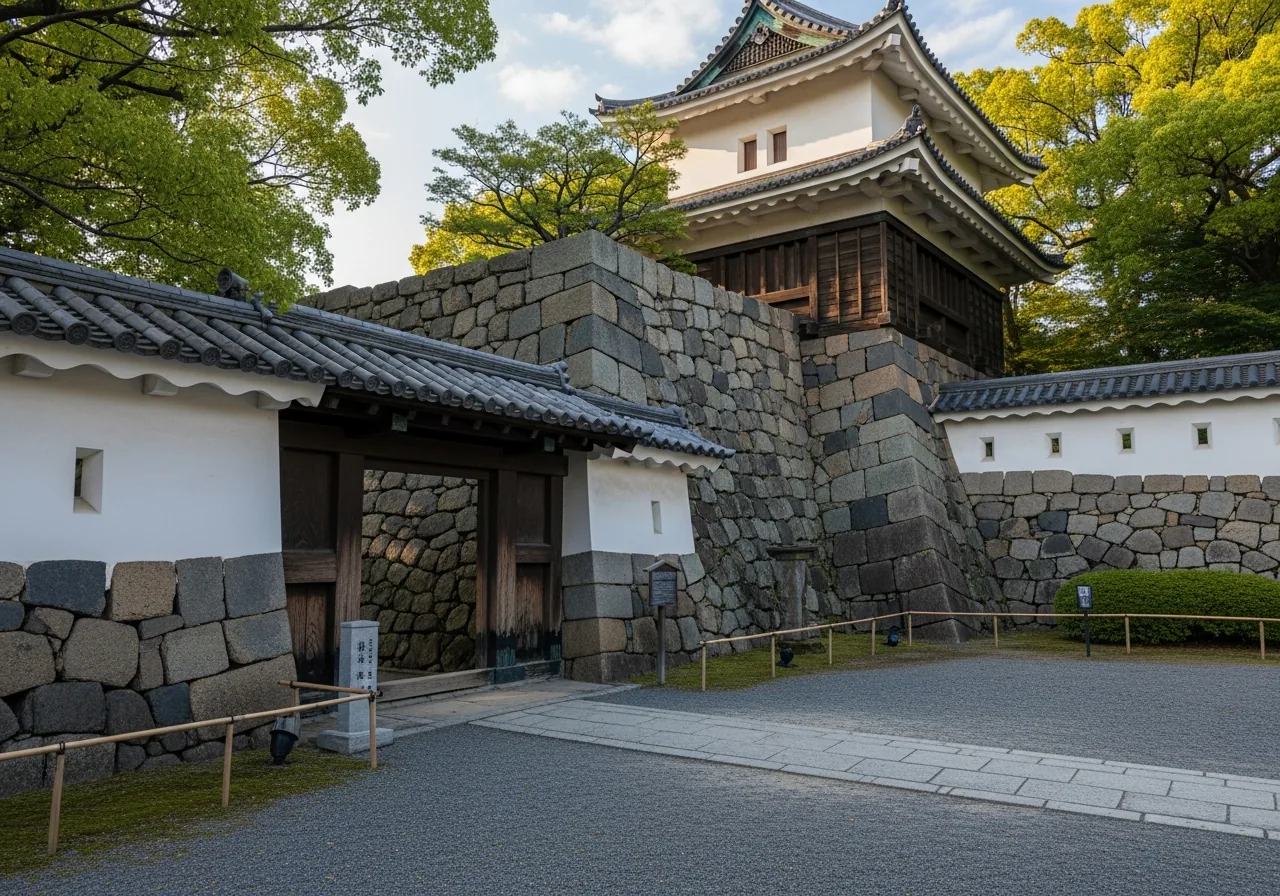
Within the Yamazato-maru Bailey of the castle grounds stands the monument commemorating Hideyori and Yodo-dono committing suicide. The spot is quiet, easy to miss, and worth finding.
On May 8th, 1615 (June 4 in the Gregorian calendar), Toyotomi Hideyori and Yodo-dono committed seppuku as their precious, once-impenetrable home Osaka Castle burned around them. So ended the legacy of the Toyotomi clan.
She was approximately 46 years old. She had survived the fall of Odani Castle, the fall of Kitanosho Castle, the death of Hideyoshi, the Winter Siege, and sixteen years of political warfare against the most powerful military government Japan had ever seen. In the end, she did not surrender. She chose the fire.
7. The Reputation She Was Given After Death
📍 Taiyuji Temple (grave of Yodo-dono), 3-2-9 Sonezaki, Kita-ku, Osaka 530-0057
🕐 Open daily, dawn to dusk (as of May 2026)
💰 Free
🚃 Higashi-Umeda Station (5 min walk)
⭐ Rating: Google 4.2 (500+ reviews)
🗺 Open in Google Maps
📋 Tabelog
What to know: How the Tokugawa rewrote her story
During the Tokugawa era, Yodo-dono was systematically rebranded as Yodogimi — a term evoking ridicule and malice — in official and popular narratives to elevate the shogunate’s legitimacy. This derogatory epithet, which persisted from the early 17th century, framed her as a malevolent force whose unchecked ambition precipitated the Toyotomi clan’s extinction, thereby absolving Tokugawa Ieyasu of culpability in the sieges of Osaka Castle in 1614–1615.
Such depictions in Edo-period chronicles and woodblock prints emphasized her supposed scheming nature, attributing the clan’s ruin to internal flaws rather than external conquest. In kabuki theater — a key medium for disseminating shogunate-approved ideologies under strict censorship — Yodogimi was routinely cast as a vengeful antagonist whose rage and pride doomed her son Hideyori.
The victors wrote the history. A woman who had held a castle against the most powerful army in Japan for two sieges, who had managed a political coalition for seventeen years after her protector’s death, who had refused every offer of comfortable surrender — she became, in the official record, a hysterical mother who ruined everything.
Modern Japanese historians have largely revised this view. The woman who refused to yield was not irrational. She understood, correctly, that leaving Osaka Castle meant the end of the Toyotomi line regardless. She thought that as soon as they left the castle, they would be confined to a small castle somewhere in Kanto and be killed. She was right. Ieyasu had Hideyori’s eight-year-old son beheaded after the siege. There was never going to be a safe exit.
8. Where to Find Her in Osaka Today
📍 Taiyuji Temple, 3-2-9 Sonezaki, Kita-ku, Osaka 530-0057
🕐 Open daily, dawn to dusk (as of May 2026)
💰 Free
🚃 Higashi-Umeda Station (5 min walk)
⭐ Rating: Google 4.2 (500+ reviews)
🗺 Open in Google Maps
📋 Tabelog
What to see: Yodo-dono’s grave and the monument at Osaka Castle
Two sites in Osaka carry her memory directly. The first is the monument inside Osaka Castle Park. Within the Yamazato-maru Bailey stands the monument commemorating Hideyori and Yodo-dono committing suicide. It sits in the quieter northern section of the castle grounds, away from the main tower crowds. Most visitors walk straight past it.
The second is Taiyuji Temple, a ten-minute walk from Umeda. The grave of Yodo-dono, who committed suicide during the Summer Siege of Osaka, is located in a corner of the temple grounds. The grave was moved to Taiyuji later — in 1877, when the army needed the land at her original burial site near what is now the Business Park district for a military training ground.
The temple is about 10 minutes’ walk from Umeda or JR Osaka Station. It sits in a dense urban block, surrounded by office buildings, which makes the grave feel stranger and more affecting than it would in a dedicated memorial park. There is no entrance fee. There are rarely other visitors at the grave itself.
For anyone who wants to understand why Osaka is the city it is — commercially independent, historically resistant to central authority, proud of its own story — Yodogimi is the right place to start. Her refusal to yield to the Tokugawa is, in a way, the city’s founding myth. You can find the best food in Osaka a short walk from both sites, and the MICHI Osaka travel guide covers everything else you need for the neighbourhood.
FAQ
Q: Who was Yodogimi in Osaka?
A: Yodogimi — also known as Yodo-dono or Lady Chacha — was the concubine of Toyotomi Hideyoshi and the mother of his heir, Toyotomi Hideyori. After Hideyoshi’s death in 1598, she became the de facto ruler of Osaka Castle and led the Toyotomi clan’s resistance against Tokugawa Ieyasu until the castle fell in 1615.
Q: Where can I find sites related to Yodogimi in Osaka?
A: Two main sites: the monument marking where she and Hideyori committed suicide, located in the Yamazato-maru section of Osaka Castle Park; and her grave at Taiyuji Temple in Kita-ku, about 10 minutes’ walk from Umeda Station. Both are free to visit.
Q: Do Osaka Castle and Taiyuji Temple have English signage?
A: Osaka Castle has extensive English-language exhibits inside the tower museum. Taiyuji Temple has limited English signage, but the grave of Yodo-dono is easy to locate — it sits behind the bell tower on the west side of the grounds.
Q: Why is Yodogimi important to Osaka’s history?
A: She was the last significant power to resist Tokugawa unification from Osaka Castle. Her refusal to surrender — and the two sieges that followed — ended the Toyotomi dynasty and allowed the Tokugawa shogunate to consolidate control over Japan. The castle that stands today is a Tokugawa rebuild over the ruins of the one she defended.
Last updated: July 19, 2026 · Corrections: [email protected]