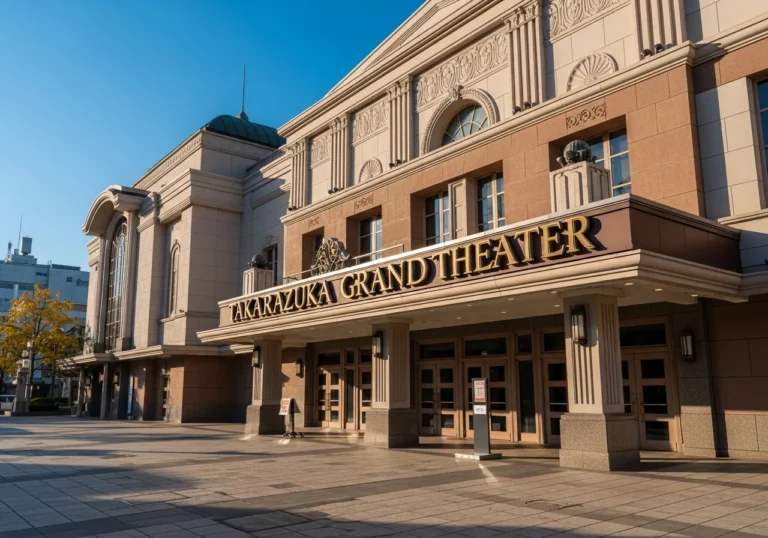
Looking for Bunraku puppet theater experiences in Osaka? This guide covers everything you need to know — the one essential venue, how to get tickets, what to expect inside, and how to make the most of your visit, whether you have two hours or a full day.
MICHI’s Pick — Selected by our Osaka-based team, based on places we’ve visited and on research using Tabelog and Google Maps ratings. In Japan, a Tabelog score of 3.4+ is genuinely high — Japanese reviewers are famously strict, and most locals consider anything above 3.4 a place worth a detour. We feature venues meeting at least one of: Tabelog 3.4+, Google Maps 4.3+, or 100+ reviews — the kind of spots locals quietly trust.
Tabelog and Google Maps scores are accurate as of the time of writing.
Bunraku is one of those things Osaka genuinely owns. The city has been the capital of Bunraku — traditional Japanese puppet theater — for many centuries, and the art form grew in popularity during the Edo Period (1603–1868) as entertainment for ordinary people, not the nobility. In 2003, UNESCO designated Bunraku as part of the Intangible Cultural Heritage of Humanity. If you want to understand what makes Osaka’s cultural identity distinct from Tokyo or Kyoto, sitting in a darkened theater watching three black-robed puppeteers move a single figure in perfect silence is a good place to start. For more on what to do and see around the city, check out the MICHI Osaka travel guide.
What Is Bunraku, Exactly?
Bunraku is a collaborative art synchronizing narrative recitation, shamisen music, and puppetry in performance. The lifelike puppets are beautifully handcrafted with elaborately decorated costumes and many individualized moving parts. They are so large that they require three puppeteers to operate them — and one of the most striking aspects of Bunraku is that the puppeteers remain visible throughout the entire performance.
The narrator, or Tayu, chants and sings the story while voicing all the puppet characters, shifting speech and intonation to express different genders, ages, and social rankings. The stories are either historical plays — such as the heroic revenge drama Chushingura — or romantic tales dramatizing the conflict between personal emotion and social obligation. The Love Suicides of Sonezaki, a tragic love story set in Osaka, is one of the most famous examples.
1. National Bunraku Theatre (国立文楽劇場)
📍 1-12-10 Nippombashi, Chuo-ku, Osaka 542-0073
🕐 Box office: 10:00–18:00 daily; performance schedules vary by season (as of May 2026)
💰 ¥1,000–¥6,700 per part (single-act tickets also available at lower prices)
🚃 Nippombashi Station (1 min walk, Exit 7)
🗣 English menu: English audio guide available (¥800 rental); free English synopsis handout; English-language box office phone support
⭐ Rating: Google 4.4 (1,000+ reviews) (as of writing)
🗺 Open in Google Maps
📋 Tabelog
🌐 Official site
What to order: Single-act ticket (¥1,000–¥3,500 depending on the program) for a 60–90 minute introduction to the art form
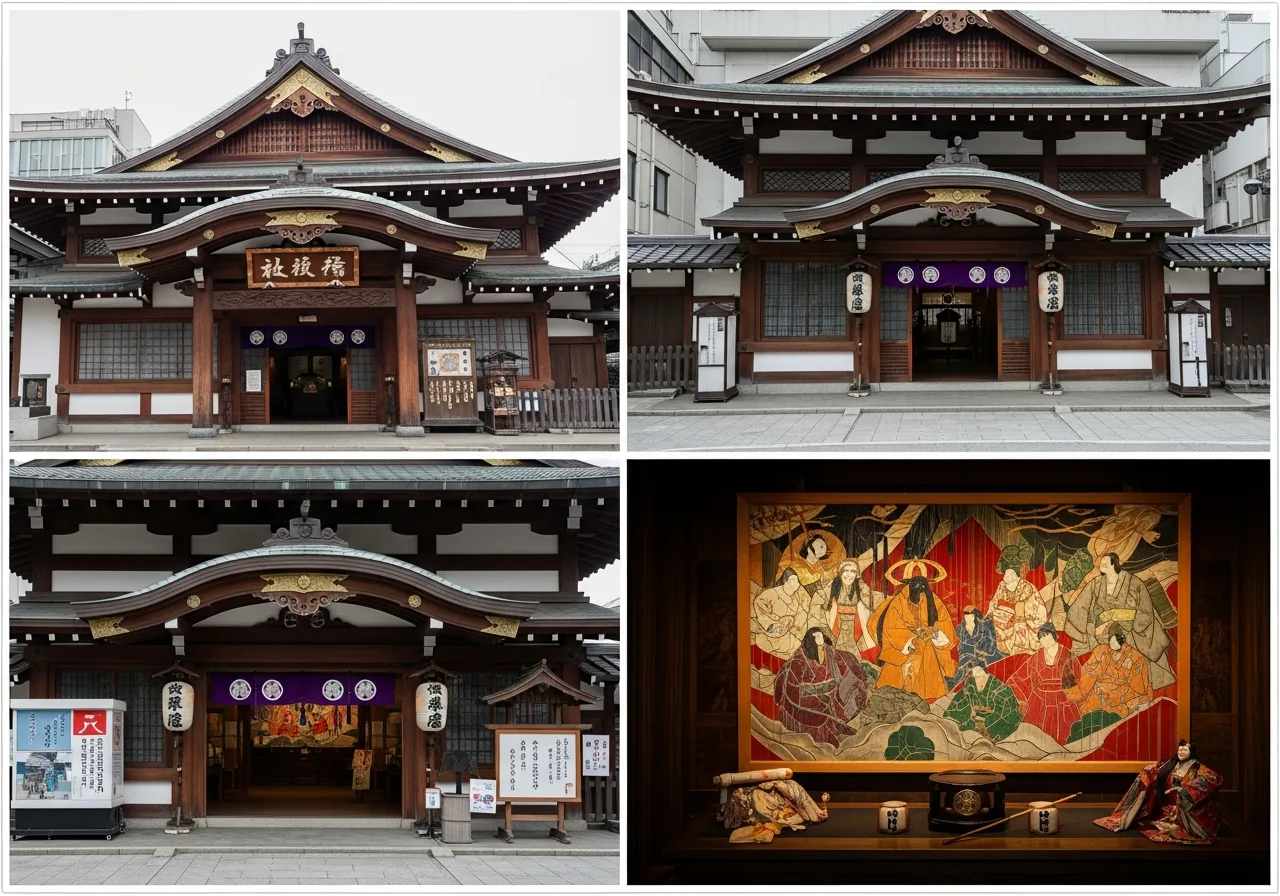
The National Bunraku Theatre — purpose-built for the art form — is located in Bunraku’s birthplace of Osaka. Bunraku originated in Osaka over 400 years ago, combining dramatic storytelling, live shamisen music, and highly skilled puppetry; each puppet is controlled by three visible puppeteers, creating a powerful and emotional performance that feels surprisingly modern despite its long history.
Performances are usually held in three-week runs in January, April, June, July/August, and November. June performances are especially popular with first-time visitors, as they often include more beginner-friendly programs. If your schedule is tight, single-act tickets let you see just one act in a shorter time at more accessible prices. Tickets can sell out, especially for popular performances, so check the schedule and book in advance online or at the box office.
English audio earphone guides with full commentary are available for ¥800. There is also an exhibition room on the ground floor with a free display of puppets, costumes, photographs, and videos of performances, with explanations written in English. Arrive 30 minutes early — the exhibition alone is worth the extra time, and it gives you the context to actually follow what’s happening on stage.
Buying a bento lunch before you arrive is a smart move; you’ll find better variety and price from outside vendors than at the theatre itself. During intermissions, theatregoers simply eat in their seats.
For the April 2026 season, full-part tickets ran ¥6,000–¥6,700 (student discounts available). Summer vacation performances in July–August offer adult tickets from ¥5,000.
How to Watch Bunraku as a First-Timer
The biggest barrier for international visitors isn’t the language — it’s not knowing what to look at. Here’s how to fix that before you sit down.
Get the English audio guide. English audio guides are strongly recommended if you do not understand Japanese, as the stories are complex and emotional. The ¥800 rental is the single best investment you can make for the experience.
Pick up the free English synopsis. A free synopsis in English is available at the box office. Read it before the lights go down.
Sit close. The puppets are not life-size, and the costuming and hand movements are extraordinary — sitting as close as possible to the front makes a significant difference.
Watch the Tayu, not just the puppets. Tearing your eyes off the puppets from time to time to observe the narrator — who does all the different voices in a highly animated way — is well worth it.
No photos during the show. Photography and filming are not allowed during performances. The exhibition room before the show is your chance to get shots of the puppets up close.
The Repertoire: What You Might See
The stories are either historical plays, such as the heroic revenge drama Chushingura, or romantic tales which dramatize the conflict between personal emotion and social obligations. The April 2026 season featured Sugawara Denju Tenarai Kagami, a classic about loyalty and political betrayal. The summer season regularly includes crowd-pleasing programs designed for newcomers and families.
Some performances are set up specifically to help non-Japanese speakers — with English subtitles displayed live, professionally timed, and even a brief English introduction at the start with a chance to take photos. These are the ones to target if it’s your first time.
Getting There and Around
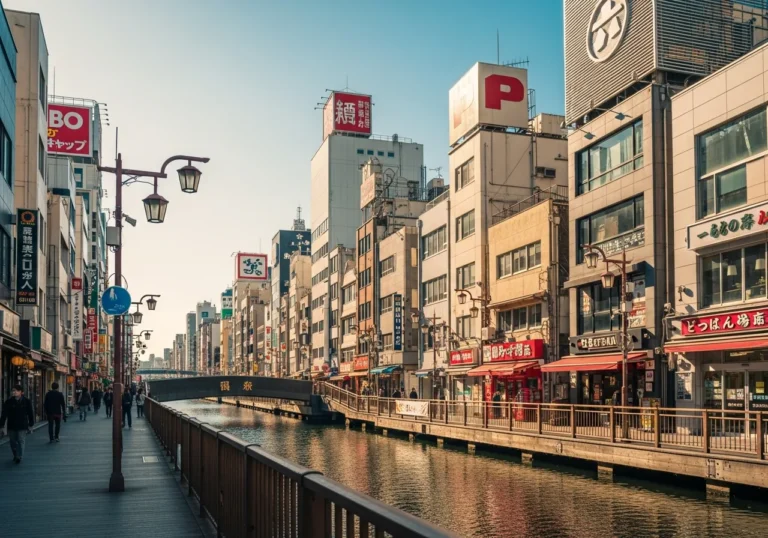
The theatre is a one-minute walk from Nippombashi Station (Exit 7) on the Osaka Metro Sakaisuji and Sennichimae Lines, and also from Kintetsu-Nippombashi Station (Exit 7) on the Kintetsu Nara Line. If you’re staying in Namba, Dotonbori, or near Kuromon Market, you can also reach the theatre on foot in about 10 minutes. The Nippombashi area is also Osaka’s electronics and anime district — Den Den Town — so there’s plenty to do before or after a performance. For ideas on what else is nearby, explore more of Osaka with our area guide. And if you’re planning a full day in the neighborhood, our roundup of the best food in Osaka has you covered for lunch and dinner options within walking distance.
FAQ
Q: What is the best Bunraku experience in Osaka?
A: The National Bunraku Theatre in Nippombashi is the only dedicated Bunraku venue in Japan and the definitive place to see it. For first-timers, the June beginner-friendly season or the summer festival programs are the easiest entry points — both are designed with international visitors in mind and include English support.
Q: How many Bunraku performances are held in Osaka each year?
A: About five Bunraku programs are shown at the theatre each year. Each run typically lasts three weeks, in January, April, June, July/August, and November. Outside of these windows, the theatre may host other traditional arts but not Bunraku itself — always check the official schedule before planning your trip around it.
Q: Do Bunraku performances have English support?
A: Yes. English audio earphone guides with full commentary are available for ¥800, and brochures are available in English, Chinese, Korean, and French. Occasionally the theatre also holds special “Bunraku for Beginners” introductory events for overseas visitors with explanations given in English, Chinese, French, Spanish, and Korean.
Q: What should I watch at a Bunraku performance in Osaka?
A: Don’t just watch the puppets — split your attention between the puppeteers’ hands, the Tayu narrator’s face, and the shamisen player. The Tayu chants and sings the entire story while voicing every character, shifting speech and intonation to express different genders, ages, and social rankings. Classic plays like Chushingura and The Love Suicides of Sonezaki are the most emotionally powerful — if either is on during your visit, prioritize them.
Last updated: July 19, 2026 · Corrections: [email protected]