Looking for the ultimate guide to Tenjin Matsuri in Osaka? This is Japan’s biggest summer festival — two days of shrine rituals, a 3,000-person street procession, 100 lantern-lit boats on the Okawa River, and a fireworks finale that draws over a million people. Whether you’re planning around the parade, the boats, or the best free viewing spot, here’s everything you need for July 24–25, 2026. For more on what to do around the festival, explore more of Osaka.
MICHI’s Pick — Selected by our Osaka-based team, based on places we’ve visited and on research using Tabelog and Google Maps ratings. In Japan, a Tabelog score of 3.4+ is genuinely high — Japanese reviewers are famously strict, and most locals consider anything above 3.4 a place worth a detour. We feature venues meeting at least one of: Tabelog 3.4+, Google Maps 4.3+, or 100+ reviews — the kind of spots locals quietly trust.
Tabelog and Google Maps scores are accurate as of the time of writing.
1. Osaka Tenmangu Shrine (大阪天満宮)
📍 2-1-8 Tenjinbashi, Kita-ku, Osaka
🕐 9:00–17:00 daily (as of May 2026)
💰 Free entry
🚃 Minami-Morimachi Station (Tanimachi/Sakaisuji lines) — 5 min walk; or JR Tozai Line Osaka-Tenmangu Station — 5 min walk
⭐ Rating: Google 4.4 (10,000+ reviews) (as of writing)
🗺 Open in Google Maps
📋 Tabelog
🌐 Official site
What to see: The Hokonagashi Shinji opening ritual (July 24, from 7:45 AM); the Moyoshi Daiko drum procession; the departure of the Rikutogyo land procession at 3:30 PM on July 25.
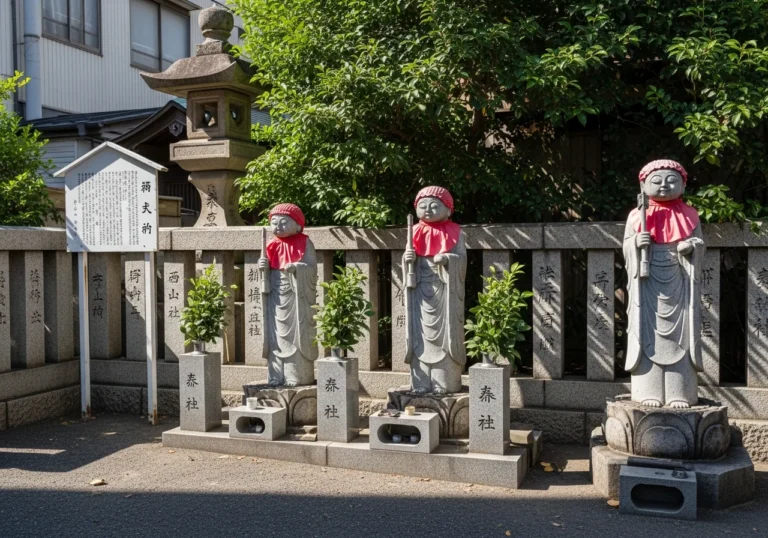
Tenjin Matsuri is the festival of Osaka Tenmangu Shrine, dating back to the 10th century — over 1,000 years of continuous celebration. It honours Sugawara no Michizane, the Heian-era scholar deified as Tenjin, the god of scholarship and learning. The shrine is the spiritual and logistical heart of the whole event: every procession starts and ends here, and the atmosphere inside the shrine grounds on the morning of July 24 is reverent and focused — a striking contrast to the festival chaos about to unfold.
Visit Osaka Tenmangu Shrine in the morning before the crowds arrive — by mid-afternoon on July 25, the surrounding streets are packed solid.
2. Rikutogyo — The Land Procession (陸渡御)
📍 Route: Osaka Tenmangu Shrine → Tenjinbashi-suji → Nakanoshima → Tenjinbashi (Okawa River)
🕐 July 25, 15:30–18:00 (as of May 2026)
💰 Free (street-side viewing)
🚃 Minami-Morimachi Station — 5 min walk to procession route
🗺 Open in Google Maps
📋 Tabelog
What to watch: The gilded mikoshi carrying Michizane’s spirit — look for the one topped with a golden phoenix.
The main day’s headline act begins at 15:30, when a column of roughly 3,000 participants sets out from Osaka Tenmangu Shrine — courtiers, drummers, lion dancers, umbrella dancers, and the mikoshi carrying the deity, all in Heian-period costume. The procession winds through the streets north of the shrine toward the Okawa River over about two and a half hours.
Find a spot along Tenjinbashi-suji — Japan’s longest shopping street — for a front-row view as the procession passes. Sidewalk viewing is free; just pick a stretch of the route and settle in early with water in hand. July in Osaka is brutally hot — bring a hand fan and something cold to drink.
3. Funatogyo — The Boat Procession (船渡御)
📍 Okawa River, between Tenjinbashi and Sakuranomiya Bridge, Kita-ku, Osaka
🕐 July 25, 18:00–21:00 (as of May 2026)
💰 Free from riverbanks; paid riverside seats ¥3,000–¥30,000; spectator boat tickets ¥6,000–¥20,000
🚃 Temmabashi Station (Keihan/Tanimachi lines) — 5 min walk to riverbank; Sakuranomiya Station (JR Loop Line) — 3 min walk
🗺 Open in Google Maps
📋 Tabelog
What to watch: The lantern-lit mikoshi boat; stage boats hosting noh and bunraku performances; the nimble Dondoko boats darting between the fleet.
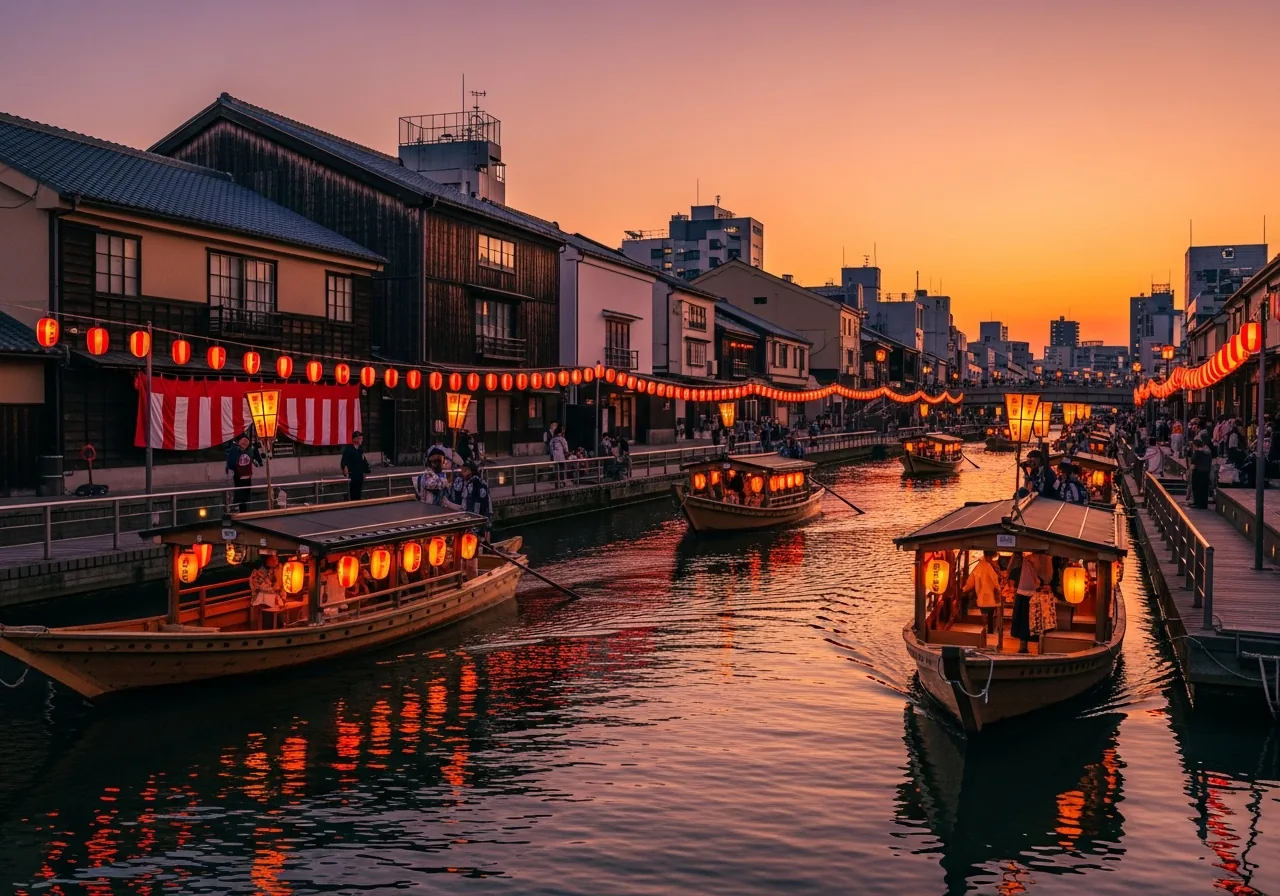
Roughly 100 boats, hung with lanterns and bonfires, carry the mikoshi and festival parties up and down the Okawa River. Stage boats host noh and bunraku-style performances, company and neighbourhood boats trade cheers across the water, and the whole river glows. It’s one of the great spectacles in Japan, and it’s completely free to watch from the banks.
For the most immersive option, purchase a seat on one of the paid spectator boats that join the Funatogyo procession on the Okawa River — you’ll be on the water among the illuminated festival boats, with fireworks exploding directly overhead. Tickets range from ¥6,000 to ¥20,000 depending on the boat and package. They sell out months in advance — booking opens in May/June through the Tenjin Matsuri official website and local travel agencies.
4. Tenjin Matsuri Fireworks (奉納花火)
📍 Launched from barges near Sakuranomiya Park and Kawasaki Park, Kita-ku, Osaka
🕐 July 25, 19:30–21:00 (as of May 2026)
💰 Free from public riverbanks; paid seats ¥3,000–¥30,000 (book in advance)
🚃 Sakuranomiya Station (JR Loop Line) — 3 min walk
🗺 Open in Google Maps
📋 Tabelog
What to watch: The fireworks reflected in the river while the lantern-lit boat procession passes below — this is the image on every Tenjin Matsuri poster.
From around 19:30 until about 21:00, a dedication fireworks display — roughly 5,000 fireworks — bursts over the river while the lantern-lit boats continue below. Fireworks above, bonfires on the water, a million-plus people on the banks: this is the “fire and water” image on every Tenjin Matsuri poster.
Paid seating is available in multiple locations along the river for between ¥3,000 and ¥30,000. Advance bookings are required and can be made in English through Klook. If you’re going free, arrive at Sakuranomiya Park by 4 PM to secure a riverbank spot for the fireworks. In 2026, July 25 falls on a Saturday — expect bigger domestic crowds than usual, and book your Osaka hotel accordingly.
5. Tenjinbashi-suji Shopping Street (天神橋筋商店街)
📍 Tenjinbashi 1-chome to 6-chome, Kita-ku, Osaka
🕐 Shops generally 10:00–20:00; food stalls during festival from approx. 11:00–23:00 (as of May 2026)
💰 Free to walk; food stalls from ¥300–¥800 per item
🚃 Tenjinbashisuji Rokuchome Station (Sakaisuji/Tanimachi lines) — direct access; Minami-Morimachi Station — 5 min walk
⭐ Rating: Google 4.2 (3,000+ reviews) (as of writing)
🗺 Open in Google Maps
📋 Tabelog
What to eat: Takoyaki (¥500–¥600), kakigori shaved ice (¥400–¥600), yakitori (¥200–¥350 per skewer), ayu salt-grilled sweetfish (¥600–¥800).
By evening on July 24, the streets around the shrine fill with food stalls, and Tenjinbashi-suji — Japan’s longest shopping street at 2.6 kilometres, running just west of the shrine — buzzes with festival energy. During the festival, around 1,000 stalls set up across the shrine grounds, the riverbanks, and the arcade itself. This is where you eat: Osaka favourites like takoyaki, ikayaki (grilled squid), kakigori, and classic festival games line the route. For a deeper dive into what to eat while you’re in the area, check out the best food in Osaka.
6. Nakanoshima Park (中之島公園)
📍 Nakanoshima 1-chome, Kita-ku, Osaka
🕐 Open 24 hours (as of May 2026)
💰 Free
🚃 Temmabashi Station (Keihan/Tanimachi lines) — 5 min walk; Yodoyabashi Station (Midosuji/Keihan lines) — 8 min walk
⭐ Rating: Google 4.3 (5,000+ reviews) (as of writing)
🗺 Open in Google Maps
📋 Tabelog
What to do: Stake out a riverside spot early on July 25 for the boat procession; use the park as a base between the land procession and the fireworks.
Located in Nakanoshima, a mere 10-minute walk from Osaka Tenman-gu Shrine, this park offers a serene escape from the festival’s excitement — an ideal place for a leisurely stroll, surrounded by lush greenery and calming river views. On festival night, the park’s riverbank fills fast. The eastern end, near Temmabashi, gives you a clear sightline to the boat procession as it passes — arrive by 5 PM if you want a decent spot without paying for reserved seating.
7. Sakuranomiya Park (桜宮公園)
📍 Tenjinbashi 6-chome, Kita-ku, Osaka (west bank of Okawa River, near Sakuranomiya Bridge)
🕐 Open 24 hours (as of May 2026)
💰 Free
🚃 Sakuranomiya Station (JR Loop Line) — 3 min walk
⭐ Rating: Google 4.2 (2,000+ reviews) (as of writing)
🗺 Open in Google Maps
📋 Tabelog
What to do: Claim a riverbank spot for the fireworks; the park sits directly opposite one of the two main launch barges.
The fireworks are launched from barges near Sakuranomiya Park and Kawasaki Park on the opposite bank — which means this stretch of river is ground zero for the best free views. For those who prefer to avoid the worst of the crowds, Sakuramiya Shrine, located behind Sakuranomiya Park, offers a relatively less-crowded view of the fireworks straight ahead. The trade-off: you’re further from the boat procession. The park areas near the launch sites fill earliest — claim a spot 2–3 hours before the 19:30 fireworks.
8. Osaka City Central Public Hall (大阪市中央公会堂)
📍 1-1-27 Nakanoshima, Kita-ku, Osaka
🕐 Open daily 9:30–21:30; closed 2nd and 4th Tuesdays (as of May 2026)
💰 Free (exterior and public areas); exhibition rooms ¥300
🚃 Temmabashi Station (Keihan/Tanimachi lines) — 5 min walk; Yodoyabashi Station — 8 min walk
⭐ Rating: Google 4.4 (4,000+ reviews) (as of writing)
🗺 Open in Google Maps
📋 Tabelog
What to do: Watch the Rikutogyo land procession pass in front of the building on July 25 afternoon; photograph the neo-Renaissance facade lit up at night.
Starting at 3:30 PM on the second day, traditional floats and portable shrines — along with characters in costumes, lion dancers, umbrella dancers, and other performers — pack the streets of Tenjimbashi and Nakanoshima throughout the afternoon. You can watch the massive procession carrying mikoshi floats down the street in late afternoon in the vicinity of Osaka City Central Public Hall. The building itself, a 1918 neo-Renaissance landmark on Nakanoshima island, makes for one of the best backdrops in the city — and the riverside terrace in front of it is a prime spot to watch the procession go by before the boats take over.
FAQ
Q: What is the best way to experience Tenjin Matsuri in Osaka?
A: Arrive at Osaka Tenmangu Shrine on the morning of July 24 for the opening rituals, then return on July 25 for the full programme: the Rikutogyo land procession from 15:30, the Funatogyo boat procession from 18:00, and the fireworks from 19:30. If you can only do one thing, get to the Okawa riverbank by 17:00 on July 25 and stay for the boats and fireworks.
Q: How many people attend Tenjin Matsuri?
A: Over two days, more than 1 million visitors flood the streets and riverbanks of northern Osaka. The crowds concentrate along the Okawa River between Temmabashi and Sakuranomiya on the evening of July 25 — this is the single most crowded stretch of the festival.
Q: Do Tenjin Matsuri venues have English support?
A: The festival itself has no formal English-language commentary, but the visual spectacle needs no translation. Advance bookings for paid riverside seating can be made in English through Klook. Major train stations around the festival area (Minami-Morimachi, Temmabashi, Sakuranomiya) have English signage, and station staff are generally helpful with directions.
Q: What should I wear and bring to Tenjin Matsuri in Osaka?
A: Many attendees wear yukata (summer kimono) and geta (wooden sandals) to be part of the annual summer event — it’s entirely optional but adds to the atmosphere. More practically: wear light, breathable clothing, bring a hand fan or small portable fan, carry cash for food stalls (most don’t take cards), and have a fully charged phone. The heat on a July evening in Osaka is serious — hydrate constantly.
Last updated: July 19, 2026 · Corrections: [email protected]