Last updated: July 19, 2026
This article reflects information available at the time of writing. Check Google Maps for the latest hours and availability.
Introduction
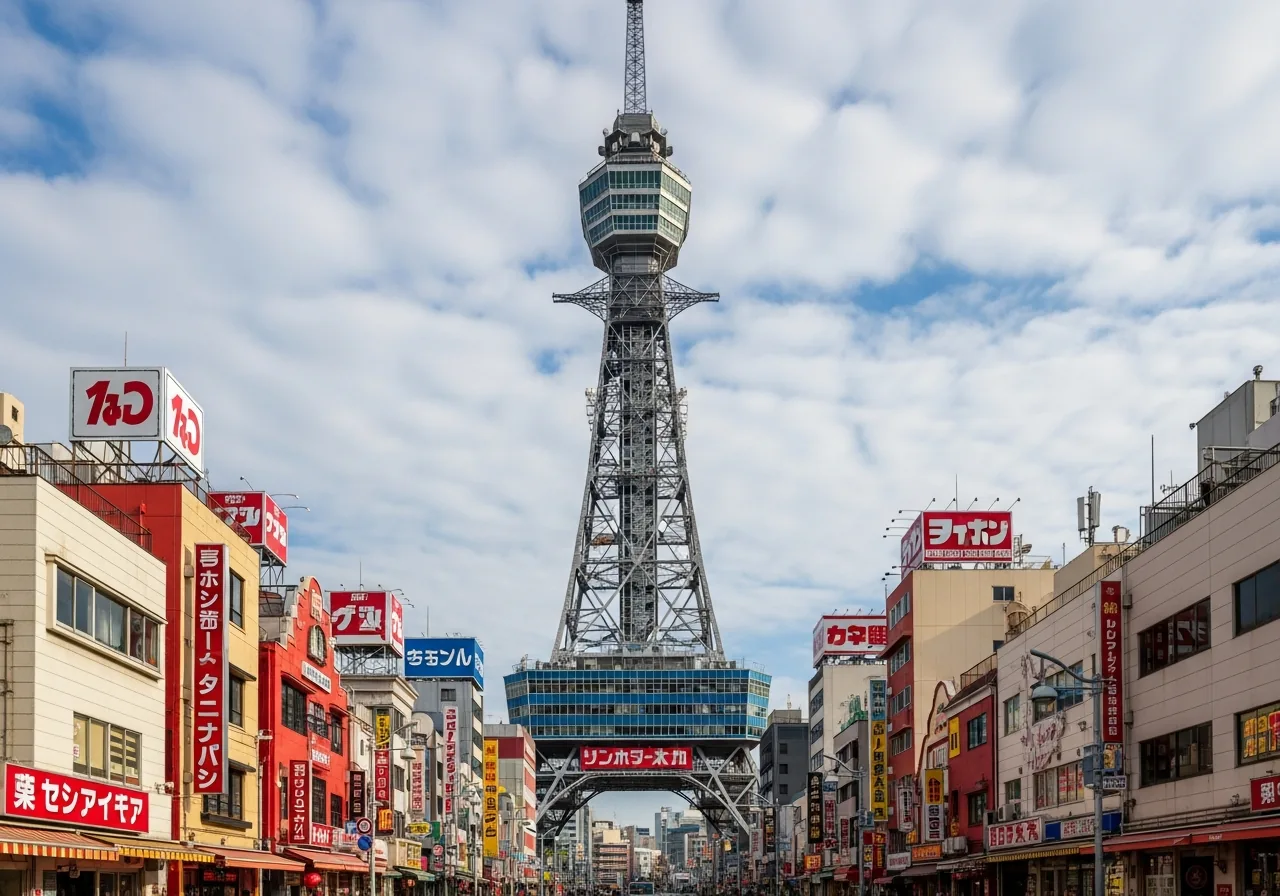
Shinsekai has always been Osaka’s most unfiltered neighbourhood — no polish, no pretence, just neon signs, deep-fried everything, and a tower that has watched over it all for over a century. Tsutenkaku (通天閣) is that tower, and it is the reason most people make the trip south from Dotonbori in the first place.
First built in 1912 as part of the futuristic Luna Park development — modelled after Paris’s Eiffel Tower and Arc de Triomphe — the original tower was dismantled during World War II for its steel, and the current structure was reconstructed in 1956, becoming a symbol of Osaka’s post-war recovery. Standing 103 metres tall, it has since been designated as a Registered Tangible Cultural Property of Japan.
But Tsutenkaku is only the beginning. The streets around it — the surrounding Shinsekai (“New World”) district was developed in 1912 as a modern entertainment quarter, divided into northern (Paris-inspired) and southern (New York-inspired) sections — are packed with retro arcades, kushikatsu joints, and a cast of local characters you won’t find anywhere else in the city. If you want to understand the best food in Osaka, this neighbourhood is essential reading.
This guide covers Tsutenkaku itself and the five landmarks immediately around it — everything you need for a half-day in Shinsekai done properly. For a broader look at the city, explore more of Osaka with our full area guide.
1. Tsutenkaku Tower (通天閣)
- 📍 1-18-6 Ebisuhigashi, Naniwa-ku, Osaka 556-0002
- 🕐 10:00 AM – 8:00 PM (last admission 7:30 PM) as of May 2026
- 💰 ¥900 adults (main observatory); ¥500 extra for the outdoor Tenbo Paradise deck
- 🚃 Ebisucho Station (Sakaisuji Line) — 3 min walk; Dobutsuen-mae Station (Midosuji Line) — 6 min walk
- 🗣 English menu: N/A (ticketing is self-service with English signage)
- 🗺 Open in Google Maps
- 📋 Tabelog
- 🌐 Official site
What to do: Main observatory (¥900) + Tenbo Paradise outdoor deck (¥500 extra)
The tower has five above-ground floors, with the main observation deck at 87.5 metres; the 5th floor houses the “Golden Observation Deck,” adorned in gold, along with the famous Billiken statue — a good-luck deity said to bring fortune to those who rub the soles of its feet. For shorter queues and a calmer experience, aim for 9:00–10:30 AM, or come after 6:00 PM when the daytime crowds thin and the city lights begin to glow.
Advance tickets only bypass the ticket purchase line — not the elevator queue, which is the primary bottleneck. The vintage elevator system can transport just 18 passengers at a time, creating inevitable waits during busy periods. Book online, go early or go late.
The top two bands of colour on the tower are also used to give the next day’s weather forecast, and the clock on the east side of the tower is said to be the biggest in Japan. Worth knowing before you leave — look up on your way out.
2. Billiken Shrine (ビリケン神社)
- 📍 Inside Tsutenkaku Tower, 5F — 1-18-6 Ebisuhigashi, Naniwa-ku, Osaka 556-0002
- 🕐 10:00 AM – 8:00 PM (same as tower) as of May 2026
- 💰 Included with tower admission (¥900)
- 🚃 Ebisucho Station (Sakaisuji Line) — 3 min walk
- 🗺 Open in Google Maps
- 📋 Tabelog
What to do: Rub Billiken’s feet for good luck (free with tower entry)
The Billiken statue at Tsutenkaku — a good-luck charm adopted from America in 1912 — has become an iconic symbol, with visitors rubbing its feet for good fortune. The original tower was built in July 1912 as a symbol of Luna Park, and was made to look like the Eiffel Tower was on top of the Arc de Triomphe — Billiken arrived with it, and has been Shinsekai’s mascot ever since. You’ll see his grinning face on everything from manhole covers to kushikatsu menus across the neighbourhood.
3. Janjan Yokocho (じゃんじゃん横丁)
- 📍 Ebisuhigashi, Naniwa-ku, Osaka (covered arcade running south from Shinsekai toward Spa World)
- 🕐 Individual shops vary; most active 11:00 AM – 10:00 PM as of May 2026
- 💰 Kushikatsu from ¥100–¥200 per skewer; budget ¥1,000–¥2,500 per person with drinks
- 🚃 Dobutsuen-mae Station (Midosuji/Sakaisuji Line) — 5 min walk
- 🗺 Open in Google Maps
- 📋 Tabelog
What to order: Kushikatsu skewers (¥100–¥200 each)
Janjan Yokocho is a covered shopping arcade running between Spa World in the south and the main Shinsekai area. The street was named “janjan” after the sound of the shamisen, a stringed instrument that girls once played here to lure customers into bars. Today, the arcade features bargain clothing stores, pinball parlours, souvenir shops, and a dense run of cheap eateries. About 50 stores line a 130-metre stretch from north to south. The golden rule at every kushikatsu counter: no double-dipping in the communal sauce. Ever.
4. Tennoji Zoo (天王寺動物園)
- 📍 1-108 Chausuyama-cho, Tennoji-ku, Osaka 543-0063
- 🕐 9:30 AM – 5:00 PM (last entry 4:00 PM); closed Mondays as of May 2026
- 💰 ¥500 adults; free for children under 12
- 🚃 Tennoji Station (JR/Osaka Metro) — 5 min walk; Dobutsuen-mae Station — 8 min walk
- 🗺 Open in Google Maps
- 📋 Tabelog
- 🌐 Official site
What to see: African Savanna zone — giraffes, lions, and hippos
Opened in 1915, the historic zoo celebrated its 110th anniversary on January 1, 2025. At ¥500 for adults, it is one of the best-value half-hours in southern Osaka — and a natural add-on after the tower if you have kids in tow or simply want to decompress from Shinsekai’s sensory overload. From the Tsutenkaku observation deck, you can already see Tennoji Park and Tennoji Zoo spread out below.
5. Spa World (スパワールド)
- 📍 3-4-24 Ebisuhigashi, Naniwa-ku, Osaka 556-0002
- 🕐 10:00 AM – 8:45 AM next day (effectively 24 hours, with a brief cleaning break) as of May 2026
- 💰 ¥1,000–¥1,500 adults depending on time of day; additional charges for some zones
- 🚃 Dobutsuen-mae Station (Midosuji/Sakaisuji Line) — 3 min walk
- 🗺 Open in Google Maps
- 📋 Tabelog
- 🌐 Official site
What to do: Zone bathing (European or Asian floors, rotated by gender monthly)
A large spa and resort offering a diverse array of baths from around the world, Spa World provides a relaxing experience for travelers seeking rejuvenation after a day of sightseeing. The facility features a rooftop spa with striking views over the city. It sits at the southern end of Janjan Yokocho, so the logical move is kushikatsu first, then a long soak. A new zone on the 3rd floor opened on April 29, 2026, serving as a kids’ space for families by day and a board game lounge for adults at night.
6. Tsutenkaku Hondori Shopping Street (通天閣本通商店街)
- 📍 Ebisuhigashi, Naniwa-ku, Osaka (the main pedestrian approach to Tsutenkaku from the north)
- 🕐 Most shops open 10:00 AM – 8:00 PM as of May 2026
- 💰 Free to walk; souvenirs from ¥500; snacks from ¥200
- 🚃 Ebisucho Station (Sakaisuji Line) — 3 min walk
- 🗺 Open in Google Maps
- 📋 Tabelog
What to pick up: Billiken-themed goods, Osaka snacks, retro tin signs (¥500–¥2,000)
Other eye-catching landmarks along this street include a massive octopus sign and a giant statue of Billiken, the “God of Good Luck and Prosperity” — many of Shinsekai’s most iconic sights come together here. This is the street you walk down to reach the tower from Ebisucho Station, and it sets the tone perfectly: loud, colourful, and completely uninterested in being tasteful. Lean into it. The MICHI Osaka travel guide has more on navigating the city’s best shopping streets.
How to Visit
Shinsekai and Tsutenkaku are best done as a half-day, ideally starting around 10:00 AM or after 5:00 PM. Here’s how to approach it:
- Getting there: Take the Sakaisuji Subway Line to Ebisucho Station — it’s a 3-minute walk from there. Alternatively, the Midosuji Subway Line to Dobutsuen-mae Station is a 6-minute walk.
- Book ahead for the tower: To avoid waiting in line, reserve your entry time online in advance. Same-day online booking is available until 6:30 PM.
- Elevator reality check: Most visits take 1–1.5 hours — enough time for the main observatory, Billiken, and a relaxed look at the skyline. If you add Tenbo Paradise, the Tower Slider, and time in Waku Waku Land, you can easily stretch the visit to 2–2.5 hours.
- Kushikatsu rule: Every restaurant on Janjan Yokocho enforces a strict no-double-dipping policy in the communal sauce. Dip once, eat, move on. It’s not negotiable.
- Weather forecast: The top two bands of colour on the tower are used to give the next day’s weather forecast — blue means rain, yellow means sun. Check it on your way out.
- Combine with Tennoji: Tennoji Zoo, Tennoji Park, and the Abeno Harukas skyscraper are all within a 10-minute walk south. A full day here is very doable.
FAQ
Q: How much does it cost to visit Tsutenkaku Tower?
A: Adult admission is ¥900, with discounts for children. If you pay an extra ¥500, you can go up to the open-air observatory deck, Tenbo Paradise. Budget ¥900–¥1,400 per adult depending on which floors you want to access.
Q: Is there an English menu or English signage at Tsutenkaku?
A: Yes. The tower’s ticketing, floor maps, and exhibit panels are all available in English. Most souvenir shops and the Waku Waku Land basement area have English-language signage. Kushikatsu restaurants on Janjan Yokocho typically have picture menus — pointing works fine.
Q: When is the best time to visit Tsutenkaku and Shinsekai?
A: Aim for 9:00–10:30 AM for shorter queues and a calmer experience, or come after 6:00 PM when the daytime crowds thin and the city lights begin to glow. Weekends and Japanese public holidays get very busy between noon and 5:00 PM — avoid that window if you can. Shinsekai is particularly atmospheric after dark when the neon signs light up the narrow streets.
Q: Is Shinsekai safe to visit?
A: Yes. The area thrived until the 1960s but fell into decline, developing a rough reputation. In recent decades, Shinsekai has experienced a renaissance as visitors seek its retro Showa-era atmosphere and authentic local food culture. It’s busy, lively, and perfectly safe for solo travellers and families alike.
Q: How long should I spend in Shinsekai?
A: Two to three hours covers Tsutenkaku, a walk through Janjan Yokocho, and a kushikatsu lunch. Add Tennoji Zoo and Spa World and you have a full day.
Information is accurate as of May 2026. We recommend checking Google Maps for the latest hours and prices before visiting.