Last updated: July 19, 2026
This article reflects information available at the time of writing. Check Google Maps for the latest hours and availability.
Introduction
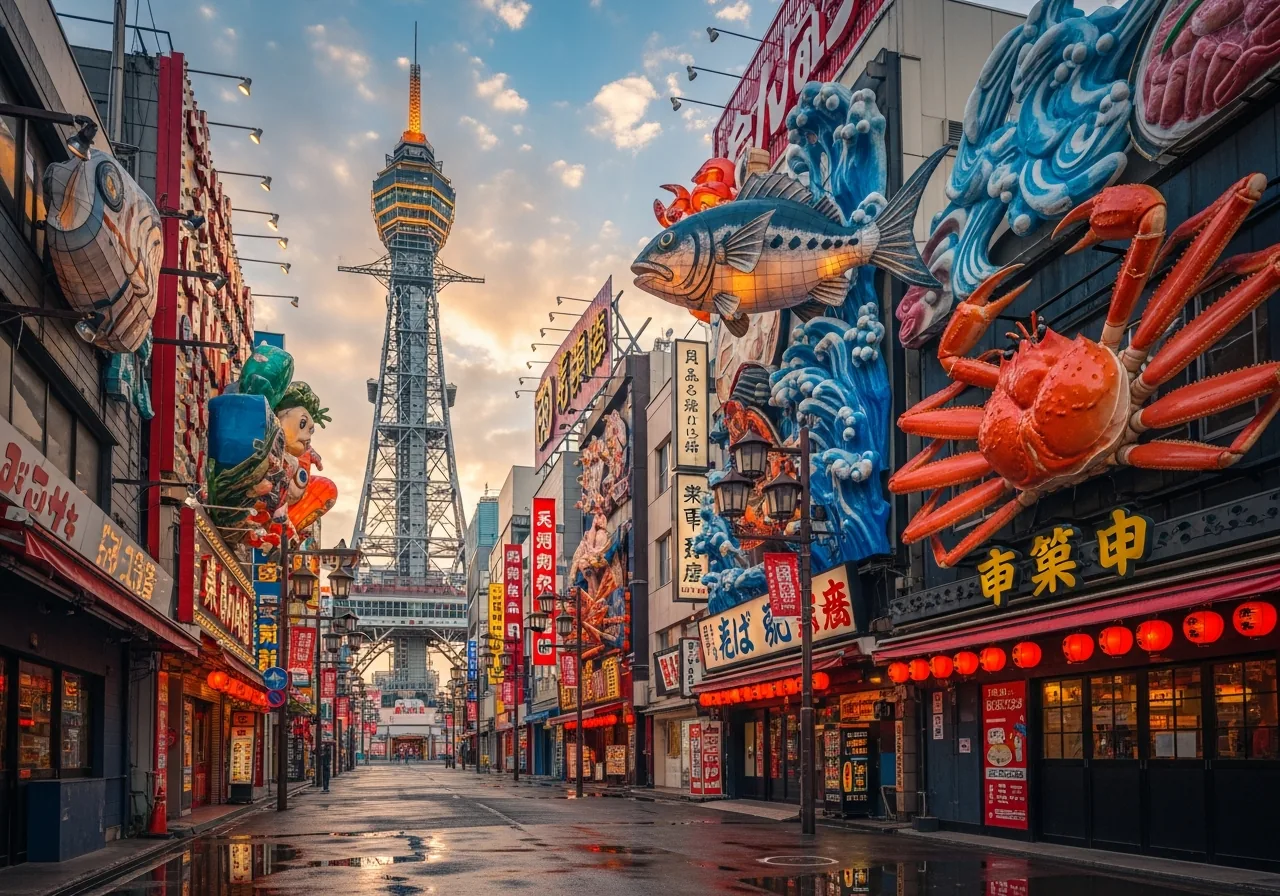
Shinsekai (新世界) translates as “New World,” and the name was meant seriously. When the district was laid out in 1912 following the success of the 1903 National Industrial Exposition, planners split it in two: the northern half modelled on Paris, the southern half on Coney Island. Paris was chosen as the model for Shinsekai’s northern half, while the southern portion was built to imitate Coney Island in New York — and Tsutenkaku Tower was constructed in 1912 after Paris’ Eiffel Tower. The ambition was enormous. The execution was spectacular, briefly.
Then came the war, the postwar poverty, and decades of neglect. By the 1970s and 80s, Shinsekai had a reputation as one of Osaka’s roughest pockets — cheap doss houses, gambling dens, and a population that the rest of the city quietly preferred to ignore. The neighborhood, once known for its poor safety, has now transformed into a popular spot bustling with tourists. That transformation is real, but it hasn’t been sanitised into blandness. The neon still flickers in primary colours. The kushikatsu counters still smell of hot oil and Worcestershire sauce. The pachinko machines still clatter.
What you get today is a neighbourhood that has pulled off a genuine comeback without losing its edge. Shinsekai is anchored by Tsutenkaku Tower and a grid of snack bars, arcades, and casual counters that feel both time capsule and living neighbourhood. It’s compact — modern Shinsekai stretches from Dobutsuen-mae station to the current tower, a compact area you can walk in twenty minutes, though that defeats the point. Slow down. Eat something fried. Rub the Billiken’s feet. This guide covers the spots worth your time — and if you want to go deeper, check out the best food in Osaka for the full picture beyond Shinsekai’s skewers.
1. Tsutenkaku Tower (通天閣)
- 📍 1-18-6 Ebisuhigashi, Naniwa-ku, Osaka 556-0002
- 🕐 Daily 10:00–20:00 (last admission 19:30) (as of May 2026)
- 💰 ¥1,000 observation deck admission (main floor); Tower Slider extra ¥1,000
- 🚃 Ebisucho Station (Osaka Metro Sakaisuji Line) — 3 min walk; Shin-Imamiya Station (JR Osaka Loop Line) — 5 min walk
- 🗺 Open in Google Maps
- 📋 Tabelog
- 🌐 Official site
The original tower was scrapped during WWII and reconstructed in 1956; the current tower stands 103 metres high, with the main observatory at 91 metres. The views are good, but the real draw is the Billiken statue on the observation floor — the official character of Tsutenkaku, considered a god of happiness, and it’s said that rubbing the soles of its feet will make your wishes come true. For the thrill-seekers: the Tower Slider is a 60-metre-long tube slide that takes you from the third floor above ground all the way down to the first basement level. Skip the slide if queues are long; the observation deck alone is worth the ¥1,000.
2. Janjan Yokocho (ジャンジャン横丁)
- 📍 Nanyodori, Ebisuhigashi, Naniwa-ku, Osaka 556-0002 (runs south from Tsutenkaku toward Dobutsuen-mae Station)
- 🕐 Individual shops vary; most open from around 11:00, many run until 22:00–23:00 (as of May 2026)
- 💰 ¥500–¥2,000 per person depending on how many stops you make
- 🚃 Dobutsuen-mae Station (Osaka Metro) — 2 min walk
- 🗺 Open in Google Maps
- 📋 Tabelog
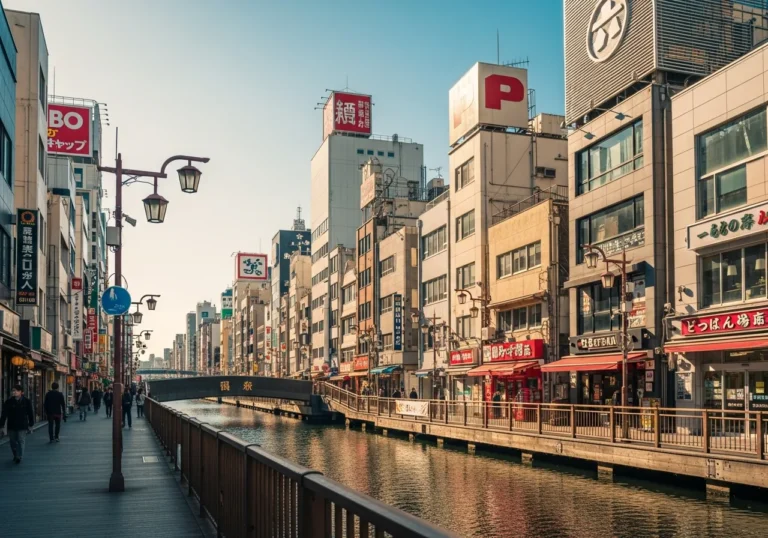
The alley is commonly known as Janjan Yokocho, after the sound of shamisen and taiko that could be heard from the street after the end of WW2. At 2.5 metres wide, the 180-metre-long alley is home to a compact but eclectic line-up of little shops. The arcade is flanked on both sides by a variety of popular stores, including kushikatsu shops, yakiniku, sushi, udon, and izakaya standing bars. Come here to bar-hop rather than commit to one restaurant — order a skewer or two at one counter, a beer at the next, and keep moving. The atmosphere after 18:00 on a weekday beats any weekend crowd.
3. Kushikatsu Daruma — Shinsekai Honten (串かつだるま 新世界本店)
- 📍 2-3-9 Ebisuhigashi, Naniwa-ku, Osaka 556-0002
- 🕐 Daily 11:00–22:30 (as of May 2026)
- 💰 ¥1,500–¥3,000 per person (food only) / ¥2,000–¥4,000 (with drinks)
- 🚃 Ebisucho Station (Osaka Metro Sakaisuji Line) — 3 min walk
- 🗣 English menu: Yes
- 🗺 Open in Google Maps
- 📋 Tabelog
- 🌐 Official site
What to order: Beef kushikatsu (¥220 per skewer), doteyaki beef tendon (¥550)
The Kushikatsu Daruma restaurant chain was founded in Shinsekai in 1929. It’s the most famous kushikatsu name in the city, and the Shinsekai Honten is the one to visit — the original location, with the comic chef mascot plastered across the facade. The golden rule: the skewers are dipped in a sauce placed in small containers shared by all customers — it is strictly forbidden to dip your kushikatsu a second time after you’ve already bitten into it. Use the free cabbage to scoop extra sauce. Expect queues in the evening; it’s much quieter during the day. Be aware that appetizers served at the start are charged — if you don’t want them, refuse them before eating.
4. Yaekatsu (八重勝)
- 📍 3-4-13 Ebisuhigashi, Naniwa-ku, Osaka 556-0002 (inside Janjan Yokocho)
- 🕐 Thu–Tue 10:30–20:30; closed Wednesday (as of May 2026)
- 💰 ¥1,000–¥2,500 per person (food only)
- 🚃 Dobutsuen-mae Station (Osaka Metro) — 3 min walk
- 🗺 Open in Google Maps
- 📋 Tabelog
What to order: Onion kushikatsu (¥180), pork belly skewer (¥200)
If Daruma is the famous one, Yaekatsu is the one locals actually argue about. It sits deep inside Janjan Yokocho, and the queue at lunchtime tells you everything. The kushikatsu at Yaekatsu has a perfect harmony of crispy batter and juicy ingredients — especially the onion kushikatsu, whose sweetness and texture make it a must-order. The counter seats maybe twenty people; turnover is fast. Get there before noon or after 14:00 to avoid the worst of the wait.
5. Spa World (スパワールド)
- 📍 3-4-24 Ebisuhigashi, Naniwa-ku, Osaka 556-0002
- 🕐 Daily 10:00–08:45 next day (effectively 24 hours with a brief cleaning break) (as of May 2026)
- 💰 ¥1,500–¥2,800 per person (entry fee varies by time of day and zone)
- 🚃 Dobutsuen-mae Station (Osaka Metro) — 3 min walk; Shin-Imamiya Station (JR) — 5 min walk
- 🗣 English menu: Yes (multilingual signage throughout)
- 🗺 Open in Google Maps
- 📋 Tabelog
- 🌐 Official site
Spa World is an onsen-themed water park offering different types of bath across 8 floors, with baths in various Western and Oriental styles, open all night long. The concept sounds gimmicky — Roman baths next to Balinese pools next to Finnish saunas — but it works, and it works especially well at midnight when the tourist crowds have thinned out. Budget two to three hours minimum. Tattoos are generally not permitted in the main bathing areas; check the official site for the current policy before you go.
6. Smartball New Star (スマートボール ニュースター)
- 📍 2-5-16 Ebisuhigashi, Naniwa-ku, Osaka 556-0002
- 🕐 Daily approx. 11:00–22:00 (as of May 2026)
- 💰 ¥100 per ball set (cash only)
- 🚃 Ebisucho Station (Osaka Metro Sakaisuji Line) — 3 min walk
- 🗺 Open in Google Maps
- 📋 Tabelog
Smartball is a pre-pachinko pinball game that was popular across Japan in the 1950s and 60s — and Shinsekai is one of the last places on earth where you can still play it. New Star is the most atmospheric of the remaining parlours: wooden machines, fluorescent lighting, elderly regulars who’ve been coming here for forty years. You’re not here to win; you’re here because this is what Shinsekai actually is. Spend ¥500, lose gracefully, and feel the Showa era close around you.
7. Tennoji Zoo (天王寺動物園)
- 📍 1-108 Chausuyama-cho, Tennoji-ku, Osaka 543-0063
- 🕐 Tue–Sun 09:30–17:00 (last entry 16:00); closed Monday (open on public holidays, closed following Tuesday) (as of May 2026)
- 💰 ¥500 adults / ¥200 children (entry fee)
- 🚃 Dobutsuen-mae Station (Osaka Metro) — 3 min walk; Tennoji Station (JR/Osaka Metro) — 5 min walk
- 🗺 Open in Google Maps
- 📋 Tabelog
- 🌐 Official site
One of Japan’s oldest zoos, opened in 1915, and still one of its best-value afternoons. The grounds border Shinsekai to the south and connect directly to Tennoji Park, which underwent a major renovation in 2019 and now has a genuinely pleasant café terrace facing the park lawn. The zoo itself houses around 180 species across naturalistic enclosures — the African savanna section is the standout. It’s a good half-day if you’re travelling with kids, or a quiet counterpoint to Shinsekai’s sensory overload if you’re not.
8. Shinsekai Market (新世界市場)
- 📍 Ebisuhigashi, Naniwa-ku, Osaka 556-0002 (covered arcade running west from Tsutenkaku)
- 🕐 Individual shops vary; most open 10:00–18:00, some close on weekdays (as of May 2026)
- 💰 Free to walk through; snacks from ¥200
- 🚃 Ebisucho Station (Osaka Metro Sakaisuji Line) — 2 min walk
- 🗺 Open in Google Maps
- 📋 Tabelog
At one time, after post-war reconstruction, it was a bustling shopping centre with about 50 stores. Due to Osaka’s ageing population and other problems, it gradually became a shuttered street. Today it’s somewhere between those two states — a covered arcade with a mix of old-school butchers, pickle shops, and a handful of newer food stalls that have moved in to fill the gaps. If south Shinsekai and Janjan Yokocho are famous Osaka landmarks, the north side and Shinsekai Market are cosy streets with a human touch — the variety of stores with attractions that deviate from standard tourist fare is a great way to get a feel for the breadth of Shinsekai’s past and present. Come here to explore more of Osaka beyond the obvious tourist circuit.
How to Order
Shinsekai runs on cash. A few of the larger kushikatsu chains now accept IC cards and credit cards, but the smaller counters in Janjan Yokocho and the market are cash-only. Bring ¥5,000–¥10,000 in small notes.
For kushikatsu specifically: you’ll typically sit at a counter and order skewers one or two at a time. Each skewer is priced individually — usually ¥150–¥300 depending on the ingredient. The communal dipping sauce is shared; the no-double-dipping rule is enforced everywhere and taken seriously. Use the free cabbage leaves to scoop extra sauce onto your skewer after the first dip. Doteyaki (beef tendon simmered in miso) is the other dish to order — it’s usually available as a side at most kushikatsu counters and costs around ¥400–¥600.
At Spa World, pay at the entrance and collect a wristband that doubles as a locker key. Towels are available to rent inside. The floor rotation between men’s and women’s zones changes monthly — check the official site before you go so you know which themed zone you’ll be getting.
For Tsutenkaku, buying tickets online in advance saves you the queue, especially on weekends and public holidays. The Tower Slider requires a separate ticket purchased at the tower itself.
FAQ
Q: Is Shinsekai expensive?
A: No. It’s one of Osaka’s most affordable neighbourhoods for eating and drinking. A full kushikatsu meal with a beer runs ¥1,500–¥2,500 per person. Tsutenkaku admission is ¥1,000. Spa World entry is ¥1,500–¥2,800 depending on the time of day. Budget ¥5,000 for a full afternoon and evening including food, drinks, and one paid attraction.
Q: Do shops in Shinsekai have English menus?
A: The major kushikatsu chains — Daruma in particular — have English menus and multilingual staff at the Shinsekai locations. Smaller counters in Janjan Yokocho may not, but most have picture menus or plastic food displays outside. Pointing works fine. Spa World has multilingual signage throughout.
Q: When is the best time to visit?
A: At dusk, when Tsutenkaku Tower and the restaurant and store signs light up, is the recommended time to visit the district. Weekday evenings from around 17:00 are the sweet spot — lively enough to feel the energy, but without the weekend tourist crush. If you want to eat at Yaekatsu without a long wait, arrive at 10:30 when it opens or after 14:00 on a weekday. Avoid Sunday afternoons in peak tourist season (March–May, October–November) unless you enjoy queuing.
For more on what to see and eat across the city, the MICHI Osaka travel guide has you covered.
Information is accurate as of May 2026. We recommend checking Google Maps for the latest hours and prices before visiting.