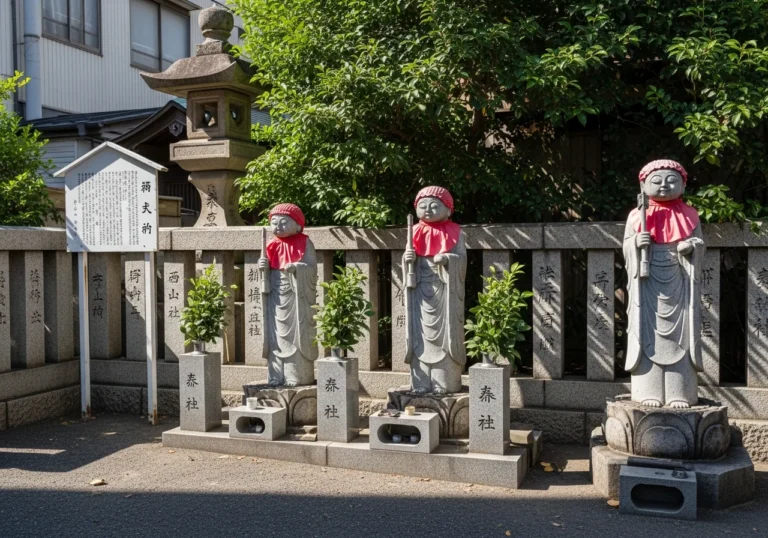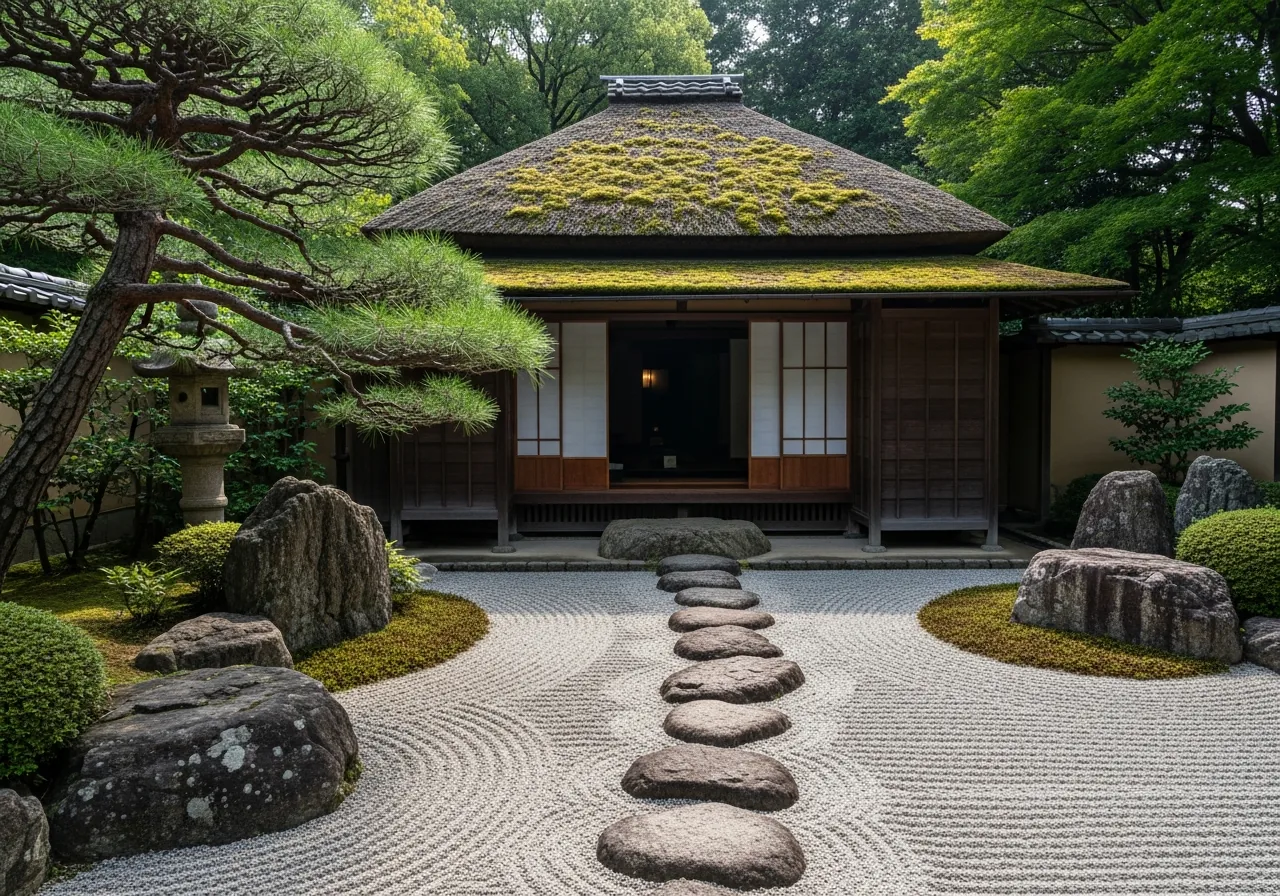
Looking for the story of Sen no Rikyu in Osaka? This guide covers the life, philosophy, and lasting legacy of Japan’s greatest tea master — a merchant’s son from Sakai who rewrote the rules of an art form, advised two warlords, and died for it. Follow his trail across Osaka Prefecture, from his birthplace to the sites where his ideas still breathe.
MICHI’s Pick — Selected by our Osaka-based team, based on places we’ve visited and on research using Tabelog and Google Maps ratings. In Japan, a Tabelog score of 3.4+ is genuinely high — Japanese reviewers are famously strict, and most locals consider anything above 3.4 a place worth a detour. We feature venues meeting at least one of: Tabelog 3.4+, Google Maps 4.3+, or 100+ reviews — the kind of spots locals quietly trust.
Tabelog and Google Maps scores are accurate as of the time of writing.
Who Was Sen no Rikyu?
Sen no Rikyu (千利休; 1522–1591) was a Japanese tea master considered the most important influence on the Japanese tea ceremony, particularly the tradition of wabi-cha. That sentence barely scratches the surface. He was also a political operator, a cultural revolutionary, and ultimately a man whose influence grew so large that the most powerful ruler in Japan ordered him to die for it.
Born into a renowned merchant family in Sakai, in present-day Osaka Prefecture, in 1522, he received an education fit for an heir and began training in the tea ceremony to acquire grace from the age of 17. The port city of Sakai flourished through trade with Ming Dynasty China and with Spain and Portugal from the mid-sixteenth century — a bustling city that was a setting for exchange among merchants and equal-footed negotiations with samurai.
Sakai, like Venice, was a largely autonomous city run by merchants, and a cultural beacon on a par with Kyoto. Merchants made their fortunes in international trade, and many were accomplished tea masters. Rikyu grew up inside that world. He gained recognition after hosting a tea party at just 23, and was known among his peers as a tea master with a unique aesthetic sense.
The Philosophy: Wabi-Cha
As the most influential tea master of all time, Rikyu transformed the Japanese tea ceremony from an ostentatious display of wealth into a spiritual practice embodying the principles of harmony, respect, purity, and tranquility. The vehicle for that transformation was wabi-cha — a stripped-back, deliberately humble approach to the ceremony.
Though not the inventor of the philosophy of wabi-sabi, which finds beauty in the very simple, Rikyu is among those most responsible for popularizing it, developing it, and incorporating it into tea ceremony. He developed a new form of tea ceremony using simple instruments and settings. This, along with his other beliefs and teachings, came to be known as soan-cha (the grass-thatched hermitage style of chanoyu), or, more generally, wabi-cha.
Historical documents from Rikyu’s time reveal how he strived to create a unique interpretation for tea, including everything from the bowls and other implements to the tiny tea room just one and a half tatami mats (less than 3 square meters) in size he created to pursue the art. In a space this confined, where the guest can hear the host’s heartbeat, we sense the philosophy behind Rikyu’s tea practice, emphasizing spiritual communion.
He also developed many tea utensils, including bamboo flower containers, tea scoops, and lid rests, and used everyday objects in tea ceremony in novel ways. Raku ware chawan (tea bowls) were originated through his collaboration with a tile-maker named Raku Chojiro. Rikyu preferred simple, rustic, locally-made items to the expensive, Chinese-made items that were fashionable at the time.
This was a radical act. In a culture where tea gatherings were essentially competitive displays of imported luxury goods, Rikyu insisted that a rough clay bowl and a thatched hut were more beautiful than gold. For more on how this aesthetic still shapes the best food in Osaka — from the presentation of kaiseki to the simplicity of a perfect bowl of dashi — the connection runs deeper than most visitors realise.
Power, Politics, and Two Warlords
In 1579, at the age of 58, Rikyu became a tea master for Oda Nobunaga and, following Nobunaga’s death in 1582, he was a tea master for Toyotomi Hideyoshi. His relationship with Hideyoshi quickly deepened, and he entered Hideyoshi’s circle of confidants, effectively becoming the most influential figure in the world of chanoyu.
As Hideyoshi’s close friend and advisor, Rikyu’s political rise accelerated. In addition to his official functions in art and culture, Rikyu was important to Hideyoshi’s diplomatic efforts. Rikyu communicated with influential figures, enabled political meetings, and may even have been left in charge of Osaka Castle — built on Hideyoshi’s orders — while his master was away.
The tension between the two men is one of Japanese history’s great dramas. While Hideyoshi enjoyed the tea ceremony, he preferred golden, lavish settings, which conflicted with Rikyu’s minimalist ideals. Despite their differences, Rikyu remained Hideyoshi’s most trusted tea master. The Golden Tea Room at Osaka Castle — a replica of which you can still see on the third floor of the castle keep today — captures that contradiction perfectly. It was constructed in contrast to the rustic aesthetics codified under his tea master Sen no Rikyu, although it is speculated that Rikyu might have helped in the design. The room’s opulence was highly unusual and may have also been against wabi-sabi norms.
The Fall
As an unofficial advisor, Rikyu’s position was also precarious. In 1591, he was suddenly banished back to Sakai from Kyoto, which was then the formal capital of Japan, only to be quickly ordered to return and then perform ritual suicide. The exact cause is still unknown, but it is likely that some combination of personal disagreements and political developments caused Hideyoshi’s abrupt change of attitude.
Some suggest that Hideyoshi felt threatened by Rikyu’s growing influence. Others point to the tea master’s alleged arrogance in placing a wooden statue of himself above a gateway where Hideyoshi would have to walk under it. Whatever the reason, Rikyu performed the tea ceremony one last time, and then took his own life. He was 69.
The Legacy
Even after his tragic end, Sen no Rikyu’s influence shaped generations of tea masters and schools of tea: the Urasenke, Omotesenke, and Mushakouji-senke tea schools all trace their origins to Rikyu’s teachings. Since then, 400 years ago, tea ceremony practice has changed very little in terms of the core concepts and delivery. That is an extraordinary statement about one person’s impact on a living art form.
A native of Sakai, Osaka Prefecture, his fascinating story inspired a novel and several films, but his life can be best discovered here, in his hometown. The 1989 film Rikyu, directed by Hiroshi Teshigahara, remains the most powerful screen treatment of his story.
1. Sakai Risho no Mori — Sen no Rikyu Chanoyu Museum (堺 利晶の杜)
📍 2-1-1 Shukuincho-nishi, Sakai-ku, Sakai City, Osaka Prefecture
🕐 Museum 9:00–18:00 (last entry 17:30); Tea Ceremony Experience 10:00–17:00; closed 3rd Tuesday of each month and New Year holidays (as of May 2026)
💰 Museum: ¥300 adults / Tea ceremony experience (Ryurei): ¥500 adults
🚃 Shukuin Station (Hankai Line) (1 min walk) / Sakai Station (Nankai Main Line) (10 min walk)
🗣 English menu: English-language leaflets and multilingual tablet commentary available
⭐ Rating: Google 4.3+ (as of writing)
🗺 Open in Google Maps
📋 Tabelog
🌐 Official site
What to order: Ryurei-style matcha and wagashi (¥500)
This is the single best place in Osaka Prefecture to understand Rikyu. This cultural and tourist facility highlights the lives and legacies of Sen no Rikyu and poet Yosano Akiko, offering visitors a chance to explore Sakai’s rich history and culture through these two prominent figures. The grounds also feature “Sakai Tai-an,” a faithful reconstruction of the tea room “Tai-an” as originally built by Sen no Rikyu. Another exhibit shows two tea rooms: one from Rikyu’s youth and one built later in his life at Jurakudai in Kyoto — you might notice differences in the alcove size and the pillars used. Rikyu established the wabi-cha style — simple and spiritual — which is beautifully reflected in these displays. Tablets provide multilingual commentary support for the exhibitions in Japanese, English, Korean and Chinese.
2. Sen no Rikyu Residence Ruins (千利休屋敷跡)
📍 1-17-1 Shukuinmachi-nishi, Sakai-ku, Sakai City, Osaka Prefecture
🕐 Open year-round (outdoor site) (as of May 2026)
💰 Free
🚃 Shukuin Station (Hankai Line) (1 min walk)
⭐ Rating: Google 4.2 (as of writing)
🗺 Open in Google Maps
📋 Tabelog
What to order: Free to visit — no admission
Sen no Rikyu was born in Sakai and brought great success to the wabi-cha style of Japanese tea ceremony. He wielded considerable power as the greatest tea master in the land, and is still known as the “Tea Saint” and founder of the Senke tea ceremony houses. The site of his home includes the famous camellia well, and a well roof made from the Daitokuji temple gate, a place with a strong connection to Rikyu. After restoration work in 2015, it is now possible to go inside the site. It sits directly adjacent to the Sakai Risho no Mori museum — visit both on the same morning.
3. Sakai City Tea House Shinan (堺市茶室 椎庵)
📍 Daisen Park, Sakai-ku, Sakai City, Osaka Prefecture
🕐 9:30–16:30 (chair seating from 10:00–16:00) (as of May 2026)
💰 ¥500 per person (standing/chair seating); garden free
🚃 Mozu Station (JR Hanwa Line) (approx. 500m walk)
⭐ Rating: Google 4.3 (as of writing)
🗺 Open in Google Maps
📋 Tabelog
What to order: Matcha and seasonal wagashi (¥500)
Located in a corner of the lush Daisen Park adjacent to the Emperor Nintoku Tomb (Daisen Kofun), the sukiya-style teahouse was built in 1929 and was designed by Ogi Rodo, a master of sukiya-style construction from the Taisho to Showa periods. Along with the neighboring Oubai-an, it is a registered tangible cultural property of the country. The garden that connects the two teahouses is free to visit and is also home to the former Jodo-ji nine-story pagoda, a nationally designated important cultural property. This is the quietest, most atmospheric place in Sakai to sit with a bowl of matcha and think about what Rikyu was actually after.
4. Honke Kojima (本家小嶋)
📍 Near Shukuinmachi-nishi, Sakai-ku, Sakai City, Osaka Prefecture
🕐 9:00–17:00 (closes when sold out); closed Mondays (as of May 2026)
💰 Keshi mochi set: approx. ¥300–500
🚃 Shukuin Station (Hankai Line) (2 min walk)
⭐ Rating: Google 4.2 (as of writing)
🗺 Open in Google Maps
📋 Tabelog
What to order: Keshi mochi — poppy seed rice cake (¥approx. ¥150–200 per piece)
Sakai, a city where merchant culture thrived, is also known for its many historic confections. Among them is keshi mochi (poppy seed rice cake), a sweet introduced during the Nanban trade with India and said to have been a favourite of Sen no Rikyu. The store “Honke Kojima,” founded in the Muromachi period (1333–1573), is a long-established maker of poppy seed rice cakes. With a secret recipe that has never left the premises, each bite offers the satisfying crunch of poppy seeds and the savoury aroma of the rice cake. Near the museum, you can also find the former site of Rikyu’s home, and this traditional confectioner’s shop which has existed since Rikyu’s time. Buy a small box to eat in the garden next door.
5. Osaka Castle — Golden Tea Room Replica (大阪城 黄金の茶室)
📍 1-1 Osakajo, Chuo-ku, Osaka City, Osaka Prefecture
🕐 9:00–17:00 (last entry 16:30); open year-round (as of May 2026)
💰 ¥600 adults (castle tower admission, includes Golden Tea Room on 3rd floor)
🚃 Osakajokoen Station (JR Loop Line) (5 min walk) / Tanimachi 4-chome Station (Osaka Metro) (8 min walk)
🗣 English menu: Full English audio guide and signage available
⭐ Rating: Google 4.2 (50,000+ reviews) (as of writing)
🗺 Open in Google Maps
📋 Tabelog
🌐 Official site
What to order: Self-guided museum visit (¥600)
The castle Rikyu may have managed in Hideyoshi’s absence is now one of Osaka’s most-visited landmarks. Level 3 houses a full-scale replica of the Golden Tea Room. Hideyoshi was obsessed with gold — he had his entire tea room gold-clad, from the walls, ceiling and pillars to the tea service itself. This was in contrast to the rustic aesthetics codified under his tea master Sen no Rikyu. Standing in front of it, the philosophical gulf between the two men becomes viscerally clear. Also newly opened in 2025, the adjacent Toyotomi Stone Wall Museum exhibits some of the castle’s original stone walls, which were covered up by the Tokugawa when they rebuilt the castle after the 1615 battle. To explore more of Osaka beyond the castle grounds, the Tanimachi and Morinomiya neighbourhoods immediately to the south are worth an afternoon.
6. Nanshoji Temple (南宗寺)
📍 1-2-10 Mikunigaoka, Sakai-ku, Sakai City, Osaka Prefecture
🕐 9:00–17:00 (as of May 2026)
💰 ¥300 adults
🚃 Mikunigaoka Station (Nankai Koya Line) (5 min walk)
⭐ Rating: Google 4.1 (as of writing)
🗺 Open in Google Maps
📋 Tabelog
What to order: Temple grounds admission (¥300)
Rikyu had Zen training at Nanshu temple (Nanshoji), also in Sakai. This would lead him to eventually study at Daitoku temple in Kyoto. The Rinzai Zen training he received here shaped the spiritual core of wabi-cha — the idea that making tea is a form of meditation, not performance. The temple also claims to hold the grave of Tokugawa Ieyasu, though historians debate this. Either way, it is a genuinely atmospheric place, far less crowded than the Sakai Risho no Mori, and the connection to Rikyu’s formation as a thinker is direct. The MICHI Osaka travel guide covers more Sakai day-trip itineraries for visitors wanting to go deeper into this side of the city.
FAQ
Q: What is the best place to learn about Sen no Rikyu in Osaka?
A: The Sakai Risho no Mori (Sakai Plaza of Rikyu and Akiko) in Sakai City is the definitive starting point. It combines a dedicated museum, a reconstruction of Rikyu’s Tai-an tea room, and a hands-on tea ceremony experience — all for ¥300 admission. It is a 30-minute train ride from central Osaka on the Nankai Line.
Q: How many Sen no Rikyu-related sites are in the Osaka area?
A: At least six significant sites are accessible as day trips from central Osaka. They cluster in Sakai City — Rikyu’s birthplace — and include his residence ruins, the Nanshoji temple where he trained, the Sakai Risho no Mori museum, and the Sakai City Tea House Shinan. Osaka Castle in the city centre holds the Golden Tea Room replica, which adds a compelling counterpoint to the Sakai sites.
Q: Do Sakai’s Rikyu-related sites have English support?
A: Yes, better than most historical sites in the Osaka area. The Sakai Risho no Mori offers English-language leaflets and multilingual tablet commentary in English, Korean, and Chinese. Osaka Castle has full English signage and audio guides. Nanshoji and the residence ruins have limited English on-site, but the sites speak for themselves.
Q: What should I order at tea ceremony experiences in Osaka?
A: At the Sakai Risho no Mori, the Ryurei-style experience (¥500) is the most accessible — you sit on chairs rather than kneeling on tatami, which makes it comfortable for most visitors. You receive matcha and a seasonal wagashi sweet. At the Sakai City Tea House Shinan, the same format costs ¥500 and comes with a garden view adjacent to the Emperor Nintoku Tomb. Both are conducted by practitioners of the Omotesenke, Urasenke, or Mushakojisenke schools — the three lineages that descend directly from Rikyu himself.
Last updated: July 19, 2026 · Corrections: [email protected]