Last updated: July 19, 2026
This article reflects information available at the time of writing. Check Google Maps for the latest hours and availability.
Introduction
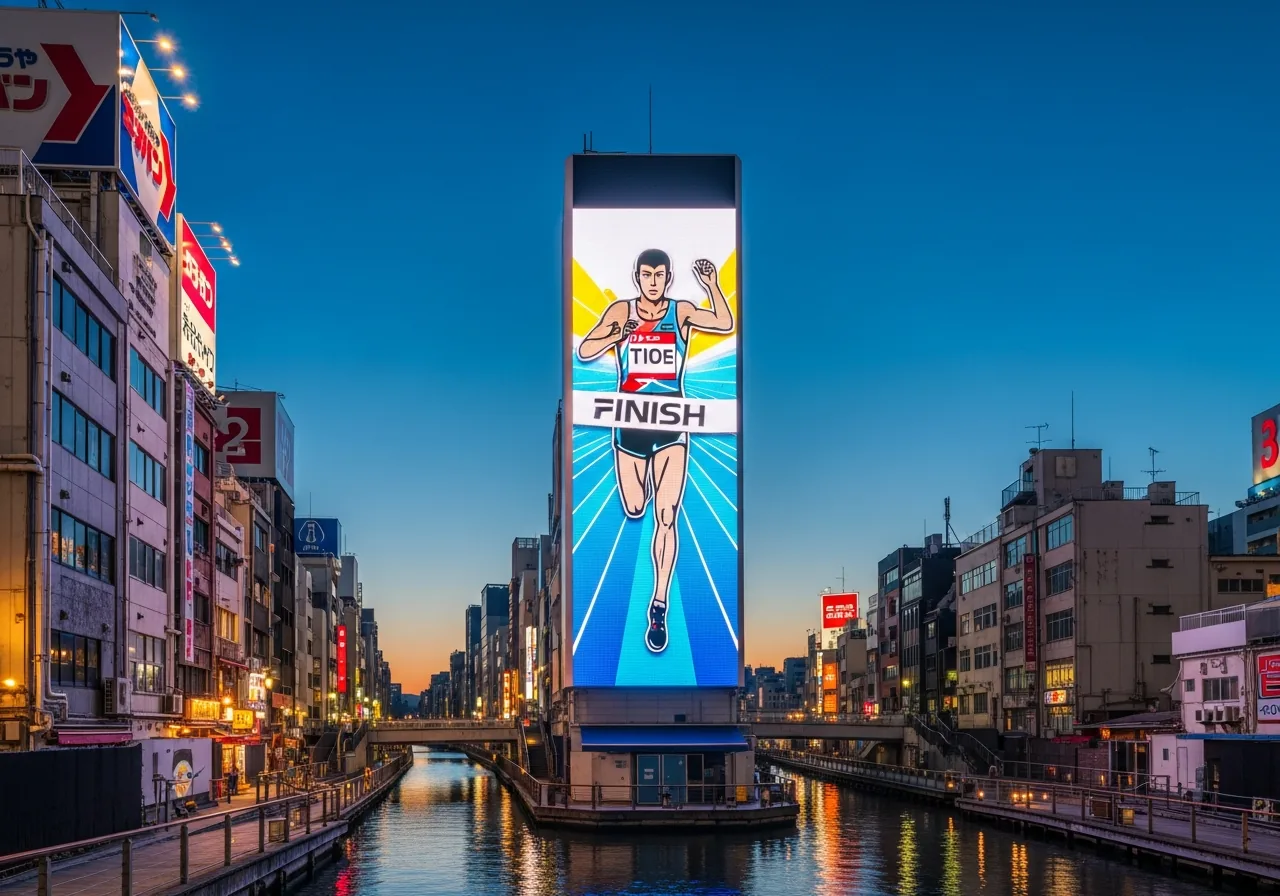
There’s a running man in Dotonbori who has never stopped moving. He’s been frozen mid-sprint above the canal since 1935 — arms raised, chest forward, expression permanently triumphant — and in that time he’s become the single most photographed spot in Osaka. Possibly in all of Japan. Towering above Dotonbori’s canal since 1935, this glowing runner has become one of Japan’s most iconic signs — a symbol of local pride, quirky charm, and Osaka’s larger-than-life energy.
The Glico Sign is not subtle. It’s 20 metres tall, built from roughly 140,000 LED chips, and sits directly above Ebisubashi Bridge at the dead centre of Osaka’s loudest entertainment district. It isn’t just an advert — it’s a cultural landmark, standing above the Dotonbori Canal, surrounded by neon, giant crab signs, and packed izakayas. For visitors, it’s the first thing you want to see. For locals, it’s the backdrop to every celebration the city has ever had.
This guide covers the full history of the sign, the six generations it’s been through, the best spots to photograph it, and everything worth doing in the immediate area once you’ve got your shot. Whether you’re here for the best food in Osaka or just ticking off the city’s essential landmarks, the Glico Sign is your anchor point for an evening in Dotonbori. Come after dark. The sign turns off just before midnight, so don’t leave it too late.
1. The Glico Sign (道頓堀グリコサイン)
- 📍 1-10-4 Dotonbori, Chuo-ku, Osaka (above the Dotonbori Canal, southwest end of Ebisubashi Bridge)
- 🕐 Illuminated from 30 minutes after sunset until midnight (as of May 2026)
- 💰 Free to view
- 🚃 Namba Station, Exit 14 (5 min walk) / Shinsaibashi Station (7 min walk)
- 🗺 Open in Google Maps
📋 Tabelog - 🌐 Official site
The original Glico sign was installed in 1935 by the Ezaki Glico Company, a confectionery brand best known for Pocky. The running man was designed to represent energy and health — two qualities the company claimed were found in their signature caramel candy, which originally contained glycogen from oysters, hence “Glico”.
The first sign stood 33 metres tall — a neon tower featuring the trademark runner and the Glico name, which immediately made it a landmark of Osaka’s Minami district. It was audacious advertising for 1935, and it worked. The sign became so embedded in the city’s identity that Ezaki Glico kept updating it rather than ever taking it down.
Dating back to 1935, the sign has had several overhauls and been altered to celebrate various sporting triumphs through the years — including when Japan hosted the Soccer World Cup and to support the Hanshin Tigers, Osaka’s baseball team. The current sign, recognised as the sixth generation, is the first to use LED technology; all previous versions were neon. This current LED version was installed in 2014. In 2022, Glico updated the logo design at the top of the sign — the only change made to the sixth-generation board so far.
The runner himself has a complicated origin story. The sign shows a runner crossing the finish line with his arms raised in victory, and one popular theory holds that the pose was inspired by Fortunato Catalon, a celebrated track-and-field sprinter from Leyte, Philippines. Ezaki Glico’s official position is that the “Goal-In Mark” has no single real-world model — but the story persists, and it adds a quietly international dimension to what looks like a purely local icon.
The sign is visible all day, but it truly comes alive after sunset. At night, the LED animations reflect off the Dotonbori Canal, creating one of Osaka’s most photogenic scenes. The sign usually turns off a few minutes before midnight, so aim to arrive between 8pm and 11pm for the full effect.
Where to stand for the best photo
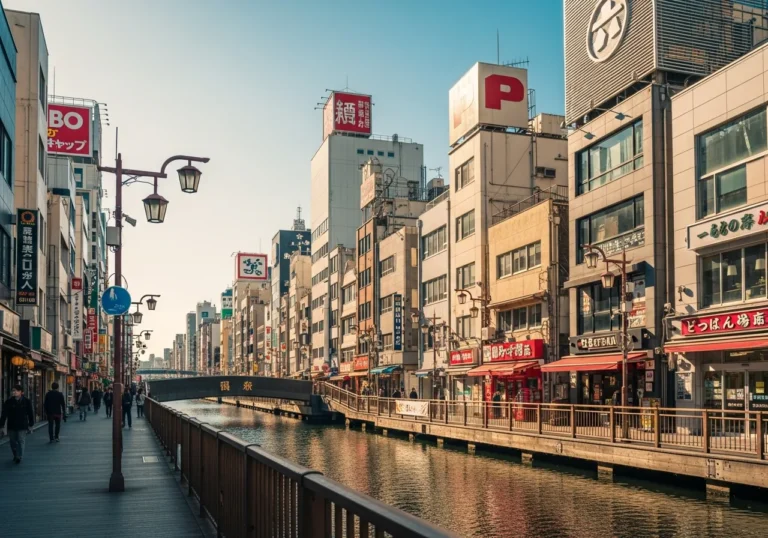
Stand on Ebisubashi Bridge to get a wide angle of the Glico Sign and the lantern lights of Dotonbori. It’s the classic shot, and it’s crowded for good reason — the framing is perfect. If you don’t like crowds, walk down to the canal-level Tombori River Walk, which offers a more peaceful angle and beautiful reflections on the water. Locals and tourists alike pose with their arms raised in victory beneath the sign, mimicking the runner’s pose — it’s become a ritual, and you’ll feel slightly left out if you don’t join in.
2. Ebisubashi Bridge (戎橋)
- 📍 Ebisubashi, Chuo-ku, Osaka (connecting Dotonbori and Shinsaibashisuji)
- 🕐 Open 24 hours
- 💰 Free
- 🚃 Namba Station, Exit 14 (3 min walk)
- 🗺 Open in Google Maps
- 📋 Tabelog
Ebisubashi Bridge, located beside the Glico Man, serves as a popular meeting point and symbol of Osaka’s lively street culture. Originally built to connect with the nearby Ebisu Shrine, it is often crowded with visitors taking photographs beneath the glowing signs of Dotonbori’s skyline.
The bridge is the primary viewing platform for the Glico Sign and the wider Dotonbori neon strip. On weekend evenings it gets genuinely packed — shoulder-to-shoulder in peak summer and during Golden Week. Come on a weekday, or arrive before 7pm, and you’ll have room to breathe. The bridge itself is short, maybe 30 metres, but the view from its centre is the definitive Osaka postcard: the canal below, the Glico runner above, and every colour of neon in between.
3. Tombori River Walk (とんぼりリバーウォーク)
- 📍 Dotonbori Canal bank, Chuo-ku, Osaka (runs along the south bank of the canal)
- 🕐 Open 24 hours
- 💰 Free
- 🚃 Namba Station, Exit 14 (5 min walk)
- 🗺 Open in Google Maps
- 📋 Tabelog
The Tombori River Walk runs along the canal directly below the Glico Sign, giving you a low-angle view that most visitors miss entirely. From down here, the sign looms overhead and its LED animations reflect across the water — it’s a completely different experience from the bridge-level crowd. The walkway stretches for several hundred metres in both directions, lined with small restaurants and bars that spill out onto the waterfront. It’s quieter than the street above, and the light on the canal after dark is genuinely worth the detour.
This is also the departure point for the Dotonbori River Cruise, a short boat tour that takes you under the bridges and past the full neon panorama at water level. Tickets are around ¥1,000–¥1,200 per person and run until around 9pm.
4. Hozenji Yokocho (法善寺横丁)
- 📍 2-chome Namba, Chuo-ku, Osaka (one block south of Dotonbori Street)
- 🕐 Alley open 24 hours; individual restaurants vary
- 💰 Free to walk; dinner from ¥2,000–¥6,000 depending on restaurant
- 🚃 Namba Station, Exit 14 (5 min walk)
- 🗺 Open in Google Maps
- 📋 Tabelog
Hozenji Yokocho is an old-fashioned alleyway beside Dotonbori. The tranquil street is known for its traditional shops and restaurants, soft lantern light, and cobblestone streets. It’s a perfect area to visit if you need a break from the high energy of Dotonbori. At the end of the alleyway is Hozenji Temple.
The contrast with the main Dotonbori strip is stark. Two minutes’ walk from the Glico Sign and you’re in a narrow stone lane lit by paper lanterns, with the smell of grilling meat drifting out of tiny counter-seat restaurants. Hozenji Temple itself is famous for its moss-covered Fudo Myo-o statue — visitors pour water over it as an offering, and the accumulated moss has turned the statue a deep, vivid green. It’s one of the most atmospheric spots in central Osaka, and almost nobody outside the immediate area knows it’s there. Go before dinner, or after — either way, it earns its detour.
5. Dotonbori Street (道頓堀)
- 📍 Dotonbori 1-chome, Chuo-ku, Osaka (the main strip running east–west along the canal)
- 🕐 Restaurants and shops: generally 11am–midnight; street itself open 24 hours
- 💰 Street food from ¥400–¥800; sit-down meals from ¥1,500
- 🚃 Namba Station, Exit 14 (4 min walk)
- 🗺 Open in Google Maps
- 📋 Tabelog
The 170-metre stretch between Tazaemonbashi and Ebisubashi bridges forms the heart of modern Dotonbori. The area is synonymous with kuidaore, a local saying meaning “to eat oneself into ruin”, reflecting Osaka’s reputation for indulgent food culture.
The Glico Man sign, first installed in 1935 and now in its sixth LED-lit version, continues to mark the area’s centre beside Ebisubashi Bridge. Other distinctive sights include the mechanised crab of Kani Doraku — its giant claws still snapping above the entrance — plus blowfish lanterns, a giant bowl of ramen, and enough competing neon to make Times Square look restrained. Street food such as okonomiyaki, takoyaki, and kitsune udon are closely associated with the district, which hosts countless eateries ranging from traditional stalls to major restaurant chains. To explore more of Osaka beyond this strip, Hozenji Yokocho and Shinsaibashisuji are both within a five-minute walk.
6. Shinsaibashisuji Shopping Street (心斎橋筋商店街)
- 📍 Shinsaibashisuji, Chuo-ku, Osaka (covered arcade running north from Ebisubashi)
- 🕐 Most shops: 11am–9pm; some restaurants later
- 💰 Free to walk; shopping and dining costs vary
- 🚃 Shinsaibashi Station (direct access from underground)
- 🗺 Open in Google Maps
- 📋 Tabelog
Shinsaibashisuji is the covered shopping arcade that runs directly north from Ebisubashi Bridge — meaning you walk off the bridge and straight into it. It stretches for about 600 metres and covers everything from 100-yen shops and fast fashion to department stores and serious cosmetics. It’s been a commercial street since the Edo period, and the current covered arcade structure dates to the postwar reconstruction era. The mix of international chains and local Osaka shops makes it more interesting than it sounds on paper. On a rainy evening, it’s the obvious place to be.
From Shinsaibashi Station, walk south along Shinsaibashisuji Shopping Street towards Ebisubashi Bridge — the Glico Sign will be visible at the end of the street. That approach, arriving from the north with the sign gradually coming into view, is actually the best way to experience the landmark for the first time.
7. Namba Yasaka Shrine (難波八阪神社)
- 📍 2-9-19 Motomachi, Naniwa-ku, Osaka
- 🕐 Grounds open 24 hours; office hours 9am–5pm
- 💰 Free
- 🚃 Namba Station, Exit 2 (5 min walk)
- 🗺 Open in Google Maps
- 📋 Tabelog
Five minutes south of Dotonbori and the Glico Sign, Namba Yasaka Shrine is one of the most visually striking shrines in Osaka — and almost entirely off the tourist radar. The main hall is built in the form of a giant lion’s head, roughly 12 metres tall, with an open mouth that serves as the stage for traditional performances. The eyes are lit at night. It’s genuinely arresting, and the contrast with the commercial chaos of Dotonbori makes it feel like a different city entirely. The shrine dates to the 7th century in some form, though the current lion-head structure is a 1974 reconstruction. Free to enter, open all hours.
8. Ezaki Glico Osaka Factory (江崎グリコ大阪工場)
- 📍 4-6-5 Kitahanada-cho, Nishiyodogawa-ku, Osaka
- 🕐 Factory tours: Tuesday–Saturday, advance reservation required (as of May 2026)
- 💰 Free (factory tour)
- 🚃 Fukushima Station (JR Osaka Loop Line) (15 min walk) or taxi
- 🗺 Open in Google Maps
- 📋 Tabelog
- 🌐 Official site
The Glico Man sign was first erected in 1935 by Ezaki Glico, a company founded in 1922 by Riichi Ezaki, who believed in the importance of health and vitality. If the sign has piqued your curiosity about the company behind it, the Ezaki Glico factory in Nishiyodogawa offers free guided tours that cover the history of the brand, the production of Pocky and Pretz, and the evolution of the Glico sign itself. Tours are conducted in Japanese, but the visual elements — production lines, historical packaging, sign dioramas — translate well regardless. Book well in advance through the official site; slots fill up fast, especially on weekends. It’s a 30-minute ride from Dotonbori but worth it for anyone who wants the full story behind the running man.
How to Visit
The Glico Sign is free to view and requires no planning beyond showing up. That said, a few practical points will make the visit significantly better.
Timing: The sign is visible all day, but it truly comes alive after sunset. At night, the LED animations reflect off the Dotonbori Canal, creating one of Osaka’s most photogenic scenes. The sweet spot is 8pm–10pm — dark enough for the full LED effect, early enough that the crowds haven’t peaked. The sign usually turns off a few minutes before midnight.
Photography: Ebisubashi Bridge is the standard spot, but it gets extremely crowded on weekends. The Tombori River Walk below the bridge gives you a lower angle with canal reflections and far fewer people. For a crowd-free shot, try a weekday afternoon when the sign is still visible but the bridge is walkable.
Getting there: The closest stations are Namba Station and Shinsaibashi Station. From Namba Station, take the Midosuji Line and exit via Exit 14 or 15B, then walk towards Dotonbori. The walk takes about five minutes. From Shinsaibashi Station, walk south along the covered shopping arcade — the sign appears at the far end.
Combine with: Hozenji Yokocho (2 min walk south), the Tombori River Walk (directly below), and Shinsaibashisuji (directly north). All three are within easy walking distance and make for a natural 2–3 hour evening loop. Check out the MICHI Osaka travel guide for a full itinerary covering the wider Namba and Shinsaibashi area.
FAQ
Q: Is there an admission fee to see the Glico Sign?
A: No. No costs are associated with walking to the sign. It’s a public outdoor billboard above a public bridge. You can stand and photograph it for as long as you like at no charge.
Q: What time does the Glico Sign light up?
A: The sign lights up 30 minutes after sunset and stays illuminated until midnight. In summer (June–August), that means it comes on around 7:30pm. In winter (December–February), closer to 5:30pm. Exact times shift with the season.
Q: When is the best time to visit to avoid crowds?
A: Visiting on a weekday gives you a more leisurely experience and avoids the largest crowds. Weekend evenings — especially Friday and Saturday from 8pm onwards — are the busiest. Golden Week (late April to early May) and the summer holiday period (mid-July to late August) are peak season; expect the bridge to be packed solid.
Q: How many generations of the Glico Sign have there been?
A: Since the first sign in 1935, it has been updated six times, adapting with the times while keeping its signature pose: a victorious runner crossing the finish line. The current sixth-generation sign is the first to use LED technology; all previous versions were neon.
Q: Is the Glico Sign visible from inside the canal cruise boats?
A: Yes — the Dotonbori River Cruise passes directly beneath the sign, giving you an upward view from the water. Tickets are around ¥1,000–¥1,200 and boats depart from the Tombori River Walk. It’s one of the better ways to see the sign if the bridge is too crowded for a clean photo.
Information is accurate as of May 2026. We recommend checking Google Maps for the latest hours and prices before visiting.