Last updated: July 19, 2026
This article reflects information available at the time of writing. Check Google Maps for the latest hours and availability.
Introduction
No other city in Japan takes food as seriously as Osaka. That’s not a casual observation — it’s baked into the city’s identity at a structural level. Osaka earned its nickname Tenka no Daidokoro — “the nation’s kitchen” — during the Edo period, when it functioned as Japan’s primary trade hub and the country’s most important port city. Ingredients from every corner of the archipelago passed through here: from the Edo period, as a port of call along the Kitamaebune shipping route, Osaka became a hub for the finest ingredients from across Japan, which gave rise to a rich food culture.
That history didn’t just produce a few famous dishes. It shaped an entire philosophy. The rational frugality of merchant families meant simple, waste-free meals became the norm — but at the same time, high-end cuisine developed in restaurants used for business. In Osaka, popularized food and high-end gastronomy coexisted, stimulating each other. The result is a city where a ¥600 bowl of udon and a ¥30,000 kappo dinner can both be considered expressions of the same culinary culture.
This guide traces that story through the places where you can still taste it. We’re talking about the market that has fed the city for over 200 years, the canal district where street food became an art form, the working-class neighbourhood that invented one of Japan’s most beloved dishes, and the dashi tradition that underpins almost everything on your plate. If you want to understand the best food in Osaka, start with understanding why it got this good in the first place. This is the long version of that story — told through real places you can walk into today.
1. Kuromon Ichiba Market (黒門市場)
- 📍 2-4-1 Nipponbashi, Chuo-ku, Osaka 542-0073
- 🕐 Most shops open 9:00–18:00; some seafood stalls from 7:00 (as of May 2026)
- 💰 ¥500–¥3,000 per person (grazing)
- 🚃 Nipponbashi Station (3 min walk) / Namba Station (8 min walk)
- 🗣 English menu: Available at most stalls
- 🗺 Open in Google Maps
- 📋 Tabelog
What to order: Fresh uni on rice (¥1,500–¥2,500), grilled scallops (¥500–¥800 per piece)
Osaka has long been known as “the Nation’s Kitchen,” and Kuromon Market is its living symbol — founded in the Edo period, the market has been feeding the city for over 200 years. In the heart of the Minami district, its 580-metre arcade houses more than 150 shops, buzzing with life and rich aromas from early morning. Come hungry, graze slowly, and don’t skip the seafood vendors near the centre of the arcade — the quality is genuinely exceptional.
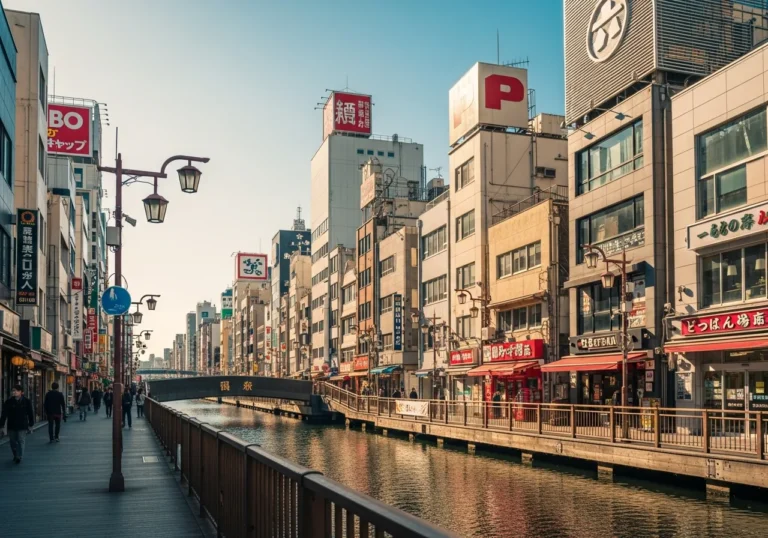
2. Dotonbori (道頓堀)
- 📍 Dotonbori, Chuo-ku, Osaka (canal district, approx. 1-chome to 2-chome)
- 🕐 Restaurants and stalls open from 10:00; most active 11:00–23:00 (as of May 2026)
- 💰 ¥500–¥2,000 per person (street food grazing)
- 🚃 Namba Station (3 min walk)
- 🗣 English menu: Available at most major restaurants
- 🗺 Open in Google Maps
- 📋 Tabelog
What to order: Takoyaki from Kukuru or Wanaka (¥600–¥800 for 6 pieces), okonomiyaki at Mizuno (¥1,200–¥1,800)
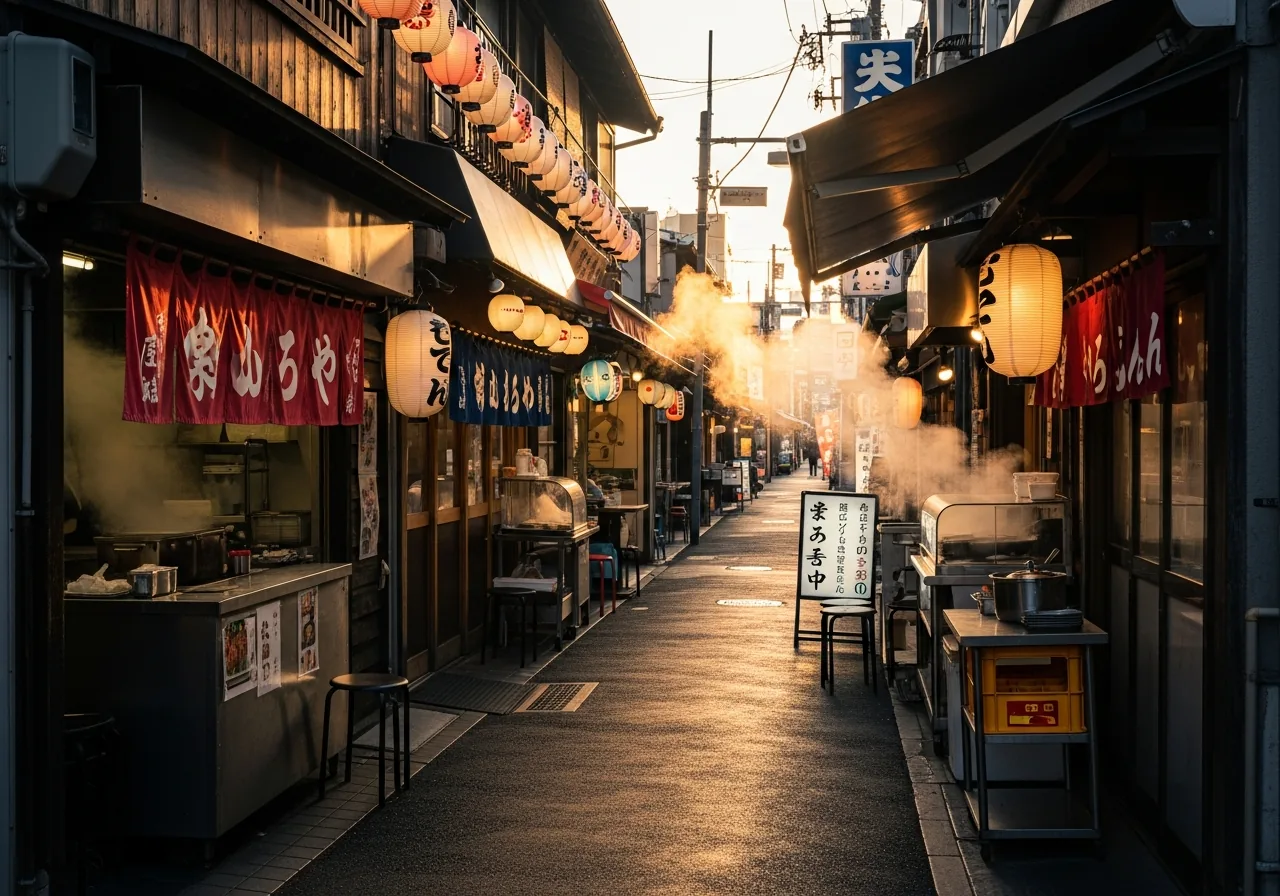
The air in Dotonbori is thick with the savoury aroma of grilling meats and the sweet scent of simmering sauces. The sizzle of batter hitting a hot teppan is the city’s soundtrack, accompanied by the rhythmic shouts of street food vendors and the dazzling glow of impossibly large neon signs. This is where Osaka’s food culture performs itself most visibly — the nickname tenka no daidokoro came about when the city was Japan’s main hub in the rice trade hundreds of years ago, but if anything, the name is even more apt today.
3. Aizuya (会津屋) — Birthplace of Takoyaki
- 📍 1-2-19 Tamadenishi, Naniwa-ku, Osaka 556-0021
- 🕐 10:00–20:00; closed Tuesdays (as of May 2026)
- 💰 ¥600–¥900 per person
- 🚃 Tamade Station, Nankai Line (3 min walk)
- 🗺 Open in Google Maps
- 📋 Tabelog
What to order: Original takoyaki, no sauce (¥600 for 8 pieces)
Invented in 1935 by Endo Tomekichi of Nishinari’s Aizuya, takoyaki captures plump octopus in dashi-rich batter and is grilled to golden spheres on copper plates. At this shop, they’re served without sauce to highlight the natural flavour of octopus and broth — which is the point. This is the original recipe, unchanged in 90 years. The shop is a 20-minute train ride from Namba, which keeps the tourist crowds thin and the experience honest.
4. Mizuno (美津の) — Okonomiyaki Since 1945
- 📍 1-4-15 Dotonbori, Chuo-ku, Osaka 542-0071
- 🕐 11:00–22:00 (last order 21:30); open daily (as of May 2026)
- 💰 ¥1,200–¥2,500 per person
- 🚃 Namba Station (5 min walk)
- 🗣 English menu: Yes
- 🗺 Open in Google Maps
- 📋 Tabelog
- 🌐 Official site
What to order: Yamaimo-yaki (mountain yam okonomiyaki) (¥1,650)
Mizuno on Dotonbori has been at it since 1945 and draws long lines — and for good reason. Okonomiyaki roughly translates as “grill whatever you like,” and the Osaka (Kansai) style mixes everything — the shredded cabbage, batter, egg, and your chosen proteins — together before it hits the flat teppan. The yamaimo version has a lighter, almost soufflé-like texture that sets it apart from the denser versions you’ll find elsewhere on the same street. Expect a queue of 20–40 minutes on weekends.
5. Kushikatsu Daruma Shinsekai (串かつだるま 新世界)
- 📍 2-3-9 Ebisuhigashi, Naniwa-ku, Osaka 556-0002
- 🕐 11:00–22:30 (as of May 2026)
- 💰 ¥1,500–¥3,000 per person (food only)
- 🚃 Dobutsuen-mae Station (5 min walk)
- 🗣 English menu: Yes
- 🗺 Open in Google Maps
- 📋 Tabelog
- 🌐 Official site
What to order: Beef kushikatsu (¥180/skewer), lotus root (¥150/skewer)
Kushikatsu was created in 1929 at Shinsekai’s Daruma, originally offering inexpensive skewered beef. Nearly a century later, the Shinsekai flagship is still the right place to eat it. Shinsekai is the spiritual home of kushikatsu — deep-fried skewered meat, vegetables, and seafood — and the retro atmosphere of the neighbourhood, with its Tsutenkaku Tower looming overhead, makes the whole experience feel like a genuine time capsule. The no-double-dipping rule is enforced with cheerful aggression.
6. 551 Horai Namba Main Store (551蓬莱 難波本店)
- 📍 3-6-3 Namba, Chuo-ku, Osaka 542-0076
- 🕐 11:00–21:00; open daily (as of May 2026)
- 💰 ¥500–¥1,500 per person
- 🚃 Namba Station (2 min walk)
- 🗺 Open in Google Maps
- 📋 Tabelog
- 🌐 Official site
What to order: Butaman (pork bun) (¥220 each, minimum 2)
551 Horai’s steaming red boxes are an Osaka institution — the kind of thing locals carry home on the Shinkansen and visitors queue for without quite knowing why, until they bite in. The butaman here is plump, juicy, and seasoned with a restrained sweetness that makes the cheap imitations at convenience stores taste like cardboard by comparison. Founded in 1945, the brand has never expanded outside the Kansai region, which is part of why it still means something.
7. Oudon Yomogi (饂飩よもぎ)
- 📍 2-10-6 Sagisu, Fukushima-ku, Osaka 553-0002
- 🕐 11:30–14:30, 18:00–22:00; closed Sundays (as of May 2026)
- 💰 ¥1,500–¥3,500 per person
- 🚃 Fukushima Station (5 min walk)
- 🗺 Open in Google Maps
- 📋 Tabelog
What to order: Kake udon with makombu dashi broth (¥900–¥1,200)
At Oudon Yomogi, the kake broth is a deeply savoury blend of dashi made from makombu kelp and dried mackerel. Udon is served in variations such as plain broth, deep-fried tofu (kitsune), and meat. The shop is run by a kappo chef, with a wide selection of drinking snacks also available. This is the dashi tradition in its most direct form — dashi is the foundation of Japanese food culture, and it was born in Osaka. One bowl here explains more about Osaka’s culinary identity than any museum exhibit could.
8. Osaka Museum of Housing and Living (大阪くらしの今昔館)
- 📍 6-4-20 Tenjinbashi, Kita-ku, Osaka 530-0041 (8F, Juso Humanis 21 Building)
- 🕐 10:00–17:00 (last entry 16:30); closed Tuesdays (as of May 2026)
- 💰 ¥600 admission (adults)
- 🚃 Tenjinbashisuji Rokuchome Station (1 min walk)
- 🗣 English menu: English audio guides available
- 🗺 Open in Google Maps
- 📋 Tabelog
- 🌐 Official site
What to order: N/A — this is a museum, not a restaurant
If you want to understand why Osaka eats the way it does, spend an hour here before you eat anywhere else. The museum reconstructs an entire Edo-period Osaka townscape at full scale — merchant houses, street stalls, a replica of the canal district — and the food culture context it provides is genuinely illuminating. The rational idea of frugality permeated merchant families, and simple, waste-free meals became the norm, but at the same time, high-end cuisine developed in restaurants used for business meetings. You can see exactly how those two worlds coexisted. Located at the top of the world’s longest covered shopping street, Tenjinbashi-suji, it’s easy to combine with a meal in the neighbourhood. Explore more of Osaka from this end of the city — the Kita area is underrated for food.
How to Order
Osaka’s food culture spans everything from standing counters to multi-course kappo dinners, so the approach varies by venue. Here’s what to know before you go.
At street food stalls and markets: Cash is still king at Kuromon Market and most Dotonbori stalls, though this is slowly changing. Order by pointing if you don’t speak Japanese — most vendors are used to it. Eat standing or find a nearby bench; there’s rarely seating.
At okonomiyaki restaurants: You’ll often be seated at a teppan table with a built-in griddle. Some places cook for you; others hand you the batter and expect you to do it yourself. If you’re unsure, watch your neighbours for 30 seconds — it’ll be obvious. The finished pancake gets painted with thick sweet sauce, crisscrossed with mayo, and topped with bonito and aonori.
At kushikatsu joints: Order skewers one or two at a time. The communal sauce pot on the table is for dipping — once only, no exceptions. Use the cabbage leaves provided as a scoop if you want more sauce. Bread crumbs on the table are for exactly this purpose.
At udon and dashi-focused restaurants: These tend to be quieter, more considered spaces. Lunch is usually the better value. The fresh ingredients used in Osaka dishes make them truly excellent: seafood comes from nearby Osaka Bay and the Seto Inland Sea, vegetables from surrounding farmlands. Ask about the dashi base if you have dietary restrictions — most traditional broths contain fish.
For a deeper dive into the city’s dining scene, the MICHI Osaka travel guide covers everything from budget street food to reservation-only counters.
FAQ
Q: Is eating in Osaka expensive?
A: Not by default. Street food at Dotonbori runs ¥500–¥1,500 per person. A sit-down okonomiyaki lunch at Mizuno is ¥1,200–¥2,500. Kuromon Market grazing costs whatever you let it — budget ¥1,500–¥3,000 for a satisfying run through the stalls. The ceiling is high if you go kappo, but the floor is genuinely low.
Q: Do restaurants in Osaka have English menus?
A: Major tourist-area spots — Dotonbori, Namba, Shinsekai — almost universally do. Neighbourhood spots like Oudon Yomogi in Fukushima may not, but picture menus and pointing get you a long way. Google Translate’s camera function handles most printed menus in seconds.
Q: When is the best time to visit Dotonbori and Kuromon Market?
A: Kuromon Market is best on weekday mornings (9:00–11:00) when it’s still primarily a working market rather than a tourist attraction. Dotonbori is liveliest — and most crowded — from 18:00 onwards. If you want the street food without the shoulder-to-shoulder crowds, go on a weekday between 11:00 and 13:00. Weekends in peak season (March–May, October–November) are genuinely packed.
Q: Is the “no double-dipping” rule at kushikatsu restaurants really enforced?
A: Yes, and cheerfully so. The sauce pot is communal — dip once, eat, repeat with a fresh skewer. If you want more sauce, use the cabbage leaves to ladle it onto your plate. Staff will remind you if you forget; it’s not a big deal, but it’s a real rule.
Q: What’s the single most important thing to understand about Osaka food culture?
A: Osakans’ passion for food has created a bottom-up food culture and given rise to the term kuidaore — eat to your heart’s content. With such a tempting cuisine, it’s no wonder that the other phrase associated with Osaka is kuidore — to bankrupt yourself spending money on food and drink. The city doesn’t just have good food. It has a cultural permission structure that says spending money on a meal is never a waste. That attitude is contagious within about 24 hours of arrival.
Information is accurate as of May 2026. We recommend checking Google Maps for the latest hours and prices before visiting.