Looking for a fascinating historical figure connected to Osaka? Ogata Koan (緒方 洪庵) is one of the city’s most consequential residents — a physician, educator, and rangaku scholar whose small school in Kitahama seeded what became Osaka University and sent graduates across Japan to build a modern nation. If you want to explore more of Osaka, his story is a good place to start.
MICHI’s Pick — Selected by our Osaka-based team, based on places we’ve visited and on research using Tabelog and Google Maps ratings. In Japan, a Tabelog score of 3.4+ is genuinely high — Japanese reviewers are famously strict, and most locals consider anything above 3.4 a place worth a detour. We feature venues meeting at least one of: Tabelog 3.4+, Google Maps 4.3+, or 100+ reviews — the kind of spots locals quietly trust.
Tabelog and Google Maps scores are accurate as of the time of writing.
Who Was Ogata Koan?
Ogata Koan (緒方 洪庵; August 13, 1810 – July 25, 1863) was a Japanese medical doctor and rangaku scholar in late Edo period Japan, noted for establishing an academy which later developed into Osaka University. Many of his students subsequently played important roles in the Meiji Restoration and the westernization of Japan in the Meiji period.
Ogata was born in 1810 to a family of low-ranking samurai of Ashimori Domain in Bitchu Province in what is now part of the city of Okayama. He moved to Osaka in 1825 with his father, and began studies in rangaku and medicine at a private academy run by Naka Tenyu from 1826. He was a restless student. In 1831, he relocated to Edo to continue his studies in western medicine, returning to Nagasaki in 1836 to study under the Dutch doctor Erdewin Johannes Niemann, despite the Tokugawa shogunate’s strict national isolation policy.
That willingness to push against the rules of his era defined everything that followed. Ogata Koan was respected as a doctor of Western medicine and as a leading figure in the introduction of Western culture in the late Edo Period. He translated many Dutch books introducing the latest medical knowledge and also wrote many of his own books. Ogata was the author of Byogakutsuron, which was the first book on pathology to be published in Japan.
Tekijuku: The School That Changed Japan
In 1838, Ogata returned to Osaka to establish his medical practice, and in the same year established the Tekijuku, an academy of rangaku studies, where he taught medicine, natural history, chemistry and physics for the next 24 years. The school started small. In 1845, he bought a mercantile house in Kashomachi (present-day Yodoyabashi, Chuo Ward, Osaka City) to relocate his Tekijuku. This relocation was unavoidable because Koan’s fame brought so many people to the school that the place in Kawaramachi became too small to accommodate all of them.
Tekijuku’s focus was Dutch studies — Ogata was a doctor, after all. But Dutch studies encompassed more than medicine, and there was a range of topics in what we’d now call STEM that were all taught there, along with instruction on the Dutch language itself, for many of the books from which Ogata taught were not translated. Ogata used his small but precious collection of Dutch books, including a Dutch-Japanese dictionary and a Dutch encyclopedia, to teach his pupils to read scientific Dutch texts.
The students at Tekijuku worked with fanatical zeal, studying physics, chemistry, and medicine from the few Dutch books available. The atmosphere was intense and competitive. His house still exists in downtown Osaka. Built in a conventional eighteenth-century style, the students left their mark on the central post of the second-floor classroom, slashing and hacking it with their swords. Those sword marks are still visible today.
The Graduates Who Rebuilt Japan
Among the some 1,000 students who studied at Tekijuku were Fukuzawa Yukichi, Omura Masujiro, Nagayo Sensai, Otori Keisuke, Sano Tsunetami, and Hashimoto Sanai. Tekijuku nurtured graduates who blazed paths in the early Meiji period for a modern Japan.
The names on that list are not minor footnotes. Fukuzawa Yukichi went on to found Keio University and is still famous enough to appear on the 10,000-yen note. Omura Masujiro became the architect of Japan’s modern army. Nagayo Sensai built the country’s public health system. Not everyone who went to Tekijuku became a doctor, but the education available at Tekijuku became instrumental in setting Ogata’s students up for later success. Learning about that shared educational experience, in what was a very small private school, can help us appreciate how he, like Osaka itself, connected people.
There is also a more personal story embedded in the alumni list. Yukichi Fukuzawa suffered from typhoid fever when he was a student of Tekijuku. When Yukichi was under treatment at the warehouse-residence of the Nakatsu Domain in Osaka, Koan nursed him devotedly back to health. It is said Yukichi never forgot Koan’s dedication. That kind of relationship — teacher as physician, mentor as friend — ran through everything Ogata did.
And the connections extend even further into Japanese culture. Tezuka Ryosen in particular is the ancestor of legendary manga artist Tezuka Osamu, whose manga about his ancestor’s life, Hidamari no Ki, included scenes in the Ogata school.
Fighting Smallpox and Cholera
Ogata’s classroom work was only half the story. Outside it, he was fighting two of the deadliest diseases of his era. From December 1849, he struggled to gain acceptance of the new smallpox vaccination, eventually opening 186 vaccination centers from Edo to Kyushu, and obtaining official recognition of the method in 1858. The personal dimension here matters: Koan wrote Japan’s first pathological book called Byogaku Tsuron. He was committed to the prevention of smallpox, which he also suffered from in his childhood, by popularizing vaccination in various parts of Japan.
For the next 24 years, Tekijuku was a center for vaccination research and cholera treatment. Koan established Jotokan in 1846, which became the first smallpox vaccination institution recognized by the Edo government in 1858. When cholera swept through Japan in 1858, he also wrote several books, including a treatise entitled How to Treat Cholera, which he compiled in haste from various European sources during the great cholera epidemic of 1858. He distributed it to doctors across the country at his own expense.
The Final Chapter
In 1862, Ogata was appointed personal physician to shogun Tokugawa Iemochi, who supported the introduction of western medicine and the establishment of a western medicine research institute in Edo. It was the highest official recognition of his career. However, Ogata died a few months later in July 1863 of acute hemoptysis, caused by the tuberculosis he had suffered from for many years. He was 52.
He did not live to see the Meiji Restoration, the opening of Japan, or the modern nation his students helped build. But the institution he left behind kept going. Tekijuku prospered and developed branches; however, its continued expansion was brought to an end with the introduction of a new education system initiated by the Meiji government. In time, Tekijuku evolved into Osaka Prefecture Medical School, then into Osaka Prefecture University Hospital and finally into today’s Osaka University.
Visiting Tekijuku Today
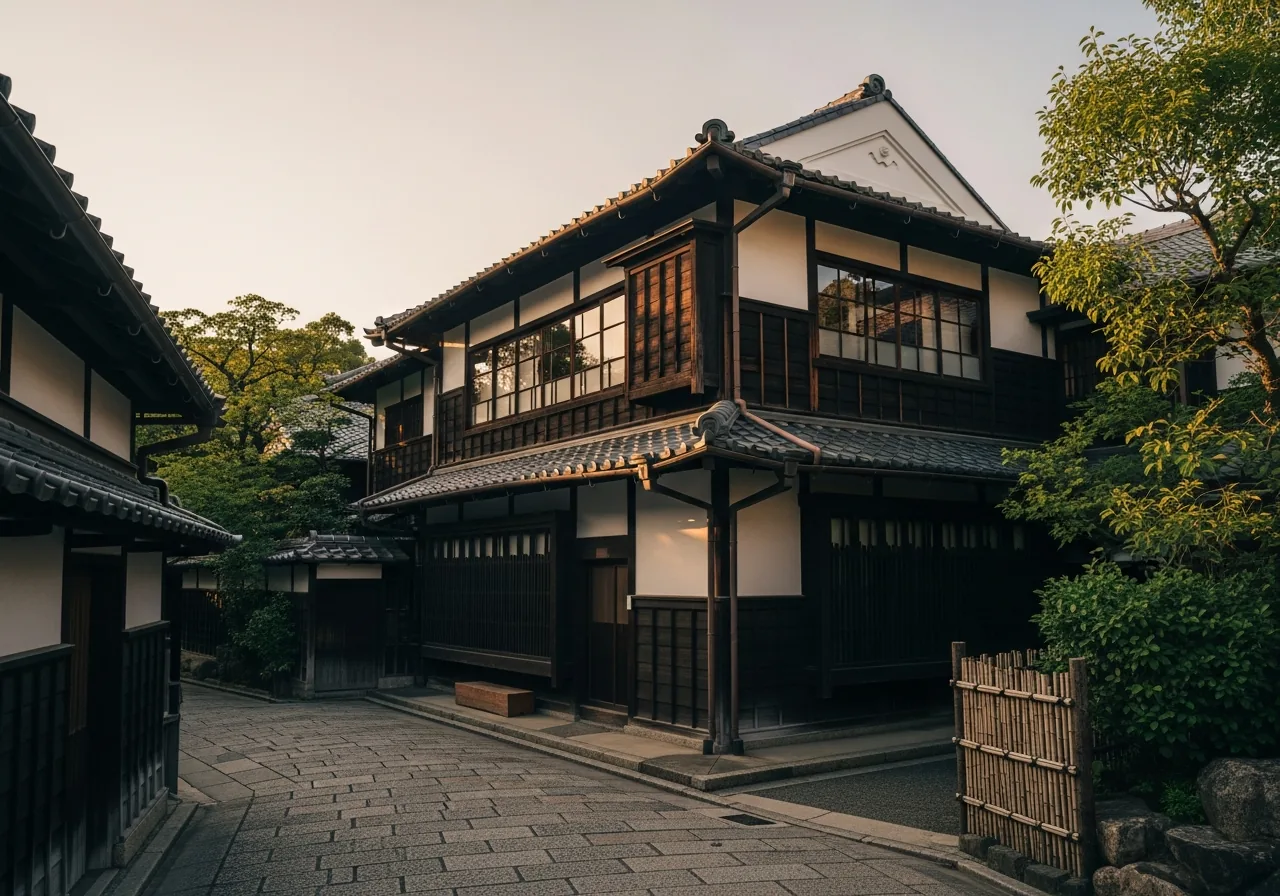
The building where all of this happened is still standing in Kitahama, and it is open to the public. Tekijuku is a school of Dutch studies opened by Ogata Koan (1810–1863), a Dutch scholar, medical scientist and educator in the last days of the Edo Period. Materials and documents relating to Ogata and his students are on display inside the building, which is a carefully preserved typical merchant’s house of the period.
Tekijuku was declared a historic ruin of Osaka in 1940, a historic ruin of Japan in 1941, and an important national cultural asset in 1964. The Agency for Cultural Affairs carried out the dismantling and reassembly work (from 1976 to 1980) to restore the original architecture back to when Ogata Koan was residing.
Several reviewers mention the modest 260 yen entrance fee and the building’s accessibility from Yodoyabashi and Kitahama stations. QR codes provide audio guides in English to supplement the Japanese signage. A bronze statue of Ogata Koan stands in the adjacent park. In those days, a Dutch-Japanese dictionary was very valuable, and the one that’s exhibited has curled-up pages and worn-out letters, which graphically convey the students’ enthusiasm.
Though the building itself is not very large, reviewers find the visit worthwhile, especially when combined with a walk through the surrounding Kitahama area, known for its blend of modern and historical architecture. While you’re in the neighbourhood, nearby attractions include Osaka Central Public Hall and Nakanoshima Park. And if you want to fuel up before or after, check out the best food in Osaka — the Kitahama and Nakanoshima stretch has some excellent options.
Tekijuku (Former Ogata Koan Residence)
📍 3-3-8 Kitahama, Chuo-ku, Osaka
🕐 10:00–16:00, closed Mondays and days following public holidays (as of May 2026)
💰 ¥260 admission
🚃 Kitahama Station or Yodoyabashi Station (3–5 min walk)
🗺 Open in Google Maps
🌐 Official site
Why Ogata Koan Still Matters
Ogata Koan is not a household name outside Japan, and even within it he tends to be overshadowed by the famous students he produced. But that is almost the point. He was a prominent medical doctor, scholar, and educator in that era, and educated many young people who later contributed to the modernization of Japan. He did not seek power or position for himself. The Summary of Commandments for Health Professionals in the final volume of his major translation, organized into 12 commandments, is famous as a summary of Hufeland’s thinking. The first commandment says, “The essence of the medical profession is to live life not for oneself but for others.” He appears to have taken that seriously.
What makes his story particularly Osakan is the setting. Osaka was a good place for Ogata to set up his school. It was a merchant city, commercially minded, less rigidly hierarchical than Edo, and full of people passing through from every domain in Japan. In Osaka, studying wasn’t viewed as a road to success in life as it was in Edo. The love of learning drove students to study. That spirit — curious, practical, open — ran through Tekijuku, and it runs through the city still. The MICHI Osaka travel guide covers more of the city’s history and culture if you want to dig deeper.
FAQ
Q: Who was Ogata Koan and why is he important to Osaka?
A: Ogata Koan (1810–1863) was a physician and Western-studies scholar who founded Tekijuku, a private academy in Osaka’s Kitahama district, in 1838. The school produced around 1,000 graduates who went on to shape modern Japan — including Fukuzawa Yukichi and Omura Masujiro — and eventually evolved into what is now Osaka University.
Q: Can you visit Tekijuku, Ogata Koan’s school, in Osaka?
A: Yes. The original building at 3-3-8 Kitahama, Chuo-ku is open to the public Tuesday through Sunday, 10:00–16:00, with a ¥260 admission fee. It is a designated Important Cultural Property of Japan, managed by Osaka University, and sits a short walk from Kitahama and Yodoyabashi stations.
Q: Is Tekijuku accessible for English-speaking visitors?
A: Reasonably so. QR codes inside the building link to English-language audio guides, though most of the written signage is in Japanese. The entrance fee is low and the visit is compact — most people spend 30–45 minutes inside.
Q: What is the connection between Ogata Koan and Osaka University?
A: Tekijuku is the direct institutional ancestor of Osaka University. After Ogata’s death, the school evolved through several iterations — Osaka Prefecture Medical School, Osaka Prefecture University Hospital — before becoming the modern Osaka University, officially founded in 1931. The university still administers the Tekijuku building and runs a research centre on the premises.
Last updated: July 19, 2026 · Corrections: [email protected]