Last updated: July 19, 2026
This article reflects information available at the time of writing. Check Google Maps for the latest hours and availability.
Introduction
Kuromon Market (黒門市場) has been feeding Osaka for the better part of two centuries. It started in the early 1800s near the Enmyo-ji Temple in central Osaka. The name comes from the black gate — kuromon literally means “black gate” — that once stood at the market’s entrance. Merchants were officially granted market status by Osaka Prefecture in 1902, and the area was originally known as Enmyoji Market. The temple and its famous gate burned down in the Great Namba Fire of 1912, but the market rebuilt itself — twice, in fact, surviving both that fire and the air raids of World War II.
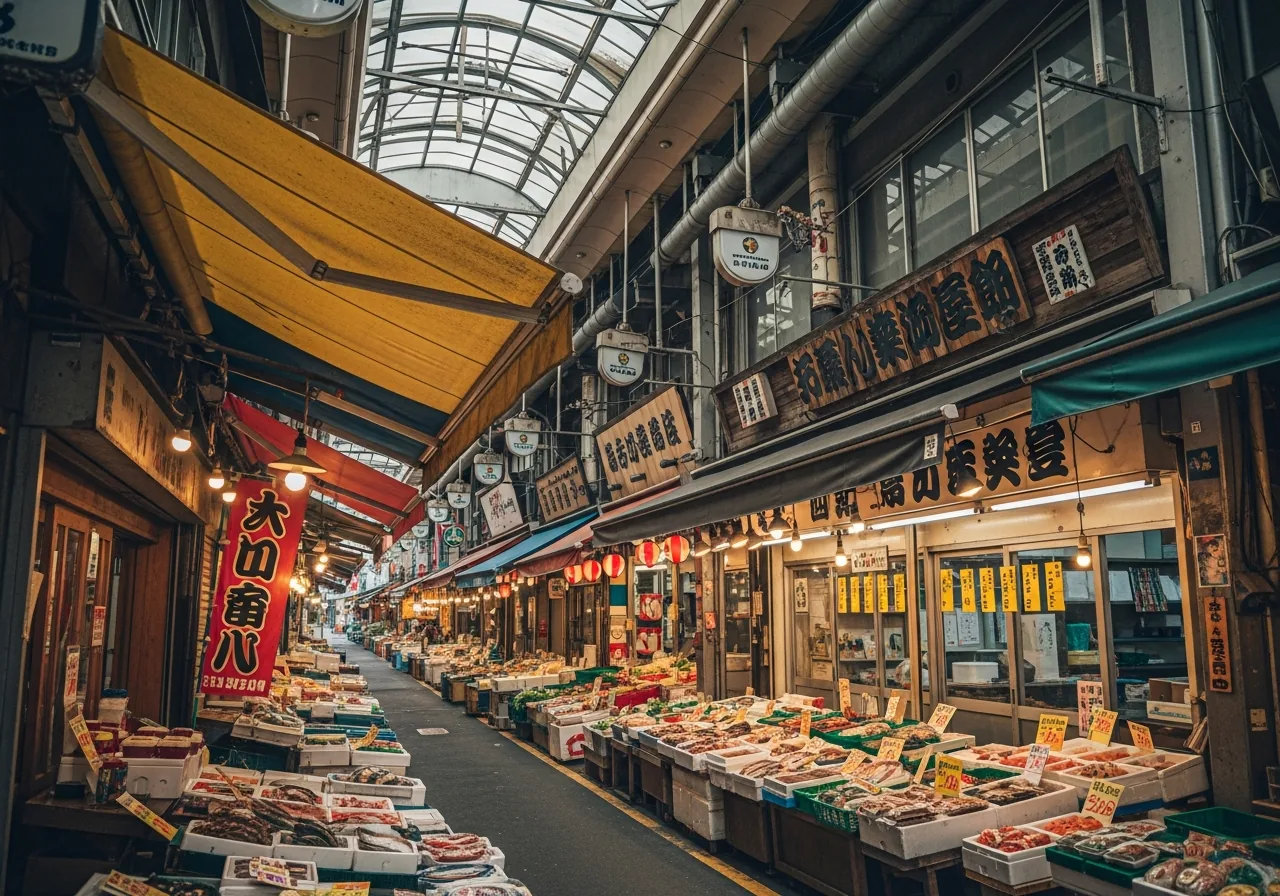
Today, the 580-metre covered arcade is packed with seafood stalls, butchers, egg specialists, and kitchen supply shops. About half the shops sell seafood and fish, including several certified specialists in the preparation of fugu — a pufferfish that can be deadly poisonous if handled incorrectly — while the rest cover meats, greengroceries, and condiments. It’s the kind of place where you can eat a ¥300 skewer of grilled scallop standing up, then turn around and spend ¥3,000 on a tray of otoro sashimi. Both are valid choices.
Fair warning: Kuromon has had a complicated few years. In 2023–2024, accusations of price gouging spread online, with the market being labelled “Botakuri Ichiba” — roughly, “Rip-Off Street” — due to its over-reliance on tourist spending. The Kuromon Association responded directly, acknowledging that prices had risen with the influx of tourist spending, but stating that as of August 2024 they revised to a “reasonable pricing system,” with unionised stores making concerted efforts toward a fair pricing model benefiting locals and tourists alike. The situation has improved, but it pays to know which stalls are worth your money — which is exactly what this guide is for. For more on eating well across the city, check out the best food in Osaka, and if you want to explore more of Osaka beyond the market, we’ve got you covered there too.
1. Kuromon Market Arcade Entrance (黒門市場 アーケード入口)
- 📍 2-4-1 Nipponbashi, Chuo-ku, Osaka 542-0073
- 🕐 Most shops open 8:00–18:00 (individual hours vary) (as of May 2026)
- 💰 Free to enter; food from ¥300 per item
- 🚃 Nipponbashi Station (Osaka Metro Sennichimae/Sakaisuji lines) — 5 min walk
- 🗺 Open in Google Maps
- 📋 Tabelog
- 🌐 Official site
What to order: Walk-and-eat anything — grilled scallop skewers from ¥300, fresh oysters from ¥500
The main entrance off Sennichimae-dori is where the market announces itself: a tall red torii-style gate flanked by vendor signs, the smell of charcoal and salt water hitting you before you’ve even stepped under the arcade roof. The roofed market stretches about 580 metres and holds around 150 shops, always bustling with people. This is your orientation point — get your bearings here before committing to anything.
2. Maguroya Kurogin (まぐろや黒銀)
- 📍 2-11-1 Nipponbashi, Chuo-ku, Osaka
- 🕐 8:00–17:00 (dine-in until 15:00; closed Jan 1–4 and irregular holidays) (as of May 2026)
- 💰 ¥1,500–¥4,000 per person
- 🚃 Nipponbashi Station — 5 min walk
- 🗺 Open in Google Maps
- 📋 Tabelog
What to order: Otoro (fatty tuna) sashimi from ¥1,500; tuna donburi from ¥1,800
A huge blue and silver tuna head rests on the bar for all to see — apparently the full butchering of a whole tuna happens earlier in the morning. Tuna sashimi is the specialty, with otoro being the most coveted cut. There are seats at the bar where you can pull up and eat to your heart’s content. Come before 11am if you want the best selection; by early afternoon the premium cuts are often gone.
3. Maguro no Entoki (まぐろの遠藤)
- 📍 1-21-7 Nipponbashi, Chuo-ku, Osaka
- 🕐 8:00–16:00 (closed Sundays, public holidays, and irregular Wednesdays) (as of May 2026)
- 💰 ¥2,000–¥3,500 per person
- 🚃 Nipponbashi Station — 5 min walk
- 🗺 Open in Google Maps
- 📋 Tabelog
What to order: Otoro sushi (¥2,000–¥2,900 depending on market price)
The best sushi and sashimi at Kuromon Market is at Entoki Maguro, which specialises in tuna sashimi and has been at the market since 1927. The Kuromon branch sits in a less conspicuous spot, which means shorter queues. The main product is black tuna from Nagasaki, with otoro sushi being the most popular item. Nearly a century in business is a reasonable endorsement.
4. Fukahiro (ふか広)
- 📍 Kuromon Market, Nipponbashi, Chuo-ku, Osaka
- 🕐 9:00–17:30 (as of May 2026)
- 💰 ¥1,500–¥5,000 per person (fugu sets higher)
- 🚃 Nipponbashi Station — 5 min walk
- 🗺 Open in Google Maps
- 📋 Tabelog
What to order: Erande-don (choose-your-own rice bowl) from ¥1,800; tora fugu (tiger pufferfish) sets from ¥8,000 in season
The tarpaulin ceiling reads “Fukahiro — since 1905,” making it one of the older shops in the market association. It operates as a chain wholesaler, selling high-quality seafood daily to hotels, restaurants, and sushi chains, with a cook on-site at the Kuromon location for eat-in dining. Fresh abalone, sea cucumber, octopus, tuna, Ise lobster, king crab, snow crab, and blowfish are all available boxed on ice. The “erande-don” — where you pick your own toppings for a rice bowl — is the most practical way to eat here without committing to a full fugu course.
5. Seasonal Fugu Stalls (冬のフグ専門店)
- 📍 Various locations throughout Kuromon Market arcade, Nipponbashi, Chuo-ku, Osaka
- 🕐 Typically October–March; individual stall hours vary (roughly 9:00–17:00) (as of May 2026)
- 💰 ¥1,500–¥3,000 for grilled fugu skewers; full fugu courses from ¥8,000
- 🚃 Nipponbashi Station — 5 min walk
- 🗺 Open in Google Maps
- 📋 Tabelog
What to order: Grilled fugu fin (hire-yaki) skewer from ¥1,500; fugu sashimi (tessa) from ¥2,500
The most famous fish at Kuromon in winter is fugu, and at least 10% of the seafood shops in the market specialise in it. During winter you’ll find fugu — pufferfish — which is a delicacy in Japan but illegal to serve in most other countries because it is deadly if not prepared correctly. Every vendor selling it must hold a government-issued fugu-handling licence, so you’re in safe hands. Come between November and February for the best selection and freshest fish.
6. Hananoki (花のき)
- 📍 Kuromon Market, Nipponbashi, Chuo-ku, Osaka
- 🕐 9:00–17:00 (closed irregular days) (as of May 2026)
- 💰 ¥800–¥1,500 per person
- 🚃 Nipponbashi Station — 5 min walk
- 🗺 Open in Google Maps
- 📋 Tabelog
What to order: Osaka-style oden from ¥150 per piece; takoyaki from ¥500
Recommended by Osaka locals as one of the go-to spots for Osaka’s traditional local dishes inside the market. This is where you come for the unglamorous, deeply satisfying stuff — oden simmered in dashi broth, takoyaki with a properly liquid centre, the kind of food that has nothing to prove. It’s a useful counterpoint to the premium seafood stalls and a reminder that Kuromon was, for most of its history, a market for working people.
7. Kuromon Ibuki Coffee (黒門IBUKI COFFEE)
- 📍 East side of the northern segment of Kuromon Market, Nipponbashi, Chuo-ku, Osaka
- 🕐 8:00–17:00 (check Google Maps for current hours) (as of May 2026)
- 💰 ¥400–¥700 per drink
- 🚃 Nipponbashi Station — 5 min walk
- 🗺 Open in Google Maps
- 📋 Tabelog
What to order: Black drip coffee from ¥450
Ibuki Coffee is located east of the northern segment of Kuromon Ichiba’s main street — which makes it the ideal first stop before you commit to eating your way down the arcade. The market opens early and so does this place; a strong black coffee at 8am, before the tour groups arrive, is genuinely one of the better ways to start a morning in this part of Osaka. Use the MICHI Osaka travel guide to plan the rest of your day around it.
8. Kuromon Market Kitchen Supply Shops (黒門市場 調理器具店)
- 📍 Throughout Kuromon Market arcade, Nipponbashi, Chuo-ku, Osaka
- 🕐 9:00–17:00 (varies by shop) (as of May 2026)
- 💰 ¥500–¥30,000+ depending on item
- 🚃 Nipponbashi Station — 5 min walk
- 🗺 Open in Google Maps
- 📋 Tabelog
What to buy: Japanese kitchen knives from ¥3,000; takoyaki pans from ¥1,500
Kuromon has always supplied professional kitchens, and a handful of shops still sell the tools of the trade — Japanese knives, dashi strainers, lacquerware, and the cast-iron takoyaki pans that every Osaka household owns. The market covers everything from fresh seafood and blowfish specialty shops to restaurants, fruit and vegetable shops, butchers, pickled goods, dried food, Japanese sweets, and Western cakes. The kitchen supply shops are easy to miss if you’re focused on eating, but they make for some of the most practical and genuinely useful souvenirs you’ll find anywhere in the city.
How to Order
Kuromon is a walk-and-eat market, not a sit-down restaurant strip. The rhythm is: pick a stall, point at what you want, pay cash (most vendors still prefer it), eat standing up or perched on a stool, move on. A few shops — Maguroya Kurogin and Fukahiro among them — have proper bar seating where you can sit and eat a full meal, but the default mode is grazing.
Most vendors display prices on boards or on the glass cases in front of their produce. If a price isn’t displayed, ask before you commit — this is standard practice and no one will take offence. The market association’s 2024 fair-pricing initiative means unionised shops now post prices clearly, so if a stall has no visible pricing, that’s a signal to be cautious.
Bring cash. While some larger shops now accept IC cards or credit cards, many stalls are cash-only. The nearest ATMs are at the convenience stores on Sennichimae-dori, just north of the market entrance. Budget ¥2,000–¥4,000 for a solid walk-through with three or four stops; ¥6,000–¥8,000 if you want to sit down for a proper tuna or fugu meal.
Individual shop hours vary, but many are open between 8am and 4pm. The market is busiest between 10am and 1pm on weekends. Weekday mornings — especially Tuesday through Thursday before 10am — are when you’ll find the most locals and the least congestion.
FAQ
Q: Is Kuromon Market expensive?
A: It depends entirely on where you shop. A grilled scallop skewer runs ¥300–¥500; a tray of otoro sashimi can hit ¥3,000. The 2024 fair-pricing reforms brought unionised stalls back in line, but a handful of non-union vendors — often newer, foreign-owned shops — still charge tourist-market prices. If a price isn’t posted, ask first.
Q: Do shops at Kuromon Market have English menus?
A: Many of the larger, more tourist-facing stalls have English signage or picture menus. The older, more traditional shops — particularly the kitchen supply stores and some of the produce vendors — may not, but pointing and gesturing works fine. Google Translate’s camera function handles most Japanese menus without issue.
Q: When is the best time to visit?
A: Weekday mornings between 8am and 10am are the sweet spot — stalls are freshly stocked, the professional chefs from nearby restaurants are doing their shopping, and the tour groups haven’t arrived yet. Avoid Saturday and Sunday afternoons, when the arcade becomes genuinely difficult to move through. For fugu, visit between November and February when the season is at its peak.
Q: How do I get to Kuromon Market?
A: The market is at 2 Chome Nipponbashi, Chuo Ward, Osaka. Take the Osaka Metro Sennichimae or Sakaisuji line to Nipponbashi Station and walk five minutes south. It’s also a 10-minute walk from Namba Station if you’re already in that area.
Information is accurate as of May 2026. We recommend checking Google Maps for the latest hours and prices before visiting.