Looking for things to do in Kitahama, Osaka? This guide covers eight of the district’s best spots — historic landmarks, riverside cafes, a Meiji-era school, and a rose garden — suited to anyone who wants to understand Osaka beyond the neon of Dotonbori. Pair it with the best food in Osaka for a full day out.
MICHI’s Pick — Selected by our Osaka-based team, based on places we’ve visited and on research using Tabelog and Google Maps ratings. In Japan, a Tabelog score of 3.4+ is genuinely high — Japanese reviewers are famously strict, and most locals consider anything above 3.4 a place worth a detour. We feature venues meeting at least one of: Tabelog 3.4+, Google Maps 4.3+, or 100+ reviews — the kind of spots locals quietly trust.
Tabelog and Google Maps scores are accurate as of the time of writing.
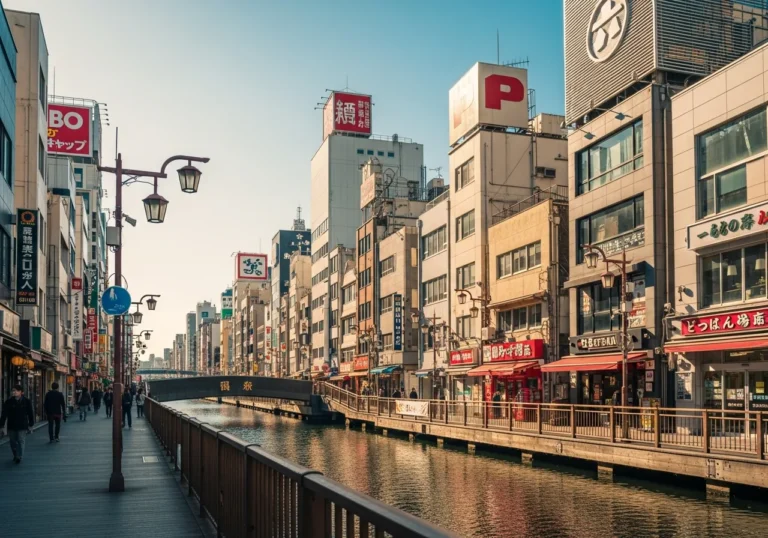
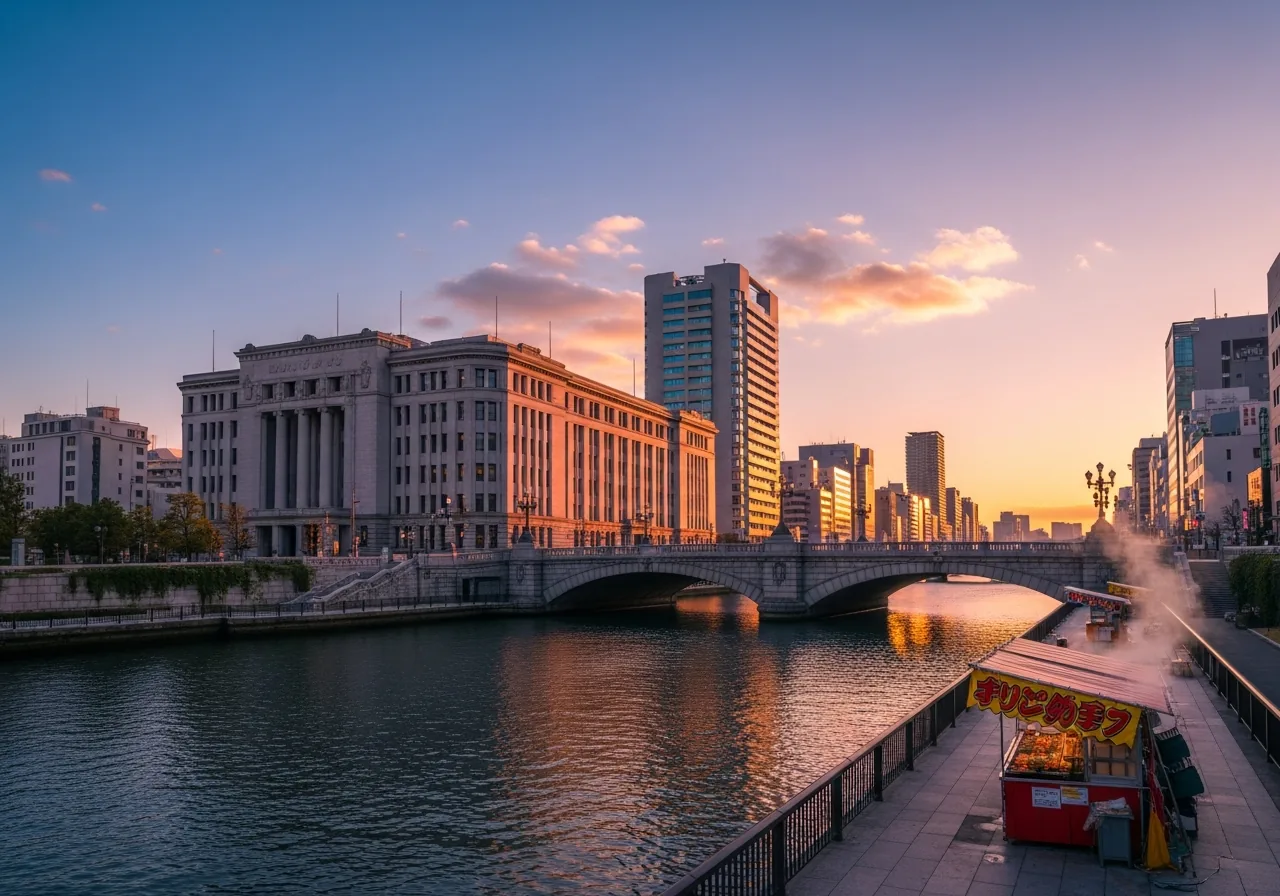
Kitahama sits between Umeda and Namba on the east bank of the Tosabori River, and it has a claim that most Osaka neighbourhoods can’t match: in the early Edo period, this area was home to a rice market and a gold exchange market, and thrived as a financial centre where money changers, rice wholesalers, and rice brokers gathered. After the Meiji Restoration, the Osaka Stock Exchange was built by Tomoatsu Godai on the site of the gold exchange market, and the Kitahama area developed as a financial district centred around the exchange. That history is still visible on every block — many of the grand buildings from that era still stand today, telling the story of Osaka’s rise as a commercial powerhouse.
The neighbourhood has a split personality that makes it worth visiting any day of the week. On weekdays it’s a bustling business district filled with sharp-suited office workers grabbing a quick espresso. When the weekend hits, the pace dramatically shifts — the area transforms into a laid-back haven where locals bring their dogs to the park, couples go on riverside dates, and people spend hours reading on café terraces. For a deeper look at what the area has to offer, explore more of Osaka through our neighbourhood guides.
1. Osaka Exchange (大阪取引所)
📍 1-8-16 Kitahama, Chuo-ku, Osaka
🕐 Exterior viewable 24 hours; lobby open on weekdays (as of May 2026)
💰 Free (exterior and lobby)
🚃 Kitahama Station (1 min walk)
⭐ Rating: Google 4.3 (1,200+ reviews) (as of writing)
🗺 Open in Google Maps
📋 Tabelog
What to order: Free to visit — no admission required
The Osaka Exchange is a massive, striking cylindrical white building with gorgeous stained glass, built in 1935. Out front stands the imposing statue of Tomoatsu Godai, the “father of Osaka’s modern economy.” The building was converted to a high-rise in 2004 and completely renovated, but its trademark round exterior and circular entrance hall remain unchanged.
2. Nakanoshima Park (中之島公園)
📍 1-1 Nakanoshima, Kita-ku, Osaka
🕐 Open 24 hours (rose garden best May–June and Oct–Nov) (as of May 2026)
💰 Free
🚃 Kitahama Station (3 min walk)
⭐ Rating: Google 4.2 (563 reviews) (as of writing)
🗺 Open in Google Maps
📋 Tabelog
What to order: Free entry — bring a picnic
Established in 1891 as Osaka City’s first public park, Nakanoshima Park is a historic green oasis stretching about 1.5 kilometres between the Dojima and Tosabori Rivers, covering an area of 11.3 hectares. The rose garden features around 310 varieties and 3,700 rose bushes in full bloom, with the best times to visit running from early May to early June and from late October to mid-November.
3. Kitahama Retro Building (北浜レトロビルヂング)
📍 1-1-26 Kitahama, Chuo-ku, Osaka
🕐 Weekdays 11:00–21:30; Weekends & holidays 11:00–19:00 (as of May 2026)
💰 ¥1,500–¥3,000 per person (afternoon tea set)
🚃 Kitahama Station (1 min walk)
⭐ Rating: Tabelog 3.52 / Google 4.2 (800+ reviews) (as of writing)
🗺 Open in Google Maps
📋 Tabelog
What to order: Afternoon tea set with scones (¥2,200–¥2,800)
Originally completed in 1912 as the headquarters of a securities brokerage, the building was influenced by the Glasgow School of England and is a registered tangible cultural property of the country. The first floor is a British-style cake and tea goods shop; the second floor is a café with a British antique atmosphere, with British interior items throughout — including doorknobs and light switches. The second-floor windows look directly over Nakanoshima’s rose garden, which makes the timing of your visit worth thinking about.
4. Tekijuku (適塾)
📍 3-3-8 Kitahama, Chuo-ku, Osaka
🕐 Tue–Sun 10:00–16:00; closed Mon, days after holidays, and 28 Dec–4 Jan (as of May 2026)
💰 ¥250 (adults) / ¥130 (students)
🚃 Kitahama Station (5 min walk)
⭐ Rating: Google 4.3 (275+ reviews) (as of writing)
🗺 Open in Google Maps
📋 Tabelog
🌐 Official site
What to order: ¥250 admission — one of the best-value history stops in Osaka
Tekijuku is a private school opened in 1838 that helped lay the foundation for modern medicine and Western studies in Japan. It is a National Historic Site and National Important Cultural Asset, and remains Japan’s only surviving school for studying Western science in Dutch. The worn pages of the Dutch-Japanese dictionary on display say more about the students’ dedication than any placard could.
5. Osaka City Central Public Hall (大阪市中央公会堂)
📍 1-1-27 Nakanoshima, Kita-ku, Osaka
🕐 9:30–21:30 (closed 2nd and 4th Mon of each month) (as of May 2026)
💰 Free (exterior and lobby); restaurant inside from ¥1,500
🚃 Kitahama Station (4 min walk)
⭐ Rating: Google 4.1 (384 reviews) (as of writing)
🗺 Open in Google Maps
📋 Tabelog
What to order: Free to enter — the interior alone is worth the detour
Built in 1918, this nationally designated important cultural property has played a major role in the development of culture and the arts in Osaka, serving as a venue for operas, concerts, lectures, and other events. It currently houses a restaurant that makes use of the original structure and furnishings from when the building was first constructed. The Neo-Renaissance facade is one of the most photographed in the city, and it earns it.
6. EMBANKMENT Coffee (エンバンクメントコーヒー)
📍 1-1-29 Nakanoshima, Kita-ku, Osaka (inside Nakanoshima Park)
🕐 Mon–Fri 8:00–19:00; Sat–Sun 9:00–19:00 (as of May 2026)
💰 ¥600–¥1,200 per person
🚃 Kitahama Station (3 min walk)
⭐ Rating: Tabelog 3.55 / Google 4.4 (500+ reviews) (as of writing)
🗺 Open in Google Maps
📋 Tabelog
What to order: Single-origin filter coffee (¥650–¥800)
A café renovated from a Western-style building built in the Meiji era, where you can enjoy coffee in a quiet and relaxing space. EMBANKMENT Coffee is a sister shop of the popular Osaka café Elmer’s Green, serving single-origin specialty coffee with a focus on light-roast beans that bring out the fruit-like sweetness and acidity of each origin. Sitting riverside inside Nakanoshima Park, it’s the most atmospheric coffee stop in the district.
7. Gokan Kitahama Main Shop (五感 北浜本館)
📍 1-1-23 Kitahama, Chuo-ku, Osaka
🕐 Mon–Fri 10:00–19:00; Sat–Sun 10:00–18:00 (as of May 2026)
💰 ¥800–¥2,500 per person (café); cakes from ¥500
🚃 Kitahama Station (2 min walk)
⭐ Rating: Tabelog 3.62 / Google 4.3 (600+ reviews) (as of writing)
🗺 Open in Google Maps
📋 Tabelog
What to order: Rice flour roll cake using Koshihikari from Niigata (¥540)
Once a former Osaka bank branch, this historical structure now houses Gokan, a patisserie with an assortment of desserts constructed from high-quality domestic ingredients. The ground floor sells cakes and baked goods to take away; the second floor has private salon-style rooms for a sit-down tea. The roll cake made with rice flour is the signature — lighter than it sounds, with a clean finish.
8. Arai Building (新井ビル)
📍 2-1-1 Imabashi, Chuo-ku, Osaka
🕐 Exterior viewable 24 hours; interior shops vary (as of May 2026)
💰 Free (exterior); café inside from ¥700
🚃 Kitahama Station (5 min walk)
⭐ Rating: Google 4.1 (200+ reviews) (as of writing)
🗺 Open in Google Maps
📋 Tabelog
What to order: Stop in for coffee at the ground-floor café (¥700–¥900)
The Arai Building, a registered tangible cultural property facing Sakaisuji Boulevard, was designed by the famous architect Kozo Kawai and built as a bank in 1922. The building’s ornate facade — terracotta detailing, arched windows, and a grand entrance — is the most photogenic stretch of Sakaisuji. The MICHI Osaka travel guide covers more of these Taisho-era architectural gems across the city.
FAQ
Q: What is the best neighbourhood spot in Kitahama, Osaka?
A: For first-timers, the Osaka Exchange building and its surrounding block is the obvious anchor — the cylindrical white facade and the Godai statue out front sum up the district’s identity in one stop. If you want to sit down, Gokan Kitahama Main Shop in the former bank building is the most complete experience: great architecture, excellent cakes, and a calm second-floor salon.
Q: How many historic landmarks are in Kitahama?
A: The district is unusually dense with preserved Meiji and Taisho-era buildings. Within a 10-minute walk of Kitahama Station you’ll find the Osaka Exchange, the Kitahama Retro Building, the Arai Building, Tekijuku, and the Osaka City Central Public Hall on Nakanoshima — five nationally registered cultural properties in one compact loop.
Q: Do Kitahama restaurants and cafés have English menus?
A: Gokan and EMBANKMENT Coffee have enough visual menus and picture displays to order without Japanese. The Kitahama Retro Building’s café is popular with tourists and staff are accustomed to English-speaking visitors. Tekijuku has English-language explanatory panels throughout the museum.
Q: What should I do first in Kitahama, Osaka?
A: Start at Kitahama Station Exit 26 and walk north across the Naniwabashi Bridge to Nakanoshima Park — the view of the Osaka City Central Public Hall from the bridge is one of the best in the city. Then loop back south along the Tosabori riverbank past EMBANKMENT Coffee and the Kitahama Retro Building to the Osaka Exchange. The whole circuit takes about two hours at a relaxed pace.
Last updated: July 19, 2026 · Corrections: [email protected]