Looking for things to do and see in Juso, Osaka? This guide covers eight of the area’s most distinctive spots — from Showa-era shopping arcades and a legendary negiyaki restaurant to the Yodo River banks and one of Osaka’s biggest annual fireworks festivals. It suits curious travelers who want to explore more of Osaka beyond the tourist circuit.
MICHI’s Pick — Selected by our Osaka-based team, based on places we’ve visited and on research using Tabelog and Google Maps ratings. In Japan, a Tabelog score of 3.4+ is genuinely high — Japanese reviewers are famously strict, and most locals consider anything above 3.4 a place worth a detour. We feature venues meeting at least one of: Tabelog 3.4+, Google Maps 4.3+, or 100+ reviews — the kind of spots locals quietly trust.
Tabelog and Google Maps scores are accurate as of the time of writing.
One stop north of Umeda on the Hankyu lines, Juso (十三) sits in Yodogawa Ward on the north bank of the Yodo River. The name literally means “thirteen” — one theory holds it was the thirteenth waypoint on the old river route between Kyoto and Osaka Bay. The station opened in 1910 as part of the Minoo-Arima Electric Railway, and the area was absorbed into Osaka City in 1925. The Juso Bridge across the Yodogawa followed in 1932. What really shaped the neighborhood, though, was the postwar boom: black markets gave way to a dense entertainment district, and the narrow alleys, low-slung buildings, and neon-lit facades that survive today are direct descendants of that era. Juso has resisted large-scale redevelopment more stubbornly than almost anywhere else in northern Osaka, which is precisely why it still feels like itself.
Today the area is a Hankyu hub where the Kyoto, Kobe, and Takarazuka lines all converge — making it one of the most connected spots in the city that most tourists never bother to exit. That’s changing slowly, but for now Juso remains a place where the regulars outnumber the visitors by a wide margin. For the best food in Osaka at prices that haven’t been inflated for tourists, this is one of the most reliable neighborhoods in the city.
1. Yamamoto Honten (山本本店)
- 📍 2-4-15 Jusohonmachi, Yodogawa-ku, Osaka 532-0024
- 🕐 11:30–14:30, 17:00–22:00 (closed Tuesdays) (as of May 2026)
- 💰 ¥800–¥1,500 (food only)
- 🚃 Juso Station (Hankyu) (3 min walk)
- ⭐ Rating: Tabelog 3.72 / Google 4.2 (500+ reviews) (as of writing)
- 🗺 Open in Google Maps
- 📋 Tabelog
What to order: Negiyaki with beef tendon (suji) (¥950)
This is the restaurant credited with inventing negiyaki — the Juso-born cousin of okonomiyaki where chopped green onions replace cabbage, seasoned with soy sauce rather than sweet sauce. Yamamoto has been making it here for decades, and the suji version, loaded with slow-cooked beef tendon, is the one to order.
2. Juso Station West Exit Shopping Arcades (十三駅西口商店街エリア)
- 📍 Jusohonmachi, Yodogawa-ku, Osaka 532-0024 (west exit of Juso Station)
- 🕐 Varies by shop; most active from late afternoon through midnight
- 💰 Free to explore
- 🚃 Juso Station (Hankyu) (1 min walk)
- ⭐ Rating: Google 4.1 (200+ reviews for the arcade area) (as of writing)
- 🗺 Open in Google Maps
- 📋 Tabelog
What to explore: Tachinomi (standing drink) bars from ¥400 per glass
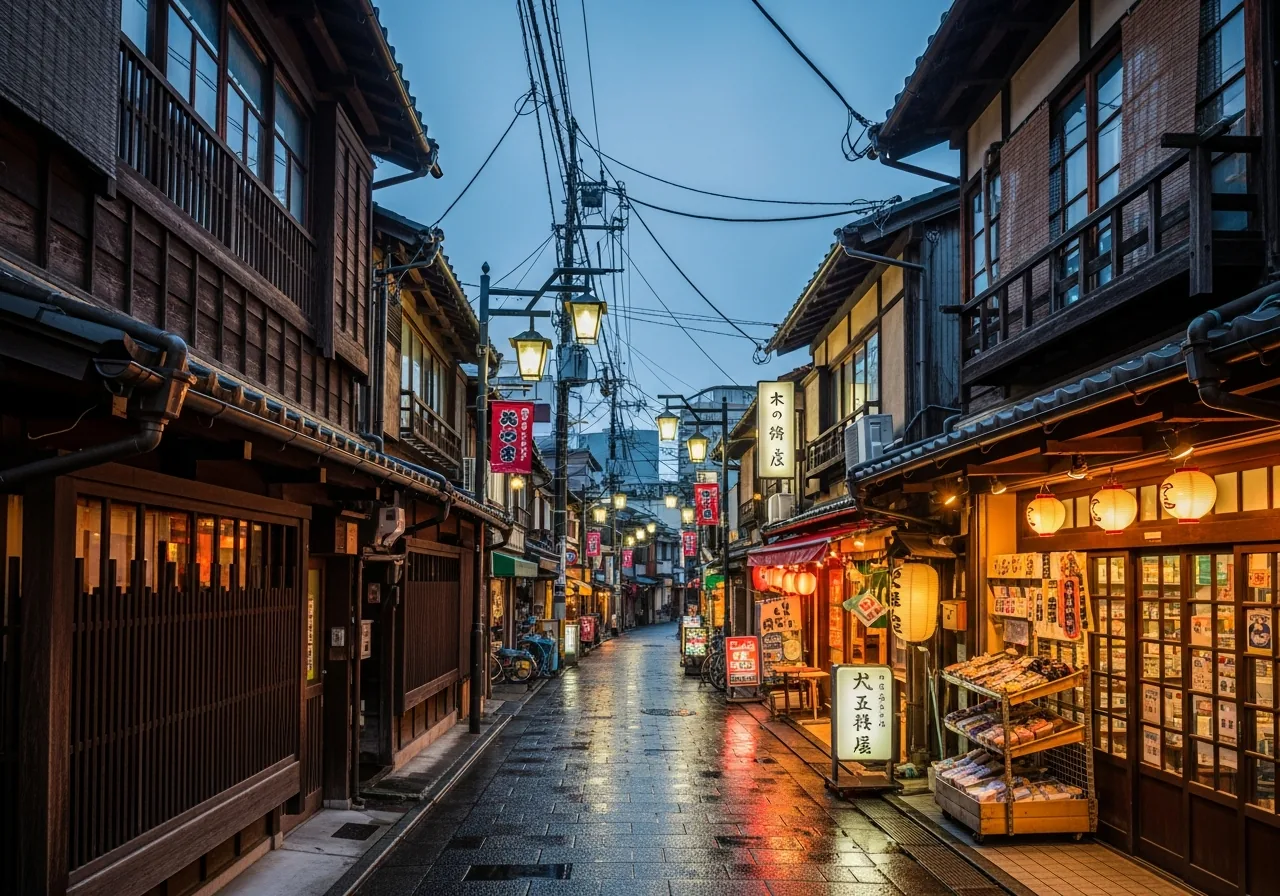
More than fifteen shopping arcades fan out from Juso Station, and the west exit cluster is the most atmospheric. The alleys are narrow, the signs are weathered, and the standing bars fill up fast after 6pm with salarymen, older couples, and the occasional curious visitor. The Showa-era energy here is not performed for tourists — it’s just Tuesday night in Juso.
3. Juso Tomytown Shopping Street (十三トミータウン商店街)
- 📍 Jusohonmachi 2-chome, Yodogawa-ku, Osaka 532-0024
- 🕐 Most shops open 10:00–19:00; some close on Wednesdays
- 💰 Free to browse
- 🚃 Juso Station (Hankyu) (4 min walk)
- ⭐ Rating: Google 4.0 (150+ reviews) (as of writing)
- 🗺 Open in Google Maps
- 📋 Tabelog
What to look for: Old-school delicatessens, oden stalls, and vintage clothing shops
Tomytown is the most compact and time-capsule-like of Juso’s arcades — a short covered street where traditional delicatessens, oden shops, and small clothing stores have been trading for decades. It’s the kind of place where you slow down and look at things rather than buy them, though the ready-made side dishes from the deli counters are genuinely good.
4. Yodo Wall Project Murals (ヨドウォールプロジェクト)
- 📍 East Juso residential streets, Yodogawa-ku, Osaka 532-0023
- 🕐 Outdoors — accessible at all times
- 💰 Free
- 🚃 Juso Station (Hankyu) (5–10 min walk, east exit)
- ⭐ Rating: Google 4.3 (80+ reviews) (as of writing)
- 🗺 Open in Google Maps
- 📋 Tabelog
What to see: Large-scale street murals by local and international artists (free)
Walk east from the station into the residential backstreets and you’ll start encountering large murals on building walls — the work of local and visiting artists who launched the Yodo Wall Project as a community art initiative rooted in Juso’s identity. The contrast between the quiet residential streets and the scale of the paintings is genuinely striking. Give yourself 20–30 minutes to wander.
5. Juso Yodogawa Riverbank (十三河川敷)
- 📍 Yodogawa riverbank near Juso Bridge, Yodogawa-ku, Osaka 532-0024
- 🕐 Open at all times (limited lighting after dark)
- 💰 Free
- 🚃 Juso Station (Hankyu) (8 min walk)
- ⭐ Rating: Google 4.2 (300+ reviews) (as of writing)
- 🗺 Open in Google Maps
- 📋 Tabelog
Best time to visit: Dusk, when the Umeda skyline lights up across the water
The Yodo River banks here are wide, grassy, and almost entirely free of crowds outside of festival season. Looking south from the Juso side, the Umeda skyline reflects off the water at dusk in a way that most visitors to Osaka never see — because they’re standing in Umeda looking the wrong direction. Go before full dark; street lighting on the riverbank is sparse.
6. Juso Bridge (十三大橋)
- 📍 Jusohonmachi, Yodogawa-ku, Osaka 532-0024 (National Route 176)
- 🕐 Open at all times
- 💰 Free
- 🚃 Juso Station (Hankyu) (7 min walk)
- ⭐ Rating: Google 4.1 (120+ reviews) (as of writing)
- 🗺 Open in Google Maps
- 📋 Tabelog
What to see: Five-arch concrete bridge completed in 1932; Hankyu rail bridges immediately upstream
The current Juso Bridge was completed in 1932 and its five concrete arches are a quiet piece of Showa-era infrastructure that most people cross without noticing. Just upstream, the three Hankyu rail bridges carry the Kyoto, Kobe, and Takarazuka lines simultaneously — worth pausing to watch if a train happens to pass. It’s a minor thing, but it’s the kind of minor thing that makes a neighborhood walk feel complete.
7. Naniwa Yodogawa Fireworks Festival (なにわ淀川花火大会)
- 📍 Yodogawa riverbed, Shinkitano 3-chome, Yodogawa-ku, Osaka 532-0025
- 🕐 Annually in August (rescheduled to October 18, 2026 — confirm on official site) (as of May 2026)
- 💰 Free (general riverbank viewing); paid reserved seats available
- 🚃 Juso Station (Hankyu) (15 min walk)
- ⭐ Rating: Google 4.5 (1,000+ reviews) (as of writing)
- 🗺 Open in Google Maps
- 📋 Tabelog
- 🌐 Official site
What to expect: Approximately 20,000 fireworks over 60 minutes; free general viewing on the Juso riverbank
The Naniwa Yodogawa Fireworks Festival launched in 1989 and draws around 450,000–600,000 people annually, making it one of the largest fireworks events in Kansai. It’s run entirely by local volunteers and funded by community donations — no corporate sponsor, no admission fee for the general riverbank. The 2026 edition is scheduled for October 18 (the festival has been shifted to autumn in recent years; always verify the date on the official site before planning around it). Arrive well before 7pm if you want a decent spot on the Juso side.
8. Juso Motoimazato Shopping Street (十三元今里商店街)
- 📍 Juso Motoimazato, Yodogawa-ku, Osaka 532-0023
- 🕐 Varies by shop; most open 10:00–20:00
- 💰 Free to browse; food from ¥300
- 🚃 Juso Station (Hankyu) (6 min walk, east exit)
- ⭐ Rating: Google 4.0 (100+ reviews) (as of writing)
- 🗺 Open in Google Maps
- 📋 Tabelog
What to try: Baked goods from local cafes; fresh produce from market stalls
The east side of Juso is quieter and more residential than the west, and the Motoimazato shopping street reflects that — it’s a working local arcade with a produce market feel, a handful of independent cafes, and the kind of bakeries and sweet shops that serve the neighborhood rather than Instagram. It’s where you go after the murals, when you want to sit down with a coffee and watch Juso go about its day. The MICHI Osaka travel guide has more on the city’s best local neighborhoods if you want to keep exploring.
FAQ
Q: What is the best thing to do in Juso, Osaka?
A: Start with a plate of negiyaki at Yamamoto Honten — it’s the dish Juso invented, and the suji (beef tendon) version is the one to order. Then walk the west exit arcades after dark for the full Showa-era atmosphere.
Q: How many things are there to do in Juso?
A: Juso is compact but dense. The main draws cluster within a 15-minute walk of the station: shopping arcades, the Yodo Wall Project murals in East Juso, the riverbank, and a strong concentration of izakayas and standing bars. You can cover the highlights in a half-day, or stretch it into a full evening with dinner and bar-hopping.
Q: Do Juso restaurants have English menus?
A: Rarely. Juso is a local neighborhood with very few concessions to international visitors — most menus are Japanese-only, and some of the older standing bars have no menu at all. Pointing at what other customers are eating works fine. A translation app on your phone will handle the rest.
Q: What should I eat in Juso, Osaka?
A: Negiyaki is the non-negotiable — it was invented here and Yamamoto Honten is the original. Beyond that, yakitori and kushikatsu dominate the izakaya menus, and doteyaki (beef sinew slow-cooked in miso) is a classic bar snack worth ordering alongside a beer.
Last updated: July 19, 2026 · Corrections: [email protected]