Last updated: July 19, 2026
This article reflects information available at the time of writing. Check Google Maps for the latest hours and availability.
Introduction
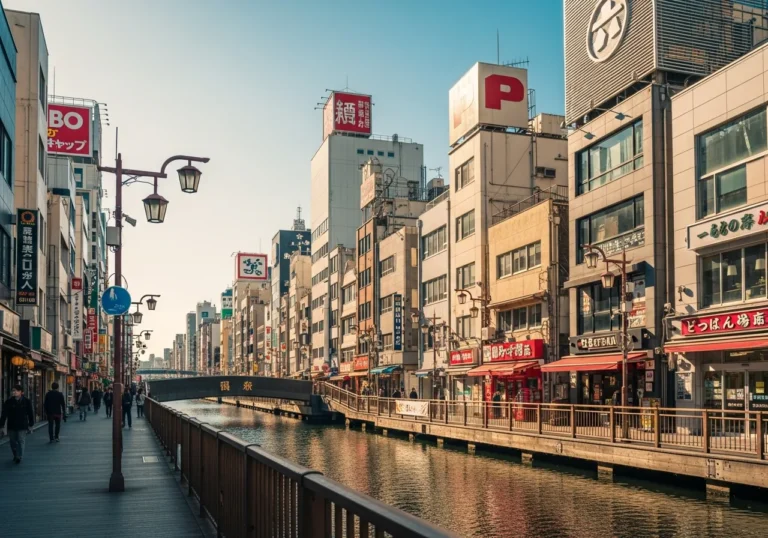
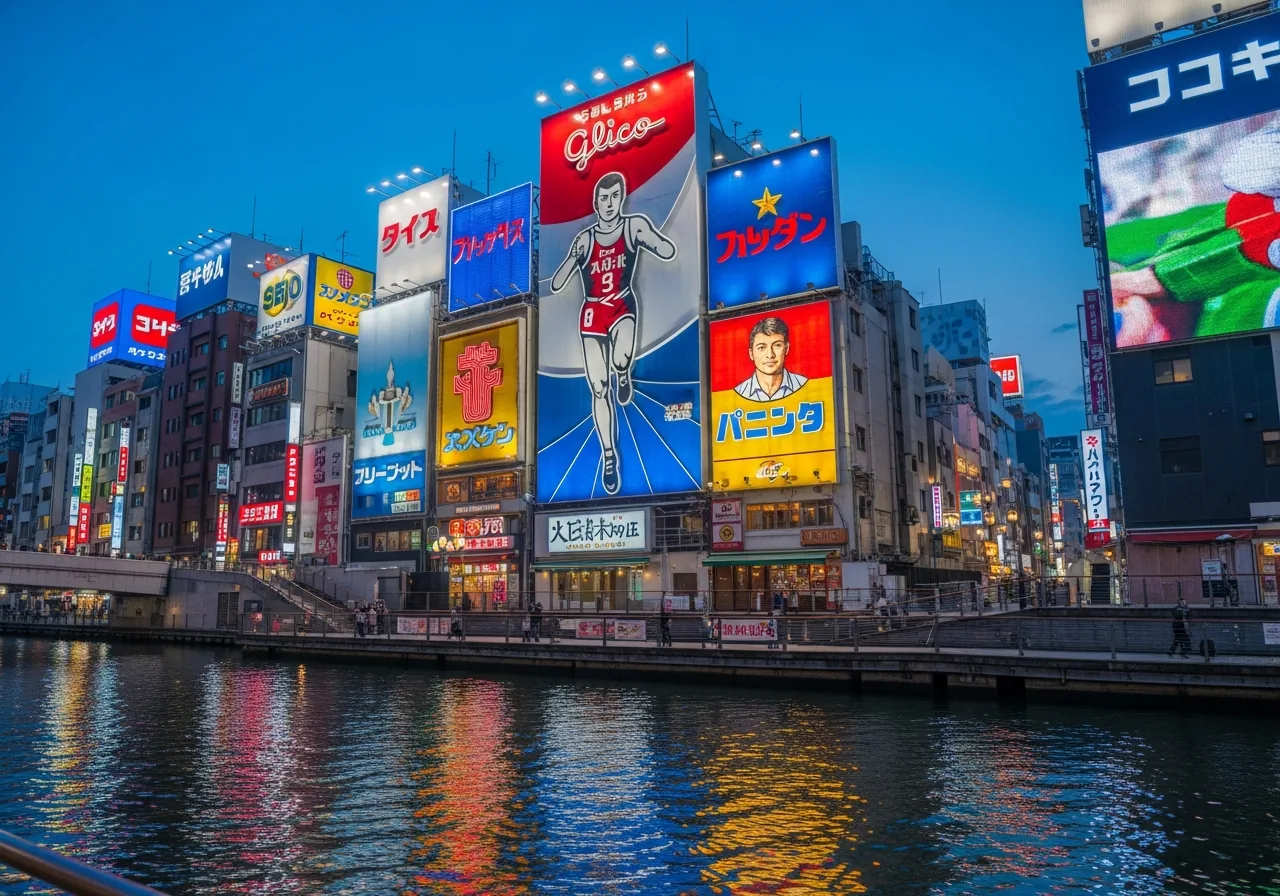
Most people encounter Glico before they even know what it is. You land in Osaka, make your way to Dotonbori, and there he is — a neon runner frozen mid-stride above the canal, arms raised, one knee up, grinning at the crowd below. You take the photo. Everyone takes the photo. But the story behind that sign, and the candy company it advertises, is genuinely worth knowing.
The best food in Osaka has always been tied to the city’s commercial DNA, and Glico is no exception. Founded in 1922 by Riichi Ezaki in Osaka, Ezaki Glico Co., Ltd. grew from a small confectionery business into a global leader in the snack food sector. The running man on that sign isn’t just a logo — he’s a 90-year-old piece of urban furniture that has outlasted wars, kidnappings, and six complete redesigns.
This guide covers the two places in Osaka where you can actually engage with the Glico story in person: the Dotonbori sign itself and the official Glico-ya shop beneath it, plus the Ezaki Memorial Hall — the company’s own museum — out in Nishiyodogawa. Neither requires much time. Both reward curiosity. If you want to explore more of Osaka beyond the obvious tourist circuit, the museum in particular is the kind of detour that makes a trip feel like yours.
1. The Glico Man Sign (グリコサイン) — Dotonbori
- 📍 Ebisubashi Bridge, 1 Dotonbori, Chuo-ku, Osaka (above the canal, visible from the bridge)
- 🕐 Illuminated nightly; best viewed after dark (as of May 2026)
- 💰 Free to view
- 🚃 Namba Station (3 min walk) / Shinsaibashi Station (5 min walk)
- 🗺 Open in Google Maps
- 📋 Tabelog
Glico was founded in 1922 by Riichi Ezaki in Osaka, and the company is best known internationally for Pocky, launched in 1966. But the sign came first. The original running man billboard went up in 1935 to promote Glico, a food and snacks company founded in Osaka. Founder Ri-ichi Ezaki created the original caramel candy as an energy product by adding glycogen from oysters, and the claim was that each piece gave you enough energy to run 300 metres — hence the running man.
The sign has gone through six major updates since 1935, and the latest version, installed in 2014, is a dynamic LED screen that displays animations and seasonal themes. This sixth-generation sign is made up of 140,000 LED lights. Since 1972, the sign has shown the Running Man on a running track with some of Osaka’s best-known landmarks — Osaka Castle and Tsutenkaku Tower were added to the background in 1998.
The sign has had several overhauls and been altered to celebrate various sporting triumphs through the years, including when Japan hosted the Soccer World Cup and to support the Hanshin Tigers, Osaka’s baseball team. Come after 7pm. The canal reflections double the effect, and the crowd thins slightly once the tour groups move on to dinner.
2. Glico-ya (グリコや) — Dotonbori Shop
- 📍 Nakaza Kuidaore Building 1F, 1-7-21 Dotonbori, Chuo-ku, Osaka
- 🕐 10:00–22:00 daily (as of May 2026)
- 💰 ¥500–¥3,000 (souvenirs and snacks)
- 🚃 Namba Station (3 min walk)
- 🗺 Open in Google Maps
- 📋 Tabelog
What to buy: Giant Pocky sets (¥1,000–¥2,500), Osaka-exclusive Pocky flavours (¥500–¥800)
The Glico-ya store, found directly beneath the company’s big blue billboard, serves as a one-stop shop for edible souvenirs — popular items include super-sized Pocky as well as candy boxes made in collaboration with popular anime franchises. It’s compact, well-stocked, and sells Osaka-exclusive flavours you won’t find at a convenience store. Skip the generic Pocky you can buy anywhere and go for the regional editions or the oversized gift boxes — they’re the actual reason to stop in.
3. Ezaki Memorial Hall — Glico Museum (江崎記念館)
- 📍 4-5-5 Utajima, Nishiyodogawa-ku, Osaka 555-8502
- 🕐 Weekdays and 1st & 3rd Saturdays, guided tours at 10:00, 11:30, 13:00, and 14:30 (each session approx. 1 hour) (as of May 2026)
- 💰 Free (advance reservation required)
- 🚃 Tsukamoto Station on JR Tokaido Main Line (16 min walk) / Mibejima Station on JR Tozai Line (18 min walk)
- 🗺 Open in Google Maps
- 📋 Tabelog
- 🌐 Official site
The Ezaki Memorial Hall was built in 1972 to commemorate the 50th anniversary of the founding of Glico. Located on the company’s headquarters premises in Nishiyodogawa Ward, the museum displays the history of the Glico Group, along with numerous product packages, advertisements, Glico toys, and items related to founder Riichi Ezaki. A display of approximately 4,000 of the toys included in Glico Caramel boxes is a centrepiece, and the museum was approved as a modernised industrial heritage by the Ministry of Economy in 2008 and registered by Osaka City as a landscape resource in 2017.
The museum provides essential English information via QR codes, ensuring accessibility for international visitors. The visit ends with gift bags and a small shop offering limited-edition snacks. Book online at least a day ahead — walk-ins are not accepted. The museum sits inside Glico’s working headquarters, which makes the whole thing feel less like a tourist attraction and more like being let into someone’s house.
Note: Tours run on weekdays and the first and third Saturdays only; the museum is closed on Sundays, public holidays, other Saturdays, summer holidays, Golden Week, and New Year’s holidays. Check the official site before booking.
The Glico Morinaga Incident — A Dark Chapter
No honest account of Glico’s history skips this. In 1984, the Glico Morinaga case — a series of criminal incidents targeting major Japanese food manufacturers — saw Ezaki Glico targeted by a group known as “The Monster with 21 Faces.” The group claimed that sweets worth ¥2.26 billion had been laced with potassium cyanide, while the company president was kidnapped (he escaped on his own), and Glico’s office was burned by the criminals. The case was never solved. It remains one of Japan’s most notorious unsolved crimes, and it’s part of why the Glico name carries a certain weight in Osaka beyond just candy nostalgia. The Ezaki Memorial Hall touches on this period — it’s handled with restraint, but it’s there.
Baton d’or (バトンドール) — Glico’s Upscale Pocky
- 📍 Hankyu Umeda Department Store, 8-7 Kakudacho, Kita-ku, Osaka / Takashimaya Osaka Store, 5-1-5 Namba, Chuo-ku, Osaka
- 🕐 Department store hours (typically 10:00–20:00) (as of May 2026)
- 💰 ¥1,200–¥2,500 per box
- 🚃 Umeda Station (direct access via Hankyu) / Namba Station (3 min walk to Takashimaya)
- 🗺 Open in Google Maps
- 📋 Tabelog
What to buy: Baton d’or Butter Pretzel with Chocolate (¥1,500–¥2,000 per box)
Most people don’t realise Glico makes this. Baton d’or is a pretzel with butter kneaded into the dough, covered with a mist of clear butter and coated with melt-in-your-mouth chocolate — and it’s only sold at certain department stores and airports. Osaka locations include the Hankyu Umeda Department Store and the Takashimaya Osaka Store. It’s Pocky for adults, essentially — the kind of thing you buy as a gift and then eat yourself on the train home. The MICHI Osaka travel guide covers both Umeda and Namba in depth if you want to plan a full day around either department store.
How to Visit
The Dotonbori sign and Glico-ya shop require zero planning — just show up. The Ezaki Memorial Hall is the opposite: advance reservation is mandatory, tours run on a fixed schedule, and the museum is closed on weekends except the first and third Saturdays. Book via the Glico website (Japanese only, but navigable with a browser translation tool) at least one day before your visit.
For the sign itself, the best viewing spot is from Ebisubashi Bridge, looking north along the canal. The sign faces south, so you want to be standing on the bridge or along the south bank of the canal. Arrive after 7pm for the full LED effect. The crowd peaks around 8–9pm on weekends — if you want a clean photo, come on a weekday evening or just after the sign lights up at dusk.
The Glico-ya shop is busiest in the early afternoon when tour groups pass through. It’s a small space. Come before noon or after 8pm for a more relaxed browse.
FAQ
Q: Is visiting the Glico sign and shop expensive?
A: The sign is free to view. The Glico-ya shop sells items from around ¥500 for a standard Pocky pack up to ¥3,000 for large gift sets. The Ezaki Memorial Hall is free but requires a reservation.
Q: Do these spots have English support?
A: The Glico-ya shop in Dotonbori is tourist-friendly and largely self-service. The Ezaki Memorial Hall conducts tours in Japanese, but QR codes throughout the exhibits provide English information. Staff are reportedly accommodating of foreign visitors.
Q: When is the best time to see the Glico sign?
A: After dark, full stop. The LED display is invisible in daylight. Weekday evenings between 7pm and 9pm offer the best balance of atmosphere and manageable crowds. Weekends in summer and during Golden Week get extremely busy.
Q: Can I visit the Ezaki Memorial Hall without a reservation?
A: No. Reservations are required and must be made online at least one day in advance. Walk-ins are not accepted. The museum is also closed on Sundays, public holidays, and most Saturdays — check the official Glico website for the current schedule before planning your visit.
Q: Where can I buy Baton d’or in Osaka?
A: At the Hankyu Umeda Department Store or Takashimaya Osaka (Namba). Both carry it year-round. It’s also available at Osaka Itami Airport if you’re buying on the way out.
Information is accurate as of May 2026. We recommend checking Google Maps for the latest hours and prices before visiting.