Last updated: July 19, 2026
This article reflects information available at the time of writing. Check Google Maps for the latest hours and availability.
Introduction
Every great cuisine has a secret. France has its fond. China has its master stock. Osaka has dashi — and it has been quietly running the show here for centuries before anyone outside Japan paid attention.
Dashi is deceptively simple: steep kombu (dried kelp) in cold water, bring it to a near-simmer, add katsuobushi (shaved dried bonito), steep briefly, strain. What you get is a pale, almost translucent liquid that carries more flavour per millilitre than almost anything else in a professional kitchen. Osaka’s flavour begins with dashi broth carefully made with bonito flakes and dried sardines, with kombu providing the key underlying tone. That combination — oceanic, savoury, faintly sweet — is the reason Osaka food tastes the way it does.
The city’s relationship with dashi isn’t incidental. In Osaka, a city that famously lives by the creed of kuidaore — to eat oneself into ruinous delight — Kuromon Ichiba Market has nourished the city for nearly two centuries. The dried goods stalls inside that market, stacked with graded kombu and hand-shaved katsuobushi, are where the city’s cooks have sourced their dashi ingredients for generations. The flavour of Osaka is, in a very real sense, the flavour of those ingredients.
This guide traces dashi from its historical roots to the living, eating present. You’ll find the udon shops that built their reputations on a single perfect broth, the market stalls where you can buy the raw ingredients, and the cooking experiences where you can learn to make it yourself. If you want to understand the best food in Osaka, start here — with the stock that everything else is built on.
For context on the neighbourhoods covered in this article, explore more of Osaka with our full area guide.
A Brief History of Dashi
Kombu has been harvested from the cold waters around Hokkaido for over a thousand years. By the Edo period (1603–1868), a well-organised trade route — the Kitamaebune shipping lane — carried dried Hokkaido kombu south to Osaka, which became the national distribution hub for the ingredient. Osaka merchants graded it, traded it, and cooked with it daily. The city’s light, kombu-forward broth style became the defining characteristic of Kansai cuisine, setting it apart from the darker, soy-heavy stocks of Tokyo and the east.
Katsuobushi — bonito that has been smoked, dried, and fermented until it resembles a piece of wood — arrived as the second pillar. The combination of kombu glutamates and katsuobushi inosinates produces a synergistic umami effect that is measurably stronger than either ingredient alone. Japanese cooks understood this empirically centuries before food scientists named it. When the word “umami” was formally identified by chemist Kikunae Ikeda in 1908, he was essentially putting a label on what Osaka kitchens had been doing since the 1600s.
Among the many dishes that dashi underpins, kitsune udon was born in Osaka. The simplicity of kitsune udon — udon noodles topped with sweetened fried tofu and chopped scallion — is the ultimate expression of dashi broth culture. First served in 1893 at Usamitei Matsubaya, kitsune udon features plump fried tofu simmered for three days until sweet and juicy, layered atop hot noodles. That dish is still on the menu today, at the same restaurant, in the same neighbourhood.
Dashi’s global influence accelerated in the late 20th century as Japanese cuisine spread internationally and chefs began studying its structure. Today, Michelin-starred kitchens in Paris, New York, and Copenhagen use kombu and katsuobushi as flavour tools. The MICHI Osaka travel guide traces that lineage back to its source — and the source is here.
1. Dotonbori Imai (道頓堀 今井)
- 📍 1-7-22 Dotonbori, Chuo-ku, Osaka 542-0071
- 🕐 11:00–22:00 (last order 21:30), closed Wednesdays (as of May 2026)
- 💰 ¥900–¥2,000 per person (food only)
- 🚃 Namba Station (5 min walk)
- 🗣 English menu: Yes
- 🗺 Open in Google Maps
- 📋 Tabelog
What to order: Kitsune udon (¥1,100)
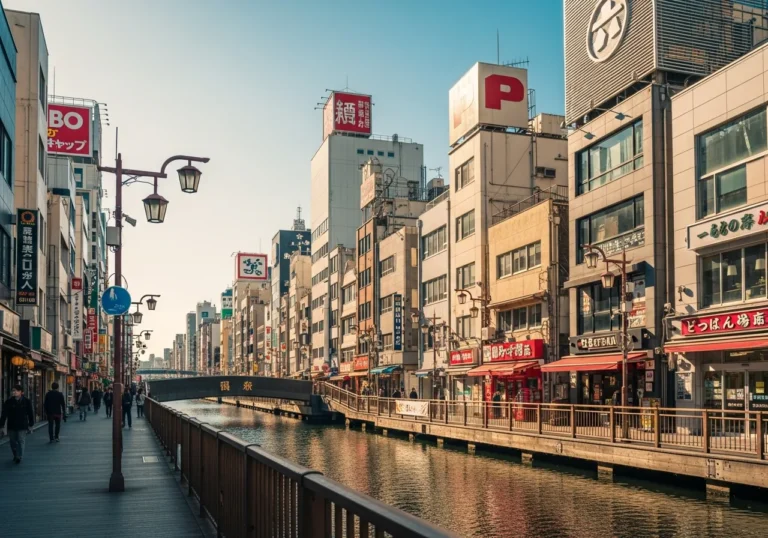
With more than 70 years of history, Dotonbori Imai is a long-established udon restaurant located in the middle of Dotonbori, Osaka. The true star is the broth: a clear yet deeply flavoured dashi made with kombu, katsuobushi, and urume-bushi (round herring flakes). Order the kitsune udon, eat slowly, and pay attention to the broth — this is what centuries of refinement tastes like.
2. Usamitei Matsubaya (うさみ亭マツバヤ)
- 📍 1-1-2 Minamisemba, Chuo-ku, Osaka 542-0081
- 🕐 11:30–14:30, closed Sundays and public holidays (as of May 2026)
- 💰 ¥900–¥1,500 per person (food only)
- 🚃 Shinsaibashi Station (5 min walk)
- 🗺 Open in Google Maps
- 📋 Tabelog
What to order: Kitsune udon (¥950)
Usami-tei Matsubaya in Minami-semba has served kitsune udon since 1893 and claims to have invented it. The dashi leans on kelp and dried bonito, giving a subtly sweet, umami-rich base that lets the tofu and noodles do the talking. The room is small, the menu is short, and the lunch queue moves fast — arrive at 11:30 to avoid the wait.
3. Kuromon Ichiba Market — Kombu and Katsuobushi Stalls (黒門市場)
- 📍 2-4-1 Nipponbashi, Chuo-ku, Osaka 542-0073
- 🕐 Most stalls 9:00–18:00 daily (as of May 2026)
- 💰 ¥500–¥3,000 depending on what you buy
- 🚃 Nippombashi Station (1 min walk)
- 🗺 Open in Google Maps
- 📋 Tabelog
What to buy: Graded Rishiri kombu (¥800–¥2,500 per pack), fresh-shaved katsuobushi (¥600–¥1,200)
Don’t overlook the dried goods stores. Filled with dried kelp, bonito flakes, dried shiitake mushrooms, and various beans, these shops are the heart of Japanese flavour. This is where dashi originates. Observing the different grades of kombu or watching katsuobushi being shaved deepens your appreciation for the complexity of Japanese cuisine. The market runs nearly 600 metres under a covered arcade — the dried goods stalls are concentrated toward the southern end.
4. Katsumon (かつもん)
- 📍 2-8-1 Sennichimae, Chuo-ku, Osaka 542-0074
- 🕐 11:30–14:30, 18:00–23:00; closed Tuesdays (as of May 2026)
- 💰 ¥900–¥1,800 per person (food only)
- 🚃 Namba Station (10 min walk)
- 🗺 Open in Google Maps
- 📋 Tabelog
What to order: Katsumon udon (¥1,100)
Katsumon, located a 10-minute walk from Namba Station, serves udon and soba both at lunch and late at night. Their signature dish is generously topped with five types of toppings including egg and green onions, and the carefully crafted dashi — made by blending kombu and katsuobushi — is the key to its flavour. The restaurant has a cosy space with only nine counter seats, creating an atmosphere that is easy to enter even solo.
5. Washin Dashimakiya Konbi — Umeda (和心だし巻き家 こんびの)
- 📍 3-1-3 Umeda, Kita-ku, Osaka 530-0001 (Innogate Osaka, 4F)
- 🕐 11:00–23:00 daily (as of May 2026)
- 💰 ¥1,200–¥2,000 per person (food only)
- 🚃 Osaka Station (3 min walk)
- 🗺 Open in Google Maps
- 📋 Tabelog
What to order: Dashimaki tamago set (¥1,400)
Dashimaki tamago — the rolled omelette saturated with dashi — is one of the clearest ways to taste the stock in isolation. This restaurant on the 4th floor of Innogate Osaka is known for its dashimaki tamago, which often draws long queues. The egg is rolled around a generous pour of katsuobushi dashi, served with grated daikon and a small bowl of the broth on the side. It is, in the best possible way, a one-ingredient argument for why dashi matters.
6. Sakura Cook — Dashi and Washoku Cooking Class (さくらクック)
- 📍 1-4-5 Higashishinsaibashi, Chuo-ku, Osaka 542-0083
- 🕐 Classes run 10:00–13:00 and 14:00–17:00; booking required (as of May 2026)
- 💰 ¥5,000–¥7,000 per person (class fee, includes meal)
- 🚃 Shinsaibashi Station (5 min walk)
- 🗣 English menu: Yes (English-language instruction available)
- 🗺 Open in Google Maps
- 📋 Tabelog
What to order: Dashi and washoku class (¥6,000)
Sakura Cook offers small classes covering dashi, miso soup, and udon in approachable steps, with English support throughout. You pull your own dashi from scratch — cold-steep the kombu, add the katsuobushi, strain — then use it as the base for miso soup and a main dish. It takes about 20 minutes and produces something that tastes nothing like the powder version. Book at least a week ahead; classes fill quickly.
7. Imai Honten — Namba (今井本店)
- 📍 1-7-22 Dotonbori, Chuo-ku, Osaka 542-0071
- 🕐 11:00–22:00, closed Wednesdays (as of May 2026)
- 💰 ¥1,000–¥2,500 per person (food only)
- 🚃 Namba Station (5 min walk)
- 🗣 English menu: Yes
- 🗺 Open in Google Maps
- 📋 Tabelog
What to order: Nabeyaki udon (¥1,800)
Imai in Dotonbori is an old institution, famous for handmade noodles and a refined broth. The nabeyaki udon arrives in a clay pot, still bubbling, with a raw egg cracked on top just before service. The broth is the same kombu-and-bonito base that has defined the restaurant for decades — clear, golden, and precise. Their kitsune udon and kamo-negi suki-nabe (duck and leek hot pot) are also must-tries.
8. Takoyaki at Kougaryu — Dotonbori (甲賀流 道頓堀店)
- 📍 1-6-4 Dotonbori, Chuo-ku, Osaka 542-0071
- 🕐 10:00–22:00 daily (as of May 2026)
- 💰 ¥600–¥900 per person (food only)
- 🚃 Namba Station (5 min walk)
- 🗺 Open in Google Maps
- 📋 Tabelog
What to order: Plain takoyaki, 8 pieces (¥700)
Invented in 1935 by Endo Tomekichi of Nishinari’s Aizuya, takoyaki captures plump octopus in dashi-rich batter and is grilled to golden spheres on copper plates. The ball is a dashi-seasoned batter poured into a cast-iron mould, with octopus, tenkasu (tempura scraps), pickled ginger, and spring onion. Kougaryu is one of the few Dotonbori shops that still serves a plain version without sauce — which is the only way to actually taste the dashi in the batter. Order those first.
How to Order
Most of the restaurants in this guide operate on a walk-in basis at lunch, but queues at Usamitei Matsubaya and Dotonbori Imai can stretch to 20–30 minutes on weekends. Arrive at opening time (11:00–11:30) to walk straight in.
For the cooking class at Sakura Cook, book online at least a week in advance. Classes are small — typically six to eight people — and English-language sessions fill faster than Japanese ones.
At Kuromon Ichiba, the dried goods stalls are concentrated toward the southern end of the arcade, near the Nippombashi Station exit. Most vendors are happy to let you smell and handle the kombu before buying. Rishiri kombu (from Rishiri Island, Hokkaido) is the premium grade used in Osaka-style dashi — look for it specifically. Expect to pay ¥800–¥2,500 for a pack that will make 10–15 batches of dashi at home.
At udon restaurants, the standard move is to order kitsune udon on your first visit — it is the dish that most directly showcases the broth, with minimal distraction from heavy toppings. If you want to go further, nabeyaki udon (served in a clay pot) keeps the broth hot throughout the meal and lets you taste how it evolves as the egg and vegetables cook into it.
Vegetarians and vegans: kombu dashi (made without katsuobushi) is technically plant-based, but most Osaka udon restaurants use a combined kombu-and-bonito stock. Ask specifically for “kombu dashi nomi” (kombu stock only) — some places can accommodate this, but it is not standard. Many dishes use dashi as a base, so always ask if you have dietary restrictions.
FAQ
Q: Is dashi-focused food in Osaka expensive?
A: Not at all. A bowl of udon usually runs ¥500 to ¥800 at casual spots, and even the more established restaurants like Imai and Usamitei Matsubaya keep their kitsune udon under ¥1,200. The cooking class at Sakura Cook costs ¥5,000–¥7,000 but includes a full meal and is the most educational ¥6,000 you will spend in Osaka.
Q: Do dashi-focused restaurants in Osaka have English menus?
A: The major udon institutions — Dotonbori Imai and Usamitei Matsubaya — both have English menus or picture menus. Sakura Cook runs its classes in English. Kuromon Ichiba’s dried goods vendors generally do not have English signage, but pointing and gesturing works fine, and many stall owners have basic English for tourist transactions.
Q: When is the best time to visit?
A: Udon restaurants are busiest at lunch on weekends (12:00–13:30). Arrive at opening — 11:00 or 11:30 — to avoid queues. Kuromon Ichiba is most atmospheric in the morning (9:00–11:00) when the market is stocked and the crowds are manageable. Avoid the market on Sunday afternoons, when tourist foot traffic peaks and the dried goods stalls can be hard to browse at leisure.
Q: Can I buy dashi ingredients to take home?
A: Yes, and it is one of the best food souvenirs from Osaka. Kuromon Ichiba’s kombu and katsuobushi vendors sell vacuum-packed products that travel well. Rishiri kombu and hon-karebushi (fully fermented katsuobushi) are the two ingredients worth prioritising. Both keep for months and will produce noticeably better dashi than anything available in supermarkets outside Japan.
Q: What is the difference between Osaka dashi and Tokyo dashi?
A: Osaka dashi is lighter, cleaner, and more kombu-forward. What sets the Osaka version apart is the broth: lighter and more delicate than the dark, soy-heavy soups of eastern Japan. The dashi leans on kelp and dried bonito, giving a subtly sweet, umami-rich base. Tokyo-style broths tend to use more soy sauce and darker, stronger katsuobushi, producing a more assertive flavour. Neither is better — they are different philosophies, and Osaka’s is the older one.
Information is accurate as of May 2026. We recommend checking Google Maps for the latest hours and prices before visiting.