Looking for temples, shrines, and neighbourhood walks in Tanimachi, Osaka? This guide covers the street’s 4.7-kilometre spine — from the government quarter at Tanimachi 4-chome down to the temple clusters around Tanimachi 7-chome to 9-chome — with five key stops, a historic shopping street, and everything you need to walk it in a half-day.
MICHI’s Pick — Selected by our Osaka-based team, based on places we’ve visited and on research using Tabelog and Google Maps ratings. In Japan, a Tabelog score of 3.4+ is genuinely high — Japanese reviewers are famously strict, and most locals consider anything above 3.4 a place worth a detour. We feature venues meeting at least one of: Tabelog 3.4+, Google Maps 4.3+, or 100+ reviews — the kind of spots locals quietly trust.
Tabelog and Google Maps scores are accurate as of the time of writing.
1. Shitennoji Temple (四天王寺)
📍 1-11-18 Shitennoji, Tennoji Ward, Osaka 543-0051
🕐 8:30–16:30 (inner precinct); outer grounds open 24 hours (as of May 2026)
💰 ¥300 (inner precinct) / ¥300 (garden) / ¥500 (treasure house)
🚃 Shitennoji-mae Yuhigaoka Station (Tanimachi Line) (5 min walk)
🗣 English menu: N/A (temple, not a restaurant)
⭐ Rating: Google 4.3 (10,000+ reviews) (as of writing)
🗺 Open in Google Maps
📋 Tabelog
🌐 Official site
What to order: Free outer grounds (¥0); inner precinct (¥300)
Shitennoji is Japan’s first officially administered Buddhist temple, founded in 593 by Prince Shotoku — which makes it older than Kyoto itself. The five-storey pagoda framed against a clear sky is one of those views that actually delivers, and the ¥300 entry to the Central Complex is one of the best-value cultural experiences in the city. If you can time it right, a flea market is held on the 21st and 22nd of every month, where vendors spread out across the temple grounds selling everything from antique kimono to handmade pottery.
The stone torii gate built in 1294 serves as a boundary for the sacred area, bearing witness to the fact that Shinto and Buddhism were at that time perceived as one unified spiritual world and not separated. That detail alone is worth pausing over. For more on what to eat and drink nearby, check out the best food in Osaka — the Tennoji area has plenty of options within walking distance.
2. Isshinji Temple (一心寺)
📍 2-8-69 Kita-Ayabecho, Tennoji Ward, Osaka 543-0062
🕐 9:00–16:00 daily (as of May 2026)
💰 Free entry
🚃 Ebisucho Station (Sakaisuji Line) (7 min walk)
⭐ Rating: Google 4.2 (3,000+ reviews) (as of writing)
🗺 Open in Google Maps
📋 Tabelog
What to order: Free entry — no ticket required
Isshinji is a Pure Land Buddhist temple founded in 1185 by the monk Honen, sitting on a gentle rise in Tennoji that once offered an unobstructed view of the setting sun. For over 800 years, ordinary Osaka residents have been entrusting their ashes here, and since the Meiji period the temple has been crafting those remains into a series of monumental Buddha statues — thirteen in total — each one incorporating the bones of tens of thousands of devotees.
Walking through the main gate is your first genuine surprise: forget the weathered cedar and subdued earthen tones you expect from ancient temples. This gate is a striking work of modern art — steel beams, bold geometric forms, and massive swing doors embossed with intricate bas-reliefs — all designed by the current head priest, who also happens to be a trained architect. It’s a ten-minute walk south of Shitennoji, and the two make a natural pairing.
3. Ikukunitama Shrine (生國魂神社)
📍 13-9 Ikutamacho, Tennoji Ward, Osaka 543-0071
🕐 Open daily; grounds accessible from early morning (as of May 2026)
💰 Free entry
🚃 Tanimachi 9-chome Station (Tanimachi Line) (4 min walk)
⭐ Rating: Google 4.1 (1,500+ reviews) (as of writing)
🗺 Open in Google Maps
📋 Tabelog
What to order: Free entry — no ticket required
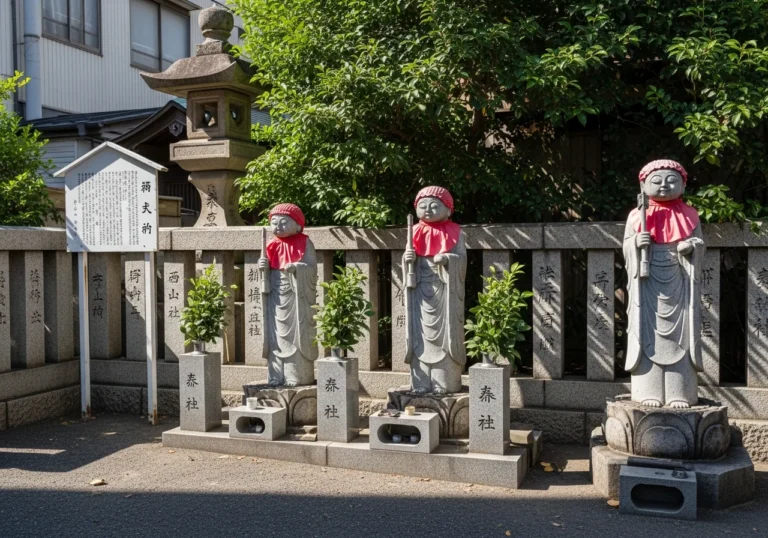
Ikukunitama Shrine — known affectionately to locals as “Ikutama-san” — is the oldest shrine in Osaka, tracing its origins back roughly 2,700 years to when Emperor Jinmu, Japan’s legendary first emperor, is said to have enshrined the deities Ikushima Okami and Ashijima Okami here to pray for peace across the land. The shrine was originally located on the Uemachi Plateau where Osaka Castle now stands, and was relocated to its current site in Tennoji Ward in 1583 when Toyotomi Hideyoshi commissioned the castle.
Ikukunitama Shrine does something most tourist-circuit shrines in Osaka fail to do: it actually feels lived-in. Locals come here to pray on ordinary Tuesday mornings. The grounds are genuinely expansive, with over a dozen subsidiary shrines to wander through, and the main hall’s Ikukunitama-zukuri roof architecture is quietly unlike anything else you’ll encounter in the city.
4. Karahori Shotengai (空堀商店街)
📍 6-chome Tanimachi, Chuo Ward, Osaka 542-0012
🕐 Individual shops vary; arcade accessible daily (as of May 2026)
💰 Free to walk; cafes and shops from ¥500
🚃 Tanimachi 6-chome Station (Tanimachi Line) (2 min walk)
⭐ Rating: Google 4.1 (500+ reviews) (as of writing)
🗺 Open in Google Maps
📋 Tabelog
What to order: Browse and graze — coffee from ¥500, lunch sets from ¥900
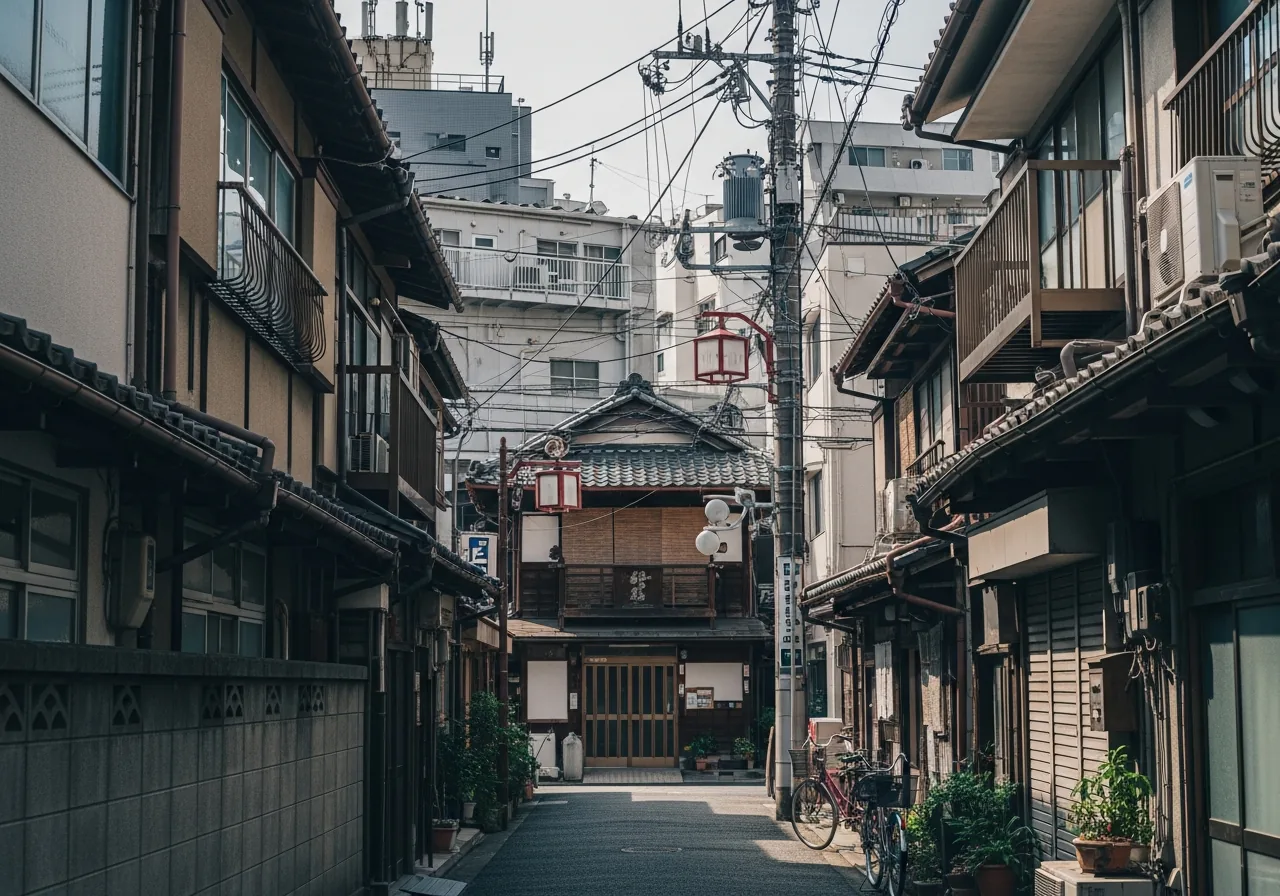
Sitting just south of Osaka Castle, Karahori feels removed from the city’s faster pace. Around Karahori Shopping Street, old nagaya townhouses sit beside family-run shops, small galleries, and cafes tucked into buildings that have been given a second life. Karahori Shotengai is split in two by Tanimachi-suji Avenue, and the uphill western section is the more atmospheric half — this is the only shotengai you’ll recall having to walk uphill, and you get a light workout going from one end to the other. Tanimachi 6-chome Station is convenient for Karahori Shotengai, a historical shopping street that has recently seen a resurgence in popularity for its fashionable boutiques and cafes.
5. Tanimachi-suji Avenue (谷町筋)
📍 Tanimachi-suji, Chuo Ward to Tennoji Ward, Osaka (Tenmabashi intersection to Kintetsu-mae intersection)
🕐 Open 24 hours (public street) (as of May 2026)
💰 Free
🚃 Any Tanimachi Line station along the route (1 min walk)
🗺 Open in Google Maps
📋 Tabelog
What to order: Free walking route — no entry fee
The avenue itself is the attraction. Tanimachi-suji runs north to south through central Osaka for approximately 4.7 kilometres, from the Tenmabashi intersection down to the Kintetsu-mae intersection near Abeno, with the Osaka Metro Tanimachi Line running directly beneath it. The northern stretch around Tanimachi 4-chome is all government offices and Osaka Castle views; head south and the mood shifts completely. Between Tanimachi 7-chome and 9-chome, temples line both sides of the road in clusters — this is the stretch locals call the “temple town” section. The Tanimachi Line’s purple colour scheme is said to reference the purple of a Buddhist monk’s robes, a detail that feels entirely appropriate once you’ve walked this stretch. To explore more of Osaka beyond the Tanimachi corridor, the Tanimachi Line connects directly to Umeda, Namba, and Tennoji.
6. Tennoji Seven Slopes (天王寺七坂)
📍 Uemachi Plateau, Tennoji Ward, Osaka (start near Tanimachi 9-chome Station)
🕐 Open 24 hours (public paths) (as of May 2026)
💰 Free
🚃 Tanimachi 9-chome Station (Tanimachi Line) (3 min walk)
⭐ Rating: Google 4.3 (200+ reviews) (as of writing)
🗺 Open in Google Maps
📋 Tabelog
What to order: Free walking route — no entry fee
Seven named stone-paved slopes cut down the western face of the Uemachi Plateau, each one flanked by small temples, old townhouses, and the occasional weeping cherry tree. The Uemachi Plateau is one of Osaka’s best areas for quiet temple paths. The slopes connect Ikukunitama Shrine at the top to the streets below in a series of short, steep descents — none takes more than five minutes to walk, but together they form one of the most atmospheric routes in the city. Just at the transition from asphalt to stone pavers on Genshoji-zaka, look left and peer into the garden surrounding Ginzan-ji Temple, a small temple dating from the 16th century. Entry is only allowed on special days, but directly across stands an impressive two-storey wooden gate marking the entrance to Reien-ji Temple, which is open to the public.
7. Osaka Prefectural Government Building and Tanimachi 4-chome (大阪府庁・谷町四丁目)
📍 2-1-3 Otemae, Chuo Ward, Osaka 540-8570
🕐 Exterior viewable 24 hours; building open Mon–Fri 9:00–18:00 (as of May 2026)
💰 Free (exterior and public areas)
🚃 Tanimachi 4-chome Station (Tanimachi / Chuo Lines) (4 min walk)
⭐ Rating: Google 4.0 (300+ reviews) (as of writing)
🗺 Open in Google Maps
📋 Tabelog
What to order: Free to visit exterior
The northern anchor of the Tanimachi corridor is a different world from the temple clusters to the south. Osaka Castle sits in a 106-hectare park that needs two to three hours even at a brisk pace, and the closest stations are Tanimachi 4-chome on the Tanimachi Line and Morinomiya on the JR Loop. The government quarter here — prefectural offices, national agency buildings, the Osaka Museum of History — gives the northern stretch of Tanimachi-suji a formal, almost austere character that makes the transition southward into temple territory feel all the more dramatic. Start here, walk south, and let the city’s 1,400-year arc unfold under your feet. The MICHI Osaka travel guide has more on combining this walk with nearby districts like Morinomiya and Uehonmachi.
FAQ
Q: What is the best neighbourhood walk in Tanimachi, Osaka?
A: The stretch from Tanimachi 4-chome south to Shitennoji-mae Yuhigaoka Station covers the full range — government quarter, temple clusters, the Karahori shopping street, and the Seven Slopes of Tennoji. Allow three to four hours on foot. Start at Tanimachi 4-chome Station and finish at Tennoji Station.
Q: How many temples are in the Tanimachi area?
A: The Tanimachi corridor and the surrounding Uemachi Plateau are home to well over a hundred temples and shrines. The densest clusters sit between Tanimachi 7-chome and 9-chome, and again around Shitennoji and Isshinji in Tennoji Ward. Most are free to enter and see almost no foreign visitors.
Q: Do Tanimachi temples have English signage?
A: Shitennoji has solid English signage throughout the inner precinct and a bilingual website. Isshinji has some English panels near the Bone Buddha hall. Ikukunitama Shrine and the smaller temples along the Seven Slopes have little to no English — but the spaces speak for themselves, and a translation app handles any gaps easily.
Q: What should I see at the temples along Tanimachi-suji in Osaka?
A: At Shitennoji, the five-storey pagoda and the Gokuraku-jodo Garden are the highlights — the garden is especially good in autumn. At Isshinji, the modernist gate and the Bone Buddha statues are unlike anything else in Japan. At Ikukunitama Shrine, the subsidiary shrines and the distinctive layered roof of the main hall reward a slow wander. If you visit on the 21st or 22nd of the month, Shitennoji’s flea market turns the whole complex into a sprawling antiques and craft market.
Last updated: July 19, 2026 · Corrections: [email protected]