Last updated: July 19, 2026
This article reflects information available at the time of writing. Check Google Maps for the latest hours and availability.
Introduction
Every city has a neighborhood that explains it. In Osaka, that neighborhood is Tennoji. It’s Osaka’s historic heart, home to Japan’s oldest officially administered Buddhist temple, Shitennoji. The whole district grew up around that temple — the streets, the markets, the entertainment quarter — and the layers are still visible if you know where to look.
Tennoji blends ancient temple grounds, a retro entertainment district, and a modern skyline featuring Abeno Harukas, Japan’s tallest skyscraper. That range is what makes it worth a full day rather than a quick detour. You can spend a quiet morning inside a 1,400-year-old pagoda, eat kushikatsu under neon signs at lunch, and watch the sun go down over the entire Kansai plain from 300 metres up — all without getting on a train.
Although its name reflects an origin of religious devotion, for much of its existence Tennoji had a less than divine reputation — home to many homeless persons and day laborers, with an undercurrent of activity that competed with the park, zoo, and art museum. Recently, however, the area around Tennoji Station has been renovated into one of the most attractive destinations in Osaka city. The grit hasn’t entirely disappeared, and that’s part of the appeal. Shinsekai still feels like Osaka before the Instagram era. The flea market at Shitennoji still draws the same crowd it always has.
This guide covers the key spots in the neighborhood — the ones that reward time and attention. For everything else the city has to offer, browse the best food in Osaka or explore more of Osaka through our full area guides.
1. Shitennoji Temple (四天王寺)
- 📍 1-11-18 Shitennoji, Tennoji-ku, Osaka 543-0051
- 🕐 Outer grounds: always open. Inner precinct (Garan): 8:30–16:30 (Apr–Sep); 8:30–16:00 (Oct–Mar). Longer hours on the 21st of each month. (as of May 2026)
- 💰 Outer grounds: free / Inner precinct: ¥300 / Garden: ¥300
- 🚃 Shitennoji-mae Yuhigaoka Station (Tanimachi Line) — 5 min walk; JR Tennoji Station — 15 min walk
- 🗣 English signage available throughout the grounds
- 🗺 Open in Google Maps
- 📋 Tabelog
- 🌐 Official site
What to see: Five-storied pagoda + inner precinct (¥300)
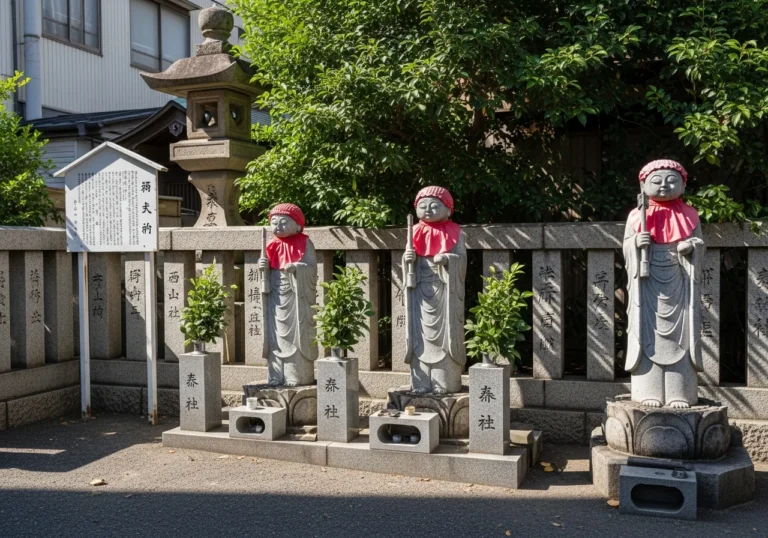
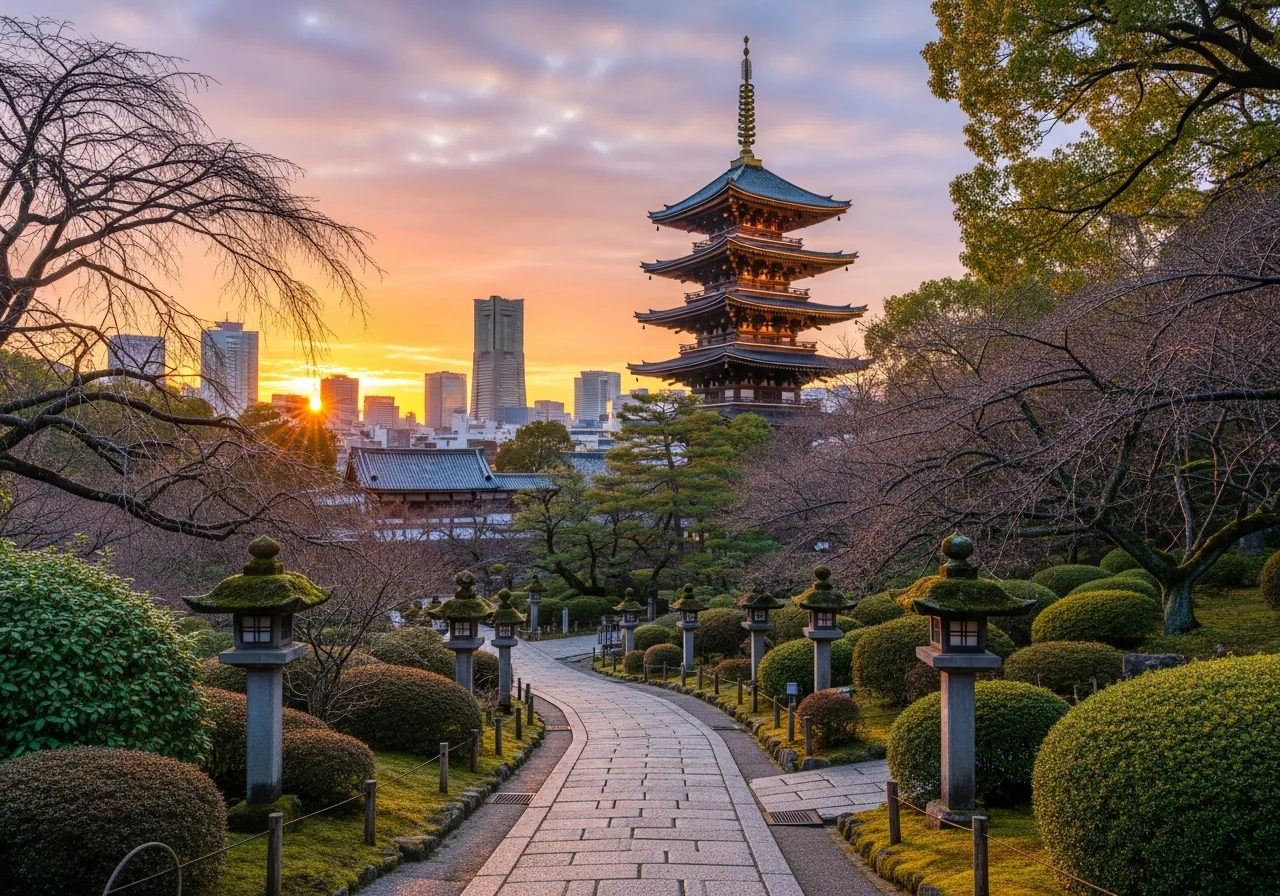
Shitennoji is one of Japan’s oldest temples and the first ever to be built by the state, founded in 593 by Prince Shotoku. Although the buildings burned down several times over the centuries, they were always carefully reconstructed to reflect the original 6th-century design. In the pebble-covered courtyard of the inner precinct stands a five-storied pagoda that can be entered and ascended, and the Main Hall in which Prince Shotoku is enshrined as a statue of Kannon. The outer grounds are free and worth wandering even if you skip the paid sections — the stone torii gate at the entrance is one of the more quietly striking things in Osaka.
2. Abeno Harukas (あべのハルカス)
- 📍 1-1-43 Abenosuji, Abeno-ku, Osaka 545-6058
- 🕐 Harukas 300 Observatory: 9:00–22:00 (last entry 21:30), open daily (as of May 2026)
- 💰 Observatory (Harukas 300): ¥2,000 adults / ¥1,200 children (6–17) / ¥700 children (4–5)
- 🚃 Osaka-Abenobashi Station (Kintetsu) / Tennoji Station (JR, Osaka Metro) — direct connection
- 🗣 English menu: Yes (restaurant floors)
- 🗺 Open in Google Maps
- 📋 Tabelog
- 🌐 Official site
What to see: Harukas 300 observation deck (¥2,000)
More than just an observation deck, Abeno Harukas packs shopping, dining, an art museum, and even a hotel into one standout destination. At 300 metres tall, this skyscraper is a symbol of the Tennoji area and one of Osaka’s top landmarks. From the Harukas 300 observatory on the 58th, 59th, and 60th floors, you can see the Osaka skyline, Osaka Bay, and parts of Kobe and Wakayama Prefecture. Come at dusk — the transition from golden hour to full city lights is the best ¥2,000 you’ll spend in Osaka.
3. Tennoji Park and Keitakuen Garden (天王寺公園・慶沢園)
- 📍 1-108 Chausuyama-cho, Tennoji-ku, Osaka 543-0063
- 🕐 Park: 7:00–21:00 (Tenshiba area). Keitakuen Garden: 9:30–17:00, closed Mon (as of May 2026)
- 💰 Park: free / Keitakuen Garden: ¥150
- 🚃 Tennoji Station (JR / Osaka Metro) — 5 min walk
- 🗺 Open in Google Maps
- 📋 Tabelog
What to see: Keitakuen Garden (¥150) and Tenshiba lawn
The Osaka City Museum of Fine Arts stands on the former residence of the prominent Sumitomo family, and the traditional Japanese garden Keitakuen has been preserved alongside it. The garden is one of the most undervisited spots in the entire city — a proper stroll garden with a large pond, stone lanterns, and almost no crowds on weekday mornings. The Tenshiba lawn area in front of the park is where Osaka families come on weekends, and it’s a good place to decompress between the temple and the tower.
4. Osaka City Museum of Fine Arts (大阪市立美術館)
- 📍 1-82 Chausuyama-cho, Tennoji-ku, Osaka 543-0063
- 🕐 9:30–17:00 (last entry 16:30), closed Mon (as of May 2026)
- 💰 Permanent collection: ¥300 / Special exhibitions: ¥1,000–¥1,800 (varies)
- 🚃 Tennoji Station (JR / Osaka Metro) — 10 min walk
- 🗺 Open in Google Maps
- 📋 Tabelog
- 🌐 Official site
What to see: Permanent collection of Japanese and Chinese art (¥300)
Tennoji Park is home to the Osaka City Museum of Fine Arts, which preserves many valuable Japanese artworks, including important cultural properties, and hosts exhibitions of noteworthy works. The permanent collection — heavy on Japanese paintings, Chinese bronzes, and Buddhist sculpture — is genuinely strong and costs only ¥300. The building itself, a 1936 neo-classical structure set at the end of a long approach through the park, is worth the walk even if you don’t go inside.
5. Tsutenkaku Tower and Shinsekai (通天閣・新世界)
- 📍 1-18-6 Ebisuhigashi, Naniwa-ku, Osaka 556-0002 (Tsutenkaku Tower)
- 🕐 Tower: 10:00–20:00 (last entry 19:30), open daily. Shinsekai district: 24 hours (as of May 2026)
- 💰 Tower observation deck: ¥900 adults / ¥400 children (5–14). Shinsekai district: free to enter
- 🚃 Ebisucho Station (Sakaisuji Line) — 4 min walk; Shin-Imamiya Station (JR / Osaka Metro) — 7 min walk
- 🗺 Open in Google Maps
- 📋 Tabelog
- 🌐 Official site
What to see: Tower observation deck (¥900) + Janjan Yokocho alley
Shinsekai represents the spirited everyday life of Osaka, with its flashy neon signs and the iconic Tsutenkaku Tower. Janjan Yokocho is a narrow, atmospheric alley in Shinsekai lined with kushikatsu restaurants, retro game centres, small bars, and red lanterns — the name means “bustling alley.” Shinsekai is significantly cheaper than Dotonbori or Umeda — expect to pay ¥800–1,500 for a full kushikatsu meal with beer. The tower itself is worth the ¥900 for the views and the Billiken statue on the third floor, but the real reason to come here is the street.
6. Tennoji Zoo (天王寺動物園)
- 📍 1-108 Chausuyama-cho, Tennoji-ku, Osaka 543-0063
- 🕐 9:30–17:00 (last entry 16:00); extended to 18:00 (last entry 17:00) on Sat, Sun, and holidays in May and September. Closed Mon (as of May 2026)
- 💰 ¥500 adults / ¥200 children (elementary school age) / free under school age
- 🚃 Tennoji Station (JR / Osaka Metro) — 8 min walk; Shin-Imamiya Station — 5 min walk (Shinsekai gate)
- 🗺 Open in Google Maps
- 📋 Tabelog
- 🌐 Official site
What to see: African savanna zone and nocturnal animal house
Tennoji Zoo, about a 10-minute walk from Shitennoji, is an urban zoo housing around 200 species and 1,000 animals, and it is a popular destination for families. Open since 1915, it has over 100 years of history, and the exhibits are designed to reflect the natural habitats of the animals, creating a striking contrast with Osaka’s urban skyline. At ¥500 for adults, it’s one of the better-value afternoons in the city — and the view of Tsutenkaku rising above the giraffe enclosure is genuinely one of Osaka’s more surreal sights.
7. Spa World (スパワールド)
- 📍 3-4-24 Ebisuhigashi, Naniwa-ku, Osaka 556-0002
- 🕐 10:00–08:45 next day (effectively 24 hours with a brief cleaning break), open daily (as of May 2026)
- 💰 ¥1,000–¥1,500 (daytime entry, varies by zone and season) / overnight stays available
- 🚃 Shin-Imamiya Station (JR / Osaka Metro) — 3 min walk
- 🗺 Open in Google Maps
- 📋 Tabelog
- 🌐 Official site
What to do: European and Asian onsen zones (entry from ¥1,000)
Spa World is a six-floor onsen complex where each floor is themed around a different bathing culture — Roman baths, Finnish saunas, Balinese pools. It sounds gimmicky, and it is, but it’s also genuinely relaxing and very popular with locals. The European and Asian zones alternate by gender monthly, so check the website before you go. It’s the right place to end a long day of walking Tennoji and Shinsekai — and at under ¥1,500, it’s hard to argue with.
8. The Tennoji Seven Slopes (天王寺七坂)
- 📍 Uemachi Plateau, Tennoji-ku, Osaka (various — start from Shingonzaka near Shitennoji)
- 🕐 Always open (outdoor walking route) (as of May 2026)
- 💰 Free
- 🚃 Shitennoji-mae Yuhigaoka Station (Tanimachi Line) — 3 min walk to Shingonzaka
- 🗺 Open in Google Maps
- 📋 Tabelog
What to do: Self-guided walking route (free)
The seven stone-paved slopes of Tennoji Ward — Shingonzaka, Genshojizaka, Kuchinawazaka, Aizenzaka, Kiyomizuzaka, Tenjinzaka, and Osaka — are known as the “Tennoji Seven Slopes.” All are made of stone and each carries its own history and views. This is the quietest and most rewarding way to see the neighborhood. The slopes run along the Uemachi Plateau, connecting old temple precincts and small shrines, and on a weekday morning you’ll have most of them to yourself. Allow two hours to walk all seven at a relaxed pace. The MICHI Osaka travel guide has more on self-guided walking routes across the city.
How to Get Around
Tennoji is one of Osaka’s best-connected hubs. Tennoji Station is one of the main terminals in the area and provides direct connections to Nara, Kansai International Airport, and Wakayama. The station is split between Tennoji and Abeno areas due to different railway companies — JR and Osaka Metro — making it a bustling interchange for the whole southern part of the city.
Most of the spots in this guide are within a 15-minute walk of each other. The logical order is: Shitennoji Temple in the morning (quietest before 10:00), then Tennoji Park and the museum, then Shinsekai and Tsutenkaku for lunch and early afternoon, then Abeno Harukas at dusk. Spa World works as a late-evening finish. The Seven Slopes walk fits best between the temple and the park — it connects them naturally.
The Osaka Metro day pass (¥820) covers all the subway lines you’ll need and pays for itself quickly if you’re combining Tennoji with Namba or Umeda.
FAQ
Q: Is Tennoji expensive to visit?
A: Not at all. Shitennoji’s inner precinct is ¥300. Tennoji Zoo is ¥500. Keitakuen Garden is ¥150. The Seven Slopes are free. Even Abeno Harukas observatory, the priciest single ticket here, is ¥2,000. A full day covering all eight spots in this guide costs around ¥5,000–¥6,000 per person including a kushikatsu lunch in Shinsekai.
Q: Do the attractions in Tennoji have English support?
A: Better than most parts of Osaka. Shitennoji has English signage throughout. Abeno Harukas has English-language audio guides and multilingual staff. Tsutenkaku has English floor maps. Spa World’s entry process is straightforward even without Japanese. The Seven Slopes have no official English signage, but the route is easy to follow with Google Maps.
Q: When is the best time to visit Tennoji?
A: Weekday mornings are ideal for Shitennoji and the Seven Slopes — both are noticeably quieter before 10:00. Shinsekai and Tsutenkaku are liveliest in the early evening, roughly 17:00–20:00, when the neon kicks in and the kushikatsu restaurants fill up. Abeno Harukas is best visited 30–45 minutes before sunset for the full light show. The 21st of each month is a flea market day at Shitennoji — the grounds fill with antique and secondhand stalls from early morning.
Information is accurate as of May 2026. We recommend checking Google Maps for the latest hours and prices before visiting.