Last updated: July 19, 2026
This article reflects information available at the time of writing. Check Google Maps for the latest hours and availability.
Introduction
Some foods become famous. A rare few become civic identity. The butaman from 551 Horai (551蓬莱) is the latter. Ask any Osaka local what they bring home from a trip, and the answer is almost always the same: a red-and-white bag, still warm, smelling of pork and onion. 551 Horai’s steamed pork buns are so famous that they’re a popular souvenir for locals in Japan to bring home after a trip to Osaka. That’s not marketing — that’s just how it works here.
But the story behind that bun is more interesting than most visitors realise. It starts in the rubble of postwar Namba, runs through a Taiwanese immigrant’s instinct for what Osaka people actually want to eat, and ends with a number borrowed from a cigarette packet. Three Chinese immigrants from Taiwan opened a Chinese diner called Horai in Osaka in 1945. They expanded the business and operated several diners in Osaka but eventually broke up in 1963 and established their own individual companies. What survived that split — and thrived — became one of the most recognisable food brands in western Japan.
This guide walks you through the full history of 551 Horai: where it came from, what makes the butaman different, why you can only buy it in Kansai, and exactly where to go when you’re ready to join the queue. If you want to go deeper into the best food in Osaka, understanding 551 Horai is as good a place to start as any — it tells you almost everything about how this city eats.
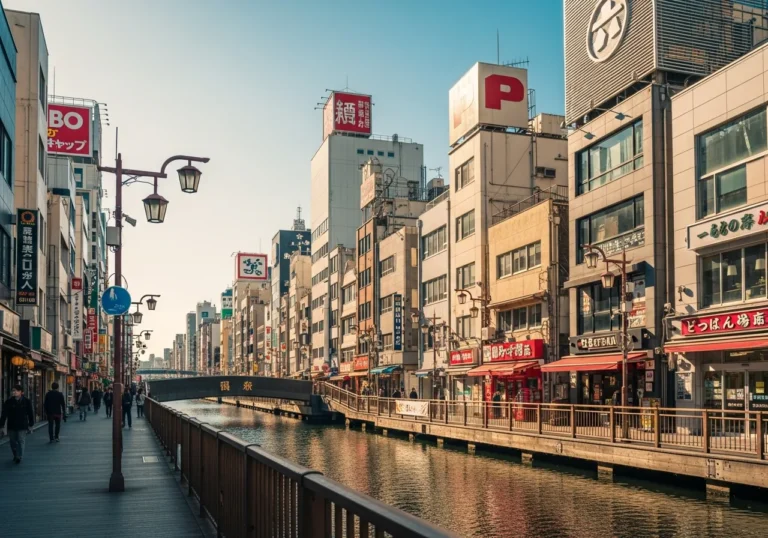
1. 551 Horai Honten — The Original (551蓬莱 本店)
- 📍 3-6-3 Namba, Chuo-ku, Osaka
- 🕐 11:00–22:00 (dine-in); takeout counter hours may vary (as of May 2026)
- 💰 ¥200–¥600 (takeout) / ¥800–¥2,000 (dine-in, 2F–3F restaurant)
- 🚃 Namba Station (1 min walk)
- 🗺 Open in Google Maps
- 📋 Tabelog
- 🌐 Official site
What to order: Butaman pork bun (¥310 each)
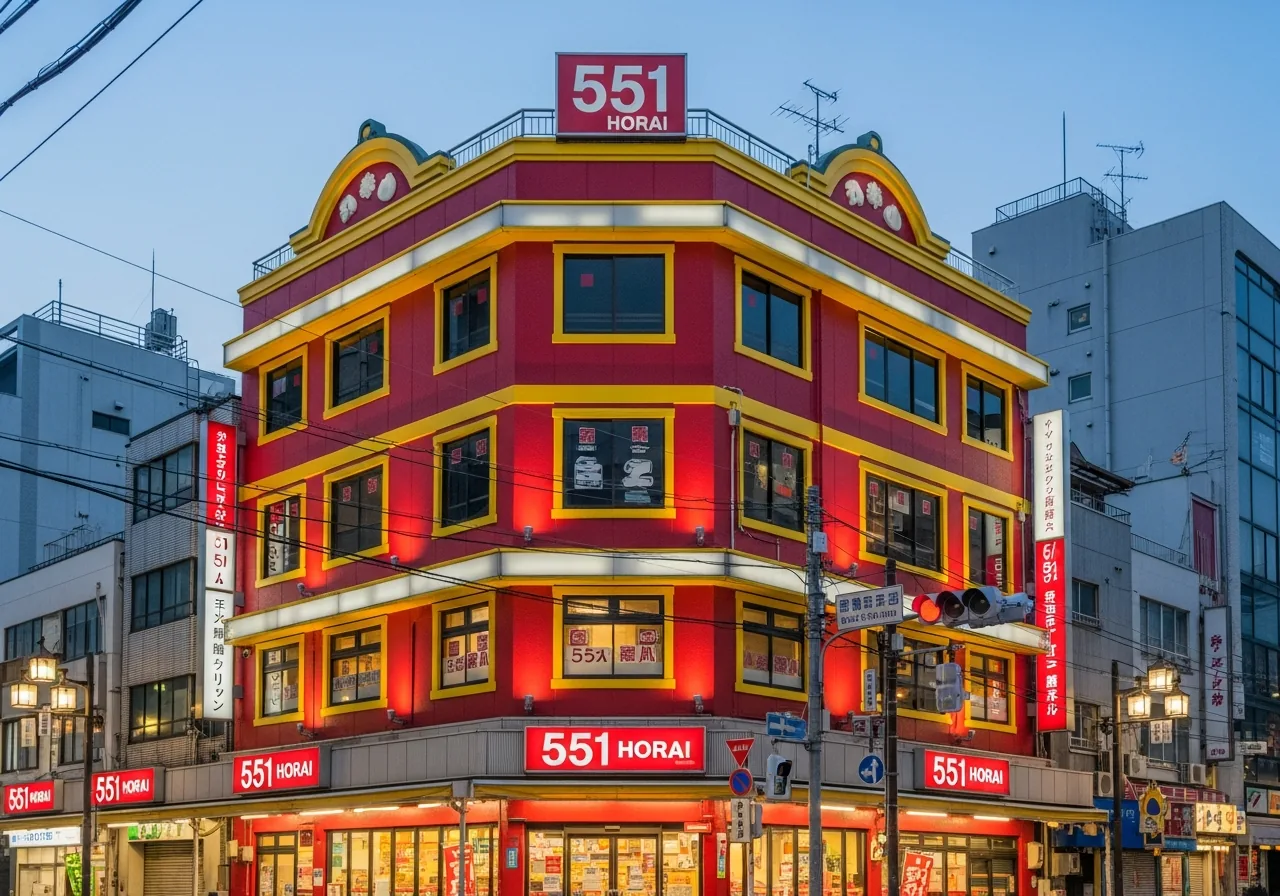
The birthplace of 551 Horai, where you can enjoy Osaka’s famous freshly made pork buns. The second and third floors of the restaurant offer a variety of Chinese dishes such as seafood fried noodles and dim sum at reasonable prices. This is the one to visit if you want the full picture — queue at the ground-floor counter, then head upstairs to eat properly.
2. The Founding Story: Namba, 1945
- 📍 Namba, Chuo-ku, Osaka (historical origin point)
- 🕐 N/A — historical context section
- 🚃 Namba Station
- 🗺 Open in Google Maps
- 📋 Tabelog
The origin: Horai Shokudo, Namba (1945)
551 Horai was founded in Namba, Osaka in 1945 by Luo Bang Qiang and two other friends. The restaurant initially made its name not with pork buns but with curry rice — a practical, filling dish for a city rebuilding from wartime devastation. The pivot to butaman came when founder Luo noticed the steamed pork buns being sold in Kobe’s Nankinmachi (Chinatown): small, close to xiaolongbao in size, filled with minced pork and spring onion. He adapted them for Japanese tastes — slightly larger, with a seasoning profile tuned to what Osaka people actually wanted — and coined the name “butaman” rather than the Chinese “buta manju.” The word was punchy, unambiguous, and easy to say. It stuck.
3. Why It’s Called “Butaman” (Not Nikuman)
- 📍 Osaka-wide cultural context
- 🚃 Any Namba or Shinsaibashi station
- 🗺 Open in Google Maps
- 📋 Tabelog
The linguistic detail: A word that tells you everything about Osaka’s food culture
In Tokyo and most of Japan, steamed pork buns are called nikuman — “meat bun.” In western Japan, the same item made with pork is specifically called butaman, meaning “pork bun.” In western Japan, “meat” often means beef, so pork-based buns get their own name. In order to clarify that the meat in these buns was pork and not beef, people began calling them butaman instead. It’s a small linguistic detail that reveals something real about Osaka’s culinary DNA — this is a city where beef has always been taken seriously, and where precision about what you’re eating matters.
4. The Split: How “551” Got Its Name
- 📍 Namba, Osaka (historical)
- 🚃 Namba Station
- 🗺 Open in Google Maps
- 📋 Tabelog
The name origin: A phone number, a cigarette, and a motto
Three Chinese immigrants from Taiwan opened a Chinese diner called Horai in Osaka in 1945. They expanded the business and operated several diners in Osaka but eventually broke up in 1963 and established their own individual company. When Luo Bang Qiang went independent, he wanted a name that was easy to remember. The last three digits of the shop’s telephone number were 551, and the cigarette brand he smoked at the time — “555” — gave him the idea to use numbers rather than words. The team later retrofitted a motto onto those digits: koko ga ichiban — “this place is number one in both taste and service.” Convenient, but the phone number story is the real one. Today, 551 Horai operates more than 50 stores selling pork buns and other dim sum in Osaka and its surroundings.
5. The Takeout Revolution: Same Price, Same Bun
- 📍 Ebisubashi-suji, Namba, Osaka (historical)
- 💰 Butaman: ¥310 each (as of May 2026)
- 🚃 Namba Station
- 🗺 Open in Google Maps
- 📋 Tabelog
The business insight: No box surcharge — ever
In 1952, 551 Horai began selling butaman at the shop front for customers to take home — a genuinely novel concept at the time. What made it radical wasn’t the takeout itself but the pricing. At a time when it was standard practice to charge customers extra for the box, Luo sold the butaman at the same price whether you ate in the restaurant or took it home. His logic: if the bun is the same bun, the price should be the same price. That philosophy — customer first, margin second — became the company’s founding principle and has never changed. The specialty of the store is the butaman, which is hand-wrapped one at a time, with a focus on “same-day production and same-day sales.”
6. 551 Horai Shin-Osaka Station (551蓬莱 新大阪駅店)
- 📍 Shin-Osaka Station, Yodogawa-ku, Osaka (JR Central Concourse)
- 🕐 8:00–21:00 (as of May 2026)
- 💰 ¥310–¥1,200 (takeout)
- 🚃 Shin-Osaka Station (directly inside)
- 🗺 Open in Google Maps
- 📋 Tabelog
What to order: Butaman (¥310) + Shumai 4-piece set (¥420)
This is the location that most visitors encounter first — and the one that generates the longest queues. Every time you pass the 551 Horai shop in Shin-Osaka station, there’s always a long line around evening commute hours. It’s the last chance to grab buns before boarding the Shinkansen back to Tokyo, which is exactly why the queue exists. Horai 551 is found only in Osaka and the Kansai region — so for many visitors, this is genuinely their last opportunity. Go before noon or after 8pm to avoid the worst of it.
7. What’s Actually in the Bun
- 📍 All 551 Horai locations, Osaka
- 🕐 Varies by location
- 💰 ¥310 per butaman
- 🚃 Namba Station or Shin-Osaka Station
- 🗺 Open in Google Maps
- 📋 Tabelog
What to order: Butaman (¥310), Shumai (¥420 for 4 pieces), Yaki-gyoza
The slightly sweet and elastic skin is filled with diced pork and onion filling. The juicy pork and the sweetness of the onions spread in your mouth in a well-balanced way. All of 551 Horai’s butaman are handmade. The filling uses diced pork rather than minced — a deliberate choice that gives each bite more texture than the convenience-store versions most people have tried. They also offer other Chinese dishes such as shumai (steamed meat dumplings), sweet and sour pork meatballs, noodles, and gyoza. The shumai, in particular, are worth picking up alongside the butaman.
8. 551 Horai vs. Horai Honkan — The Other Horai
- 📍 Multiple locations across Osaka
- 🕐 Varies by location
- 💰 ¥300–¥400 per butaman (Horai Honkan)
- 🚃 Namba Station
- 🗺 Open in Google Maps
- 📋 Tabelog
What to order: Butaman (price varies by location)
A common point of confusion: there are two separate companies using the Horai name, and they are not the same thing. Originally the same company — Horai Shokudo — the business eventually split into 551 Horai, Horai Honkan, and Horai Bekkan, each going independent. Horai’s butaman differ from 551’s in a couple of ways: their buns are much fluffier in texture, they have a more equal bun-to-filling ratio, and the filling includes additional ingredients like onion, mushroom, and shiitake. Neither is wrong. They’re just different interpretations of the same origin. If you want to explore more of Osaka beyond the obvious tourist trail, doing a side-by-side tasting of both is a genuinely worthwhile afternoon.
9. Why You Can Only Buy It in Kansai
- 📍 Kansai region only (Osaka, Kyoto, Kobe, Shiga, Wakayama)
- 🚃 Any major Osaka station
- 🗺 Open in Google Maps
- 📋 Tabelog
The constraint: Freshness over expansion
551 is deeply rooted in Osaka culture, but they don’t sell outside of western Japan. This is a deliberate quality decision: to maintain quality, the company only operates stores within 150 minutes of their Kansai factories. No Tokyo branches. No online shipping of fresh buns. 551 Horai can be found in Kyoto, Kobe, Shiga, and Wakayama — but there are no 551 Horai locations in Tokyo. The scarcity is part of the appeal, and it’s why the Shin-Osaka queue exists: people are stocking up before they leave the zone. The MICHI Osaka travel guide covers plenty of other Osaka-only foods worth tracking down, but few have this kind of enforced exclusivity built into their business model.
How to Order
Most 551 Horai locations operate as takeout counters rather than sit-down restaurants. The exception is the Honten (main store) in Namba, which has a full dine-in restaurant on the second and third floors. At takeout counters, you’ll typically queue at the window, point at what you want (there are usually photos or display models), pay, and receive your order in a paper bag. Buns are sold individually or in sets — a box of four butaman is the standard gift purchase.
Frozen versions are available at most locations and are worth buying if you want to take them further afield. They reheat well in a steamer or microwave. Fresh buns, however, are a different experience: eat them within 30 minutes of purchase, ideally standing outside the shop. If you purchase one at a train station, do not eat it on the local train — it’s considered rude due to the smell. Shinkansen are fine. Local trains are not.
If you want to avoid lines, go before noon or in the late evening. Weekend afternoons at Namba and Shin-Osaka are reliably chaotic. The queue moves fast — 551 Horai has been doing this for 80 years and the counter staff are efficient — but you’ll still wait 10–20 minutes at peak times.
FAQ
Q: How much does a 551 Horai butaman cost?
A: The pork buns cost ¥310 for one. A box of four runs around ¥1,240. Shumai (4 pieces) are approximately ¥420. Dine-in at the Honten restaurant will run ¥800–¥2,000 per person depending on what you order.
Q: Do 551 Horai shops have English menus?
A: Most takeout counters rely on photos and display models, which makes ordering straightforward without language skills. The dine-in restaurant at the Honten has a picture menu. Staff at major tourist-area locations (Namba, Shin-Osaka) are accustomed to non-Japanese speakers pointing and gesturing.
Q: When is the best time to visit?
A: Weekday mornings before noon, or after 8pm on any day. There’s always a long line around evening commute hours at Shin-Osaka, and weekend afternoons at Namba are similarly busy. The Honten dine-in restaurant is less crowded at lunch on weekdays.
Q: Can I take 551 Horai buns back to Tokyo?
A: Fresh buns are best eaten within a few hours. Frozen buns travel fine and are sold at most locations — they’ll survive a Shinkansen ride and reheat well at home. There are no 551 Horai locations in Tokyo, so frozen is your only option for taking the taste home.
Q: Is 551 Horai the same as “Horai” sold in supermarkets?
A: No. The original Horai Shokudo split into multiple independent companies — 551 Horai, Horai Honkan, and Horai Bekkan — each operating separately. The 551 Horai brand (red packaging, Namba-based) is a distinct company from the Horai products found in supermarkets outside Kansai.
Information is accurate as of May 2026. We recommend checking Google Maps for the latest hours and prices before visiting.