Last updated: July 19, 2026
This article reflects information available at the time of writing. Check Google Maps for the latest hours and availability.
Introduction
Most people come to Osaka for the food. The takoyaki, the kushikatsu, the late-night ramen. But spend enough time here and you start to notice something else running underneath all of it — a deep, centuries-old relationship with sake that shaped not just what Osaka drinks, but how Japan drinks.
Osaka was never the biggest sake-producing region in Japan. That title belongs to Nada in Kobe, just 30 kilometres west. But Osaka was the market — the commercial engine that turned sake from a regional craft product into a national drink. Known historically as Settsu Province, Osaka was a major commercial hub from the Edo period, and as trade flourished, so did the number of sake breweries, with producers competing on the quality of their rice and water. Sake flowed into Osaka’s ports from across the Kansai region, was graded, priced, and redistributed to Edo (modern Tokyo) and beyond. The city didn’t just consume sake — it set the standard for it.
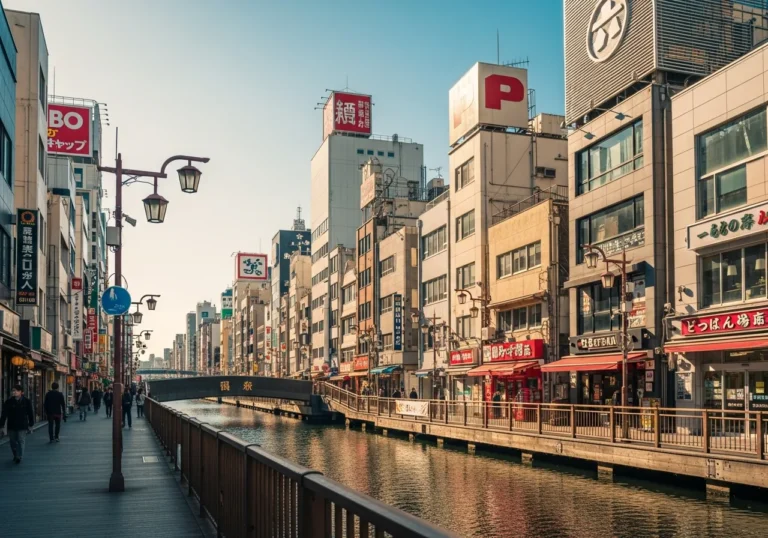
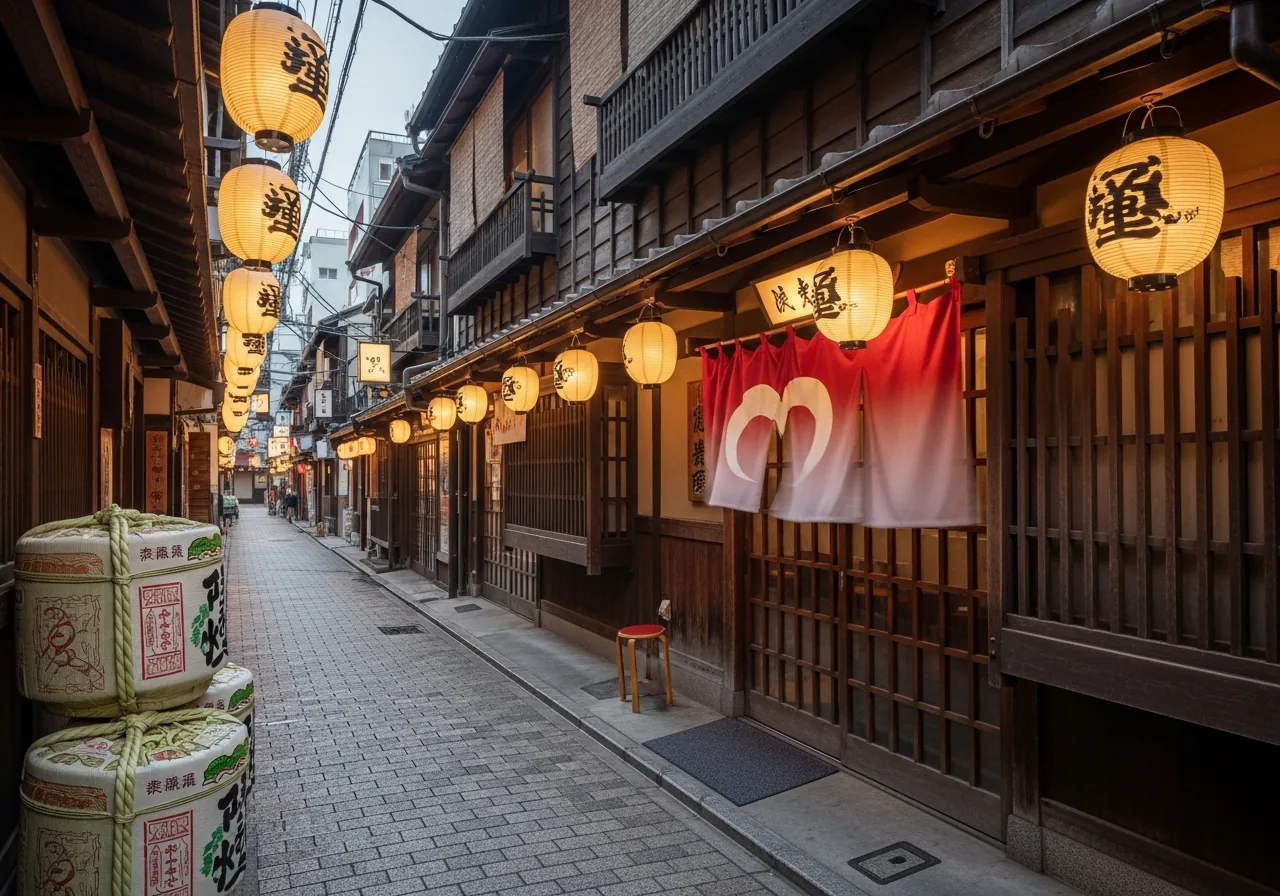
That history is still legible today, if you know where to look. Areas like Ura-Namba, east of Namba Station, have been gaining attention since around 2010 as a destination for bar-hopping, sitting about a 10-minute walk west from Dotonbori. Sake bars have multiplied across the city, from old-school izakayas in Tenma to polished tasting rooms in Fukushima. And out in Hannan, at the southern edge of the prefecture, Osaka’s oldest brewery has been making sake by hand since 1716.
This guide covers the places where Osaka’s sake culture is most alive — a working brewery you can tour, specialist bars where the list runs deep, and izakayas where sake is taken as seriously as the food. For more on what to eat and drink across the city, see the best food in Osaka. And if you want to explore more of Osaka beyond the sake trail, the MICHI Osaka travel guide has you covered.
1. Naniwa Shuzo (浪花酒造)
- 📍 3-13-6 Ozaki-cho, Hannan City, Osaka Prefecture 599-0201
- 🕐 Tours available (advance booking required) (as of May 2026)
- 💰 Tour fee varies by package; sake purchases from ¥1,000 per bottle
- 🚃 Ozaki Station, Nankai Main Line (6 min walk)
- 🗺 Open in Google Maps
- 📋 Tabelog
- 🌐 Official site
What to order: Gold Award junmai daiginjo (prices vary at the direct sales store)
Founded in the Kyoho era of the Edo period in 1716, Naniwa Shuzo is the oldest sake brewery in Osaka Prefecture, with over 300 years of continuous production. Hannan City is bordered by the Izumi Mountains, and the clear underground water from those mountains is medium-hard — ideal conditions for fermentation, which is why this corner of Osaka became a brewing stronghold. Even now, when computer-managed brewing is the industry norm, the brewery insists on manually overseeing rice, water, temperature, and humidity — an approach that has earned it multiple national awards.
A brewery tour runs about 60 minutes and takes you through the traditional handcrafted brewing process, starting with a short film inside the historic residence on the grounds, followed by detailed explanations of each production stage. The storehouse building is designated as a national tangible cultural property and continues to be used in the same condition as when the brewery first opened. Tours include sake tasting and a wooden masu cup to take home. The location is about an hour from central Osaka, but that’s part of the point — this is what sake country actually looks like.
Note: Tours require advance booking. Check the official site or contact the brewery directly before visiting.
2. SAKE NERD (サケナード)
- 📍 Namba area, Osaka (near JR Namba Station — confirm exact address via Google Maps)
- 🕐 Evenings; check Google Maps for current hours (as of May 2026)
- 💰 ¥3,000–¥6,000 per person (food and drinks)
- 🚃 JR Namba Station (3 min walk)
- 🗺 Open in Google Maps
- 📋 Tabelog
What to order: Seasonal sake pairings with Kawachi duck tataki
The kitchen at SAKE NERD focuses on dishes built to pair with drinks, using seasonal ingredients for creative cuisine — standouts include the Kawachi Duck Roast Tataki and Black Wagyu Sukiyaki Spring Rolls. This is a sake bar that takes the food side seriously, which puts it a cut above the average nihonshu spot in the Namba area. The list skews toward smaller Kansai producers, and the staff know their way around it. Confirmed operating through the 2025–2026 New Year period based on recent visitor reviews.
3. Tosui (とうすい)
- 📍 Namba area, Osaka (confirm exact address via Google Maps)
- 🕐 Evenings; check Google Maps for current hours (as of May 2026)
- 💰 ¥3,500–¥7,000 per person (food and drinks)
- 🚃 Namba Station (5 min walk)
- 🗺 Open in Google Maps
- 📋 Tabelog
What to order: Junmai daiginjo by the glass (prices vary by selection)
Tosui (とうすい) is a Namba-area izakaya and Japanese sake bar with a reputation for a carefully curated list and a no-smoking policy — rare enough in this part of the city to be worth flagging. The name itself is a classical Japanese term for the pleasure of drinking, which tells you something about the priorities here. This is the kind of place where you sit at the counter, let the staff guide you through a few pours, and end up staying two hours longer than planned. Solid anchor for a sake-focused evening in central Osaka.
4. Sake Pairing Bar Potan (酒ペアリングバー ぽたん)
- 📍 Fukushima area, Osaka (confirm exact address via Google Maps)
- 🕐 Evenings; check Google Maps for current hours (as of May 2026)
- 💰 ¥4,000–¥8,000 per person (tasting sessions and food)
- 🚃 Fukushima Station, JR Osaka Loop Line (5 min walk)
- 🗺 Open in Google Maps
- 📋 Tabelog
What to order: Masterclass tasting session (book in advance)
Sake Pairing Bar Potan is run by a former sake brewer who trained for a year at an Osaka brewery, and that background shows in how the sessions are structured. It’s a masterclass-style experience covering the history, brewing process, and cultural depth of Japanese sake, held in a space designed with traditional Japanese architecture where sake takes centre stage. Located in Fukushima, just minutes from central Osaka, it’s a calm and accessible setting to learn directly from a sake professional. If you want to leave Osaka actually understanding what you’ve been drinking, this is the most efficient way to do it.
5. Isomaru Suisan Dotonbori (磯丸水産 道頓堀店)
- 📍 Dotonbori, Chuo-ku, Osaka (confirm exact address via Google Maps)
- 🕐 Open late (often until 5:00 AM); check Google Maps for current hours (as of May 2026)
- 💰 ¥2,500–¥4,500 per person (food and drinks)
- 🚃 Namba Station (3 min walk)
- 🗺 Open in Google Maps
- 📋 Tabelog
What to order: Grilled seafood set + cold junmai (¥2,500–¥3,500 for food)
Isomaru Suisan is built around the combination of fresh seafood grilled at the table and carefully selected Japanese sake — a pairing that has been central to Osaka’s drinking culture for centuries. This is not a specialist sake bar; it’s a high-volume izakaya chain. But the Dotonbori branch does the format well, the sake list is broader than you’d expect, and the late hours make it a reliable last stop after a long night in Namba. The atmosphere is loud, the grills are smoking, and nobody is being precious about anything. That’s the point.
6. Robata no Sato Namba Branch (炉ばたの里 難波店)
- 📍 Namba area, Osaka (confirm exact address via Google Maps)
- 🕐 Evenings; check Google Maps for current hours (as of May 2026)
- 💰 ¥3,500–¥6,000 per person (food and drinks)
- 🚃 Namba Station (5 min walk)
- 🗺 Open in Google Maps
- 📋 Tabelog
What to order: Robatayaki seasonal set + temperature-served sake
At Robata no Sato, the sake is served at different temperatures — from hot atsukan to chilled hiyashi — across 11 distinct temperature levels, because the same sake genuinely changes in aroma and flavour depending on how it’s served. That level of attention to temperature is a direct inheritance from Osaka’s merchant-era sake culture, when buyers and sellers developed precise vocabularies for evaluating sake quality. The robatayaki is the draw for food, but the sake programme is the reason to linger.
7. Takashimaya Osaka Robatayaki (高島屋大阪 炉端焼き)
- 📍 5-1-5 Namba, Chuo-ku, Osaka (Takashimaya Osaka, 9F)
- 🕐 Check Google Maps for current hours (as of May 2026)
- 💰 ¥4,000–¥8,000 per person (food and drinks)
- 🚃 Namba Station (1 min walk)
- 🗺 Open in Google Maps
- 📋 Tabelog
What to order: Seasonal robatayaki + junmai daiginjo by the glass
Just a one-minute walk from Namba Station, this robatayaki restaurant on the 9th floor of Takashimaya Osaka serves seasonal grilled dishes alongside Japanese sake including junmai daiginjo. Department store restaurants in Japan are often better than their setting suggests, and this one earns its place on a sake-focused itinerary. The view over Namba is a bonus. It’s a practical choice if you want a sit-down sake experience without navigating the narrower streets of Ura-Namba.
How to Order
Sake in Osaka is ordered by the glass (ippai), by the small carafe (tokkuri), or — at specialist bars — by a tasting flight (nomi-kurabe). At most izakayas, a single glass runs ¥500–¥900 and a tokkuri (180ml) costs ¥800–¥1,500 depending on the grade. Junmai daiginjo, the premium category, will push toward the top of that range.
Temperature matters more than most visitors realise. Sake can be served at different temperatures — hot (atsukan), body temperature (hitohada-kan), or cold (hiyashi) — and the same sake genuinely changes in aroma and taste across those levels. If you’re unsure, ask for it cold (hiyashi) first. You can always try it warm later.
At brewery tours like Naniwa Shuzo, you’ll typically taste several grades side by side, which is the fastest way to understand the difference between a basic futsushu and a premium junmai. Don’t skip the direct sales store at the end — bottles bought at the source are often cheaper than retail, and you can taste before you buy.
At sake bars, it’s fine to tell the staff your flavour preferences: dry (karakuchi), fruity (fruity-kei), or rich and savoury (junmai-kei). Most specialist bar staff in Osaka speak enough English to navigate this conversation, especially in the Namba and Fukushima areas.
FAQ
Q: Is sake expensive in Osaka?
A: Not particularly. A glass at an izakaya runs ¥500–¥900. A tokkuri (small carafe, 180ml) is typically ¥800–¥1,500. Specialist sake bars charge more — expect ¥1,000–¥2,000 per glass for premium pours — but tasting flights often offer better value than ordering by the glass. Brewery tours at Naniwa Shuzo include tasting as part of the experience.
Q: Do sake bars in Osaka have English menus?
A: It varies. Tourist-facing spots like Isomaru Suisan and the Takashimaya restaurant floor generally have English menus or picture menus. Specialist sake bars in Namba and Fukushima often have Japanese-only lists, but staff at places like SAKE NERD and Sake Pairing Bar Potan are accustomed to international visitors and can guide you verbally. Pointing at what someone else is drinking also works reliably.
Q: When is the best time to visit Osaka for sake?
A: Winter and early spring (January to March) is the traditional brewing season — if you’re visiting Naniwa Shuzo, this is when the brewery is most active. For sake bars and izakayas, there’s no bad season, but autumn brings new-release sake (hiyaoroshi) that many bars feature prominently. Weekday evenings are quieter than weekends across the Namba and Dotonbori areas.
Q: Is Osaka actually a sake-producing city?
A: Osaka’s role was historically more as a sake trading hub than a production centre — the city’s ports and merchant networks distributed sake from Kansai breweries across Japan. From the Edo period onward, Osaka’s commercial strength drove the growth of sake culture in the region, with breweries competing on the quality of their rice and water. Today, a handful of active breweries remain in the prefecture, with Naniwa Shuzo in Hannan being the oldest and most accessible to visitors.
Information is accurate as of May 2026. We recommend checking Google Maps for the latest hours and prices before visiting.