Last updated: July 19, 2026
This article reflects information available at the time of writing. Check Google Maps for the latest hours and availability.
Introduction
Ask someone in Osaka what they eat on a Tuesday night and there’s a decent chance the answer is okonomiyaki. Not because it’s a special occasion — because it’s just dinner. The savory pancake built on a batter of flour, grated yam, shredded cabbage, and whatever protein you fancy has been a fixture of Osaka kitchens and street stalls since at least the early twentieth century. It’s cheap, filling, and deeply personal: every family has a preferred sauce-to-mayo ratio, a favourite topping combination, a shop they’d defend in an argument.
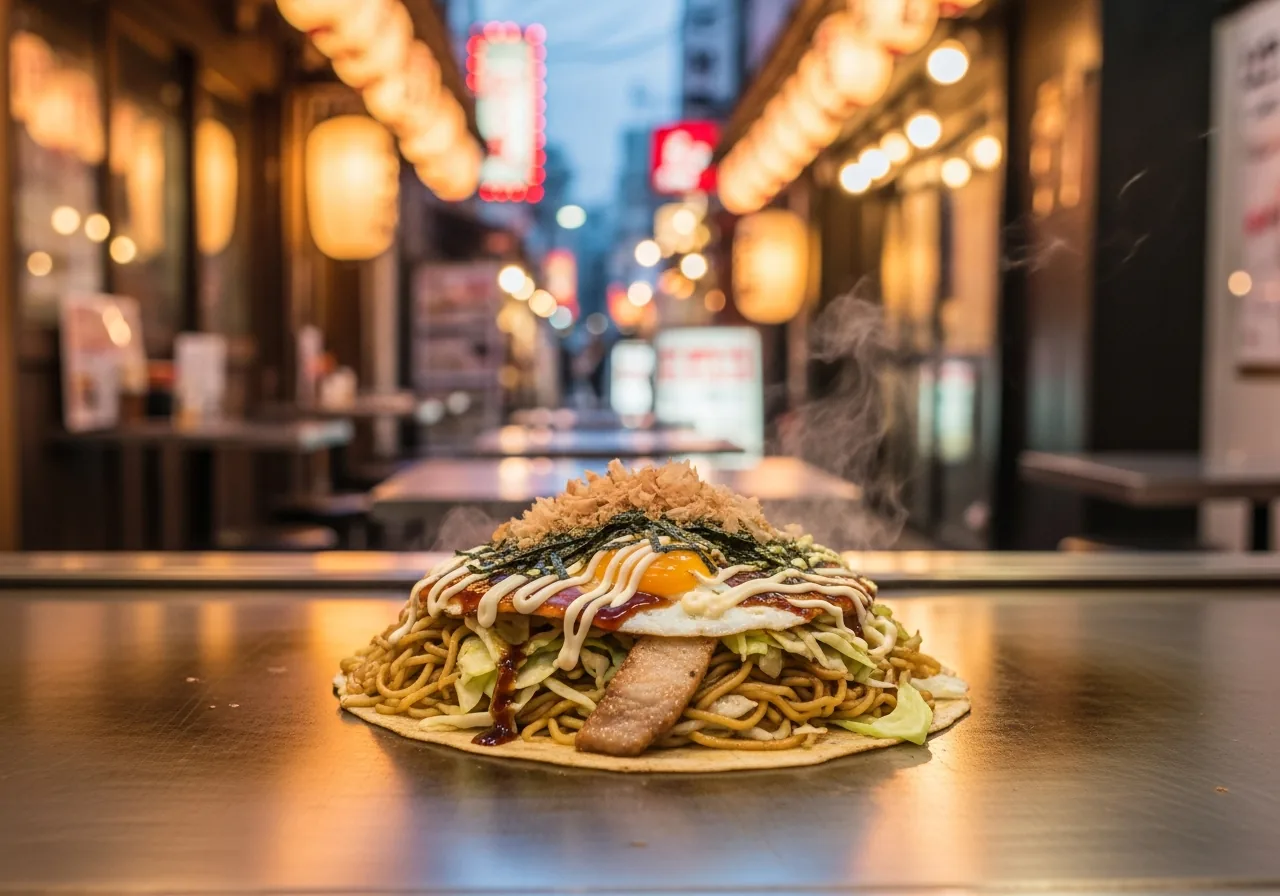
Then there’s Hiroshima, which makes the same claim with equal conviction — and a completely different pancake. The Osaka version folds everything into the batter and cooks it as one unit. The Hiroshima version layers ingredients in sequence: batter, cabbage, pork, noodles, egg, all stacked rather than mixed. Two cities, one name, zero consensus. The debate has been running for decades and nobody is backing down.
This guide covers the best places in Osaka to eat the Osaka version — and a couple of spots where you can try both side by side. Whether you want a counter seat at a seventy-year-old institution or a no-frills neighbourhood joint that locals actually go to, you’ll find it here. For more on what to eat across the city, check out the best food in Osaka — okonomiyaki is just the beginning.
One practical note before you go: Osaka-style okonomiyaki is almost always cooked on a teppan (iron griddle) built into your table. Some restaurants cook it for you; others hand you a spatula and let you manage it yourself. Both approaches are covered below.
1. Okonomiyaki Mizuno (みづの)
- 📍 1-4-15 Dotonbori, Chuo-ku, Osaka
- 🕐 11:00–22:00 (last order 21:30), closed Wednesdays (as of May 2026)
- 💰 ¥1,200–¥2,500 per person (food only) / ¥2,000–¥3,500 (with drinks)
- 🚃 Namba Station (5 min walk)
- 🗣 English menu: Yes (also Chinese and Korean)
- 🗺 Open in Google Maps
- 📋 Tabelog
What to order: Yamaimoyaki (yam okonomiyaki) (¥1,500)
Founded in 1945, Mizuno has earned a spot in the Michelin Bib Gourmand for six consecutive years — and the permanent queue outside is as reliable as the food itself. The third-generation owner keeps the menu balanced between new spins and unchanged traditions, but the signature move here is the generous use of grated Japanese mountain yam in the batter, which gives the pancake an unusually light, almost soufflé-like interior. The menu is available in English, Chinese, and Korean, which makes ordering straightforward even on a first visit. Come before 11:30 or after 14:00 on weekdays if you want to avoid the longest waits.
2. Fukutaro Honten (福太郎 本店)
- 📍 2-3-17 Namba, Chuo-ku, Osaka
- 🕐 17:00–23:30 (Mon–Fri) / 12:00–23:30 (Sat–Sun & holidays), closed Tuesdays (as of May 2026)
- 💰 ¥1,500–¥2,800 per person (food only) / ¥2,500–¥4,000 (with drinks)
- 🚃 Kintetsu Nippombashi Station (3 min walk)
- 🗺 Open in Google Maps
- 📋 Tabelog
What to order: Negiyaki (green onion pancake) (¥1,100)
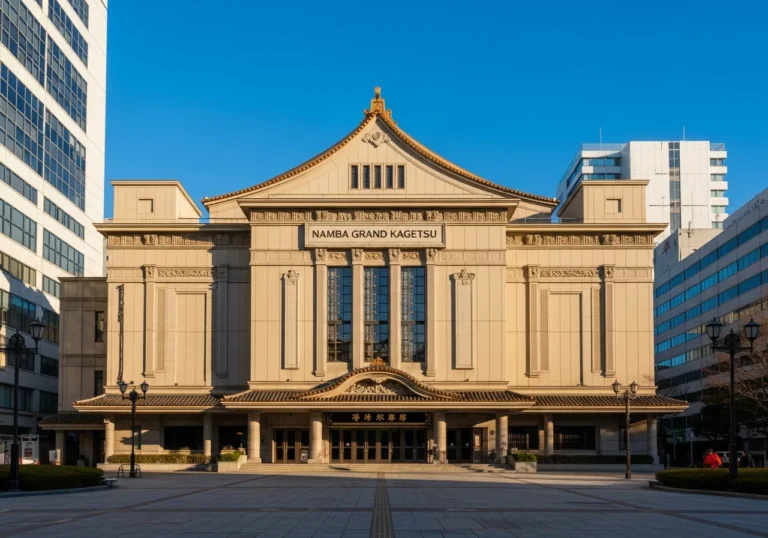
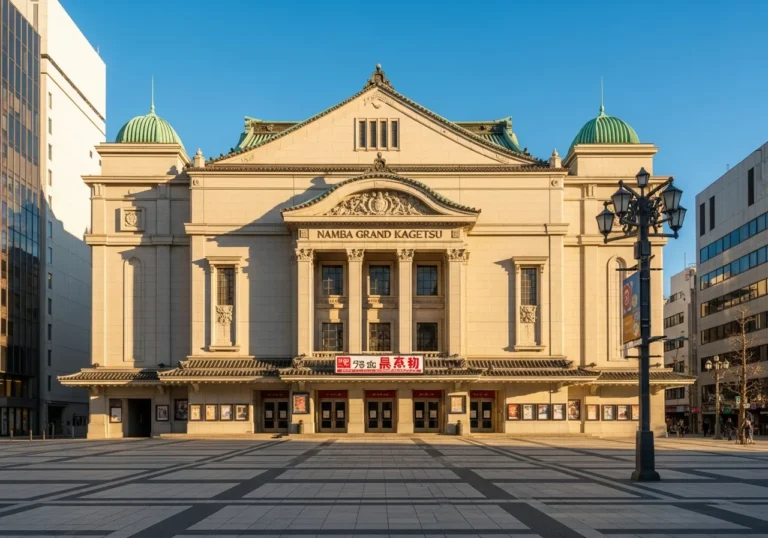
Fukutaro’s main branch sits near Namba Grand Kagetsu in the thick of the entertainment district, and it draws a crowd that skews local — the kind of place where the table next to you is a group of salarymen on their second round of beer. The house speciality is negiyaki, a thinner, crispier variant that swaps most of the cabbage for a dense tangle of green onions. It’s sharper and less sweet than a standard butatama, and it pairs better with a cold beer than almost anything else on the menu. Tabelog reviewers consistently call it a quintessential Osaka restaurant.
3. Okonomiyaki Chitose (お好み焼き 千とせ)
- 📍 1-7-16 Ebisuhigashi, Naniwa-ku, Osaka
- 🕐 11:30–14:30 / 17:00–21:00, closed Mondays (as of May 2026)
- 💰 ¥900–¥1,800 per person (food only)
- 🚃 Dobutsuen-mae Station (5 min walk)
- 🗣 English menu: Yes
- 🗺 Open in Google Maps
- 📋 Tabelog
What to order: Butatama (pork and egg) (¥950)
Chitose sits in a small alleyway near Tennoji Zoo — blink and you’ll walk straight past it. It’s extremely popular with foreign visitors, and the second-generation owner uses English to welcome guests from around the world. The batter is made with grated Japanese yam and flour, mixed with chunks of cabbage and sliced pork — nothing revolutionary, but executed with the kind of quiet precision that comes from doing one thing for decades. The chef cooks everything at the counter in front of you. Order the butatama, watch it get flipped, and eat it straight off the iron.
4. Tsuruhashi Fugetsu Honten (鶴橋風月 本店)
- 📍 4-2-15 Higashinodamachi, Miyakojima-ku, Osaka
- 🕐 11:30–22:00 (last order 21:30) (as of May 2026)
- 💰 ¥1,200–¥2,500 per person (food only) / ¥2,000–¥3,500 (with drinks)
- 🚃 Tsuruhashi Station (8 min walk)
- 🗺 Open in Google Maps
- 📋 Tabelog
What to order: Modanyaki (okonomiyaki with yakisoba noodles) (¥1,450)
Fugetsu is an okonomiyaki eatery with a history spanning decades, with its main store in Miyakojima. It’s a chain, but this is the original that started it all. The flagship is worth visiting over the mall branches: the counter seats put you close enough to the griddle to feel the heat, and the staff cook everything themselves rather than handing you a spatula. The modanyaki — okonomiyaki with a layer of yakisoba noodles folded in — is the move here. It’s heavier than a standard pancake and better for it. Tsuruhashi is also Osaka’s Korean neighbourhood, so the area around the restaurant is worth exploring before or after.
5. Okonomiyaki Kiji (お好み焼き きじ)
- 📍 B1F, 1-1-3 Umeda, Kita-ku, Osaka (Hankyu Sanbangai South)
- 🕐 11:30–21:30 (last order 21:00), closed irregularly — check ahead (as of May 2026)
- 💰 ¥1,000–¥2,200 per person (food only)
- 🚃 Osaka/Umeda Station (3 min walk)
- 🗺 Open in Google Maps
- 📋 Tabelog
What to order: Butatama (pork and egg) (¥1,050)
Kiji is listed among the top 100 eateries in both the Michelin Guide and Tabelog — which explains the long line of people waiting outside. It’s tucked into the basement of Hankyu Sanbangai, which sounds unglamorous until you’re actually sitting at the counter watching the chef work the griddle with the kind of efficiency that only comes from years of repetition. The batter is notably light, the cabbage stays crunchy, and the ratio of filling to pancake is exactly right. For a city-centre location, the prices are reasonable and the quality is consistent. If you’re already in Umeda for shopping or transit, there’s no reason not to stop here.
6. Yukari Honten (ゆかり 本店)
- 📍 2-13-4 Sonezaki, Kita-ku, Osaka
- 🕐 11:30–22:00 (last order 21:30) (as of May 2026)
- 💰 ¥1,200–¥2,500 per person (food only) / ¥2,000–¥3,500 (with drinks)
- 🚃 Higashi-Umeda Station (5 min walk)
- 🗺 Open in Google Maps
- 📋 Tabelog
What to order: Yukari-yaki (seafood mix: shrimp, pork belly, scallops, squid, konjac) (¥1,650)
The Yukari version includes shrimp, pork belly, scallops, squid, and konjac in the mix — it’s the kitchen-sink approach to okonomiyaki, and it works. The main branch in Sonezaki draws a mix of office workers at lunch and couples in the evening, and the atmosphere is more relaxed than the tourist-heavy Dotonbori spots. The teppan tables are well-maintained, the staff are patient with first-timers, and the menu has enough variety that you could come back three times and order something different each visit. If you want to explore more of Osaka beyond the main tourist corridors, Sonezaki is a good neighbourhood to start.
7. Ajinoya (味乃家)
- 📍 1-7-16 Dotonbori, Chuo-ku, Osaka
- 🕐 12:00–22:00 (last order 21:30), closed Thursdays (as of May 2026)
- 💰 ¥1,000–¥2,000 per person (food only)
- 🚃 Namba Station (5 min walk)
- 🗺 Open in Google Maps
- 📋 Tabelog
What to order: Butatama (pork and egg) (¥1,050)
Ajinoya has been on Dotonbori since the 1950s and has the worn-in feel to prove it. The interior is narrow, the tables are close together, and the griddles are built right into the counter — you’re eating elbow-to-elbow with strangers, which is exactly how it should be. It’s been included in the Osaka Michelin Guide and Tabelog’s top restaurant rankings. The butatama here is a textbook example of the Osaka style: thick, fluffy, and finished with a generous pour of Worcestershire-based sauce and a zigzag of Japanese mayo. Order it, eat it hot, and don’t overthink it. This is the MICHI Osaka travel guide‘s pick for the most straightforwardly satisfying okonomiyaki in Dotonbori.
8. Okonomiyaki Shimizu (お好み焼き しみづ)
- 📍 Naniwa-ku, Osaka (Tamade area — confirm exact address via Google Maps before visiting)
- 🕐 18:00–23:00, closed Sundays and Mondays (as of May 2026)
- 💰 ¥800–¥1,500 per person (food only)
- 🚃 Tamade Station (5 min walk)
- 🗺 Open in Google Maps
- 📋 Tabelog
What to order: Butatama (pork and egg) (¥820)
Shimizu was newly selected for the Tabelog Okonomiyaki Top 100 in 2024, and it’s the kind of place that earns that recognition without any of the trappings — no English signage, no tourist foot traffic, no Instagram queue. Counter seating only, a short menu, and an owner who cooks everything herself. The pancake at ¥820 is one of the best-value bowls in the city. This is a neighbourhood spot in the truest sense: you’ll be the only non-local in the room, and that’s the point. Confirm the exact address on Google Maps before you go, as the street-level signage is minimal.
How to Order
Osaka-style okonomiyaki is less complicated to order than it looks. Here’s what you need to know before you sit down.
Self-cook vs. chef-cooked: Most of the restaurants in this guide cook the okonomiyaki for you at a counter or bring it to your table already on the griddle. A few places — particularly the more casual neighbourhood spots — will hand you a spatula and expect you to manage the flip yourself. If you’re unsure, watch what the table next to you is doing.
The flip: If you are cooking it yourself, wait until the edges look set and the bottom is golden before attempting the flip. Use two spatulas if available. Don’t press down on it after flipping — that squeezes out the steam that keeps the interior fluffy.
Toppings: The standard finish is okonomiyaki sauce (a thick, sweet-savoury Worcestershire variant), Japanese mayonnaise, dried bonito flakes (katsuobushi), and dried green seaweed (aonori). Apply them in that order. The bonito flakes will wave in the heat — that’s normal and correct.
Ordering the basics: “Butatama” (pork and egg) is the default Osaka-style okonomiyaki and the safest first order at any restaurant. “Negiyaki” replaces most of the cabbage with green onions for a thinner, crispier result. “Modanyaki” adds a layer of yakisoba noodles. Most menus have photos; many have English translations.
Drinks: Beer is the standard pairing. Most restaurants also serve highballs and soft drinks. Sake is less common at okonomiyaki shops than at izakayas.
FAQ
Q: Is okonomiyaki in Osaka expensive?
A: No. A standard butatama at most restaurants runs ¥900–¥1,500. Seafood-heavy versions with multiple toppings can reach ¥2,000–¥2,500. Add ¥500–¥800 for a beer. Budget ¥1,500–¥2,500 per person for a full meal with a drink at most of the places in this guide.
Q: What’s the actual difference between Osaka-style and Hiroshima-style okonomiyaki?
A: The core difference is construction. In Osaka, all the ingredients — batter, cabbage, protein — are mixed together and cooked as a single unit. In Hiroshima, the ingredients are layered in sequence on the griddle: batter first, then cabbage, then pork, then noodles, then egg on top. The Hiroshima version is taller, denser, and has a more prominent noodle presence. Neither is more “authentic” — they’re genuinely different dishes that happen to share a name.
Q: Do okonomiyaki restaurants in Osaka have English menus?
A: The tourist-facing spots in Dotonbori and Umeda (Mizuno, Kiji, Chitose) reliably have English menus or picture menus. Neighbourhood spots like Shimizu do not. At any restaurant, pointing at a photo or saying “butatama” (pork and egg) will get you fed without any Japanese required.
Q: When is the best time to visit?
A: Weekday lunches (11:30–13:00) and weekend evenings (18:00–20:00) are the busiest periods at popular spots like Mizuno and Kiji. For those two specifically, arriving right at opening or after 14:00 on weekdays cuts the wait significantly. Neighbourhood spots like Shimizu and Chitose are less predictable — they’re small, so even a modest crowd fills them quickly.
Q: Can I eat okonomiyaki if I’m vegetarian?
A: Some restaurants offer vegetable-only versions — Mizuno is one of the more reliable options for this. Strict vegans will find it harder, as the batter typically contains egg and the bonito flakes are standard. It’s worth calling ahead or checking the English menu online before visiting.
Information is accurate as of May 2026. We recommend checking Google Maps for the latest hours and prices before visiting.