Last updated: July 19, 2026
This article reflects information available at the time of writing. Check Google Maps for the latest hours and availability.
Introduction
Most visitors to Osaka spend their time in Dotonbori or Shinsekai, which is fine — but Nakanoshima is where the city keeps its actual history. Nakanoshima is the strip of land sandwiched between the Dojima and Tosabori rivers, and for most of the Meiji and Taisho eras, it was the administrative and financial engine of western Japan. The buildings that went up here weren’t built to impress tourists — they were built to mean something. They still do.
The prefectural library, city hall, and a branch of the Bank of Japan were all built here, showcasing Western architecture that reflected Osaka’s rise as an international metropolis. Walk the island east to west and you move through a century of civic ambition in about thirty minutes: Greek Revival columns, neo-Renaissance red brick, a jet-black contemporary art cube, and a children’s library designed by one of the world’s most celebrated architects. It’s a genuinely unusual mix, and it works.
This guide covers the eight landmarks worth your time on Nakanoshima — from the grand public hall where Einstein once lectured to the rose garden that blooms quietly beside the river. If you’re looking for the best food in Osaka, the island has some strong options too, particularly along the Tosabori riverbank. But the real reason to come here is the architecture and the atmosphere — unhurried, slightly formal, and completely unlike anywhere else in the city. Plan a half-day minimum. A full day if you want to go inside everything.
To explore more of Osaka beyond the island, Kitahama and Yodoyabashi are both a short walk away and worth folding into the same afternoon.
1. Osaka City Central Public Hall (大阪市中央公会堂)
- 📍 1-1-27 Nakanoshima, Kita-ku, Osaka 530-0005
- 🕐 Exhibition room & free viewing area: 9:30–20:00, closed Tuesdays (as of May 2026)
- 💰 Free (exhibition room & public areas) / Event tickets vary
- 🚃 Naniwabashi Station (Keihan Nakanoshima Line), 1 min walk
- 🗣 English signage available
- 🗺 Open in Google Maps
- 📋 Tabelog
- 🌐 Official site
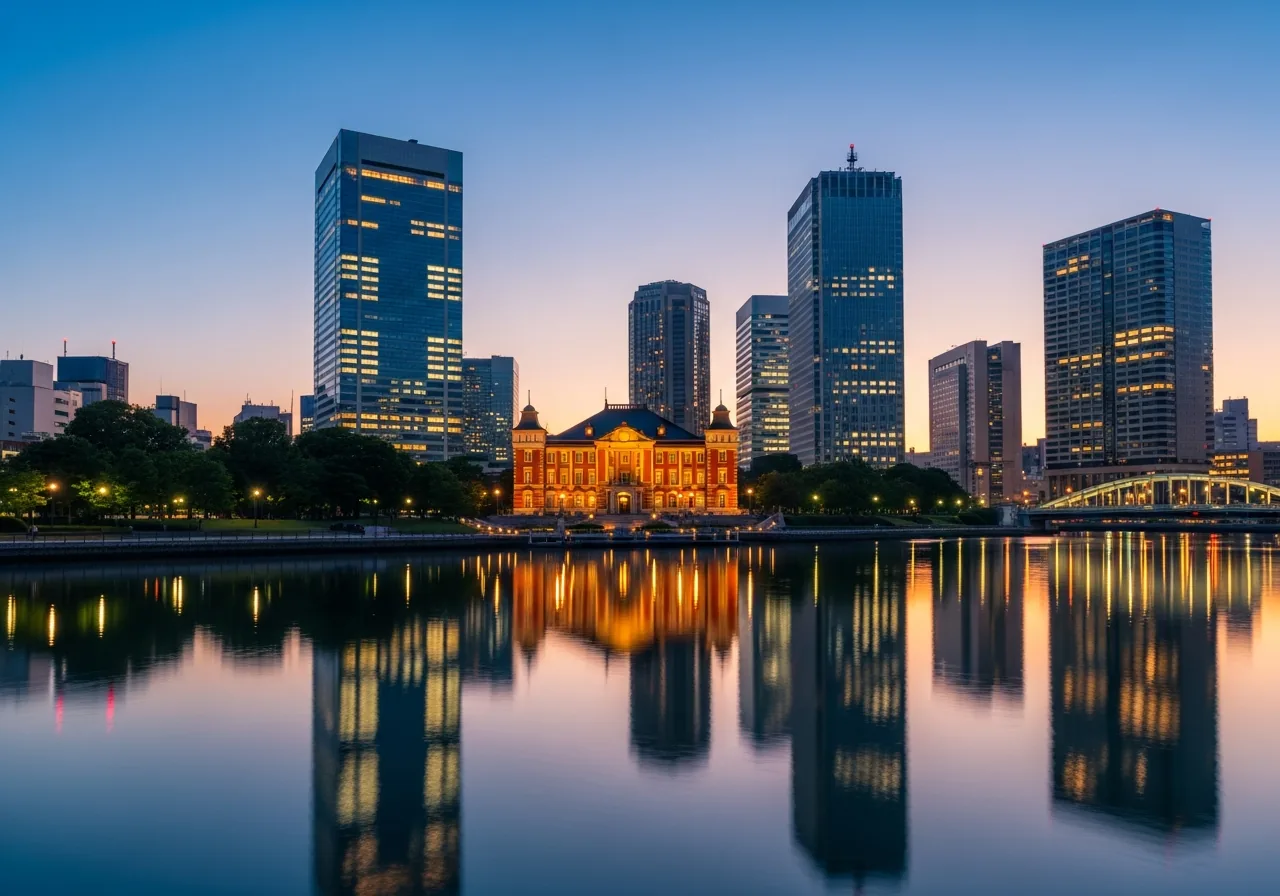
The elegant red-brick building, built in neo-Renaissance style with baroque elements, was completed in 1918 — funded entirely by a single donation — and has since hosted operas, concerts, and lectures by figures including Albert Einstein and Helen Keller. It was the first public hall building in western Japan to be designated an Important Cultural Property of Japan. The basement exhibition room is free and open daily; the real draw is simply standing in front of it at dusk when the facade lights up.
2. Nakanoshima Park (中之島公園)
- 📍 1-1 Nakanoshima, Kita-ku, Osaka 530-0005
- 🕐 Open 24 hours (rose garden best April–May and October–November)
- 💰 Free
- 🚃 Naniwabashi Station (Keihan Nakanoshima Line), 1 min walk
- 🗺 Open in Google Maps
- 📋 Tabelog
Surrounded by the Dojima and Tosabori rivers, Nakanoshima Park sits at the symbolic heart of Osaka’s identity as an aqua metropolis. The rose garden — Bara no Komichi — runs along the eastern tip of the park and peaks in late April and again in October. It’s not enormous, but the combination of blooms, river light, and the Central Public Hall looming behind it makes for one of the better free afternoons in the city. Come on a weekday morning if you want it to yourself.
3. Osaka Prefectural Nakanoshima Library (大阪府立中之島図書館)
- 📍 1-2-10 Nakanoshima, Kita-ku, Osaka 530-0005
- 🕐 Mon–Fri 9:00–20:00, Sat–Sun 9:00–17:00, closed public holidays
- 💰 Free
- 🚃 Yodoyabashi Station (Osaka Metro Midosuji Line / Keihan), 5 min walk
- 🗺 Open in Google Maps
- 📋 Tabelog
Built in 1904 with money donated by the Sumitomo family, the building’s facade is supported by Corinthian columns in the Greek shrine style, with a domed central hall that resembles a church. The main building and its wings became Important Cultural Properties of Japan in 1974. You don’t need a library card to walk in and look around — the interior is as impressive as the exterior, and most visitors just come to photograph the atrium. It’s the first public library in Osaka Prefecture to house documents and ancient records related to Osaka, and it remains popular with researchers and book lovers.
4. Nakanoshima Museum of Art, Osaka (大阪中之島美術館)
- 📍 2-1-26 Nakanoshima, Kita-ku, Osaka 530-0005
- 🕐 10:00–17:00 (last entry 16:30), closed Mondays (or next day if Monday is a holiday)
- 💰 Permanent collection: ¥500 adults / Special exhibitions: ¥1,500–2,000 (varies by show)
- 🚃 Watanabebashi Station (Keihan Nakanoshima Line), 3 min walk
- 🗣 English labels available
- 🗺 Open in Google Maps
- 📋 Tabelog
- 🌐 Official site
The Nakanoshima Art Museum opened in February 2022 and immediately became the most architecturally striking building on the island — a matte-black cube that sits in deliberate contrast to all the Meiji-era stone around it. The collection focuses on modern art and design, with works spanning the late 19th century to the present. The rotating special exhibitions have been consistently strong; check the schedule before you go, as the admission price and crowds vary significantly depending on what’s showing.
5. Children’s Book Forest Nakanoshima (こども本の森 中之島)
- 📍 1-1-28 Nakanoshima, Kita-ku, Osaka 530-0005
- 🕐 9:30–17:00, closed Mondays (or next day if Monday is a holiday)
- 💰 Free (advance reservation required)
- 🚃 Naniwabashi Station (Keihan Nakanoshima Line), 3 min walk
- 🗺 Open in Google Maps
- 📋 Tabelog
- 🌐 Official site
This cultural facility, designed and built by world-renowned Osaka architect Tadao Ando, holds approximately 20,000 books — and the entire walls of the first through third floors are floor-to-ceiling bookshelves. Books can’t be checked out, but visitors can read inside or carry one out to Nakanoshima Park, where many people settle on benches by the river. It’s technically a children’s facility, but adults wander in constantly — the architecture alone justifies the visit. Book your free slot online before arriving.
6. Osaka Museum of Oriental Ceramics (大阪市立東洋陶磁美術館)
- 📍 1-1-26 Nakanoshima, Kita-ku, Osaka 530-0005
- 🕐 9:30–17:00 (last entry 16:30), closed Mondays
- 💰 ¥1,400 adults (special exhibitions may vary)
- 🚃 Naniwabashi Station (Keihan Nakanoshima Line), 1 min walk
- 🗣 English labels available
- 🗺 Open in Google Maps
- 📋 Tabelog
- 🌐 Official site
This museum was established to commemorate the donation of the world-famous “Ataka Collection” by the Sumitomo Group; the entrance is surrounded by 7-metre-high glass with a cafe attached. The collection — Chinese and Korean ceramics spanning over a thousand years — is displayed in natural light, which is unusual for ceramics and makes the glazes look genuinely alive. It’s quieter than the art museum next door and rewards slow looking. The entrance hall renovation completed in spring 2024 added a striking new glass-walled photo spot.
7. Naniwabashi Bridge (難波橋)
- 📍 Naniwabashi, Kita-ku, Osaka (spanning Tosabori River between Kitahama and Nakanoshima)
- 🕐 Open 24 hours
- 💰 Free
- 🚃 Naniwabashi Station (Keihan Nakanoshima Line), 1 min walk / Kitahama Station (Osaka Metro), 3 min walk
- 🗺 Open in Google Maps
- 📋 Tabelog
Affectionately known as “Lion Bridge” for the two stone lions at each end, the bridge rewards close attention — the lion statues, retro lamp posts, and the wide stone staircase leading down to Nakanoshima Park are all worth photographing. It’s one of the most photogenic spots on the island, particularly at golden hour when the river catches the light and the Central Public Hall frames the background. Cross it slowly.
8. National Museum of Art, Osaka (国立国際美術館)
- 📍 4-2-55 Nakanoshima, Kita-ku, Osaka 530-0005
- 🕐 10:00–17:00 (Fri–Sat until 20:00), closed Mondays
- 💰 Permanent collection: ¥430 adults / Special exhibitions: ¥1,200–1,800 (varies)
- 🚃 Higobashi Station (Osaka Metro Yotsubashi Line), 5 min walk
- 🗣 English labels available
- 🗺 Open in Google Maps
- 📋 Tabelog
- 🌐 Official site
On the western end of the island, the National Museum of Art sits alongside the Osaka Science Museum and is the most serious art institution on Nakanoshima. The entire museum is underground — the only thing above street level is a dramatic steel sculpture that marks the entrance. The permanent collection covers post-war Japanese and international art, and the Friday evening extended hours make it a genuinely good option for a late-afternoon visit. Check the MICHI Osaka travel guide for current exhibition listings before you go.
How to Get Around
Nakanoshima is a long, narrow island — roughly 3 kilometres from the Higobashi end to the Tenmabashi end — and the best way to cover it is on foot. The island is about a 15-minute walk south of Umeda Station, and once you’re there, most sites can be discovered on foot. The Keihan Nakanoshima Line runs underground beneath the island with stops at Naniwabashi, Oebashi, and Nakanoshima stations, which is useful if you want to skip between the eastern and western ends without walking. Yodoyabashi Station on the Osaka Metro and Keihan lines is approximately 2 minutes on foot from the western edge of the island.
For the museums, buy tickets at the door — queues are rarely long except during blockbuster special exhibitions. The Nakanoshima Pavilion Sightseeing Pass bundles entry to five cultural institutions on the island and is worth considering if you plan to visit more than three paid venues in a single day. River cruises depart every 30 minutes between March and December from 5 p.m. to 11 p.m. and offer a completely different perspective on the island’s architecture from the water.
FAQ
Q: Is Nakanoshima expensive to visit?
A: Most of the landmark buildings — the Central Public Hall, Nakanoshima Park, Naniwabashi Bridge, and the Prefectural Library — are free. The paid museums range from ¥430 (National Museum of Art permanent collection) to around ¥2,000 for major special exhibitions. A full day visiting three museums will cost ¥2,000–4,500 per person depending on what’s showing.
Q: Do the museums have English signage?
A: Yes, all four major museums on the island — the Nakanoshima Museum of Art, the National Museum of Art, the Museum of Oriental Ceramics, and the Children’s Book Forest — have English labels or pamphlets. Staff English varies, but the signage is generally sufficient to navigate independently.
Q: When is the best time to visit Nakanoshima?
A: Late April and early May for the rose garden in bloom. October for the second rose season and cooler walking weather. December through February brings the Hikari-Renaissance illuminations, and the museums are quieter in winter — good for enjoying the collections without crowds. Avoid visiting on Mondays, when most museums are closed.
Q: How long does a visit to Nakanoshima take?
A: Two hours covers the main architectural landmarks at a walk. Add 90 minutes per museum if you plan to go inside. A full day — park, two or three museums, and a riverside lunch — is the most satisfying way to do it.
Information is accurate as of May 2026. We recommend checking Google Maps for the latest hours and prices before visiting.