Last updated: July 19, 2026
This article reflects information available at the time of writing. Check Google Maps for the latest hours and availability.
Introduction
Most visitors to Osaka spend their time in Dotonbori eating takoyaki and staring at neon signs. That’s fine. But if you want to understand what this city looked like before the pachinko parlours and the covered arcades, take the Nankai Line south to Sumiyoshi Ward and spend a morning at Sumiyoshi Taisha (住吉大社).
With approximately 1,800 years of history, Sumiyoshi Taisha is an exceptionally ancient shrine believed to have been established around the 3rd century. It is the head shrine of over 2,300 shrines across Japan — and yet it sits in a quiet residential neighbourhood, flanked by a tram line and a car park. That contrast is part of the appeal. Sumiyoshi Taisha is an active place of worship where Japanese people come to perform various Shinto rituals, not a tourist-oriented shrine.
What sets it apart architecturally is the Sumiyoshi-zukuri style — Sumiyoshi Taisha predates the arrival of Buddhism in Japan and, along with Izumo Taisha and the Ise Jingu, has its own style of architecture free of mainland Asian influences. The four vermilion-and-white halls, the steep arched bridge, the thousand-year-old camphor tree — there’s a lot to take in across roughly 99,000 square metres of grounds.
This guide covers every major highlight, how to navigate the visit, and what to do when you get there. For everything else to eat and see nearby, check out the best food in Osaka and explore more of Osaka with our area guides.
1. The Sorihashi Bridge (Taiko Bashi)
- 📍 2-9-89 Sumiyoshi, Sumiyoshi Ward, Osaka 558-0045
- 🕐 Open daily: 6:00 AM–5:00 PM (Apr–Sep); 6:30 AM–5:00 PM (Oct–Mar) as of May 2026
- 💰 Free entry to shrine grounds
- 🚃 Sumiyoshi-Taisha Station (Nankai Main Line) — 3 min walk; Sumiyoshitorii-Mae Station (Hankai Tram) — 2 min walk
- 🗺 Open in Google Maps
- 📋 Tabelog
- 🌐 Official site
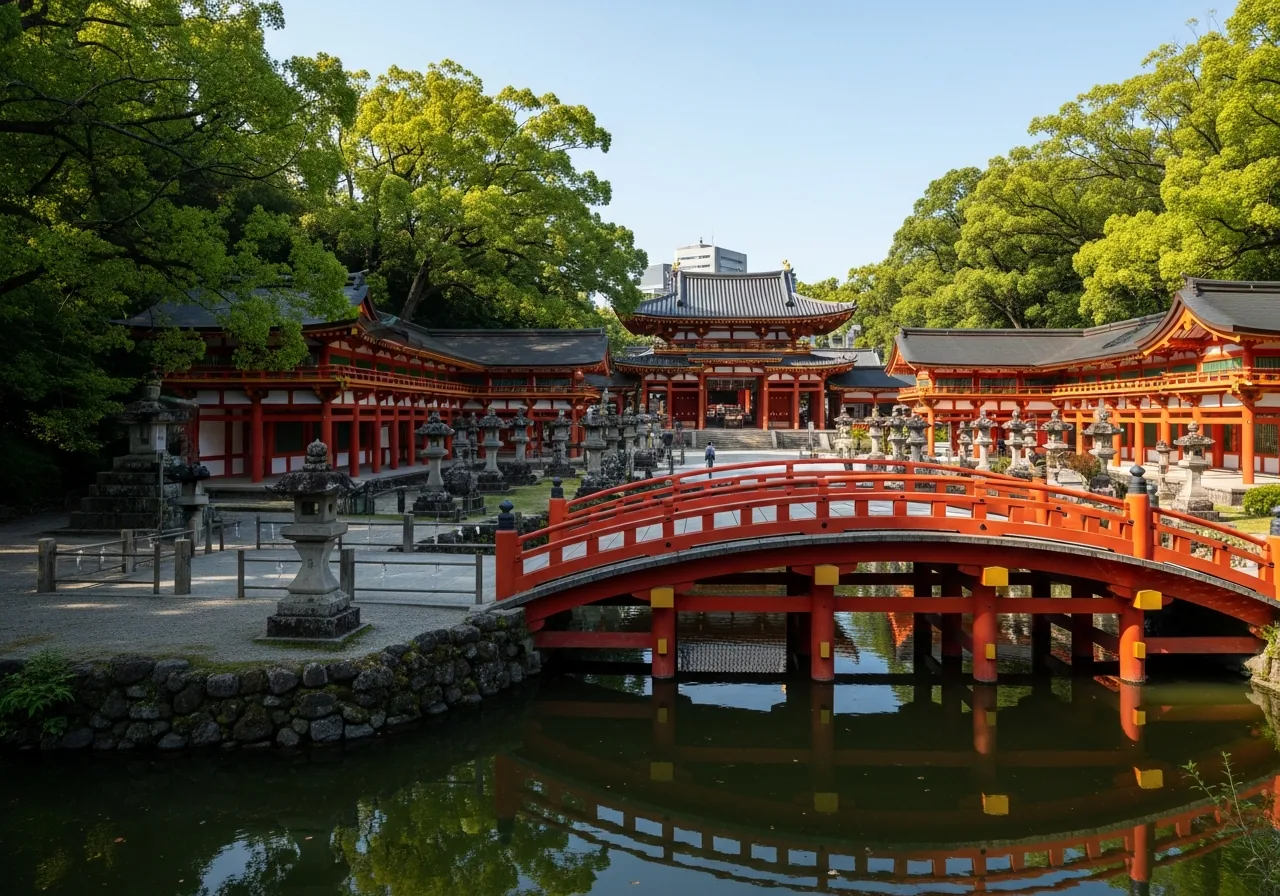
The most striking feature in the shrine grounds is the Sorihashi Bridge with its beautiful vermillion railings — also known as Taikobashi (drum bridge), characterised by its steep incline. On sunny days, the railings reflect in the water below, creating a circular appearance — hence the name “drum bridge.”
This is the first thing you see after passing through the main torii gate, and it earns its reputation. The arch is genuinely steep — more than you’d expect from a photograph. The stone steps can be slippery after rain, so walk carefully or use the flat side paths. Crossing it is considered an act of purification. Most visitors do it; a few take one look at the gradient and quietly use the bypass. No judgement either way.
2. The Four Main Halls (Honden)
- 📍 2-9-89 Sumiyoshi, Sumiyoshi Ward, Osaka 558-0045
- 🕐 Open daily: 6:00 AM–5:00 PM (Apr–Sep); 6:30 AM–5:00 PM (Oct–Mar) as of May 2026
- 💰 Free to view; formal prayer ceremonies (go-kito) from ¥5,000
- 🚃 Sumiyoshi-Taisha Station (Nankai Main Line) — 3 min walk
- 🗺 Open in Google Maps
- 📋 Tabelog
- 🌐 Official site
All four main sanctuaries are designated as National Treasures. The roof, made with cypress bark thatching, has two sloping sides extending from the ridge. The pillars are painted a vivid red, while the walls are coated in white gofun (chalk), creating a striking contrast.
There are four main halls at Sumiyoshi Taisha. The first three are positioned in a straight line facing west, while the fourth stands just beside the third. This arrangement is rarely seen in Japan, as shrines built during and after the Nara Period (710–794) mostly face south, following Chinese geomancy. The layout is one of the things that makes this place feel genuinely different from the shrines you’ve already visited in Kyoto.
3. Sumiyoshi-zukuri Architecture
- 📍 2-9-89 Sumiyoshi, Sumiyoshi Ward, Osaka 558-0045
- 🕐 Open daily: 6:00 AM–5:00 PM (Apr–Sep); 6:30 AM–5:00 PM (Oct–Mar) as of May 2026
- 💰 Free
- 🚃 Sumiyoshi-Taisha Station (Nankai Main Line) — 3 min walk
- 🗺 Open in Google Maps
- 📋 Tabelog
- 🌐 Official site
The rare Sumiyoshi-zukuri (住吉造) style — defined by straight rooflines and forked finials — feels markedly different from later shrine designs, prioritising structural clarity over ornament. This is one of three styles of ancient shrine architecture that predate the arrival of Buddhism and other foreign influences to Japan. Typical features are simple, straight thatched roofs that do not curve upward and decorative crossed poles on the roof’s gables. Pillars are painted vermilion, walls are painted white, and each shrine building has a surrounding wooden fence.
If you’ve spent time at Fushimi Inari or Meiji Jingu, the visual language here will feel noticeably starker and older. That’s the point. The honden on the grounds at Sumiyoshi Taisha has been designated as a National Treasure on the grounds that it is the oldest example of this style of architecture.
4. Goshogozen and the Sacred Camphor Tree
- 📍 2-9-89 Sumiyoshi, Sumiyoshi Ward, Osaka 558-0045
- 🕐 Open daily: 6:00 AM–5:00 PM (Apr–Sep); 6:30 AM–5:00 PM (Oct–Mar) as of May 2026
- 💰 Free
- 🚃 Sumiyoshi-Taisha Station (Nankai Main Line) — 3 min walk
- 🗺 Open in Google Maps
- 📋 Tabelog
- 🌐 Official site
From the National Treasure-designated main hall to the Sorihashi Bridge, Goshogozen, the Bowl of Issun Boshi, and the thousand-year-old sacred camphor tree, the grounds of Sumiyoshi Taisha are packed with attractions. Goshogozen — the innermost sacred precinct — is considered the most spiritually charged spot on the entire site. You can’t enter, but you can stand at the boundary and take it in.
The camphor tree is worth finding on its own terms. It’s enormous, gnarled, and roped off with shimenawa (sacred rope). The shrine grounds, surrounded by greenery, are home to four main halls designated as national treasures and a sacred tree that is over 1,000 years old. Stand next to it and the 1,800-year history of the place stops feeling abstract.
5. The Rabbit Statue and Auxiliary Shrines
- 📍 2-9-89 Sumiyoshi, Sumiyoshi Ward, Osaka 558-0045
- 🕐 Open daily: 6:00 AM–5:00 PM (Apr–Sep); 6:30 AM–5:00 PM (Oct–Mar) as of May 2026
- 💰 Free; omamori (amulets) from ¥1,000
- 🚃 Sumiyoshi-Taisha Station (Nankai Main Line) — 3 min walk
- 🗺 Open in Google Maps
- 📋 Tabelog
- 🌐 Official site
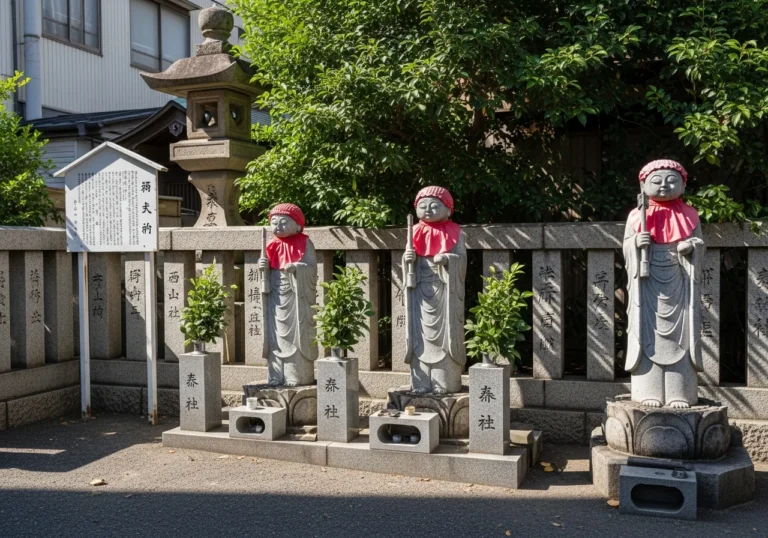
Near the Fourth Hall stands a small rabbit statue (Sumiyoshi kami usagi), associated with prayers for good health. It’s easy to miss if you’re moving quickly — slow down and look for it near the base of the hall. Sumiyoshi Taisha covers a vast area of about 99,000 square metres and includes four main halls, 27 auxiliary shrines, and many other points of interest.
Otoshi-sha, an auxiliary shrine a short walk from the main precinct, has an “omokaru ishi” fortune stone that many visitors try. The idea: lift the stone, make a wish, lift it again — if it feels lighter the second time, your wish will be granted. It’s a good excuse to wander beyond the main circuit.
6. Ema, Omikuji, and Goshuin
- 📍 2-9-89 Sumiyoshi, Sumiyoshi Ward, Osaka 558-0045
- 🕐 Goshuin (shrine stamp) office: typically 9:00 AM–4:30 PM as of May 2026
- 💰 Ema from ¥500; omikuji from ¥100; goshuin ¥500–¥1,000
- 🚃 Sumiyoshi-Taisha Station (Nankai Main Line) — 3 min walk
- 🗺 Open in Google Maps
- 📋 Tabelog
- 🌐 Official site
Ema are small wooden plaques on which Shinto worshippers write their prayers or wishes. At Sumiyoshi Taisha, visitors can purchase an ema at the shrine’s administration building. After inscribing their wishes, the ema are hung on specifically designed racks in hopes that the kami will receive their messages.
The goshuin (official shrine stamp) here is particularly well-regarded among collectors — the calligraphy is done by hand, not stamped. Common omamori (amulets) for travel safety, protection, and good fortune are typically ¥1,000–¥2,000. If you’re collecting goshuin across Osaka, this is one of the better ones to have in your book.
7. The Sumiyoshi Matsuri Festival
- 📍 2-9-89 Sumiyoshi, Sumiyoshi Ward, Osaka 558-0045
- 🕐 Annual festival: late July to August 1 as of May 2026
- 💰 Free to attend
- 🚃 Sumiyoshi-Taisha Station (Nankai Main Line) — 3 min walk
- 🗺 Open in Google Maps
- 📋 Tabelog
- 🌐 Official site
The Sumiyoshi Matsuri runs from July 30th to August 1st, starting on the Day of the Sea. It’s one of Osaka’s three great festivals — the mikoshi (portable shrine) procession crosses the Yamato River and draws enormous crowds. If you’re in Osaka in late July, this is worth planning around.
The New Year period is the other major draw. The shrine is affectionately nicknamed “Sumiyossan,” with over 2 million worshippers during the three days of the New Year’s holidays. That’s not a typo. Avoid January 1–3 unless you enjoy being in a crowd of that scale — or specifically want to experience hatsumode at one of Japan’s most attended shrines.
8. Getting There and Practical Access
- 📍 2-9-89 Sumiyoshi, Sumiyoshi Ward, Osaka 558-0045
- 🕐 Open daily: 6:00 AM–5:00 PM (Apr–Sep); 6:30 AM–5:00 PM (Oct–Mar) as of May 2026
- 💰 Free entry
- 🚃 Sumiyoshi-Taisha Station (Nankai Main Line) — 3 min walk; Sumiyoshitorii-Mae Station (Hankai Tram) — 2 min walk; Sumiyoshi-Higashi Station (Nankai Koya Line) — 5 min walk
- 🗺 Open in Google Maps
- 📋 Tabelog
- 🌐 Official site
From Nankai Railway: 3 minutes walk east from Sumiyoshi-Taisha Station on the Nankai Main Line; 5 minutes walk west from Sumiyoshi-Higashi Station on the Nankai Koya Line. The Hankai Electric Tramway stops at Sumiyoshitorii-Mae Station — a short walk from the main gate. From Namba, the Nankai Main Line takes about 10 minutes. From Osaka/Umeda, take the JR Loop Line to Shin-Imamiya, then switch to the Nankai — total journey around 20 minutes.
The Hankai tram is worth taking at least one way. It’s one of Osaka’s last surviving streetcar lines, and it deposits you directly in front of the main torii gate. Slow, charming, and ¥230 flat fare.
How to Visit
The grounds are free to enter and open early — opening time is 6:00 AM from April to September, and 6:30 AM from October to March. The outer gate closes at 4:00 PM; the inner Okakiuchi area closes at 5:00 PM year-round. Arriving at opening time on a weekday is the best way to experience the place without crowds.
The standard circuit takes 60–90 minutes at a relaxed pace. Start at the main torii gate on the west side, cross the Sorihashi Bridge, work through the four main halls in order (First through Fourth), then loop around to the auxiliary shrines, the camphor tree, and Goshogozen. Pick up a goshuin at the stamp office near the main hall before 4:30 PM.
Dress modestly — this is an active place of worship. Photography is generally fine in the open areas, but photography may be restricted near sacred areas, so follow on-site signs. There are no bag lockers on site, so travel light. The grounds are largely flat except for the Sorihashi Bridge itself, which has steep stone steps — there are flat bypass paths on either side for those who need them.
The MICHI Osaka travel guide has more on combining Sumiyoshi Taisha with a half-day in the surrounding Sumiyoshi and Abiko neighbourhoods, which have good local eating options within a short walk or tram ride.
FAQ
Q: Is entry to Sumiyoshi Taisha free?
A: Yes — the shrine grounds are free to enter. Formal prayer ceremonies (go-kito) start from around ¥5,000. Ema (wooden wish plaques) start from ¥500, omikuji (fortune slips) from ¥100, and goshuin (shrine stamps) are typically ¥500–¥1,000.
Q: Does Sumiyoshi Taisha have English signage?
A: Some. The main pathways have bilingual signs, and the official website has an English section. Staff at the main office are unlikely to speak fluent English, but the circuit is easy to navigate without language skills. Grab a free English map at the entrance.
Q: When is the best time to visit?
A: Weekday mornings, ideally at opening time (6:00 AM in summer). The grounds are quiet, the light is good for photography, and you’ll have the Sorihashi Bridge largely to yourself. Avoid January 1–3 (over 2 million visitors in three days) and the Sumiyoshi Matsuri weekend in late July unless you specifically want the festival atmosphere. Autumn (October–November) is particularly pleasant — cooler temperatures and the camphor tree’s foliage at its best.
Q: How long does a visit take?
A: Allow 60–90 minutes for the full circuit including all four main halls, the auxiliary shrines, and the camphor tree. If you’re collecting a goshuin or attending a ceremony, add another 20–30 minutes.
Q: Is Sumiyoshi Taisha accessible for visitors with mobility limitations?
A: The main grounds are largely flat and manageable. The Sorihashi Bridge is steep and has no handrails on the steps — use the flat bypass paths on either side. The inner precinct paths are paved and even.
Information is accurate as of May 2026. We recommend checking Google Maps for the latest hours and prices before visiting.