Last updated: July 19, 2026
This article reflects information available at the time of writing. Check Google Maps for the latest hours and availability.
Introduction
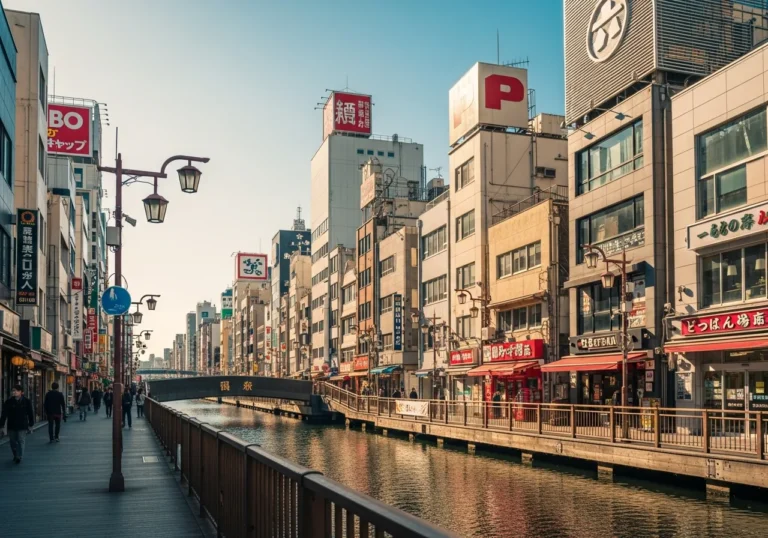
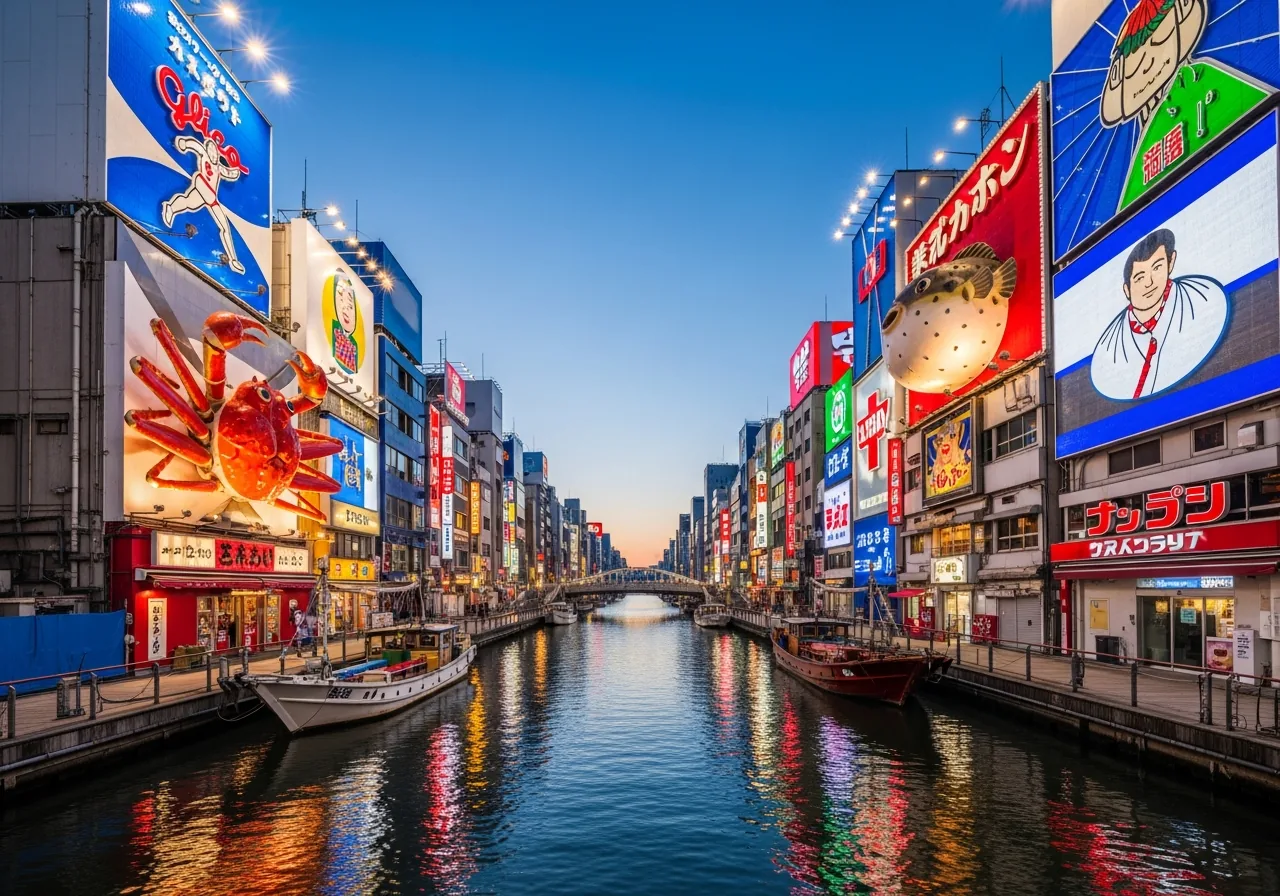
Every first-time visitor to Osaka ends up here. Dotonbori (道頓堀) is the city’s loudest, brightest, most unapologetically itself neighbourhood — a 400-metre strip of canal-side streets where giant mechanical crabs rotate above restaurant doors, neon signs stack four storeys high, and the smell of takoyaki follows you everywhere. It is not subtle. That is entirely the point.
The canal itself dates to the early 17th century, dug to connect two rivers and quickly colonised by theatres, teahouses, and merchants who understood that spectacle sells. The entertainment district that grew up around it never really stopped performing. Today the theatres have mostly given way to restaurants and souvenir shops, but the instinct — give people something to look at — remains completely intact. If you want to understand the best food in Osaka, Dotonbori is where that story starts: this is the neighbourhood that gave the world takoyaki, kushikatsu, and the phrase kuidaore — “eat until you drop.”
This guide covers the landmarks worth your time: the ones with genuine history, a good reason to linger, and something to actually do beyond a quick photo. The core area is compact — the canal strip, Hozenji Yokocho, and the surrounding eating streets can all be covered on foot within 20 to 30 minutes at a casual pace. Build in more time than that. You’ll want it.
1. The Glico Running Man Sign (グリコサイン)
- 📍 Ebisubashi Bridge, 1-chome, Dotonbori, Chuo-ku, Osaka
- 🕐 Illuminated daily from dusk to midnight (as of May 2026)
- 💰 Free
- 🚃 Namba Station (5 min walk)
- 🗺 Open in Google Maps
- 📋 Tabelog
First installed in 1935, the sign features a running man crossing a finish line — a symbol of health and energy that reflects the values of the Glico snack company, makers of Pocky. The current version is the sixth generation, updated in 2014 with a full LED display. The bridge directly in front of it, Ebisubashi, is the photo spot — always packed. Go early morning or very late at night if you want the shot without 200 people in it.
2. Ebisubashi Bridge (戎橋)
- 📍 Ebisubashi, Chuo-ku, Osaka 542-0071
- 🕐 Open 24 hours (as of May 2026)
- 💰 Free
- 🚃 Namba Station (5 min walk)
- 🗺 Open in Google Maps
- 📋 Tabelog
The bridge itself is the landmark, not just the backdrop for the Glico sign. The Dotonbori district sits beside a 400-year-old canal, and Ebisubashi is the crossing that has anchored the neighbourhood’s social life for most of that history. For a calmer angle on the whole strip, wander a little east along the riverwalk — the view back toward the bridge, with the neon stacking up behind it, is better than the one everyone photographs from the bridge itself.
3. Tombori River Cruise (とんぼりリバークルーズ)
- 📍 Tazaemonbashi Pier, Dotonbori, Chuo-ku, Osaka 542-0071
- 🕐 11:00–21:00, departures every 30 minutes, daily (as of May 2026)
- 💰 ¥1,000 per adult (standard 20-min cruise)
- 🚃 Namba Station (6 min walk)
- 🗣 English menu: English commentary available on board
- 🗺 Open in Google Maps
- 📋 Tabelog
- 🌐 Official site
You drift past the Glico Running Man, the mechanical crab at Kani Doraku, and the stacked neon signage of Minami-Osaka, all framed by the river’s surface. Evening cruises are where the experience peaks — the neon reflects off the canal at dusk in a way that feels almost cinematic. Online reservations opened in November 2025 through the official Cloud Pass system, so you can now lock in your departure time up to three months ahead without stopping at the counter. The cruise is suspended annually on July 13, 24, and 25, and may be cancelled without notice due to high water levels or strong winds.
4. Kani Doraku Dotonbori Main Branch (かに道楽 道頓堀本店)
- 📍 1-6-18 Dotonbori, Chuo-ku, Osaka 542-0071
- 🕐 11:00–23:00 daily (as of May 2026)
- 💰 ¥3,000–¥8,000 per person (food only)
- 🚃 Namba Station (5 min walk)
- 🗣 English menu: Yes
- 🗺 Open in Google Maps
- 📋 Tabelog
Look up for the mechanical Kani Doraku crab sign clacking its pincer — a favourite meeting point and one of the most recognisable facades in town. The crab has been rotating above this corner since 1960, and the restaurant below it has been serving crab kaiseki and crab shabu-shabu ever since. The sign is the landmark; the meal is the reason to actually go inside. Book ahead for dinner — walk-ins at peak hours are a gamble.
5. Hozenji Yokocho (法善寺横丁)
- 📍 Hozenji Yokocho, Namba, Chuo-ku, Osaka 542-0076
- 🕐 Open 24 hours (individual restaurants vary) (as of May 2026)
- 💰 Free to enter; restaurants from ¥1,500 per person
- 🚃 Namba Station (5 min walk)
- 🗺 Open in Google Maps
- 📋 Tabelog
Hozenji Yokocho is an old-fashioned alleyway beside Dotonbori, known for its traditional shops and restaurants, soft lantern light, and cobblestone streets. It is a perfect area to visit if you need a break from the high energy of the main strip. At the end of the alleyway is Hozenji Temple, where the moss-covered Fudo Myo-o statue draws a steady stream of visitors who ladle water over it before making a wish. The alley is one of the few places in this neighbourhood where the volume actually drops. Come for dinner at one of the long-running kappo restaurants, then linger.
6. Nakaza Kuidaore Building and Kuidaore Taro (中座くいだおれビル)
- 📍 1-7-21 Dotonbori, Chuo-ku, Osaka 542-0071
- 🕐 Varies by tenant; building open daily from approximately 11:00 (as of May 2026)
- 💰 Free to view; food from ¥500
- 🚃 Namba Station (5 min walk)
- 🗺 Open in Google Maps
- 📋 Tabelog
Kuidaore Taro is a mechanical clown statue with origins in the 1950s, displayed in the lobby of the Nakaza Kuidaore Building. He wears a white and red striped outfit with blue accents and round glasses, welcoming visitors with a cheerful drumming stance. The building underwent a full renovation in spring 2025, with a new 3D Kuidaore Taro figure added to the exterior facade alongside LED displays — the result is louder and more photogenic than before. Inside, souvenir shops sell Japanese snacks, candy, and Kuidaore Taro merchandise.
7. Ebisu Tower Ferris Wheel at Don Quijote (道頓堀大観覧車 えびすタワー)
- 📍 Don Quijote Dotonbori, 1-6-15 Soemoncho, Chuo-ku, Osaka 542-0084
- 🕐 11:00–23:00 daily (as of May 2026)
- 💰 ¥1,000 per adult (¥900 with Osaka Amazing Pass)
- 🚃 Namba Station (5 min walk)
- 🗺 Open in Google Maps
- 📋 Tabelog
The Ebisu Tower Ferris Wheel sits atop the Don Quijote building at 77.4 metres, completing a full rotation in about 15 minutes. It holds the distinction of being the world’s first oval-shaped ferris wheel. As of October 2025, the adult fare is ¥1,000, with a ¥100 discount if you show your Osaka Amazing Pass. The views over the canal and south toward Namba are genuinely good at night — this is one of the few spots in Dotonbori where you can look down at the chaos rather than be inside it.
8. Osaka Shochikuza Theatre (大阪松竹座)
- 📍 1-9-19 Dotonbori, Chuo-ku, Osaka 542-0071
- 🕐 Box office hours vary by performance; check schedule in advance (as of May 2026)
- 💰 ¥4,000–¥22,000 per person depending on seat and performance
- 🚃 Namba Station (5 min walk)
- 🗺 Open in Google Maps
- 📋 Tabelog
- 🌐 Official site
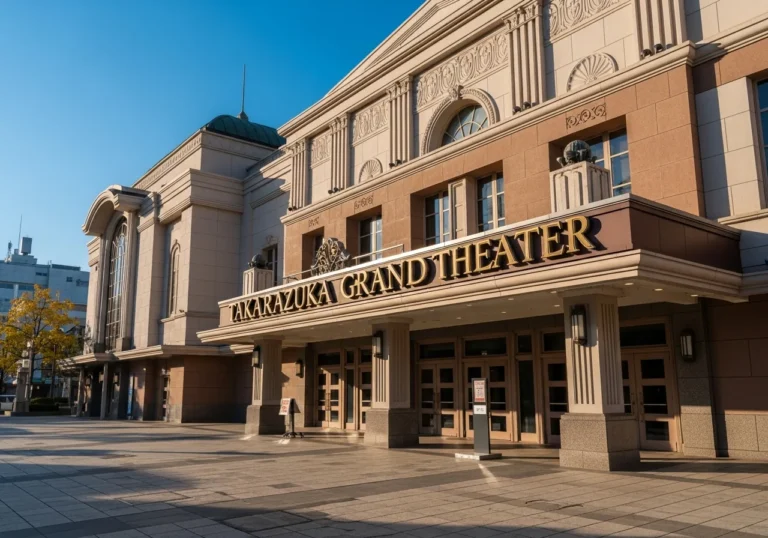
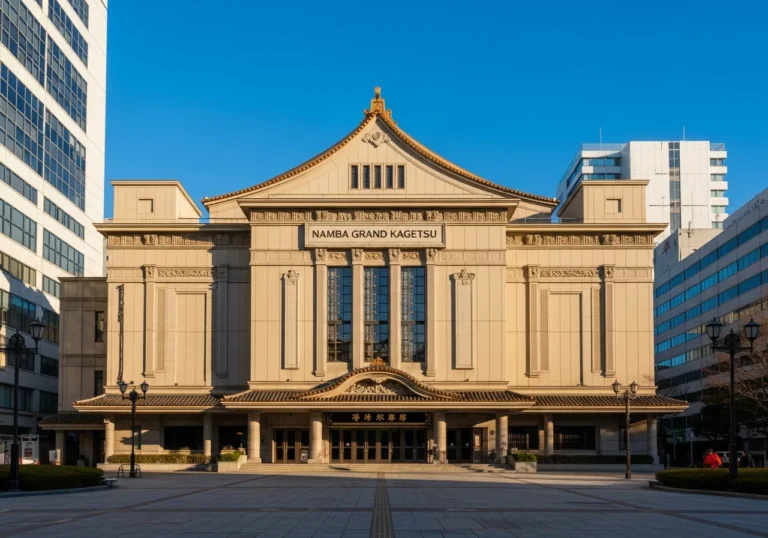
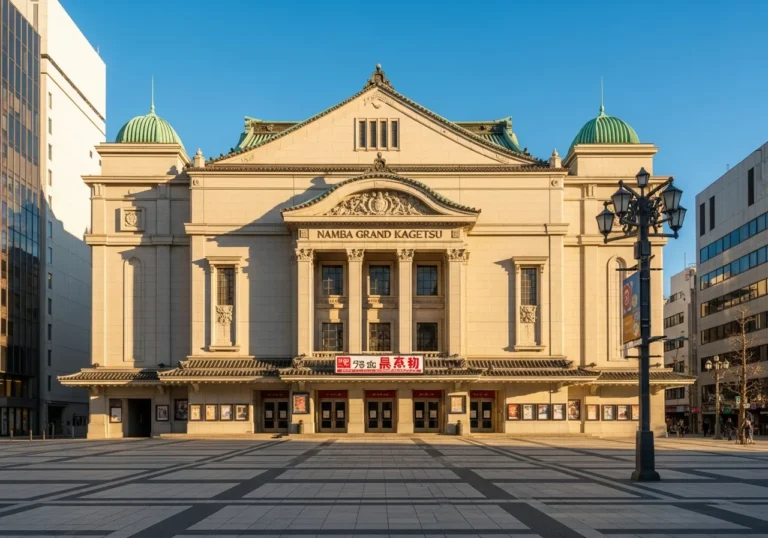
Shochikuza is the only remaining kabuki establishment from Dotonbori’s original theater district. Its refined facade, with design elements reminiscent of Italian Renaissance architecture, contrasts sharply with the bright illuminations that define the street around it. To explore more of Osaka beyond the neon and street food, an evening here is the sharpest possible pivot — kabuki performances run several times a year, and the building itself is worth a look even when the curtain is down.
How to Get Around Dotonbori
The whole strip is walkable. Shinsaibashi Station (one stop north on the Midosuji Line) is an equally valid arrival point if you’re coming from the north; the walk from Shinsaibashi to Ebisubashi takes about 8 minutes through the covered Shinsaibashi-suji shopping arcade. From Namba Station, the main Dotonbori canal is a 5-minute walk south through the covered Namba Walk underground passage or straight up Midosuji.
The Tombori River Walk runs along the south bank of the canal and is entirely flat — good for strollers and wheelchairs. Watch your pockets in the densest crowd points, particularly around Ebisubashi. For the Ferris Wheel and River Cruise, queues build from around 6pm on weekends — arrive before 5pm or after 8:30pm to avoid the worst of it. The MICHI Osaka travel guide has more detail on getting around the wider Namba area.
Most of the landmarks here are free or under ¥1,500. Budget ¥3,000–¥5,000 per person if you add a sit-down meal in Hozenji Yokocho, and another ¥1,000 if you take the River Cruise. The Ferris Wheel and Shochikuza are optional add-ons depending on your interests.
FAQ
Q: Is Dotonbori expensive to visit?
A: The landmarks themselves are mostly free — the Glico sign, Ebisubashi, Hozenji Yokocho, and the Kuidaore Taro building cost nothing to see. The River Cruise is ¥1,000, the Ferris Wheel is ¥1,000, and street food runs ¥400–¥900 per item. A full afternoon including one sit-down meal will cost most people ¥3,000–¥6,000 total.
Q: Do the landmarks in Dotonbori have English signage?
A: Many of the larger establishments have English menus. The River Cruise offers multilingual commentary. Hozenji Temple and the street itself require no language skills — you navigate by sight. Shochikuza kabuki performances are in Japanese, though some productions offer English programme notes.
Q: When is the best time to visit Dotonbori?
A: The visual spectacle is at its best after dark, when the lights truly come alive. For photos without crowds, go early morning or very late at night if you want the Glico shot without 200 people in it. Weekday evenings from around 6–9pm hit the sweet spot between full illumination and manageable crowds. Avoid Saturday nights in summer — the canal strip becomes genuinely difficult to move through.
Information is accurate as of May 2026. We recommend checking Google Maps for the latest hours and prices before visiting.