Last updated: July 19, 2026
This article reflects information available at the time of writing. Check Google Maps for the latest hours and availability.
Introduction
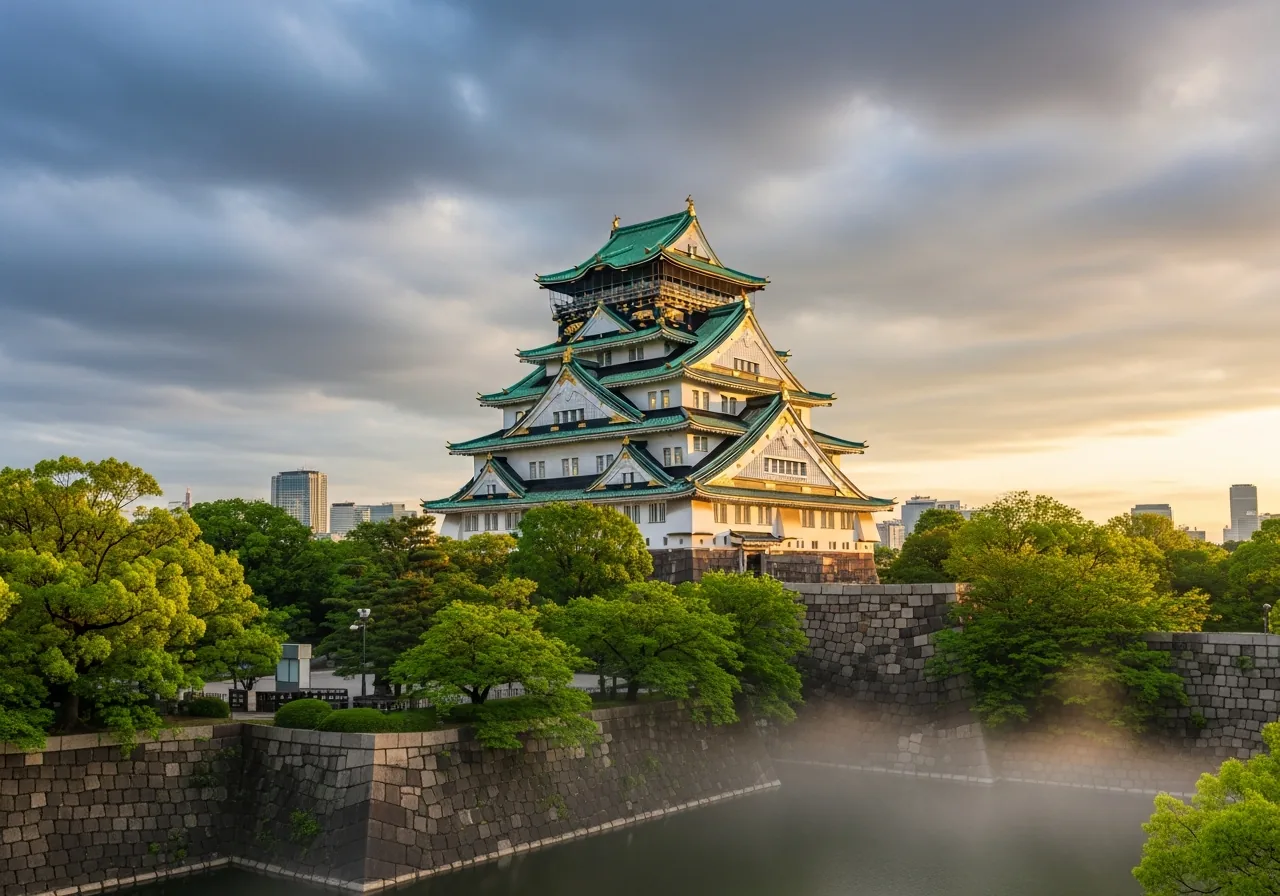
Osaka Castle is the reason this city exists in the shape it does. When Toyotomi Hideyoshi broke ground here in 1583, he wasn’t just building a fortress — he was staking a claim on the entire country. The original castle was built to be the most formidable in Japan, a display of power after Hideyoshi unified the country. The city that grew up around it became Japan’s commercial engine for centuries, and the castle’s silhouette — white walls, green copper roof, gold-leaf trim — still anchors Osaka’s skyline today.
What most visitors don’t realise before they arrive is how much there is beyond the main tower. The surrounding park covers 105 hectares and contains over 3,000 cherry trees, with free entry around the clock. There’s a moat you can cruise by boat, a plum grove that blooms in February, a Shinto shrine dedicated to Hideyoshi himself, and a brand-new underground museum that opened in 2025 showing the castle’s original 16th-century stone walls. You could spend a full day here and still not see everything.
This guide covers every major landmark inside and around Osaka Castle Park — what each one is, what it costs, and how to sequence your visit so you’re not doubling back. For everything else the city has to offer, check out the best food in Osaka and explore more of Osaka beyond the castle grounds.
1. Osaka Castle Main Tower (大阪城天守閣)
- 📍 1-1 Osakajo, Chuo-ku, Osaka 540-0002
- 🕐 9:00–18:00 (last entry 17:30); closed 28 Dec–1 Jan (as of May 2026)
- 💰 ¥1,200 adults / free for under-16s (tower + Toyotomi Stone Wall Museum)
- 🚃 Tanimachi 4-chome Station (Osaka Metro) — 15 min walk; JR Osakajokoen Station — 20 min walk
- 🗣 English menu: English audio guides and multilingual exhibit panels available
- 🗺 Open in Google Maps
- 📋 Tabelog
- 🌐 Official site
What to see: 8-floor museum + 8th-floor observation deck (¥1,200 all-in)
The current tower is a 1931 ferro-concrete reconstruction — the Tokugawa-era original was struck by lightning in 1665 and never rebuilt during the feudal period. The ticket price doubled from ¥600 to ¥1,200 in April 2025 when the new Toyotomi Stone Wall Museum was added to the admission, so you’re getting more than you were before. Eight floors of exhibits on Toyotomi Hideyoshi and the Siege of Osaka culminate in an 8th-floor observation deck with a clear view across the city. Tickets can be purchased at the castle tower, but long lines form on busy days — skip them by buying e-tickets in advance.
2. Toyotomi Stone Wall Museum (大阪城 豊臣石垣館)
- 📍 1-1 Osakajo, Chuo-ku, Osaka 540-0002 (adjacent to the Main Tower)
- 🕐 9:00–18:00 (last entry 17:30); closed 28 Dec–1 Jan (as of May 2026)
- 💰 Included in the ¥1,200 Main Tower ticket
- 🚃 Tanimachi 4-chome Station (Osaka Metro) — 15 min walk
- 🗺 Open in Google Maps
- 📋 Tabelog
What to see: Original 1583 Toyotomi-era stone walls (included in tower ticket)
Located next to the castle tower and included in the ticket price, the museum opened in 2025 and exhibits some of the castle’s original stone walls — covered up by the Tokugawa after the 1615 battle and not rediscovered until the 1950s. This is genuinely new history: you’re looking at the actual foundations Hideyoshi built, not a reconstruction. Most visitors rush past it on the way to the tower; don’t.
3. Nishinomaru Garden (西の丸庭園)
- 📍 Nishinomaru, Osakajo, Chuo-ku, Osaka 540-0002
- 🕐 9:00–17:00 (extended hours during cherry blossom season) (as of May 2026)
- 💰 ¥200 adults (¥350 during cherry blossom illumination season)
- 🚃 Osakajokoen Station (JR Loop Line) — 5 min walk
- 🗺 Open in Google Maps
- 📋 Tabelog
What to see: Cherry blossom lawn with castle backdrop (¥200 entry)
The Nishinomaru Garden encompasses the former “western citadel” — a lawn garden with 600 cherry trees, a tea house, and views of the castle tower from below. During peak bloom, the garden hosts nighttime illumination, making it one of Osaka’s quintessential spring scenes. At ¥200 it’s one of the cheapest good views in the city, and unlike the tower queue, it rarely feels overwhelming.
4. Gozabune Inner Moat Boat Ride (御座船)
- 📍 Osaka Castle Inner Moat, Chuo-ku, Osaka (boarding near Gokurakubashi Bridge)
- 🕐 Seasonal operation; typically 10:00–16:00 (check ahead) (as of May 2026)
- 💰 ¥1,500 per person (free with Osaka Amazing Pass)
- 🚃 Tanimachi 4-chome Station (Osaka Metro) — 15 min walk
- 🗺 Open in Google Maps
- 📋 Tabelog
What to do: 20-minute moat cruise (¥1,500)
The golden Gozabune is adorned with about 3,000 pieces of gold leaf and narrates the history of Osaka Castle during the cruise. The 20-minute ride takes you up close to the stone walls said to be the highest in Japan, with a stunning view of the castle tower from the water. It’s a completely different perspective from anything you get on foot — the scale of the moat walls only registers properly from down here.
5. Hokoku Shrine (豊国神社)
- 📍 2-1 Osakajo, Chuo-ku, Osaka 540-0002
- 🕐 Open daily, grounds accessible at all hours (as of May 2026)
- 💰 Free
- 🚃 Tanimachi 4-chome Station (Osaka Metro) — 15 min walk
- 🗺 Open in Google Maps
- 📋 Tabelog
What to see: Shinto shrine dedicated to Toyotomi Hideyoshi (free)
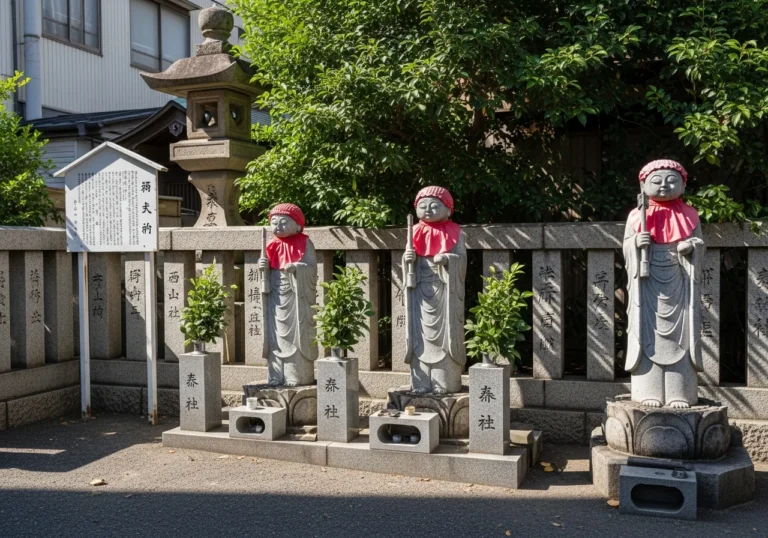
Hokoku Shrine is dedicated to Hideyoshi, sits just south of the keep, and is free and rarely busy. It’s the quietest spot in the entire castle complex — a few minutes of actual stillness while everyone else queues for the tower elevator. The bronze statue of Hideyoshi out front is worth a look; it captures the man’s outsized ambition in a way the museum exhibits don’t quite manage.
6. The Outer Moat Stone Walls and Otemon Gate (大手門)
- 📍 Otemon, Osakajo, Chuo-ku, Osaka 540-0002 (main southwest entrance)
- 🕐 Open 24 hours (park grounds) (as of May 2026)
- 💰 Free
- 🚃 Tanimachi 4-chome Station (Osaka Metro) — 10 min walk
- 🗺 Open in Google Maps
- 📋 Tabelog
What to see: Tokugawa-era stone walls and original castle gate (free)
The outer moat is twelve metres deep and walled in colossal Tokugawa-era stone — several of the “spectacle stones” top 100 tons each, which is the kind of fact that lands better when you’re standing under them. Look for the enormous Octopus Stone (Tako-ishi), one of the largest castle stones in Japan. Entering through Otemon Gate on the southwest side gives you the most dramatic approach to the keep — the tower appears gradually above the walls as you walk in, and it’s entirely intentional.
7. Osaka Castle Park Plum Grove (梅林)
- 📍 Umebayashi, Osakajo, Chuo-ku, Osaka 540-0002 (east of the main tower)
- 🕐 Open 24 hours (park grounds) (as of May 2026)
- 💰 Free
- 🚃 Morinomiya Station (Osaka Metro / JR) — 10 min walk
- 🗺 Open in Google Maps
- 📋 Tabelog
What to see: 1,270-tree plum grove in bloom from late January to early March (free)
East of the keep, around 1,270 plum trees bloom in February — before the cherry crowds arrive, making it quietly one of the best-timed visits of the year. If you’re in Osaka in late January or February and want a park experience without the Golden Week chaos, this is it. The grove is free, rarely crowded, and the contrast of white and pink blossoms against the castle walls is genuinely striking.
8. MIRAIZA Osaka-jo (ミライザ大阪城)
- 📍 1-1 Osakajo, Chuo-ku, Osaka 540-0002 (inside the inner bailey, beside the keep)
- 🕐 Shops and restaurants: 11:00–21:00 (varies by tenant) (as of May 2026)
- 💰 Free to enter; dining from ¥1,500–¥5,000+ depending on restaurant
- 🚃 Tanimachi 4-chome Station (Osaka Metro) — 15 min walk
- 🗺 Open in Google Maps
- 📋 Tabelog
- 🌐 Official site
What to do: Rooftop views of the castle tower; dining and souvenir shopping
MIRAIZA Osaka-jo is the former 1931 army headquarters building, reborn as a retail and dining complex beside the keep. The rooftop offers a close-up view of Osaka Castle, making it a popular scenic spot. The building itself — a Western-style structure from the same era as the reconstructed tower — is worth a look even if you skip the restaurants. The rooftop is free to access and gives you a different angle on the keep than anything you get from ground level. The MICHI Osaka travel guide has more on dining options in the surrounding area if you want to eat well after your visit.
How to Order
Osaka Castle Park is a landmark complex, not a single building — plan your visit accordingly. Here’s how to get the most out of it without wasting time.
Buy tickets online. Long lines form at the castle tower ticket window on busy days, with waits over 30 minutes — skip them by purchasing e-tickets in advance. The official site (osakacastle.net) sells them directly.
Consider the Osaka Amazing Pass. The pass covers free entry to the Main Tower, Toyotomi Stone Wall Museum, and the Gozabune Boat Ride, plus unlimited Osaka Metro and city buses and access to 40+ attractions citywide. Note that Nishinomaru Garden is not included.
Sequence your visit. Enter via Otemon Gate (southwest) for the best approach. Walk the outer moat walls first, then cross into the inner bailey for the tower and Stone Wall Museum. Save the Gozabune boat ride for late afternoon when the light is better. Nishinomaru Garden is best visited last — it’s closest to Osakajokoen Station if you’re heading back by JR.
Wear proper shoes. The park is large and hilly — you’ll cover at least 2 km from station to keep and back. Coin lockers are available at every park-entrance station for ¥400–¥600 a day.
Photography note: Photography is banned on the 3rd and 4th museum floors inside the tower. The exterior and observation deck are fair game.
FAQ
Q: Is Osaka Castle expensive to visit?
A: The park grounds are free and open 24/7. Only the castle museum (¥1,200) and Nishinomaru Garden (¥200–¥350) require tickets. The Gozabune boat ride is ¥1,500 separately, or free with the Osaka Amazing Pass. A full day covering everything costs around ¥3,000–¥4,000 per adult without the pass.
Q: Does Osaka Castle have English signage?
A: Yes. The museum inside the main tower has English-language exhibit panels throughout, and English audio guides are available. Most signs in the park grounds are bilingual. Staff at the ticket windows can handle basic English questions.
Q: When is the best time to visit?
A: April and November are optimal — April for the 3,000 cherry trees at peak bloom, November for sharp autumn foliage — though both periods bring massive crowds and 45-minute elevator waits. Visit early morning (before 9:00) for fewer people, or late afternoon for golden hour. Weekdays beat weekends, and avoid Golden Week entirely if you can. For plum blossoms with almost no crowds, February is the answer.
Q: How long does a visit take?
A: Budget at least two to three hours for the tower, Stone Wall Museum, and a walk around the inner moat. A full day — including the Gozabune ride, Nishinomaru Garden, Hokoku Shrine, and the plum grove or outer moat walls — is easily filled. The full perimeter loop takes 1.5 to 2 hours at a moderate pace (3–4 km).
Q: Can I visit Osaka Castle Park at night?
A: The park grounds are open 24 hours daily with free entry. The main tower closes at 18:00. During cherry blossom season, Nishinomaru Garden runs evening illumination events with extended hours — check the official site for exact dates each year.
Information is accurate as of May 2026. We recommend checking Google Maps for the latest hours and prices before visiting.