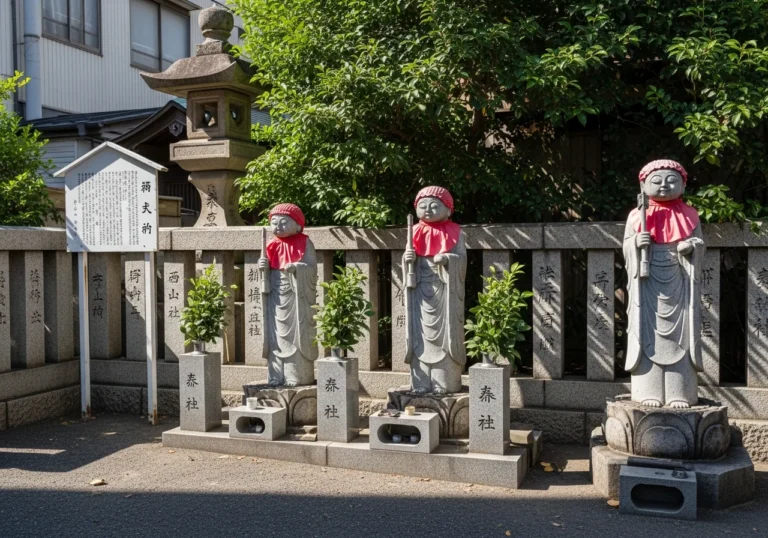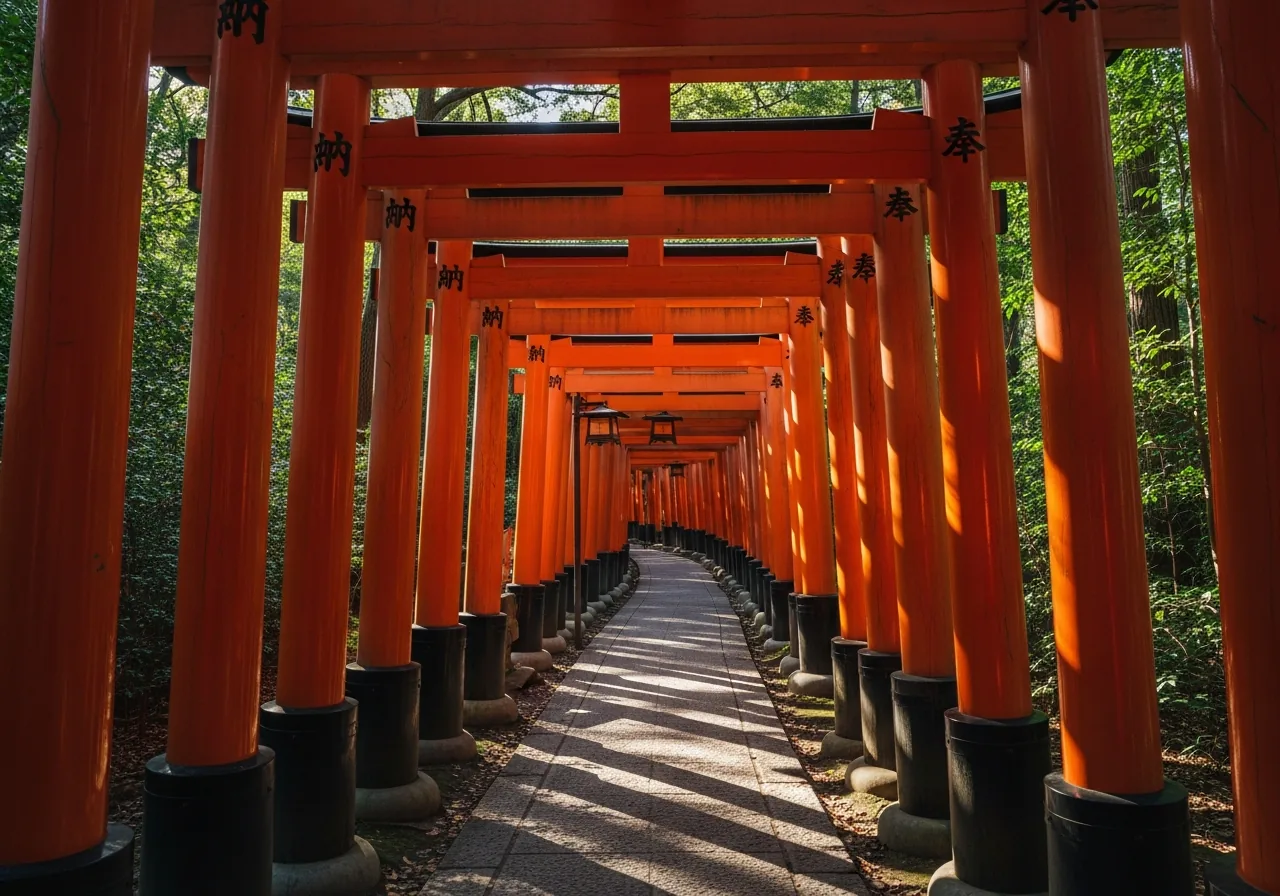
Looking for torii gates in Osaka? This guide covers what they are, why they matter, and where to find the most significant examples across the city — from a 730-year-old stone gate at a Buddhist temple to a shrine that gave its name to an entire architectural style. Five key spots, all free to enter, all worth your time.
MICHI’s Pick — Selected by our Osaka-based team, based on places we’ve visited and on research using Tabelog and Google Maps ratings. In Japan, a Tabelog score of 3.4+ is genuinely high — Japanese reviewers are famously strict, and most locals consider anything above 3.4 a place worth a detour. We feature venues meeting at least one of: Tabelog 3.4+, Google Maps 4.3+, or 100+ reviews — the kind of spots locals quietly trust.
Tabelog and Google Maps scores are accurate as of the time of writing.
You’ve seen the photos — a tunnel of vermilion gates, a lone arch framing a mountain path, a stone structure standing in front of what looks unmistakably like a Buddhist temple. Torii gates are everywhere in Japan, and Osaka has some of the most interesting examples in the country. But most visitors walk past them without knowing what they’re actually looking at.
Here’s the short version. A torii is a traditional Japanese gate most commonly found at the entrance of or within a Shinto shrine, where it symbolically marks the transition from the mundane to the sacred — a spot where kami are welcomed and thought to travel through. The presence of a torii at the entrance is usually the simplest way to identify Shinto shrines, and a small torii icon represents them on Japanese road maps and on Google Maps.
Torii gates are traditionally vermilion-colored structures featuring two upright posts and two horizontal crossbars, though they can also be found in black, stone-gray, or natural wood, depending on the shrine’s tradition and local customs. The first torii gates appeared in Japan during the mid-Heian period, around 922 AD. They’ve been a fixture of the landscape ever since.
What makes Osaka’s torii particularly interesting is the variety. The city has a shrine that invented its own torii style, a Buddhist temple with the oldest grand stone torii in Japan, and a neighborhood shrine where the gate frames one of the strangest sights in the country. Before you go, check out MICHI Osaka travel guide for broader context on the city’s architecture and culture.
When visiting, bow respectfully before passing through a torii gate. Step to one side rather than walking straight down the centre — the middle path is for the kami. It’s a small gesture, but locals notice it.
One more thing worth knowing: although ostensibly associated with Shinto shrines nowadays, torii were historically used within Buddhist contexts as well. These date back to the times when the Buddhist and Shinto faiths had merged into a syncretic religion. That history is very much alive in Osaka — which is exactly why Shitennoji is on this list.
All five spots below are free to enter. For everything else to do nearby, explore more of Osaka with our area guides.
1. Sumiyoshi Taisha (住吉大社)
📍 2-9-89 Sumiyoshi, Sumiyoshi Ward, Osaka 558-0045
🕐 Apr–Sep: 6:00–17:00 / Oct–Mar: 6:30–17:00, open year-round (as of May 2026)
💰 Free entry
🚃 Sumiyoshi Taisha Station, Nankai Main Line (3 min walk) / Sumiyoshi-Torii-mae tram stop, Hankai Line (directly in front)
🗣 English signage available on grounds
⭐ Rating: Google 4.4 (10,000+ reviews) (as of writing)
🗺 Open in Google Maps
📋 Tabelog
🌐 Official site
What to see: The Kakutorii (square-post stone torii) and the steep Sorihashi arched bridge at the entrance
Sumiyoshi Taisha is Osaka’s grand shrine and the head of some 2,300 Sumiyoshi shrines across Japan, founded by the legendary empress-regent Jingu in the early 3rd century. The torii here is genuinely unusual: one of the stone torii at the shrine is known as the Kakutorii — unusual in that the middle bar does not extend outside of the vertical posts, and all pieces have square edges. This type of torii is called Sumiyoshi torii after the shrine. It’s the only style in Japan named after a single shrine, and you can see why — it looks nothing like the torii you’ve seen in every other photo of Japan. The four main halls, dating from 1810, are designated as National Treasures.
2. Shitennoji Temple (四天王寺)
📍 1-11-18 Shitennoji, Tennoji Ward, Osaka 543-0051
🕐 Apr–Sep: 8:30–16:30 / Oct–Mar: 8:30–16:00, open year-round (as of May 2026)
💰 Outer grounds free; Inner Precinct ¥300; Treasury House ¥500
🚃 Shitennoji-mae Yuhigaoka Station, Tanimachi Subway Line (5 min walk) / JR Tennoji Station (10 min walk)
🗣 English signage available on grounds
⭐ Rating: Google 4.3 (8,000+ reviews) (as of writing)
🗺 Open in Google Maps
📋 Tabelog
What to see: The stone torii at the west entrance — the oldest grand stone torii in Japan
Osaka’s Shitennoji, founded in 593 by Shotoku Taishi and the oldest state-built Buddhist temple in the country, has a torii straddling one of its entrances. The original wooden torii burned in 1294 and was then replaced by one in stone. This 8.5-metre-tall torii is located at Shitennoji Temple in Tennoji, Osaka. Built in 1294, this shrine gate stands as the oldest grand torii made from stone in all of Japan, and is registered as an Important Cultural Property. The fact that it stands in front of a Buddhist temple — not a Shinto shrine — is the whole point. This is an example of the syncretic fusion of Shintoism and Buddhism. Before Shinto and Buddhism were separated by a jurisdiction of the Meiji government, this type of fusion was quite common.
3. Namba Yasaka Shrine (難波八阪神社)
📍 2-9-19 Motomachi, Naniwa Ward, Osaka 556-0016
🕐 Open 24 hours, year-round (as of May 2026)
💰 Free entry
🚃 Namba Station, Osaka Metro Midosuji Line (5 min walk)
⭐ Rating: Google 4.3 (5,000+ reviews) (as of writing)
🗺 Open in Google Maps
📋 Tabelog
What to see: The torii gate framing a 12-metre lion head — one of the most photographed sights in Osaka
Near Namba Station, tucked among residential buildings, this small but impressive shrine has been a prestigious place since the Heian period and is considered the guardian deity of the Namba area since ancient times. The torii here works differently from most — it’s not the gate itself that stops you, it’s what you see through it. The sight of the lion’s face appearing from the eastern torii gate is striking and surprises many visitors. That feature is a 12-metre-tall giant lion head just past the torii gate, whose mouth serves as a stage where dances are performed during festivals. Walk through the gate at dusk when the eyes are lit up and you’ll understand why this place has a permanent queue of people with cameras.
4. Osaka Tenmangu (大阪天満宮)
📍 2-1-8 Tenjinbashi, Kita Ward, Osaka 530-0041
🕐 9:00–17:00, open year-round (as of May 2026)
💰 Free entry to grounds
🚃 Minami-Morimachi Station, Osaka Metro Tanimachi/Sakaisuji Lines (5 min walk)
⭐ Rating: Google 4.3 (4,000+ reviews) (as of writing)
🗺 Open in Google Maps
📋 Tabelog
What to see: The main vermilion torii at the entrance to one of Osaka’s most important shrines
Osaka Tenmangu, located near the Tenjinbashisuji Shopping Street — known as Japan’s longest shopping arcade — is a shrine dedicated to Sugawara no Michizane, famous as the god of learning. The torii here is classic Myojin-style: deep vermilion, with the characteristic curved upper crossbar that most people picture when they think of a Japanese gate. The shrine grounds house various power spots believed to bring benefits such as matchmaking and warding off evil, including the Hoshiai Bridge over the Hoshiai Pond on the north side of the grounds. It’s a working neighbourhood shrine — you’ll see students praying before exams, not just tourists with cameras — and the torii marks that transition from the busy shopping street to something genuinely quieter.
5. Imamiya Ebisu Shrine (今宮戎神社)
📍 1-6-10 Ebisunishi, Naniwa Ward, Osaka 556-0003
🕐 9:00–17:00, open year-round (as of May 2026)
💰 Free entry
🚃 Imamiya-Ebisu Station, Nankai Main Line (1 min walk)
⭐ Rating: Google 4.2 (2,500+ reviews) (as of writing)
🗺 Open in Google Maps
📋 Tabelog
What to see: The torii gate at the entrance to Osaka’s most commercially beloved shrine — especially vivid during the Toka Ebisu festival in January
Imamiya Ebisu Shrine is famous for enshrining Ebisu-san, known as the god of commerce in Osaka, with a history dating back to 600 CE. The torii here is a standard Myojin type, but the context makes it worth a visit: this is the shrine that Osaka’s merchant class has prayed at for over a millennium, and the gate carries that weight. During the Toka Ebisu festival in mid-January, over a million people pass through it over three days — the largest such gathering in western Japan. On a quiet weekday, you can walk through alone and feel the contrast. After your visit, the area around Namba and Shinsekai has some of the best food in Osaka within easy walking distance.
FAQ
Q: What is the best torii gate in Osaka?
A: For architectural significance, the stone torii at Shitennoji Temple is unmatched — it’s the oldest grand stone torii in Japan, dating from 1294. For sheer atmosphere, Sumiyoshi Taisha’s Kakutorii is the most distinctive, with its unusual square-post design found nowhere else in the country.
Q: How many torii gates are there in Osaka?
A: Osaka Prefecture has over 1,500 registered shrines and temples, most with at least one torii. Within Osaka city itself, you’ll find torii at dozens of shrines ranging from major landmarks like Sumiyoshi Taisha and Osaka Tenmangu to tiny neighbourhood shrines tucked between apartment buildings.
Q: Do Osaka shrines have English signage?
A: The major shrines — Sumiyoshi Taisha, Shitennoji, and Namba Yasaka — all have English information boards at key points. Smaller shrines like Imamiya Ebisu and Osaka Tenmangu have limited English on-site, but the experience of walking through a torii gate needs no translation. Google Maps listings for all five spots above are in English.
Q: What should I know before passing through a torii gate in Osaka?
A: Bow once before entering and once before leaving. Walk to the left or right side of the path rather than down the centre — that middle lane is considered the kami’s path. Photography is generally fine in the outer grounds; look for signs near the main hall, where restrictions sometimes apply. All five shrines and temples in this guide are free to enter.
Last updated: July 19, 2026 · Corrections: [email protected]