Shinjiro Torii did not set out to build a whisky empire: in 1899, aged twenty, he opened a small wine shop in Osaka’s Nishi-ku district and watched his imported Spanish bottles collect dust. The reason Japanese whisky exists at all is that this failure forced him to invent something new — a sweetened fortified wine calibrated to the Japanese palate, whose profits then funded the world’s first purpose-built malt whisky distillery outside the British Isles, opened at Yamazaki in 1923. Every bottle of Yamazaki, Hibiki, or Kakubin sold anywhere on earth today is the downstream consequence of one Osaka merchant’s refusal to accept that his shelves would not sell.
Why we can tell you this — MICHI is written and edited in Osaka, and the streets of this story — Dosho-machi’s pharmaceutical quarter in Chuo Ward, the Nishi-ku block where Torii Shoten opened on February 1, 1899, and the Yamazaki valley twenty minutes south by train — are places our editorial team can walk on any given afternoon. This piece draws on Suntory’s own corporate archive and official distillery history, the National Diet Library’s portrait record of Torii Shinjiro, Nikka Whisky’s published founder timeline, the Osaka Convention & Tourism Bureau’s distillery documentation, and contemporary spirits journalism. Where the historical record is contested — particularly the question of how much creative credit belongs to Torii versus his first master distiller, Masataka Taketsuru — we say so plainly rather than smoothing it over.
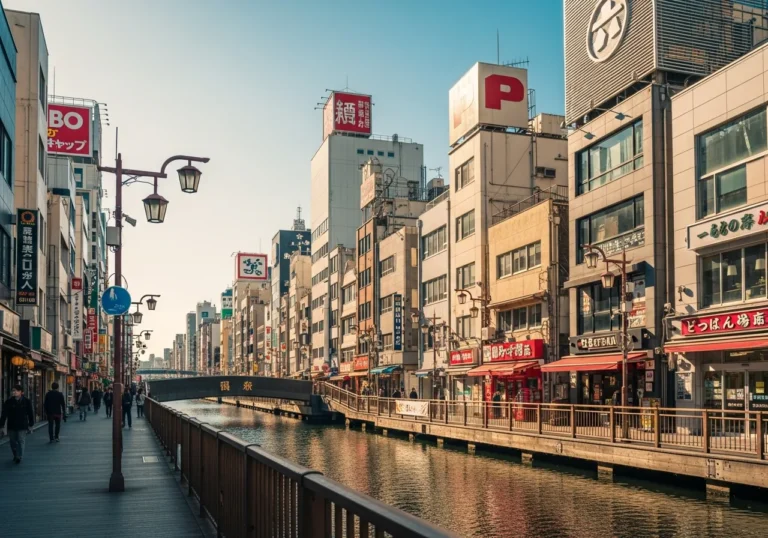
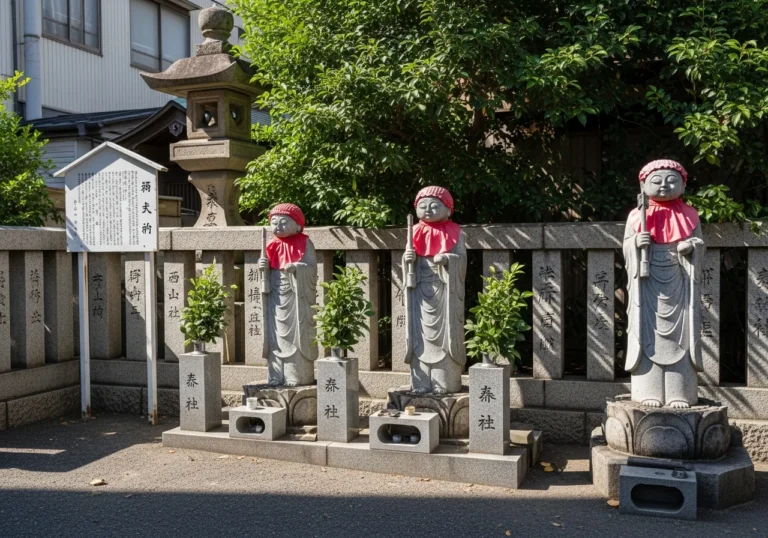
Stand in Dosho-machi today and the street still smells faintly of the past. The low-slung machiya townhouses that once lined this pharmaceutical quarter of central Osaka are mostly gone, replaced by glass office towers housing the Japanese subsidiaries of Pfizer and Takeda, but the Chuo Ward heritage panels at the Sukunahikona Shrine still explain what this district was: the national clearing-house for medicines, a guild-regulated zone where, by 1722, 124 wholesale pharmacists operated under shogunate licence. It was here, in 1892, that a thirteen-year-old boy from a modest Osaka family named Shinjiro Torii began an apprenticeship that would, over the next century, reshape what the world drinks.
The story of Japanese whisky is usually told as a triumph of craft — of copper pot stills and mizunara oak and mountain mist. That is not wrong, but it is incomplete.
Before any of that, it is a story about a city, a historical moment, and one man’s peculiar commercial instinct: the conviction that the right product, made for the right palate, could bridge two entirely different drinking cultures. Understanding why Torii succeeded requires drilling through seven layers of cause and consequence, from the geopolitics of Meiji-era Japan all the way down to the chemistry of soft water.
Why Did an Osaka Pharmacist’s Apprentice Start a Whisky Company?
Shinjiro Torii was thirteen years old in 1892 when he became an apprentice at Konishi & Co., a pharmaceutical wholesaler in Osaka’s Dosho-machi district, where he was first exposed to blended Western alcohol. The connection between pharmaceuticals and spirits was not incidental in Meiji Japan: in addition to Western medicines, the company sold Western liquors including wine, brandy, and whisky. Alcohol and medicine occupied adjacent shelves in the same commercial ecosystem, both classified as imported Western goods, both arriving through the same trading networks that had opened after Commodore Perry’s arrival in 1853.
Torii entered Osaka Commercial School in 1890 and later joined Konishi Gisuke Shoten, where he learned blending techniques used in the era’s imitation whiskies. This is the first layer of the “why”: Torii’s education was not academic but artisanal.
He learned by doing — by mixing, tasting, adjusting. As a teenager, Shinjiro apprenticed at Konishi Gisuke Shoten, Osaka’s premier pharmacy that also imported quality Western liquors.
There, he became fascinated with blending, spending most of his time mastering techniques and developing both his nose and palate.
The second layer is the city itself. In the mid-nineteenth century, early foreign visitors to Osaka saw resemblances to European cities like Paris and Venice.
As Japan modernized in the Meiji era (1868–1912), however, the city’s industrialization led it to be nicknamed the “Manchester of the East.” Osaka was not Tokyo — it was not the seat of government or the showcase of imperial ambition. It was the merchant city, the commercial city, the city where the question was always: what can be made, and who will buy it?
A government-approved organization called the Doshomachi Yakushu Nakagai Nakama (Medicine Traders Guild) inspected medicines collected in Doshomachi, set proper prices for them, and supplied them exclusively around the country. Torii grew up inside this guild culture — a world that rewarded quality control, blending skill, and the ability to read what a market wanted.
The third layer is timing. The Meiji era was a period when the Japanese people moved from being an isolated feudal society at risk of colonization by Western imperial powers to the new paradigm of a modern, industrialized nation state, influenced by Western scientific, technological, philosophical, political, legal, and aesthetic ideas.
Western goods were not merely fashionable — they were ideologically charged. To drink wine or whisky was to participate in “bunmei kaika,” civilization and enlightenment.
When Shinjiro Torii opened his small import store in Osaka in 1899, he had only optimism to sell. Just 20 years old and virtually penniless, Shinjiro hungered to accelerate the quest for the “civilization and enlightenment” that defined Japan’s ambitions during the turn-of-the-century Meiji period.
Why Did the Wine Shop Fail — and Why Did That Failure Matter?
The failure was swift and instructive. Shinjiro stocked his shelves with European wine, but the bottles collected dust: the Japanese public was not accustomed to the delicacies of foreign spirits.
This is a fact that most corporate histories of Suntory acknowledge with a certain pride — the founder failed first, then adapted. But the failure deserves more scrutiny than it usually gets, because it contains the entire logic of what came next.
Why did the wine not sell? The answer is not simply that Japanese people did not drink wine.
They drank sake, shochu, and mirin — fermented and distilled beverages with long domestic histories. The problem was that imported European wine was dry, tannic, and acidic in ways that clashed with Japanese food and Japanese palates calibrated to umami-forward flavours.
Shinjiro stocked his shelves with European wine, but the bottles collected dust: the Japanese public was not accustomed to the delicacies of foreign spirits. This hard lesson cost Shinjiro his savings, but it also motivated him to create his first original blend, fit for the palate of Japanese people.
The response Torii devised was not to give up on Western alcohol but to transform it. He continued developing original wine for many years.
After almost ten years of unceasing effort, he created Akadama Port Wine in 1907, which eventually became one of the most popular wines in Japan. Akadama — the name means “red ball,” a reference to the sun — was a sweetened fortified wine, closer in profile to a dessert wine than to the dry table wines that had failed.
Originally Akadama port wine, it is a Japanese red fortified wine created in 1907 by Shinjirō Torii, the founder of Suntory. The red circle on the label represented the sun; the name referred to the red sphere of the sun, the source of all life, and previewed the philosophical foundation that later gave rise to Suntory’s name itself, a portmanteau of Sun and Torii.
The commercial logic was elegant: take a Western category (fortified wine), adapt it radically to local taste (sweeter, softer, more approachable), and sell it as both modern and Japanese. Akadama was a huge commercial success from which Torii was able to establish Suntory.
The profits from Akadama would eventually fund the whisky distillery. But first, Torii needed to make the product famous — and here he deployed a marketing instinct that was, by any measure, extraordinary.
Why Did Japan’s First Nude Poster Sell Whisky’s Predecessor?
In 1922, Torii Shoten commissioned what became one of the most discussed advertising images in Japanese history. In 1922, Torii Shoten, the forerunner of Osaka-based beverage maker Suntory, made a poster to promote its “Akadama Port Wine” in Japan.
Dubbed “Japan’s first nude poster,” it became an instant sensation. It has become one of Japan’s most iconic and classic images.
The “nude” model was Emiko Matsushima, a stage actress. The poster was directed by Toshirou Kataoka, known as a genius in the advertising world.
It was highly unimaginable for a woman to show bare shoulders in public. The photoshoot for the poster took place in Osaka in May 1922.
The image was controversial precisely because it was transgressive — it placed a Western product in a visual register that Japanese advertising had never used. It was provocative, modern, and impossible to ignore.
Why does this matter to the story of Japanese whisky? Because it reveals something essential about Torii’s method.
He was not simply a blender or a distiller — he was a communicator, someone who understood that a new product requires a new cultural frame. Helped by this nude poster, Akadama Port Wine sold well in Japan and Torii used the profits to try and make whisky.
The poster was the bridge between the wine shop that failed and the distillery that changed the world.
With slogans like “delicious” and “nutritious,” Torii launched Japan’s first poster featuring a nude female photograph and innovative newspaper advertisements, boosting sales year after year.
The Akadama campaign also established a pattern that Suntory would follow for the rest of the twentieth century: the use of bold, emotionally resonant advertising to sell a product that was simultaneously aspirational and accessible. Suntory pioneered emotional, story-driven commercials in Japan.
Their TV ads often showcased celebrities, musicians, and cinematic storytelling, linking drinks with lifestyle aspirations. This lineage runs directly from the 1922 nude poster to the Akira Kurosawa-directed Suntory commercials of the 1970s, and from there to the fictional Suntory ad at the centre of Sofia Coppola’s Lost in Translation.
Why Build a Whisky Distillery — and Why There, at Yamazaki?
By 1921, Torii had incorporated his business as Kotobukiya Co., Ltd. with one million yen in capital.
In 1921, he established “Kotobukiya Limited” with 1 million yen in capital and launched a modern operation. The Akadama profits had given him a platform.
The question was what to do with it. His answer — to build Japan’s first malt whisky distillery — was, by any rational business calculation, absurd.
At the time, the West accounted for less than one percent of the Japanese liquor market. His own company directors were unanimously opposed.
Torii invested his family fortune and pursued his dream of building Japan’s first whisky distillery despite unanimous protest from company directors.
Why whisky, specifically? The answer lies in Torii’s apprenticeship.
He had spent years around imitation whiskies — the cheap, spirit-forward blends that Japanese companies were producing by adding flavourings to neutral alcohol. He knew what authentic Scotch whisky tasted like, and he believed that a genuinely made Japanese whisky, adapted to local tastes, could find a market that the imitations never would.
Even with the success of Akadama, Shinjiro pined for an exotic liquor made entirely in Japan. He refused to accept the widely held belief that whisky could be made only in Scotland.
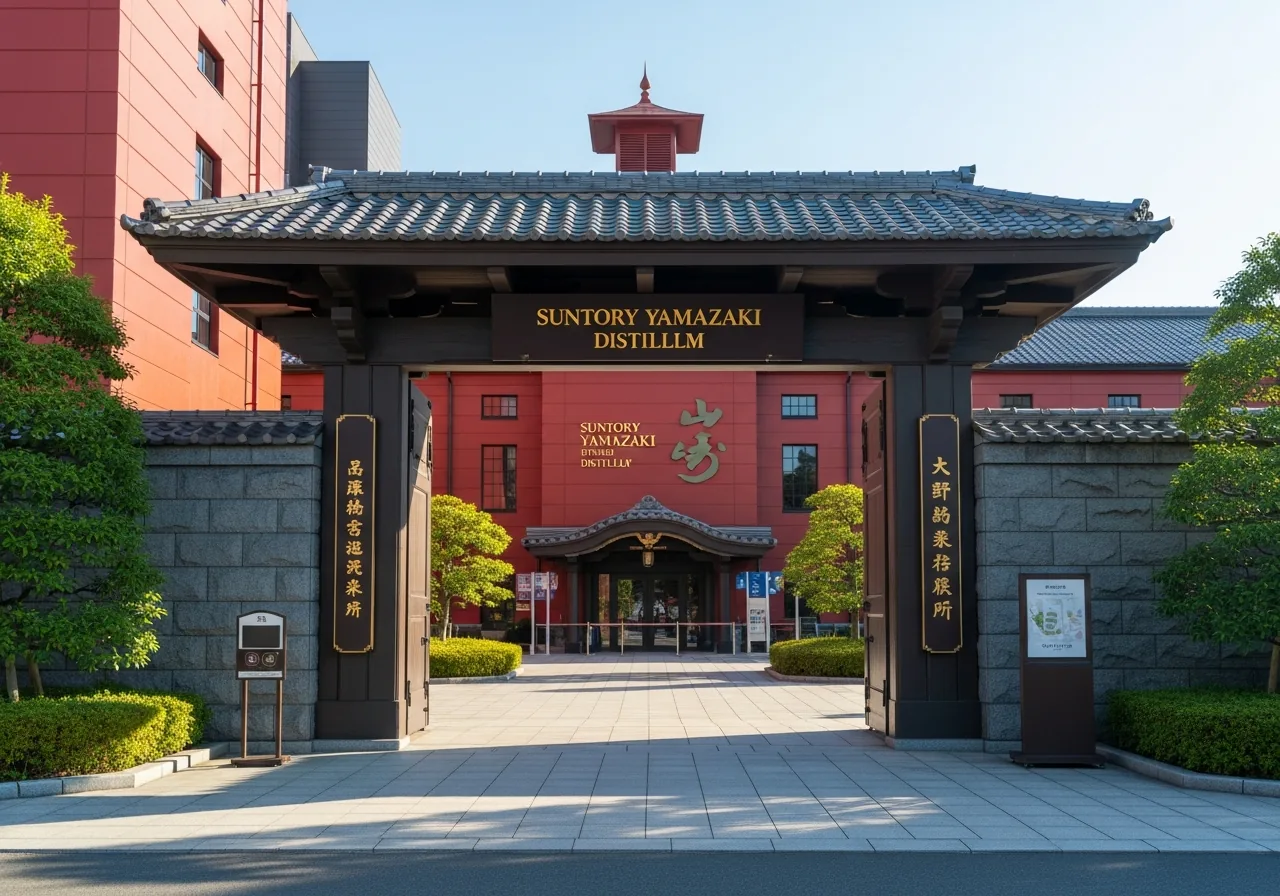
The choice of Yamazaki as the distillery site was not arbitrary. Shinjiro Torii chose to build the Yamazaki Distillery on the outskirts of Kyoto, at the confluence of three rivers: Katsura, Uji and Kizu.
The soft, mineral-rich waters flowing into these rivers from their source of Mount Tennozan are ideal for producing fine whisky. This site also benefits from a favourable, humid subtropical climate, which is favourable for the maturation of whisky in the distillery.
The water question was decisive. Whisky is roughly sixty percent water by volume in the bottle, and the mineral content of the water used in mashing and dilution shapes the spirit’s character profoundly.
Yamazaki has long been known for its excellent water, so much so that tea master Sen no Rikyu built a teahouse there. The unique topography, where the Uji River, Kizu River, and Katsura River converge, creates a moderately humid climate.
This high-quality water and humid environment is said to be an ideal place for whisky production. That Sen no Rikyu — the sixteenth-century master who defined the Japanese tea ceremony — had chosen this same water source four centuries earlier was not lost on Torii.
He was building on a tradition of Japanese connoisseurship, not simply importing a Scottish one.
There was also a practical argument. For the construction of the distillery, Torii envisioned a location “not too far from Osaka” and explored several candidate sites, including Suita, Hirakata, and Yamazaki.
Yamazaki sits at the southwestern fringe of Kyoto, roughly twenty minutes from Osaka by rail — close enough to the commercial centre to manage, far enough into the hills to find the water and climate the whisky required. Torii feared that Hokkaido was too far from the main markets of central Honshu — Japan’s largest island — so he vetoed the idea and instead built Yamazaki on the outskirts of Kyoto in 1923.
This was a commercial decision as much as a terroir decision: the distillery had to be reachable.
Why Did Torii Need Masataka Taketsuru — and What Happened When Their Visions Diverged?
Torii knew what he wanted to make. He did not, at first, know how to make it. The gap between his ambition and his technical knowledge was bridged by one of the most consequential partnerships in the history of spirits: his recruitment of Masataka Taketsuru.
Masataka Taketsuru was a Japanese chemist and businessman who helped establish whisky production in Japan and founded Nikka Whisky Distilling. Born to a family that had owned a sake brewery since 1733, he traveled to Scotland in 1918 to study organic chemistry and distilling.
His Scottish education was exhaustive. In December 1918, he arrived in Scotland and enrolled at the University of Glasgow, where he studied organic chemistry in the summer of 1919.
Taketsuru studied under Thomas Stewart Patterson, the Gardiner Chair of Chemistry. In April 1919, Taketsuru began his apprenticeship at Longmorn distillery in Strathspey, Scotland, and then in July at James Calder & Co.’s Bo’ness distillery in the Lowlands region.
He also, famously, married a Scottish woman. On 8 January 1920, he married Jessie Roberta “Rita” Cowan of Middlecroft, Kirkintilloch, despite opposition from both their families.
Taketsuru returned to Japan with his Scottish wife, his notebooks full of distillation chemistry, and a head full of Scotch whisky’s flavour logic. He compiled detailed “Taketsuru Notes” that became a blueprint for Japanese whisky production.
These notebooks — documenting mash chemistry, still geometry, and cask selection — are among the most consequential technical documents in Japanese spirits history.
When Taketsuru’s original employer, Settsu Shuzo, abandoned its whisky project in the post-war economic downturn, he was left without a platform. In June 1923, Taketsuru was recruited by Shinjiro Torii, founder of Kotobukiya, on a 10-year contract with an annual salary of 4,000 yen — double his previous earnings — to lead the creation of Japan’s first authentic whisky. Masataka led the construction based on his experiences in Scotland, overseeing the site as factory manager, and in November 1924, Japan’s first malt whisky distillery was completed.
The partnership was productive and, from the beginning, tense. The two men had fundamentally different visions of what Japanese whisky should be.
Torii prioritized developing a lighter, more palatable Japanese-style whisky adapted to local tastes and blending practices, whereas Taketsuru remained committed to replicating authentic Scottish methods, including peated malts and traditional maturation techniques. This was not a trivial disagreement — it was a philosophical divide about the purpose of the entire enterprise.
In 1929, at the insistence of Torii, the Suntory Whisky Shirofuda (white label) was released to market aged 4.5 years, a considerably younger age than desired by Taketsuru. Being heavily peated in the style mastered by Taketsuru in Scotland, it was not well received.
The first Japanese whisky was, commercially, a failure. The Japanese palate that had rejected dry European wine now rejected heavily peated Scotch-style whisky.
Torii had been right about the market; Taketsuru had been right about the technique. Neither was entirely right about the product.
In March 1934, upon completing his contract, Taketsuru left Kotobukiya to pursue his dream of creating authentic whisky in Hokkaido. He moved north to Yoichi, Hokkaido — a rugged, remote area that reminded him of Scotland.
Philosophical differences eventually pushed Taketsuru to leave and establish Nikka, creating one of whisky history’s most fascinating rivalries. From this single partnership and its dissolution, Japan’s entire whisky industry was born: Suntory on one side, Nikka on the other, each carrying one half of the original vision.
The Taketsuru Notes and What They Represent
It is worth pausing on the question of credit, because it is genuinely contested. Suntory’s corporate history attributes the success of Japanese whisky primarily to Torii’s vision and commercial instinct.
Nikka’s corporate history, naturally, emphasises Taketsuru’s technical mastery. There was clearly a gap between Masataka Taketsuru, an engineer who had a dream of making real Scotch whisky, and Shinjiro Torii, a manager who was involved in the business feasibility of domestic whisky.
Both framings are accurate, and neither is complete.
What is beyond dispute is that without Torii’s capital and commercial courage, Taketsuru would have had no distillery to build. And without Taketsuru’s Scottish training and his meticulous notebooks, Torii would have had no technical foundation on which to build it.
After his ten-year contract ended, Taketsuru established his own distillery, Yoichi, in 1934, which grew into the company we now know as Nikka. In essence, this single, determined man is the common ancestor of Japan’s two largest whisky producers.
The rivalry between Suntory and Nikka that has defined Japanese whisky for ninety years is the direct offspring of the collaboration and conflict between these two men.
Why Did Kakubin Succeed Where Shirofuda Failed?
After the failure of Shirofuda in 1929, Torii spent eight years refining his approach. The result, launched in 1937, was Kakubin — the “square bottle” whisky that would become Japan’s best-selling expression and remains so today.
In 1929, Shinjiro released Suntory Shirofuda (White Label), the first authentic Japanese whisky with a smoky flavour. It did not suit Japanese palates, but he persevered again.
After many challenges, he finally launched Suntory Whisky Kakubin in 1937, with its iconic square bottle. Finally, he had a whisky that became popular quickly, and Suntory was recognised as a pioneer of Japanese Whisky.
Why did Kakubin work when Shirofuda had not? The answer is the same answer that explained Akadama’s success over imported European wine: adaptation.
Kakubin was lighter, less peated, and more food-compatible than Shirofuda. It was designed not for the whisky connoisseur who wanted a faithful replica of Scotch, but for the Japanese drinker who wanted something modern and Western that did not assault the palate.
Instead of forcing Western flavours, Torii tailored wine and whisky to Japanese preferences — lighter, smoother, and more food-friendly.
The timing of Kakubin’s launch was also significant. Japan in 1937 was a country undergoing rapid militarisation, but also rapid urbanisation and the growth of a salaried middle class with disposable income and aspirational tastes.
Kakubin arrived at exactly the moment when a mass market for Western-style spirits was beginning to form. Through trial and error, Shinjiro finally succeeded in 1937, launching a Suntory Whisky that would eventually be nicknamed “Kakubin” (“square bottle”) by the people of Japan.
Today, Kakubin remains the number-one-selling Japanese whisky by value in Japan.
The Second World War tested the distillery’s survival in ways that no business plan could have anticipated. The Pacific War began soon after Kakubin’s launch.
While it became difficult to procure raw materials, Yamazaki somehow managed to continue making whisky. When air raids became more frequent, they dug holes in the mountainsides and ground around the distillery and buried barrels filled with whisky to protect it.
The whisky that survived the war continued to age quietly in Yamazaki’s warehouses. The whisky that escaped the war continued to mature quietly in Yamazaki.
Overcoming many crises, each and every barrel that continued to be produced became the foundation for the postwar whisky boom.
Why Did Japanese Whisky Take Sixty Years to Conquer the World?
Torii died on February 20, 1962, aged eighty-three. His son Keizo Saji was born in Osaka in 1919 as the second son of Shinjiro Torii.
He became president of Kotobukiya in 1961, and officially renamed it to Suntory Limited in 1963, paying tribute to the success of Suntory Whisky (Kakubin). The name Suntory — a portmanteau of “Sun” and “Torii” — encoded the founder’s identity into the company’s permanent identity.
In 1963, Kotobukiya changed its name to “Suntory”, taken from the name of the whisky it produces, which itself was derived from the English “sun” (referencing Akadama) + Tory, the anglicized version of Torii’s name.
For most of the postwar period, Japanese whisky was essentially a domestic product. It was enormously popular at home — the highball culture that defines Japanese drinking today was built on Suntory’s blended whiskies — but it was largely unknown abroad.
In 1961, Suntory Whisky received approval for label registration in the United States as “Japanese Whisky,” one of the “Top Five Whiskies in the World,” alongside Scotch, Irish, Canadian, and Bourbon. The category existed in name internationally, but it had no audience.
The first crack in the wall came in 2003, when Yamazaki 12 Years Old was awarded the prestigious gold medal at the International Spirits Competition in the UK. This widely covered event changed not only the history of Japanese whisky but the history of whisky itself.
2003 finally put Japanese Whisky on the map for all whisky connoisseurs. But the real rupture came eleven years later.
In November 2014, Jim Murray’s Whisky Bible 2015 named the Yamazaki Single Malt Sherry Cask 2013 the world’s best whisky. Yamazaki Sherry Cask 2013 was awarded “World Whisky of the Year” in the 2015 edition of Jim Murray’s Whisky Bible, scoring 97.5 marks out of 100.
This was the first time that a Japanese whisky had received the prestigious accolade in the Whisky Bible’s 11-year history. For the first time in the 12 years the Whisky Bible had been published, not a single Scottish whisky made the bible’s top five.
Jim Murray hailed Yamazaki Sherry Cask 2013 as “near indescribable genius” and praised its “nose of exquisite boldness” and finish of “light, teasing spice.”
A second major inflection came in 2015, when Jim Murray’s Whisky Bible rated Yamazaki Sherry Cask 2013 as the world’s best whisky, driving immediate retail sell-outs across North America and Europe. The bottle had been released in a limited run; just 18,000 bottles were made — it sold out immediately, and became available in just a few specialist shops.
Within months, bottles that had retailed for around $70 were trading on the secondary market for hundreds, then thousands, of dollars. The global Japanese whisky boom had begun.
Why did it take so long? The answer is partly structural.
Japanese whisky was built for the Japanese market, priced for Japanese consumers, and distributed through Japanese channels. The export infrastructure simply did not exist at scale until demand created it.
But there is also a deeper reason: Japanese whisky required the global premium spirits market to develop a vocabulary for appreciating it. The rise of single malt Scotch as a connoisseur category in the 1980s and 1990s created the conceptual framework — the language of terroir, cask influence, and regional character — that Japanese whisky could then inhabit and complicate.
Why Does Torii’s Osaka Origin Still Matter?
It would be easy to tell this story as a Yamazaki story — a story about a distillery near Kyoto, about mountain water and mizunara oak. Suntory’s own marketing often leans in that direction, emphasising the natural environment of the distillery site. But the story is fundamentally an Osaka story, and understanding why matters for understanding what Japanese whisky actually is.
Suntory was founded in 1899 in Utsubo Nakadori 2-chome, Nishi-ku, Osaka by Shinjiro Torii, who had a dream of creating Western liquor. Since then, the company has maintained its headquarters in Osaka and produces a wide variety of products.
The headquarters has never moved. The commercial logic that drove Torii — the merchant city’s instinct for what a market wants, the Dosho-machi tradition of quality control and guild discipline, the Osaka willingness to try something that has never been tried — is baked into the company’s DNA.
Osaka’s commercial culture shaped Torii’s approach in ways that a Tokyo or Kyoto upbringing would not have. The city’s merchant tradition, rooted in the Edo-period role as Japan’s commercial capital, valorised practical intelligence over theoretical knowledge, market responsiveness over aesthetic purity.
Torii’s willingness to adapt — to sweeten the wine, to lighten the whisky, to commission a nude poster — was not a compromise of his vision. It was the vision.
The product had to meet the customer where the customer was.
This is also why the Torii-Taketsuru split was, in retrospect, productive rather than tragic. Taketsuru’s Hokkaido distillery at Yoichi was built on the principle that Japanese whisky should replicate Scottish conditions as faithfully as possible.
Torii’s Yamazaki was built on the principle that Japanese whisky should be Japanese — using Japanese water, Japanese climate, and eventually Japanese mizunara oak, to make something that could not have been made anywhere else. Though initially inspired by traditional Scottish whisky, Torii envisioned a Japanese approach by choosing a terrain and climate completely different from those of Scotland.
Torii chose the region of Yamazaki, on the outskirts of Kyoto, as the birthplace of Japanese whisky. Both approaches produced great whisky.
But Torii’s approach produced something genuinely new.
Why Should a Discerning Traveller Care?
The easy answer is that Yamazaki is one of the most celebrated distilleries on earth, that a tour there is a genuinely extraordinary experience, and that the whisky library on site contains bottles that cannot be found anywhere else. All of that is true. But the more interesting answer is about what Torii’s story reveals about how cultural innovation actually works.
The conventional narrative of Japanese whisky — that it succeeded by faithfully replicating Scottish tradition — is only half true. What Torii actually did was more interesting: he took a foreign form, understood why it was failing in its imported version, and rebuilt it from the inside out to suit a different culture. The result was not an imitation of Scotch but a new category of spirit that has since forced the entire whisky world to reckon with its own assumptions about what whisky can be.
This is a pattern that recurs throughout Japanese cultural history — the absorption and transformation of foreign forms into something distinctly Japanese. But Torii’s version of it was driven not by aesthetic theory but by commercial necessity.
He adapted because he had to, because the market demanded it, because the bottles were not selling. The philosophical depth came later, as a consequence of the practical choices.
For the traveller who visits Yamazaki today, the distillery offers something that most heritage sites cannot: a place where the origin story is still physically present. A distinctive feature of whisky production at Suntory Yamazaki Distillery is the variety of raw spirits it produces, unparalleled anywhere in the world.
It selectively uses wooden barrel fermentation tanks and stainless steel fermentation tanks in the fermentation process, stills of different sizes and shapes in the distillation process. The diversity of production methods at Yamazaki — the multiple still shapes, the variety of cask types, the different fermentation vessels — is a direct expression of Torii’s original instinct: that the right product for the Japanese palate would require experimentation, not replication.
The Whisky Museum, which opened alongside the distillery, provides an in-depth exploration of its 100-year history through exhibits featuring vintage bottles, historical artifacts from Torii, and displays on the evolution of Japanese whisky craftsmanship. These collections highlight key innovations, such as the adaptation of Scottish distillation techniques to Japan’s unique climate and water sources. Standing in that museum, looking at the photograph of the young Shinjiro Torii — the Osaka shopkeeper who watched his wine bottles collect dust and decided to make something new — it is possible to trace a direct line from that moment of commercial failure to the global phenomenon that Japanese whisky has become.
The Suntory company that Torii founded is now, as of 2026, a global corporation with approximately 40,000 employees globally, headquartered in Osaka. Nobuhiro Torii, great-grandson of founder Shinjirō Torii, was appointed as president of Suntory Holdings beginning March 2025.
Four generations of the same family, still running the company from the same city where a twenty-year-old apprentice opened a wine shop on February 1, 1899. The continuity is remarkable, and it is distinctly Osaka: the merchant city that builds things to last.
Frequently Asked Questions
Q: When was Shinjiro Torii born, and where?
A: Shinjiro Torii was born on 30 January 1879 in Osaka, Japan, and died on 20 February 1962.
Q: What was Torii’s first successful product?
A: In 1907, Shinjiro introduced a sweet fortified port wine he named Akadama. The name referred to the red sphere of the sun, the source of all life, and previewed the philosophical foundation that later gave rise to Suntory’s name itself, a portmanteau of Sun and Torii. Akadama became a massive success; more than a century later, it’s still a beloved product.
Q: Why is the Yamazaki Distillery located where it is?
A: The Yamazaki Distillery is located on the southwestern outskirts of Kyoto at the confluence of the Katsura, Uji, and Kizu rivers. Nestled in a misty valley at the foot of Mount Tennozan in Shimamoto, Osaka Prefecture, the site was chosen for its pure, soft water ideal for whisky production and maturation.
Q: Who was Masataka Taketsuru, and what was his role at Yamazaki?
A: Taketsuru returned to Japan, where he worked at Kotobukiya (later Suntory) and helped establish Japan’s first commercial whisky distillery at Yamazaki under founder Shinjiro Torii. He later left to found Nikka Whisky, creating the second pillar of the Japanese whisky industry.
Q: When did Japanese whisky achieve global recognition?
A: The first major international award came in 2003 at the International Spirits Competition in the UK. The decisive moment was in 2014, when Yamazaki Sherry Cask 2013 was awarded “World Whisky of the Year” in the 2015 edition of Jim Murray’s Whisky Bible, scoring 97.5 marks out of 100 — the first time a Japanese whisky had received the accolade in the Whisky Bible’s history.
Q: Can I visit the Yamazaki Distillery from Osaka?
A: Yes. The nearest station, JR Yamazaki Station, is a 20-minute train ride from Osaka Station toward Kyoto.
From there, it’s a 10-minute walk south along the tracks to reach the Suntory Yamazaki Distillery. Tours and tastings are available through Suntory’s reservation system; booking well in advance is strongly advised, particularly for weekend visits.
Suntory Yamazaki Distillery — Visitor Information
Address: 5-2-1 Yamazaki, Shimamoto-cho, Mishima-gun, Osaka 618-0001 / 大阪府三島郡島本町山崎5-2-1
Nearest station: JR Yamazaki Station (JR Kyoto Line) — approx. 10 min walk south along the tracks. From Osaka Station: approx. 20 min by train.
Hours: Tours by advance reservation only; hours vary by season and tour type. Check the official site before visiting.
Admission: Approx. ¥2,000–¥6,000 depending on tour type (confirm current pricing on the official site; prices subject to change).
Official site: suntory.com/factory/yamazaki