Looking for maneki-neko (lucky cat) spots in Osaka? The beckoning cat has a documented connection to Osaka going back to the Meiji era, and the city’s shopping streets, shrines, and souvenir districts are among the best places in Japan to find one. This guide covers five real Osaka spots — from a shrine that hands them out during a monthly ritual to the souvenir-dense streets of Dotonbori — for anyone who wants to understand, photograph, or take home a lucky cat. For more on what to do between spots, check out explore more of Osaka.
MICHI’s Pick — Selected by our Osaka-based team, based on places we’ve visited and on research using Tabelog and Google Maps ratings. In Japan, a Tabelog score of 3.4+ is genuinely high — Japanese reviewers are famously strict, and most locals consider anything above 3.4 a place worth a detour. We feature venues meeting at least one of: Tabelog 3.4+, Google Maps 4.3+, or 100+ reviews — the kind of spots locals quietly trust.
Tabelog and Google Maps scores are accurate as of the time of writing.
Before you start hunting for one, it helps to know what you’re actually looking at. The maneki-neko — literally “beckoning cat” — is a common Japanese figurine believed to bring good luck to its owner. The figurine depicts a cat, traditionally a calico Japanese Bobtail, with a paw raised in a beckoning gesture. That gesture trips up a lot of first-time visitors: it may be confused for a waving gesture by non-locals, but the typical Japanese beckoning gesture is made by holding up the hand, palm down, and repeatedly folding the fingers down and back.
The figurine is believed to have first appeared during the later part of the Edo period in Japan, though the exact origins remain unknown — one of the earliest records appears in Utagawa Hiroshige’s ukiyo-e woodblock print from 1852. Osaka’s own claim to the story is specific: in 1876, during the Meiji era, there is evidence that kimono-clad maneki-neko were distributed at a shrine in Osaka. That shrine began selling little maneki-neko figurines wearing little kitty kimonos as good luck charms. The city has been part of the lucky cat story ever since.
The symbolism runs deeper than most people realise. Maneki-neko can be found with either the right or left paw raised, and the significance differs with time and place — a statue with the left paw raised is said to attract more customers, while the right paw raised is said to attract more money. Colour matters too: the original white colour is for good luck and overall good fortune, black is to ward off evil, red is for good health, yellow or gold is for wealth, and pink is for romance. And there’s one more detail worth knowing: the higher the cat raises its paw, the greater the distance the luck will come from.
The most famous origin legend involves a feudal lord and a cat at a Tokyo temple, but other regions, including Osaka and Kyoto, also have their own folklore tied to lucky cats — they all share one common theme: cats symbolise gratitude and the power to fulfil wishes. Osaka’s merchant culture — historically obsessed with commerce and good fortune — made the beckoning cat a natural fit. Walk any covered shopping arcade in the city today and you’ll see them perched above cash registers, tucked into shrine alcoves, and stacked in souvenir shop windows. Here are the five best places to encounter them properly.
1. Sumiyoshi Taisha — Nankunsha Shrine (住吉大社 南鎮社)
📍 2-9-89 Sumiyoshi, Sumiyoshi-ku, Osaka 558-0045
🕐 Open daily, grounds accessible from dawn; Hatsu-tatsu Mairi ritual held on the first Day of the Dragon each month (as of May 2026)
💰 Free entry; maneki-neko charms from approx. ¥500
🚃 Sumiyoshitaisha Station (Nankai Main Line) — 5 min walk
⭐ Rating: Google 4.5 (9,000+ reviews) (as of writing)
🗺 Open in Google Maps
📋 Tabelog
What to see: Maneki-neko charms distributed at Nankunsha Shrine during the monthly Hatsu-tatsu Mairi ritual
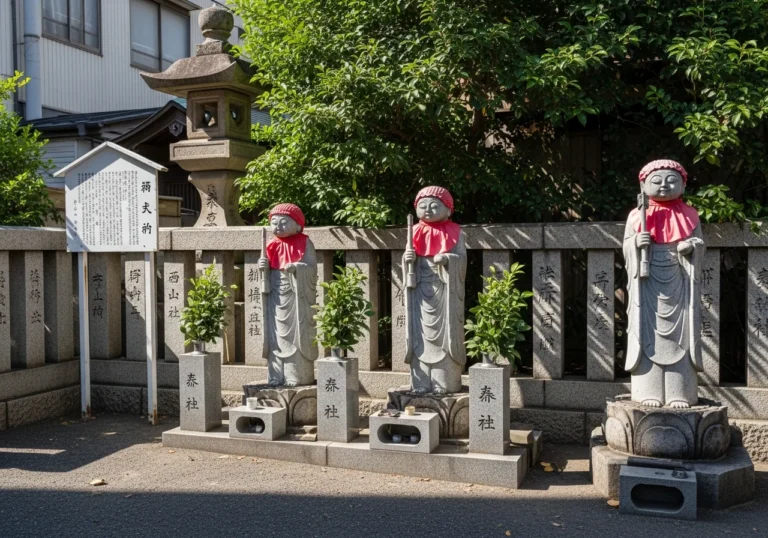
The pilgrimage route runs through four sub-shrines within the Sumiyoshi Taisha complex, and at the second stop — Nankunsha Shrine — visitors can receive a maneki-neko that brings good fortune. Within the shrine grounds is a camphor tree over 1,000 years old, and many lucky cats are offered inside the shrine. This is one of the most atmospheric ways to encounter the maneki-neko tradition in Osaka: not in a shop, but in a living ritual context at one of Japan’s oldest and most important shrines. The Hatsu-tatsu Mairi falls on a different calendar date each month — check the shrine’s schedule before you go.
2. Dotonbori Souvenir Strip (道頓堀)
📍 Dotonbori, Chuo-ku, Osaka 542-0071 (main canal street)
🕐 Most souvenir shops open 10:00–22:00 daily (as of May 2026)
💰 ¥500–¥5,000 depending on size and material
🚃 Namba Station (multiple lines) — 5 min walk
🗣 English menu: N/A (retail, not dining)
⭐ Rating: Google 4.3 (50,000+ reviews for the area) (as of writing)
🗺 Open in Google Maps
📋 Tabelog
What to buy: Ceramic maneki-neko figurines (¥800–¥3,000), solar-powered waving cats (¥1,200+)
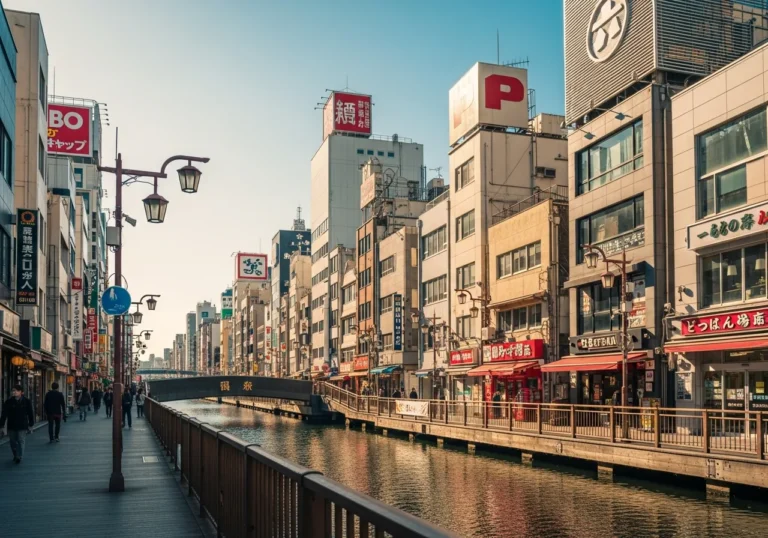
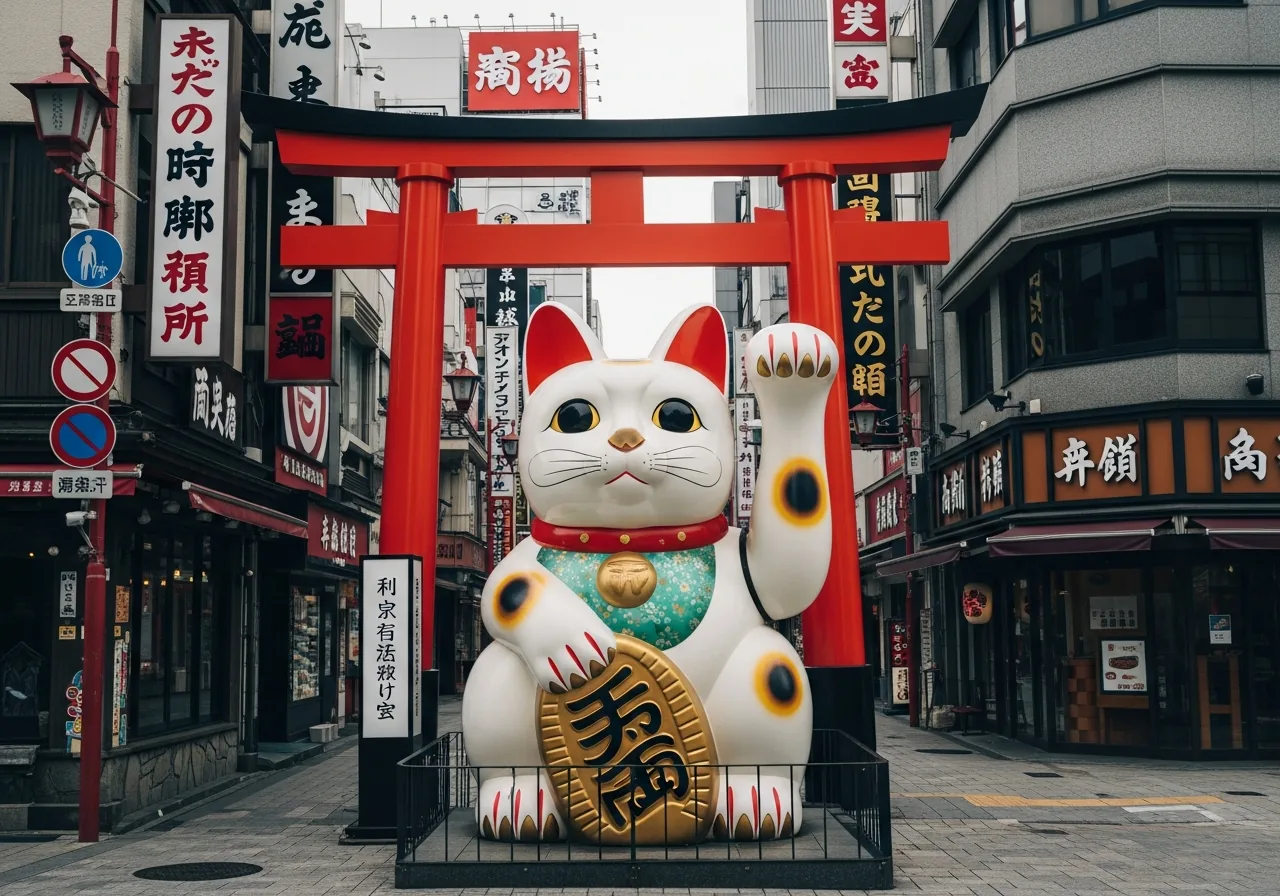
Dotonbori is the densest concentration of maneki-neko retail in Osaka. The figurines are typically displayed near the entrances of shops, restaurants, pachinko parlours, bars, hotels, and other businesses — and along Dotonbori’s main strip, you’ll see them in every configuration imaginable. Maneki-neko come in different colours and styles; common colours are white, black, red, and gold. The souvenir shops here stock everything from ¥500 keychain versions to hand-painted ceramic pieces. If you want the best food in Osaka alongside your shopping, Dotonbori delivers on both fronts — the takoyaki stalls and ramen shops are steps away.
3. Shinsekai Retro District (新世界)
📍 Shinsekai, Naniwa-ku, Osaka 556-0002
🕐 Shops generally open 10:00–20:00; some later (as of May 2026)
💰 ¥300–¥4,000
🚃 Shin-Imamiya Station (JR/Nankai) or Dobutsuen-mae Station (Osaka Metro) — 5 min walk
⭐ Rating: Google 4.2 (area rating) (as of writing)
🗺 Open in Google Maps
📋 Tabelog
What to buy: Vintage-style maneki-neko (¥500–¥2,500), retro Osaka souvenir cats
Shinsekai is the right neighbourhood for anyone who wants their maneki-neko with some grit attached. The retro arcade district — built in 1912 and still wearing its age proudly — has a cluster of souvenir and novelty shops that stock older-style figurines alongside the standard tourist fare. In addition to statues, maneki-neko can be found in the form of keychains, piggy banks, air fresheners, pots, and numerous other media and merchandise — and Shinsekai’s shops lean into the kitschier end of that spectrum. The neighbourhood’s Tsutenkaku Tower looms overhead; the lucky cats in the windows below feel entirely at home.
4. Namba Doguyasuji Arcade (難波道具屋筋商店街)
📍 Namba Doguyasuji, Chuo-ku, Osaka 542-0074
🕐 Most shops open 10:00–18:00; closed Sundays for some vendors (as of May 2026)
💰 ¥1,000–¥15,000 (professional-grade and decorative pieces)
🚃 Namba Station (multiple lines) — 5 min walk
⭐ Rating: Google 4.2 (1,000+ reviews) (as of writing)
🗺 Open in Google Maps
📋 Tabelog
What to buy: Large ceramic maneki-neko for restaurant display (¥3,000–¥15,000)
Doguyasuji is Osaka’s professional kitchen and restaurant supply street — and that means it’s also where restaurants come to buy their lucky cats. Figurines are typically displayed near the entrances of shops and restaurants, and the vendors here stock the larger, more serious ceramic pieces that end up above cash registers across the city. If you want a maneki-neko that looks like it belongs in a 50-year-old Osaka izakaya rather than a tourist gift bag, this is the street. Antique examples of maneki-neko may be made of carved wood, stone and metal, handmade porcelain or cast iron — and a few of the older dealers on this street carry exactly those.
5. Shinsaibashi-suji Shopping Arcade (心斎橋筋商店街)
📍 Shinsaibashi-suji, Chuo-ku, Osaka 542-0085
🕐 Most shops open 11:00–21:00 daily (as of May 2026)
💰 ¥500–¥8,000
🚃 Shinsaibashi Station (Osaka Metro Midosuji Line) — 1 min walk
🗣 English menu: N/A (retail)
⭐ Rating: Google 4.3 (10,000+ reviews) (as of writing)
🗺 Open in Google Maps
📋 Tabelog
What to buy: Contemporary and designer maneki-neko (¥800–¥8,000), gift-boxed versions
Japan’s longest covered shopping arcade — over 600 metres — has a handful of souvenir and lifestyle shops that stock more design-forward maneki-neko alongside the classics. Palm-sized pieces (5–10cm tall) typically cost ¥1,000–¥3,000. The price range is broad, from palm-sized figurines starting around ¥1,000 to elaborate ceramic pieces costing tens of thousands of yen. Shinsaibashi is the place to find gift-boxed versions with colour-coded meaning cards — the kind you can actually explain to someone back home. The MICHI Osaka travel guide covers the full Shinsaibashi area if you want to plan a longer afternoon here.
FAQ
Q: What is the best place to find maneki-neko in Osaka?
A: Sumiyoshi Taisha is the most culturally significant — it’s one of the Osaka shrines with a documented maneki-neko history going back to the Meiji era, and the monthly Hatsu-tatsu Mairi ritual at Nankunsha Shrine is a genuinely rare experience. For retail, Dotonbori has the widest selection in one place.
Q: How many places sell maneki-neko in Osaka?
A: Dozens, spread across every major shopping district. The highest concentrations are in Dotonbori, Shinsaibashi-suji, and Shinsekai. Doguyasuji is the specialist destination for larger, professional-grade pieces. Most 100-yen shops and convenience stores also carry small versions.
Q: Do Osaka shops have English-speaking staff for maneki-neko purchases?
A: At souvenir shops in Dotonbori and Shinsaibashi, basic English is common enough to get by. At Doguyasuji’s trade-focused shops and at Sumiyoshi Taisha, expect Japanese only — but buying a figurine or receiving a charm doesn’t require much conversation. Pointing and a smile go a long way.
Q: What should I look for when buying a maneki-neko in Osaka?
A: Decide on paw direction first — left paw for attracting customers and relationships, right paw for money and fortune. Then pick your colour: white for general good luck, gold for wealth, black for protection. If you’re buying as a gift, a boxed piece with a colour-meaning card (available at Shinsaibashi shops) makes the symbolism easy to share.
Last updated: July 19, 2026 · Corrections: [email protected]