Looking for a deep dive into Osaka’s famous eat-till-you-drop culture? This guide covers the concept of kuidaore, the districts, dishes, festivals, and experiences that define it — from a 200-year-old market to a summer festival that draws 1.3 million people. Whether you’re a first-timer or a repeat visitor, this is how Osaka actually works.
MICHI’s Pick — Selected by our Osaka-based team, based on places we’ve visited and on research using Tabelog and Google Maps ratings. In Japan, a Tabelog score of 3.4+ is genuinely high — Japanese reviewers are famously strict, and most locals consider anything above 3.4 a place worth a detour. We feature venues meeting at least one of: Tabelog 3.4+, Google Maps 4.3+, or 100+ reviews — the kind of spots locals quietly trust.
Tabelog and Google Maps scores are accurate as of the time of writing.
What Is Kuidaore — and Why Does It Define Osaka?
The concept of kuidaore emerged from Osaka’s unique history as the “nation’s kitchen” during the Edo period (1603–1868). As the primary centre for rice and other goods, Osaka cultivated a powerful merchant class — wealthy, but ranked socially below the samurai and prohibited from displaying status through extravagant clothing or weaponry. Instead, they poured their wealth and passion into food.
The phrase stands in contrast to Kyoto’s kidaore — dressing until you drop — where the focus was on spending money on exquisite kimonos instead of food. Kuidaore isn’t about mindless eating; it’s about a discerning and passionate appreciation of food. Today, it’s less about financial ruin and more about the joy of eating until you are stuffed — the driving force behind the city’s obsession with local favourites like okonomiyaki, kushikatsu, and fugu.
That philosophy is baked into every corner of the city. Osaka’s unique customs — standing on the right side of escalators, haggling at markets — stem from its history as a rebellious, merchant-driven city. The city’s love for manzai comedy and its friendly, direct social culture are deeply intertwined with its boisterous dining scene. To understand the best food in Osaka, you have to understand this history first.
1. Dotonbori (道頓堀)
📍 Dotonbori, Chuo-ku, Osaka-shi, Osaka 542-0071
🕐 Open 24 hours (individual restaurants vary) (as of May 2026)
💰 ¥500–¥3,000 per person (street food to sit-down)
🚃 Namba Station (3 min walk)
⭐ Rating: Google 4.5 (50,000+ reviews) (as of writing)
🗺 Open in Google Maps
📋 Tabelog
What to order: Takoyaki (¥600–¥800 for 6 pieces), okonomiyaki (¥900–¥1,500)
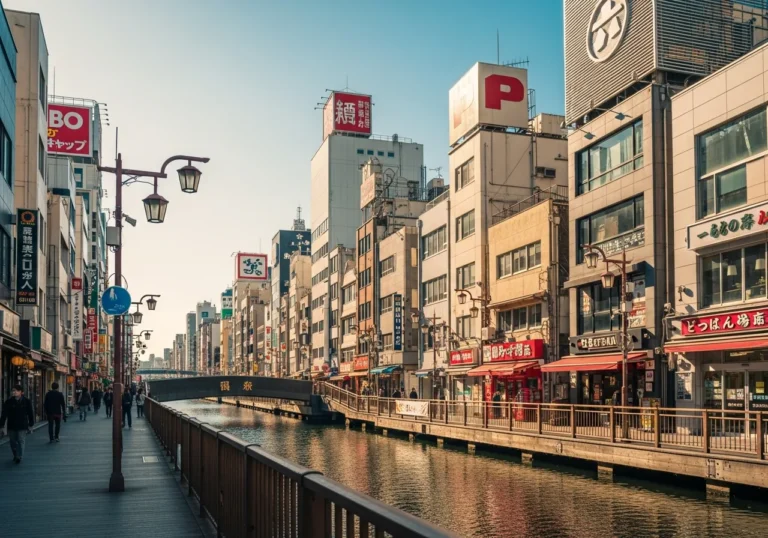
Dotonbori is the physical embodiment of Osaka’s soul — loud, unapologetic, and utterly obsessed with good food. Here, a single philosophy reigns supreme: kuidaore. During summer, both banks of the riverside promenade — spanning roughly 800 metres — are lit with around 2,000 traditional paper lanterns, their warm orange glow reflected on the water creating a dreamlike atmosphere quite different from the usual neon blaze.
2. Kuromon Ichiba Market (黒門市場)
📍 2-4-1 Nipponbashi, Chuo-ku, Osaka-shi, Osaka 542-0073
🕐 Most shops 9:00–18:00; restaurants 11:00–23:00 (as of May 2026)
💰 ¥500–¥2,000 (street food grazing); ¥3,000–¥4,000 (sit-down lunch)
🚃 Nipponbashi Station (3 min walk)
🗣 English menu: Available at many stalls
⭐ Rating: Google 4.3 (8,000+ reviews) (as of writing)
🗺 Open in Google Maps
📋 Tabelog
What to order: Grilled scallops (¥400–¥600 each), fresh sea urchin on rice (¥1,500–¥2,500), fugu sashimi (¥2,000+)
This busy 580-metre shopping street has fed locals since 1902 and is affectionately known as “Osaka’s Kitchen.” Half the shops sell seafood and fish — including several certified specialists in the preparation of fugu, the pufferfish that can be deadly poisonous if handled incorrectly — while the rest carry meats, produce, and condiments. For the freshest experience and to see the market in action, go around 8:30–9:00 AM — you’ll encounter fewer crowds and catch the shops preparing for the day.
3. Shinsekai (新世界)
📍 Shinsekai, Naniwa-ku, Osaka-shi, Osaka 556-0002
🕐 Restaurants typically 11:00–22:00 (as of May 2026)
💰 ¥800–¥2,500 per person (kushikatsu and drinks)
🚃 Shin-Imamiya Station (5 min walk)
⭐ Rating: Google 4.3 (10,000+ reviews) (as of writing)
🗺 Open in Google Maps
📋 Tabelog
What to order: Kushikatsu skewers (¥100–¥200 per skewer), doteyaki beef tendon (¥500–¥700)
Shinsekai is the spiritual home of kushikatsu — deep-fried skewered meat, vegetables, and seafood. The golden rule: no double-dipping in the communal sauce. Use the provided cabbage leaves to scoop extra sauce instead. Shinsekai is grittier and more authentic than tourist-heavy Dotonbori — come here for the real Osaka food experience. The retro Tsutenkaku Tower looms overhead, and the whole neighbourhood feels like a time capsule of mid-century Osaka.
4. Tenjin Matsuri (天神祭) — Osaka Tenmangu Shrine
📍 2-1-8 Tenjinbashi, Kita-ku, Osaka-shi, Osaka 530-0041
🕐 Festival: July 24–25 annually; shrine open daily 9:00–17:00 (as of May 2026)
💰 Free admission to festival; food stalls ¥300–¥1,000 per item
🚃 Minami-Morimachi Station (5 min walk)
⭐ Rating: Google 4.4 (5,000+ reviews) (as of writing)
🗺 Open in Google Maps
📋 Tabelog
What to order: Festival stall takoyaki (¥600), yakitori (¥300–¥500 per skewer)
Osaka’s Tenjin Festival has a history dating back more than 1,000 years. The highlight is the water procession on July 25, when more than 100 boats come and go along the Okawa River amid the sounds of taiko drumming and energetic chants. About 1.3 million people come to watch the 3,000 votive fireworks. The food stalls that line the streets are as much a part of the experience as the boats — this is kuidaore culture at its most communal.
5. Tenjinbashisuji Shopping Street (天神橋筋商店街)
📍 Tenjinbashi 1–7-chome, Kita-ku, Osaka-shi, Osaka 530-0041
🕐 Most shops 10:00–20:00 (as of May 2026)
💰 ¥500–¥2,000 per person (grazing)
🚃 Tenjinbashisuji Rokuchome Station (1 min walk)
⭐ Rating: Google 4.3 (3,000+ reviews) (as of writing)
🗺 Open in Google Maps
📋 Tabelog
What to order: Grilled eel (unagi) set (¥1,500–¥2,500), fresh tofu (¥300–¥600)
The Tenjinbashisuji Shopping Street extends from Tenjinbashi 1-chome to 7-chome, with a total length of 2.6 km and nearly 600 shops. Nearby Tenma is an after-work drinking and eating neighbourhood where office workers crowd into tiny standing bars and street-side stalls — this is where Osakans eat when they are not performing for tourists. Come on a weekday evening for the most authentic version of this.
6. Sumiyoshi Taisha Shrine and Sumiyoshi Festival (住吉大社・住吉祭)
📍 2-9-89 Sumiyoshi, Sumiyoshi-ku, Osaka-shi, Osaka 558-0045
🕐 Shrine: 6:00–17:00 daily; Festival: late July–early August (as of May 2026)
💰 Free admission; food stalls ¥300–¥1,000 per item
🚃 Sumiyoshi Taisha Station (3 min walk)
⭐ Rating: Google 4.4 (8,000+ reviews) (as of writing)
🗺 Open in Google Maps
📋 Tabelog
What to order: Festival stall okonomiyaki (¥800–¥1,200), kakigori shaved ice (¥400–¥600)
The Sumiyoshi Festival is one of the iconic summer events in Osaka, set at the historic Sumiyoshi Taisha Shrine, which boasts a legacy of over 1,000 years. It blends sacred Shinto rituals with lively local participation. With more than 200,000 attendees every year, the festival showcases Japan’s traditions through portable shrine processions, formal rituals, and parades. The food stalls that appear during the festival are a direct expression of kuidaore — eating as celebration, not just sustenance.
7. Nakaza Kuidaore Building (中座くいだおれビル)
📍 1-7-21 Dotonbori, Chuo-ku, Osaka-shi, Osaka 542-0071
🕐 Varies by tenant; generally 11:00–23:00 (as of May 2026)
💰 ¥1,000–¥4,000 per person depending on restaurant
🚃 Namba Station (5 min walk)
⭐ Rating: Google 4.2 (2,000+ reviews) (as of writing)
🗺 Open in Google Maps
📋 Tabelog
What to order: Varies by floor — Osaka-style sushi, kushikatsu, and kitsune udon are all represented
No discussion of kuidaore is complete without Kuidaore Taro — the mechanical, drum-playing clown mascot that has stood in Dotonbori since 1950. Originally the mascot for a restaurant named “Cui-daoré,” he survived the restaurant’s closure and remains a symbol of the district, embodying the festive and slightly chaotic spirit of Osaka’s dining scene. The Nakaza Kuidaore Building, where you can enjoy a variety of gourmet food and entertainment, reopened in spring 2025. Taro still stands guard outside — stop for the photo, then head in for the food.
8. Kuromon Ichiba Morning Food Crawl Route
📍 Starting point: 2-4-1 Nipponbashi, Chuo-ku, Osaka-shi, Osaka 542-0073
🕐 Best visited 8:30–11:00 (as of May 2026)
💰 ¥1,500–¥3,000 total for a full morning graze
🚃 Nipponbashi Station (3 min walk)
⭐ Rating: Google 4.3 (8,000+ reviews) (as of writing)
🗺 Open in Google Maps
📋 Tabelog
What to order: Grilled oysters (¥400–¥600 each), tuna sashimi (¥800–¥1,500 per portion), fresh fruit skewers (¥300–¥500)
Plan small portions at many stops rather than one big meal — the kuidaore philosophy is all about variety. A box of eight takoyaki costs ¥650, and you can graze through grilled scallops, sea urchin, and seasonal fruit without spending more than ¥2,000 if you pace yourself. Markets are best in the morning; street stalls peak from 5 PM to 9 PM. To explore more of Osaka beyond the tourist strips, this morning crawl is the most honest introduction to how the city actually eats.
FAQ
Q: What is the best cultural food experience in Osaka?
A: Kuromon Ichiba Market is the most concentrated expression of kuidaore culture — over 150 stalls, 200 years of history, and the kind of fresh seafood that professional chefs shop for. Pair it with an evening in Shinsekai for kushikatsu and you’ve covered the full spectrum.
Q: How many kuidaore-related experiences are there in Osaka?
A: The concept touches virtually every neighbourhood. The densest clusters are in Dotonbori, Shinsekai, and around Kuromon Market in Minami, but Tenma and Tenjinbashisuji in the north offer a more local, less tourist-facing version of the same culture.
Q: Do Osaka restaurants and markets have English menus?
A: Dotonbori and Kuromon Market have strong English support — most stalls display prices clearly and many have English menus or picture menus. Shinsekai and Tenma are less polished on this front, but pointing and ordering by number works fine, and staff are generally patient with visitors.
Q: What should I order to experience kuidaore culture in Osaka?
A: Start with takoyaki (octopus balls, ¥600–¥800 for six), then move to kushikatsu skewers in Shinsekai (¥100–¥200 each), and finish with kitsune udon — thick wheat noodles in dashi broth topped with sweet fried tofu, a dish that was invented in Osaka and remains one of its most quietly satisfying meals.
Last updated: July 19, 2026 · Corrections: [email protected]