The vegetables that once defined Osaka’s table — the deep-crimson Kintoki carrot of Naniwa Ward, the softball-sized Torikai eggplant of Settsu, the turnip whose seeds accidentally fathered one of Japan’s most famous pickles — nearly vanished entirely in the postwar decades, erased by a triple blow of urban sprawl, agricultural standardization, and the wholesale Westernization of the Japanese diet. In October 2005, Osaka Prefecture launched a formal certification system for what it named Naniwa no Dentō Yasai — Naniwa Traditional Vegetables — rescuing varieties that had fed the city’s merchants and cooks for three centuries, and as of May 2026, the prefecture’s official register stands at 26 certified varieties.
Why we can tell you this — MICHI is edited in Osaka, and the streets, markets, and wards where these vegetables were born — Naniwa, Tennoji, Miyakojima, Nishinari — are the streets we walk. This article draws on Osaka Prefecture’s own agricultural certification materials, Osaka City’s official English-language documentation of the Naniwa-yasai programme, the Japan Ministry of Agriculture’s regional cuisine records, and the corporate biodiversity archive of Kyocera Document Solutions, which has cultivated certified Naniwa varieties on its Osaka headquarters campus since 2016. Where the historical record is thin — particularly on the precise mechanisms by which individual varieties were rescued — we say so rather than speculate.
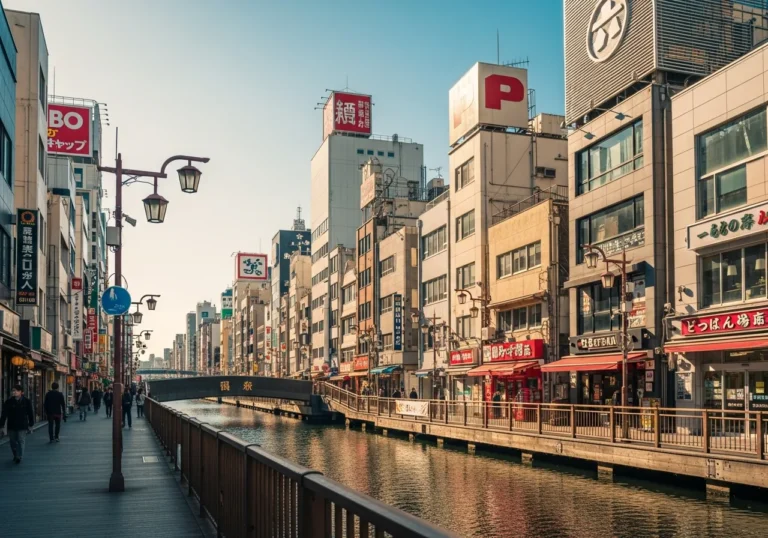
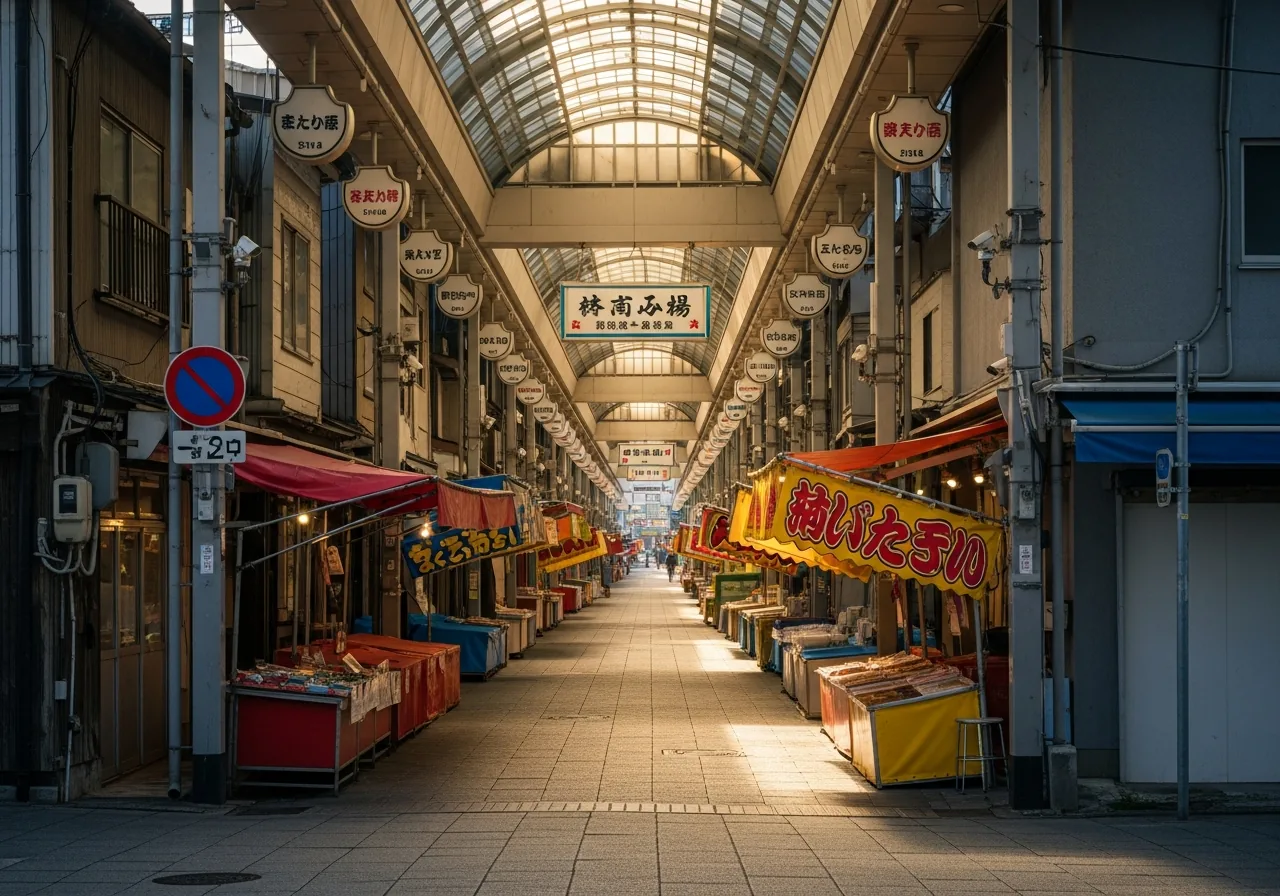
Stand at the Kuromon Ichiba market on a weekday morning and you will see, if you look carefully, a small gold-and-green certification sticker on a handful of vegetable stalls. Most shoppers walk past it.
The sticker is easy to miss — a modest oval, the kind of thing that reads as bureaucratic rather than significant. But that sticker is the visible tip of one of the more quietly remarkable food-heritage projects in modern Japan: the systematic resurrection of an entire urban agricultural tradition that came within a single generation of disappearing forever.
Why Did Osaka Develop Its Own Vegetables at All?
The answer begins with a name. Osaka Bay was once so rich in fish that it was called the “fish garden” — written as two characters that are pronounced “Naniwa,” which is said to be the origin of Osaka’s ancient name. The city that grew up around that bay became something more than a fishing port: it became the place where Japan’s food economy was organized, priced, and distributed.
Even after the Edo period, when the political center moved to Edo, Osaka remained a major economic and commercial center. Annual tax rice and specialty products from all over the country were collected in warehouses in Osaka, sold by merchants, and sent all over the country — and Osaka, where ingredients from every region of Japan were commonly traded, received the name “The Kitchen of the Nation.”
That title — Tenka no Daidokoro, the Kitchen of the Nation — is repeated so often in Osaka tourism materials that it risks becoming wallpaper. But it describes something structurally real. In the Edo period, when maritime traffic thrived, large amounts of kelp found their way into Osaka when the westbound route connecting the region with Hokkaido was established — a route now sometimes referred to as the “Konbu Road.” The rise in popularity of konbu dashi in Osaka was helped by the fact that the water in Osaka was soft, so the conditions were in place for delicious dashi to be made from konbu.
This is the first layer of the why. Osaka was not simply a city that happened to like food.
It was a city whose entire economic architecture — the rice warehouses, the commodity exchanges, the shipping routes — created a population of merchants who were simultaneously frugal and demanding. The rational idea of frugality permeated merchant households, and simple, lean meals became the norm.
But simple did not mean crude. It meant that the quality of the ingredient itself had to carry the dish.
And that, in turn, meant that the vegetables grown in the fields immediately surrounding the city mattered enormously.
Kyoto vegetables are famous as traditional vegetables, but if Kyoto vegetables were presented to the Imperial Palace and were prized for their beautiful and elegant taste and appearance, the appearance of traditional vegetables in Osaka was created because the common people simply wanted something delicious.
That distinction is worth pausing on. Kyoto’s vegetables were aristocratic objects — bred for the court, for the temple, for the aesthetic demands of kaiseki.
Osaka’s vegetables were merchant vegetables: bred for flavour, for yield, for the kind of robust character that could hold its own in a pot of dashi without dissolving into blandness. The city’s food culture demanded ingredients that tasted of somewhere specific.
Why Here, in These Specific Fields?
The geography of Osaka’s traditional vegetable culture is a map of the city’s pre-industrial topography. Each variety is inseparable from the particular patch of ground that produced it — and understanding why those patches produced what they did requires understanding what the land around Osaka actually looked like before the concrete arrived.
During the Edo period, Osaka was known as the “nation’s kitchen,” and there were many unique vegetables that were served in people’s daily lives. Those vegetables were grown in a ring of specialized agricultural districts that pressed right up against the city’s edges — in some cases, inside what we would now consider the urban core itself.
Take the Kema cucumber (Kema kyūri). This cucumber is a black-spined variety from Kema-chō in Miyakojima Ward.
It is usually around 30cm in length and 3cm in width, with a crunchy bite and a unique bitterness. Kema-chō sits along the Okawa river, just north of central Osaka — a location that provided the alluvial soil and reliable water access that cucumbers demand.
The variety’s bitterness, which would be a liability in a modern supermarket context, was precisely what Osaka cooks valued: it held its character through pickling and through the long simmering of summer dishes.
Or consider the Katsuma pumpkin (Kotsuma nankin). It is originally from Tamade-chō, formerly Kotsuma Village, in Nishinari Ward.
It is a small, lumpy kind of pumpkin which is vertically-lined and has sticky flesh, growing to about 900 grams. Nishinari is now one of Osaka’s most densely urban wards — the neighbourhood around Shin-Imamiya station, known internationally for its cheap hotels and its old working-class character.
The idea that it was once a pumpkin-farming village requires a genuine act of historical imagination.
During the Edo period, these pumpkins were famed as one of the signature Naniwa vegetables. Katsuma merchants peddled these goods to Osaka via the Katsuma Kaidō, and the pumpkins were reputedly eaten on the Winter Solstice as a remedy against stroke and colds.
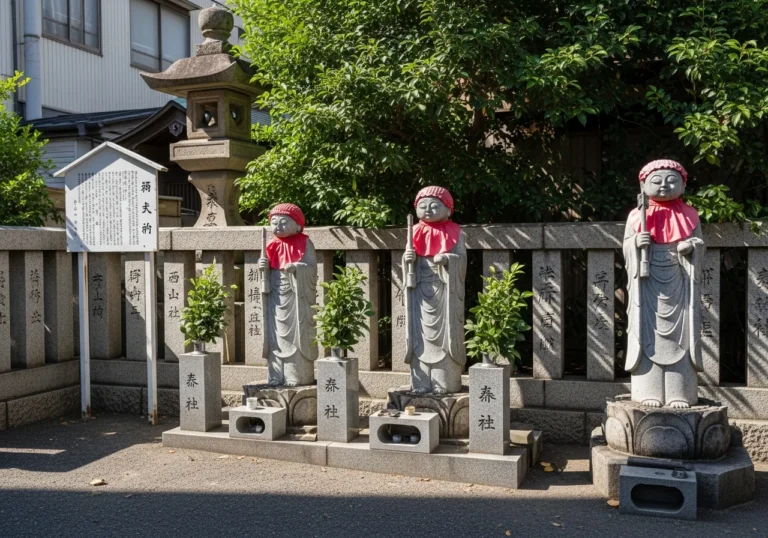
That last detail is not incidental. At the Ikune Shrine in Nishinari, a ritual known as the Kotsuma Nankin Festival is held on the winter solstice, during which steamed pumpkin is served to visitors, who partake in it to ward off stroke, prevent senility, and ensure good health.
The vegetable was not merely food. It was embedded in the ritual calendar of the neighbourhood that grew it.
The Torikai eggplant (Torikai nasu) tells a similar story of place-specificity. This eggplant, about the size of a softball, was formerly a special local product of Torikai District, Settsu City, in the Edo period.
In 785 AD, Wake no Kiyomaro constructed a canal between the Yodo River and the Kanzaki River in what is now Settsu, and the Heian period Emperor Uda built a village in what is now the Torikai neighbourhood. The eggplant grew in soil that had been irrigated by those ancient waterways for over a millennium.
The Yodo and Ai rivers flow from north to south of the farm, and there is soil where good quality eggplants can be grown with abundant water resources.
And then there is the Tennoji turnip (Tennoji kabura), which may be the most consequential of all the Naniwa vegetables in terms of its reach beyond Osaka. It originated around Tennoji and is separated into two types with lobated or rounded leaves.
Both have a hearty texture and a strong sweetness, and locals call them “float turnips” because their taproots rise to the surface. In 1756, a Buddhist priest named Enzui carried seeds of the Tennoji turnip back from Kyoto to his temple in Nozawa Onsen in Nagano Prefecture.
He planted the seeds in the temple farm, which led to a crop of a vegetable with a small root and large leafstalks, different from those of a Tennoji turnip. With an elevation of 600 meters, Nozawaonsen is a cold highland that gets lots of snowfall — and the Tennoji turnip, grown in the warm land of western Japan, reacted to the sudden change in environment, and so the nozawana was born.
Nozawana is now one of Japan’s most famous pickled vegetables, eaten across the country. Its ancestor is an Osaka turnip.
Why Did These Varieties Nearly Disappear?
The destruction was not dramatic. There was no single moment of loss, no flood or fire that wiped out Osaka’s agricultural heritage. The disappearance was gradual, structural, and — in retrospect — almost inevitable given the forces arrayed against these vegetables.
Osaka is called “the Kitchen of the Nation” as it was in the Edo period, and food culture has flourished since ancient times, with many unique Osaka vegetables supporting that food culture. However, after the war, breed improvement to raise agricultural productivity, the conversion of farmland to residential land, and the Westernization of diet caused varieties with regional history and tradition to disappear from shop fronts one after another.
Three forces operated simultaneously, and they reinforced each other.
The Land Itself Was Taken
Osaka’s postwar reconstruction was extraordinary in its speed and scale. One-third of Osaka was destroyed by American air raids during World War II, including many commercial and industrial districts.
Thanks to postwar reconstruction plans and the positive attitude of Osaka’s people, the city regained its pre-war vitality. That vitality required housing, factories, roads, and infrastructure — all of which consumed the agricultural land that had surrounded the city.
The fields of Kema, Tennoji, Nishinari, and Torikai were not preserved as heritage zones. They were built over.
As farmland became residential land and eating habits became more Westernized, traditional varieties began to disappear. The Moriguchi daikon — a variety so extreme in its dimensions that it holds a place in the record books — offers a particularly vivid example.
Hailing originally from the Moriguchi district of Osaka in ancient times, the main thrust of its production eventually shifted out of Osaka entirely. In Moriguchi City, Osaka Prefecture, a variety of vegetables pickled with sake lees was very popular, but for some reason it disappeared.
The reason is not known, but it is said to be due to urban development.
The Moriguchi daikon is now grown primarily in Aichi and Gifu prefectures, in the deep sandy soils along the Kiso River basin — far from the city that gave it its name. Originating in the region of Moriguchi in the prefecture of Osaka, it is the longest radish in the world, between one and one-and-a-half meters, sometimes reaching two meters. The vegetable survived, but it survived as an exile.
The Seeds Were Standardized Away
The second force was agricultural modernization. Japan’s postwar food policy prioritized yield, uniformity, and shelf life — the qualities that make a vegetable viable in a national distribution system. After World War II, by breed improvement for the purpose of the stable supply of vegetables, these unique vegetables had disappeared gradually.
The logic was not malicious. It was rational, given the food insecurity of the immediate postwar years.
But the F1 hybrid varieties that replaced regional landraces were optimized for the wrong things. The vegetables we habitually eat are bred for good appearance and easy mass production and are being rapidly standardized.
On the other hand, production efficiency of traditional vegetables is not good because of their irregular shape and slow growth — but they have valuable genes.
The Kema cucumber’s bitterness, the Katsuma pumpkin’s irregular lumpy skin, the Torikai eggplant’s water-intensive cultivation requirements — all of these were liabilities in a standardized market. Torikai eggplant had been actively cultivated in the Torikai area of Settsu City from the Taisho era to the Showa era.
Since a lot of water and labor are required for cultivation, the number of growers gradually decreased, and the last remaining farmer carefully protected the seeds. Even now, with a slight increase in the number of producers, there are not enough quantities on the market — it is a phantom traditional vegetable.
That phrase — “phantom traditional vegetable” — captures the situation precisely. These were not extinct varieties. They were varieties kept alive by one or two elderly farmers, in plots too small to supply any market, sustained by personal commitment rather than commercial logic.
The Appetite Changed
The third force was cultural. Japan’s rapid economic growth in the 1960s and 1970s brought with it a wholesale transformation of the national diet.
Western vegetables — celery, cauliflower, Brussels sprouts — became fashionable. In the early Showa period, Osaka farmers had grown Western vegetables such as celery, Brussels sprouts, cauliflower, and red cabbage, and shipped them to Tokyo.
What had been an export curiosity became, in the postwar decades, the mainstream. The traditional Naniwa vegetables, with their strong flavours and their requirement for specific preparation knowledge, seemed old-fashioned.
The Kintoki carrot (Kintoki ninjin) illustrates this shift with particular clarity. It was cultivated in Naniwa Ward in the Edo period until the early Showa period, also referred to as the “Osaka Ninjin.” It has soft flesh with a strong fragrance, and can be found in ozoni soup, one of the traditional Japanese New Year’s dishes.
The carrot is deep crimson — not the orange of the Western carrot that now dominates every Japanese supermarket. Its colour comes from lycopene rather than beta-carotene, which gives it a different flavour profile: sweeter, more aromatic, less sharp.
But it looks nothing like what consumers had come to expect a carrot to look like.
The same logic applied across the range. The Osaka Shirona (Osaka shirona), a white-stemmed leafy green, was cultivated by Japanese farmers in the Tenmabashi area during the Edo period, so it is called “Tenmana.” It comes in three stages of ripening — early, medium, and late — and each stage provides a delicate flavour that is not too distinctive.
It has been grown in the Namba area since the beginning of the Edo period. The leaves have delicate fibres, as well as a kind of stickiness and a rich sweetness — an all-rounder ingredient for stir-fry, miso soup, and hotpot.
But “not too distinctive” is not a selling point in a market that rewards visual impact and easy description.
Why Did Anyone Bother to Save Them?
The revival of Naniwa yasai did not emerge from a single visionary act. It emerged from a confluence of pressures — some global, some intensely local — that converged in the late 1990s and early 2000s.
Globally, the slow food movement had begun to reframe heritage varieties not as agricultural anachronisms but as repositories of genetic diversity, cultural memory, and flavour complexity. Traditional varieties of vegetables were attracting more attention in the wake of the slow food movement. Branding local agricultural products had also become a nationwide trend.
In Japan, the model that Osaka looked to — and consciously sought to differentiate itself from — was Kyoto’s Kyo-yasai programme. It all started in the late 1970s in Kyoto when both the Prefecture and the City began a project to support producers of Kyo-yasai.
Established in 1989, the official certification program of Kyo-yasai now targets 21 varieties of traditional vegetables originating in Kyoto, including Kujo negi, Shogoin daikon, and Kamo nasu. Kyoto’s programme had been commercially successful, creating a premium brand that commanded higher prices and attracted tourist attention.
Osaka watched, and drew conclusions.
But the Osaka programme was not simply an imitation of Kyoto’s. The two cities’ vegetable cultures are philosophically distinct, and the certification criteria reflect that. The criteria for “Naniwa Traditional Vegetables” are: first, vegetables that have been cultivated in Osaka Prefecture for approximately 100 years; second, vegetables whose seedlings and seeds have a clear provenance, are unique to Osaka, and can be grown using seedlings and seeds that can be secured; and third, vegetables produced within the prefecture.
The emphasis on provenance and on the continued availability of seeds is crucial. A variety that exists only in a museum collection or a gene bank does not qualify.
The vegetable must be actively grown, by real farmers, in Osaka soil. This is not a heritage designation for the dead.
It is a living agricultural certification.
The Naniwa Traditional Vegetable certification programme was started by Osaka Prefecture in October 2005. Osaka City had already launched its own parallel certification in February 2005, covering varieties grown specifically within the city limits. Vegetables that have been cultivated within Osaka City since before the early Showa period — approximately 100 years ago — and that have a history and tradition of supporting Osaka’s agriculture and food culture, are certified from February 2005 as “Osaka City Naniwa Traditional Vegetables,” with currently ten varieties certified.
The programme grew steadily. As of May 2026, with the addition of Kawachi Issun broad beans as a newly certified Naniwa Traditional Vegetable, the total now stands at 26 varieties. That number represents not just bureaucratic expansion but genuine agricultural recovery: each new addition means that a variety has been found, its seeds secured, its cultivation re-established, and its provenance documented.
What Was Actually Rescued, and How?
The recovery stories vary in their details, but they share a common structure: a variety reduced to a single elderly keeper, seeds preserved through personal commitment, and then a slow rebuilding of the cultivation base through a combination of municipal support and individual farmers’ willingness to take on difficult, low-yield crops.
The Torikai eggplant is perhaps the most dramatic example. The Torikai eggplant, cultivated in the Torikai area of Settsu City, was established as a specialty product in the Edo period, but production ceased during wartime.
From 1994, Settsu City began a preservation project to restart cultivation. The wartime interruption is significant: the bombing and food shortages of the Pacific War years forced farmers to abandon difficult, water-intensive heritage varieties in favour of whatever would grow fastest and most reliably.
When the war ended, the knowledge and the seeds had nearly gone with it.
The Suita kuwai (Suita jikogui), a type of arrowhead bulb grown in Suita City, tells a similar story. Traditional Naniwa vegetables such as Suita Kuwai, Hattori Shirauri, Mishima Udo, Torikai Nasu eggplants, Takayama Gobo burdocks, and Takayama Mana are produced in the areas surrounding Osaka. Each of these varieties is tied to a specific microclimate and soil type — the alluvial plains of the Yodo River basin, the volcanic soils of the northern hills, the waterlogged lowlands around Kadoma and Moriguchi.
The Osaka Shirona’s recovery involved the pickle industry as much as the farming community. Long-established pickle shops in Osaka City have been making Japanese pickles using traditional techniques, and they helped to revive Naniwa yasai, which almost disappeared.
This is a reminder that the preservation of a vegetable variety is not solely an agricultural problem. It requires the entire food chain — growers, processors, cooks, and eaters — to maintain demand.
A variety that no one knows how to cook, or that no one wants to eat, will not survive regardless of how carefully its seeds are stored.
The Kintoki carrot’s revival has been particularly visible because of its role in Osaka’s New Year cuisine. The deep-crimson carrot is an essential ingredient in ozoni, the regional New Year soup, and in the simmered dishes that accompany the holiday.
The Kintoki carrot was a specialty of the area around Naniwa Ward in Osaka City from the Edo period through the early Showa period, also called “Osaka Ninjin” or “Kizu Ninjin.” The root is approximately 30 centimetres long, deep crimson, with soft flesh that does not break down in cooking, and a strong sweetness and fragrance. Its ceremonial role in New Year cooking gave it a cultural anchor that purely culinary varieties lacked — there was a specific, recurring occasion that demanded it.
The Osaka Prefecture agricultural page notes that the Kintoki carrot “was a specialty of the area around Naniwa Ward from the Edo period through the early Showa period” — meaning that the variety was grown in what is now one of Osaka’s most densely built urban wards, within walking distance of Namba. The fields are gone.
The carrot, improbably, is not. (Osaka Prefecture, Naniwa Traditional Vegetables)
Why Does the Naniwa Yasai Programme Differ from Kyoto’s?
The comparison with Kyoto is unavoidable, and it is worth making carefully, because the two programmes reflect genuinely different food philosophies — and because Osaka’s programme has often been overshadowed by its neighbour’s more famous brand.
Kyoto’s Kyo-yasai are aristocratic vegetables. Kyoto was the ancient capital of Japan and the home to the aristocracy, who supported a market for high-grade food.
Kyoto is surrounded by mountains, making it difficult to transport seafood to the area, so people cultivated the most delicious vegetables possible. The result was a vegetable culture oriented toward refinement, toward the aesthetics of kaiseki, toward the kind of beauty that justifies a premium price.
Similar to the Appellation d’Origine Contrôlée, Kyo-yasai are cultivated in Kyoto using specific methods to ensure the product’s quality, with a yellow label to prove their noble status in the market.
Naniwa yasai are merchant vegetables. They are rustic, robust, and flavour-forward.
Osaka’s traditional vegetables were created because the common people simply wanted something delicious. They are characterized by their rustic texture and strong flavour.
The Kema cucumber’s bitterness, the Katsuma pumpkin’s stickiness, the Tennoji turnip’s tendency to float above the soil — these are not refined qualities. They are the qualities of vegetables bred by and for people who cooked every day, who needed ingredients that could hold up to strong seasoning and long cooking times, who valued character over elegance.
This distinction has commercial implications. Kyo-yasai commands premium prices in high-end restaurants and department store food halls across Japan.
Naniwa yasai is still finding its market position. Naniwa yasai are very rare and difficult to find in your local supermarket.
They are usually found in specialist markets such as Michi no Eki Kanan, Hana no Mori, and Oide-na, which is sponsored by JA, the Japan Agricultural Cooperatives. The scarcity is partly a function of limited production, but it is also a function of the programme’s relative youth and the difficulty of building consumer awareness for vegetables that most Osaka residents have never encountered.
There is also a structural difference in how the two programmes approach certification. Kyoto’s programme is oriented toward brand management — the yellow label is a marketing tool as much as a quality guarantee. Osaka’s programme is oriented toward preservation — the certification mark signals authenticity and provenance, but the primary goal is to keep the varieties alive and in cultivation, not to create a luxury product category.
The Deeper Question: What Is Lost When a Vegetable Disappears?
This is where the story moves from agricultural history into something more philosophically interesting. The loss of a vegetable variety is not simply the loss of a flavour. It is the loss of a specific relationship between a place, a community, and the land that sustained them.
Consider what the Katsuma pumpkin represents. At the Ikune Shrine in Nishinari, the Kotsuma Nankin Festival is held on the winter solstice, during which steamed pumpkin is served to visitors who partake in it to ward off stroke and ensure good health.
On that day, candies made from traditional Naniwa vegetables and shochu produced from Kotsuma pumpkin are also sold. This is a ritual that connects the present neighbourhood to a village that no longer exists — Kotsuma Village, now buried under the streets of Nishinari Ward.
The pumpkin is the only surviving link between the modern urban ward and its agricultural past.
Or consider the Tennoji turnip’s relationship to nozawana. The chance occurrence of a priest carrying Tennoji turnip seeds to Nagano led to deepened exchanges between the Tennoji Turnip Association in Osaka Prefecture and Nozawaonsen Village, and a monument was erected as a sign of gratitude for the traditional vegetable passed down by ancestors and for the bond between the two parties.
A vegetable that nearly disappeared from Osaka is the genetic ancestor of one of Japan’s most consumed pickled vegetables. The implications for biodiversity are not abstract: if the Tennoji turnip had been lost entirely, the genetic lineage that produced nozawana would have been severed.
Production efficiency of traditional vegetables is not good because of their irregular shape and slow growth, but they have valuable genes. As a member of the community, we will protect and nurture the genes of local traditional vegetables and pass them on to future generations, remembering the history and culture of this place.
That statement comes from Kyocera Document Solutions, a technology company that has been cultivating certified Naniwa varieties on its Osaka headquarters campus since 2016 — growing Tamatsukuri Kuromon Oriental Pickling Melon, Kotsuma Pumpkin, Tennoji Turnip, Tanabe Radish, and Torikai Eggplant on the premises of their Head Office. The fact that a technology corporation has taken on the cultivation of heritage vegetables as a biodiversity conservation activity says something significant about how the programme has evolved: it has moved beyond the farming community into the broader civic fabric of the city.
Why Should a Discerning Traveler Care?
The honest answer is that most visitors to Osaka will not encounter Naniwa yasai in any obvious way. The vegetables are not on the menu at the takoyaki stalls of Dotonbori.
They are not in the bento boxes at Shin-Osaka station. They are not, for the most part, in the supermarkets.
But that is precisely why they matter to a traveler who is looking for something beyond the surface of a city.
Osaka’s food identity is usually presented to visitors through its most democratic and accessible expressions: takoyaki, okonomiyaki, kushikatsu, the raucous abundance of Kuromon market. These are real and genuinely wonderful things.
But they are also the food of a city that has already processed its ingredients through several layers of commercial mediation. They tell you about Osaka’s appetite, its generosity, its love of flavour — but they do not tell you about the specific land that surrounds the city, the specific agricultural communities that fed it for three centuries, or the specific relationship between Osaka’s merchant culture and the vegetables that grew in its fields.
Naniwa yasai tells you all of those things. Naniwa kappo cuisine is guided by shimatsu no kokoro — a traditional ethos of resourcefulness that calls for using ingredients fully and without waste.
That ethos is inseparable from the quality of the ingredients themselves. The reason Osaka’s high-end kappo restaurants developed such sophisticated techniques for vegetable preparation is that the vegetables they were working with had enough character to reward that sophistication.
When a kappo chef in Kitashinchi or Fukushima uses a certified Kintoki carrot in a New Year dish, or a Tennoji turnip in a winter simmered preparation, they are not performing heritage for the benefit of tourists. They are using the ingredient that the dish was designed around — the ingredient whose flavour profile shaped the cooking technique, not the other way around.
Valuing local ingredients such as traditional Naniwa vegetables, seafood from Osaka Bay, and Kawachi duck are part of that spirit. From the Edo period, as a port of call along the Kitamaebune shipping route, Osaka became a hub for the finest ingredients from across Japan, which gave rise to a rich food culture.
For a traveler willing to look, there are specific places where the encounter is possible. The JA Osaka City direct sales store in Hirano, the Michi no Eki Kanan roadside station in the southern part of the prefecture, and the Hana no Mori market all carry certified Naniwa yasai in season.
The JA Osaka City Oide-na Hirano Store carries Tanabe radish, Tennoji turnip, Katsuma squash, Kintoki carrot, Osaka shirona, Naniwa onion, Kauma gourd, and Tamatsukuri Kuromon gourd. These are not tourist attractions.
They are working agricultural markets, and the experience of buying a Kintoki carrot from a farmer who grew it in Osaka soil is qualitatively different from buying a carrot in a supermarket.
The Ikune Shrine winter solstice festival in Nishinari, where the Kotsuma Nankin pumpkin is served, is open to the public and costs nothing to attend. It is one of the few places in Osaka where a traditional Naniwa vegetable is consumed in its original ritual context, in the neighbourhood where it was grown for centuries. That is a rare thing in any city.
Where Does the Programme Stand Now?
As of August 2026, the Naniwa Traditional Vegetables programme is in a phase of cautious expansion. The addition of Kawachi Issun broad beans in May 2026 brought the total to 26 certified varieties — a significant increase from the 18 that were certified as recently as 2019. Each addition represents a successful recovery: a variety found, documented, and returned to active cultivation.
The programme faces structural challenges that certification alone cannot solve. The farmers who grow Naniwa yasai are working with varieties that are inherently less efficient than commercial F1 hybrids.
Since these traditional vegetables have been disappearing in recent years, Osaka Prefecture has put forward efforts to revive and popularize them, such as certifying varieties that have been grown in the prefecture for more than 100 years as “Naniwa traditional vegetables.” But certification creates awareness; it does not automatically create markets. The premium pricing that would make these varieties economically viable for farmers depends on consumer demand that is still being built.
The involvement of institutions beyond the farming community — corporations like Kyocera cultivating varieties on their campuses, restaurants incorporating certified ingredients into their menus, the Osaka Prefecture library producing educational materials for schoolchildren — suggests that the programme has achieved a degree of civic embedding that goes beyond a simple agricultural subsidy scheme. In recent years, there has been a growing momentum to reconsider these traditional vegetables, and an increasing number of producers are working on discovering and reviving Naniwa Traditional Vegetables with a focus on Osaka Prefecture.
The question of whether that momentum will be sufficient to secure the long-term future of all 26 varieties remains genuinely open. Some, like the Kintoki carrot and the Tennoji turnip, have achieved enough cultural visibility to feel relatively secure. Others, like the Torikai eggplant, remain genuinely precarious — kept alive by a small number of dedicated growers, with insufficient market demand to make expansion economically rational.
What is not in doubt is that the programme has already achieved something remarkable: it has brought back from the edge of extinction a set of vegetable varieties that encode, in their flavours and their cultivation requirements and their ritual uses, three centuries of Osaka’s agricultural and culinary history. The city that called itself the Kitchen of the Nation is, slowly and imperfectly, recovering the ingredients that made that kitchen worth naming.
Frequently Asked Questions
Q: What exactly qualifies as a Naniwa Traditional Vegetable?
A: A vegetable must have been cultivated in Osaka Prefecture for roughly 100 years, and its seedlings and seeds must have a clear provenance, be unique to Osaka, and be growable using seeds that can be secured. It must also be produced within the prefecture.
Q: How many Naniwa Traditional Vegetables are currently certified?
A: As of May 2026, with the addition of Kawachi Issun broad beans, the total stands at 26 certified varieties.
Q: Where can I buy or taste Naniwa yasai in Osaka?
A: Naniwa yasai are very rare and difficult to find in a local supermarket. They are usually found in specialist markets such as Michi no Eki Kanan, Hana no Mori, and Oide-na, which is sponsored by JA, the Japan Agricultural Cooperatives. Some kappo restaurants in Osaka’s Kitashinchi and Fukushima districts use certified varieties seasonally.
Q: How is Naniwa yasai different from Kyoto’s Kyo-yasai?
A: If Kyoto vegetables were presented to the Imperial Palace and were prized for their beautiful and elegant taste and appearance, Osaka’s traditional vegetables were created because the common people simply wanted something delicious. Naniwa yasai are merchant vegetables — robust, flavour-forward, and bred for everyday cooking rather than aristocratic presentation.
Q: Is the Tennoji turnip really the ancestor of nozawana?
A: According to a legend at Kenmeiji Temple, the origin of nozawana dates back to Buddhist priest Enzui of Kenmeiji Temple, who brought back some seeds of Tennoji turnips on his way home from a training trip in Kyoto in 1756. He planted the seeds in the temple farm, which led to a crop of a vegetable with a small root and large leafstalks, different from those of a Tennoji turnip. Recent research has led to a theory that in addition to a sudden reaction to a new environment, there was hybridization between the Tennoji turnip and another local seed.
Naniwa Traditional Vegetables — Where to Experience This in Osaka
JA Osaka City Oide-na Hirano Store (おいで〜菜 平野店)
Carries Tennoji turnip, Kintoki carrot, Katsuma pumpkin, Osaka shirona, and other certified varieties in season.
Address: 1-1-1 Hirano-machi, Hirano-ku, Osaka 547-0041 / 大阪市平野区平野町1-1-1
Nearest station: Hirano Station (Osaka Metro Tanimachi Line) — approx. 10 min walk
Hours: Variable by season; contact store in advance. Phone: 06-6702-7739
Admission: Free to enter (retail market)
Osaka Prefecture official Naniwa yasai page: pref.osaka.lg.jp
Ikune Shrine (生根神社) — Kotsuma Nankin Festival (winter solstice)
Address: 2-9-18 Tamade-nishi, Nishinari-ku, Osaka 557-0014 / 大阪市西成区玉出西2-9-18
Nearest station: Tamade Station (Osaka Metro Yotsubashi Line) — approx. 5 min walk
Hours: Winter solstice festival (approx. December 22) — open to public, free
Admission: Free
Osaka City Naniwa yasai information: city.osaka.lg.jp