Konosuke Matsushita arrived in Osaka in November 1904 as a nine-year-old with no money, no formal education, and no family waiting for him — and by the time he died in 1989, the company he had built from a dirt-floored tenement in the city’s Fukushima ward was generating US$42 billion in annual revenue. The mechanism was not genius in the conventional sense: it was a specific, Osaka-forged understanding of the merchant’s duty — that goods should be as cheap and abundant as tap water — translated first into a light socket, then into a bicycle lamp, then into the consumer-electronics empire the world eventually called Panasonic.
Why we can tell you this — MICHI is written and edited in Osaka, which means we can walk the Semba wholesale district where Matsushita served his apprenticeship, take the Keihan line to Kadoma where the original factory still stands, and read the city through the commercial logic he absorbed here. This piece draws on the official corporate chronicle published by Panasonic Holdings, the PHP Institute’s own account of its founding philosophy, the Wikipedia entry on the zaibatsu dissolution cross-checked against the Panasonic Holdings 1946 chronicle, and the EBSCO Research Starters biography. Where sources conflict on precise ages and dates — the Wikipedia entry and the Panasonic corporate history occasionally differ by a year — we have followed the Panasonic Holdings primary source.
On a November morning in 1904, a boy stepped off a train at Osaka’s Namba station and walked to a street called Hachimansuji to begin work at the Miyata Hibachi Store. One hundred and eleven years later, Panasonic would mark that date — November 23, 1904 — as the day Konosuke Matsushita entered his career path.
He was nine years old. He had left his mother weeping on the platform at Kinokawa Station in Wakayama.
Her lonely figure as the train pulled out of the station was a scene that would be deeply engraved in his mind forever. He would not build a company for another fourteen years.
But the education had already begun.
Why Did a Nine-Year-Old End Up Alone in Osaka?
Kōnosuke Matsushita was born on 27 November 1894 in Wasamura, now part of Wakayama Prefecture. His father was an affluent landlord in the farming village of Wasa and was one of the wealthiest men of his community. The comfort did not last.
Konosuke’s father lost the family property in speculations on the rice exchange when Konosuke was four, and left for Osaka three years later in search of work. The family’s collapse was not unusual in Meiji-era Japan: the rice futures market at Dojima, which had operated since the seventeenth century, was a mechanism that could ruin a landlord as swiftly as it had once enriched him. Losing all fortunes, including house and land, Matsushita’s parents were forced to leave the village and move to Wakayama City, where they started a small shop selling wooden clogs called geta.
The clog business did not go well, and worse, Matsushita’s two brothers and a sister died of influenza. In desperation, Matsushita’s father left home for Osaka looking for a job and eventually found one.
Death was not an abstraction in this household. Deaths in the family followed while he was still young.
His father died in 1906, and his mother, Tokue, died in 1913, leaving him to build a life without the family structure he began with. By the time Konosuke was nineteen, he was effectively an orphan who had been a wage-earner for a decade.
Why send a nine-year-old to Osaka rather than keep him in Wakayama? The answer is structural.
When Konosuke was nine, months before he was to graduate from elementary school, his father sent for him, apprenticing Konosuke first to the Miyata Hibachi Store, then later to the Godai Bicycle Store, where his employer was impressed by his natural aptitude and keen interest in business. The apprenticeship system — the deshi tradition — was how Osaka transmitted commercial knowledge.
A boy placed in a merchant’s household would learn not from books but from proximity: watching transactions, absorbing pricing logic, understanding the relationship between supplier and customer through daily repetition.
Why Osaka, and Why Semba in Particular?
The city Konosuke arrived in was not simply Japan’s second city. It was the country’s commercial nervous system, a place whose identity had been shaped by centuries of mercantile culture in ways that Tokyo — the political capital — had never been.
Osaka was traditionally considered Japan’s economic hub. By the Kofun period it had developed into an important regional port, and in the seventh and eighth centuries it served briefly as the imperial capital.
Osaka continued to flourish during the Edo period and became known as a center of Japanese culture.
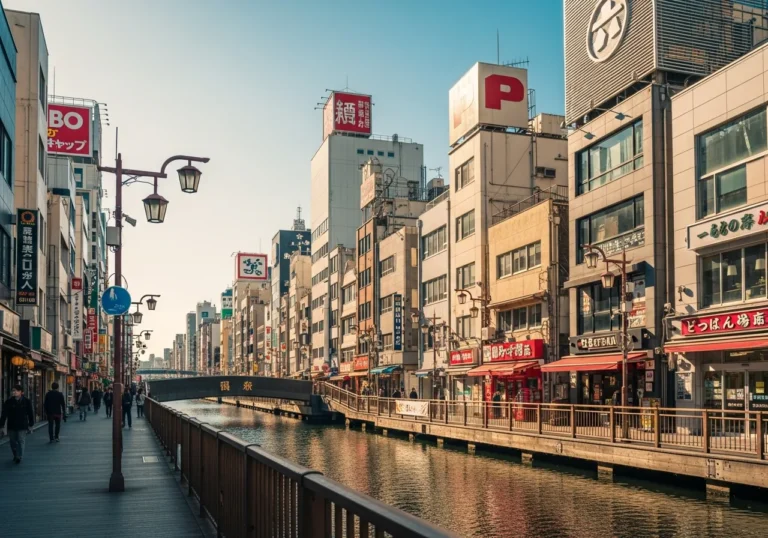
The district where Konosuke served his longest apprenticeship — Semba — was the heart of this commercial world. To understand Osaka, to really get what makes its people tick, you have to understand Semba.
This isn’t just a business district; it’s the 400-year-old engine room of Osaka’s commercial spirit. This is where the city’s DNA was coded — a unique blend of pragmatism, speed, and a relentless focus on the bottom line.
The akindo — the Osaka merchant — was a specific cultural type: the domain of the akindo, the Osaka merchant, whose mindset influences every office, shop, and back-alley deal. The term akindo means merchant, but in Osaka, it carries respect and signifies a particular kind of intelligence.
Konosuke spent five years at the Godai Bicycle Store in Semba. From that day, Konosuke Matsushita spent seven years as an apprentice at the Miyata Hibachi Shop through February 1905 and Godai Bicycle Shop in Semba through June 1910.
In terms of age, it was from 9 to 15. During this period when childhood ends and the personality is formed, he physically rather than theoretically learned what a merchant should be.
He later reflected on those years in terms that reveal exactly what Semba taught him. He reflected: “At the time, Semba could be called Semba College and it was a popular belief that learning how to do business in Semba as an apprentice was the best training a merchant could receive.”
The bicycle shop was not an arbitrary placement. Konosuke found a new apprenticeship at a store selling bicycles, which, at the time, were luxury items imported from the U.K.
Handling expensive imported goods taught him something that would define his entire career: the gap between what things cost to produce and what ordinary people could afford to pay. He would spend the rest of his life trying to close that gap.
Why Did He Leave a Stable Job to Start a Company with Nothing?
Watching the streetcars that had been in Osaka for some time, Konosuke decided that his future lay in the electrical business. In 1910, at fifteen, he joined the Osaka Electric Light Company — the utility that would eventually become Kansai Electric Power.
Originally, he was hired to work as a wiring assistant but because of his willingness to learn, he quickly became an electrician. Over the next couple of years, Matsushita’s position rose within the company as he was promoted several times.
At the age of twenty-two, Matsushita was promoted to the position of an electrical inspector.
This was a remarkable trajectory for someone with no secondary education. Such a position was considered somewhat prestigious as the salary was considerably attractive, given the fact that Matsushita was, to a certain degree, uneducated.
The sensible move was to stay. He did not stay.
The reason was a socket. He noticed design flaws in existing electric light sockets and devoted his spare time to researching improvements.
In 1917 he successfully invented a modified socket; however, when he eagerly presented this innovation to management at his company it was met with outright rejection. The supervisor told him it was useless.
This was the pivot point — not because the rejection proved the supervisor wrong (it may have been a reasonable commercial judgment at the time), but because of what Konosuke did next.
Constant poor health convinced Matsushita to leave the company to start his own business. In June 1917, Matsushita, his wife and his brother-in-law, Toshio Iue, who later founded Sanyo Electric, set up shop in a tiny two-room tenement in eastern Osaka.
His savings at that point totalled less than 100 yen. Konosuke’s savings totaled less than 100 yen, scarcely enough for basic tools and supplies.
However, undaunted by his meager resources, he set up a shop in his tiny dirt-floored tenement with two co-workers from Osaka Electric Light Company and Mumeno’s youngest brother, Toshio.
Why did he do it? The conventional answer is entrepreneurial drive.
The more precise answer is Semba. A decade of watching merchants operate had given him a specific belief: that the gap between the quality of goods available and the price ordinary people could pay was not a fixed condition of the market but a solvable problem.
He had seen Godai-san at the bicycle shop hold firm on price because the product was worth it. He had absorbed the idea that a merchant’s dignity lay in the quality of what he sold, not in the margin he extracted.
The socket was just the first expression of that belief.
Why Did the Company Almost Die Before It Began?
The first months were catastrophic. Sales of the socket were poor, and by the end of 1917, Konosuke’s former co-workers pulled out, leaving only Konosuke, Mumeno and Toshio.
Mumeno’s pawnshop register tells the story of months of hand-to-mouth survival. The family was pawning its possessions to buy food.
The socket that had cost Matsushita his career was not selling.
What saved them was not the socket at all. Just when things looked really bad, Matsushita got a big order for a thousand special plates for electric fans.
Repeat orders followed, giving him the capital he needed to put his socket and other wiring fixtures into mass production. The insulator plates were unglamorous — industrial components for fan manufacturers — but they generated the cash that kept the socket dream alive.
On 7 March 1918, Matsushita Electric Housewares Manufacturing Works was formally founded in the Fukushima ward of Osaka. The company’s founding product was the attachment plug — a device that allowed a single electrical outlet to serve both a light bulb and an appliance simultaneously.
At a time when lights and home appliances were becoming popular with the general public, there was only one electrical supply outlet in the home, restricting the use of multiple products. Matsushita developed the revolutionary “Attachment Plug” with dual sockets for lightbulbs and electric sockets, making electrical appliances more accessible for everyone.
With its innovative design and affordable price, the Attachment Plug was a hit product — and the beginning of Panasonic’s story.
The pricing strategy was deliberate and radical. They proved popular as they were of higher quality than other products on the market, and were 30% to 50% cheaper.
This was not discounting for its own sake. It was the Semba logic applied to manufacturing: the merchant’s job is to make goods accessible, not to extract maximum margin from scarcity.
By the end of 1918, the company employed 20 people. The workshop that had started with three people and less than 100 yen had become, in less than a year, a small factory.
Why Did Osaka’s Electrification Create the Conditions for Matsushita’s Rise?
Timing is not luck when you understand the forces behind it. Matsushita founded his company in 1918 at the precise moment when Japan’s electrical infrastructure was expanding rapidly enough to create mass demand for household fittings, but slowly enough that the market for quality, affordable components was still wide open.
Japan’s electricity history began in 1886, seven years after Thomas Edison put electric light bulbs into practical use. Under the modernization policy of the government during the Meiji era, factories sprang up across the nation, along with demand for electricity to power them.
This led to the birth of hundreds of small and midsize electricity suppliers. By the time Matsushita joined the Osaka Electric Light Company in 1910, the grid was expanding into residential neighbourhoods, but the hardware connecting homes to that grid — the sockets, plugs, and fixtures — was expensive, poorly made, and largely imported.
The Taisho Era saw rapid urbanization and significant lifestyle changes. Cities such as Tokyo, Osaka, and Nagoya expanded, with new infrastructure, high-rise buildings, and commercial facilities emerging.
With the spread of electric lighting, city streets became bright even at night, extending the vibrancy of urban life beyond daytime hours. Every new household connected to the grid was a potential customer for Matsushita’s plugs and sockets.
The market was not just growing; it was being created in real time, street by street, as the utility companies extended their lines through Osaka’s expanding residential wards.
Matsushita had spent seven years at the Osaka Electric Light Company watching this expansion from the inside. He knew which neighbourhoods were being wired, which products were failing in the field, and what ordinary households actually needed.
His competitors were either large established manufacturers with no incentive to cut prices, or small workshops without the quality control to build trust. The gap he identified was real, and he was positioned — by geography, by training, and by timing — to fill it.
Why Did the 1923 Bicycle Lamp Change Everything?
The attachment plug established the company. The bicycle lamp made it famous. In 1923 they launched revolutionary bullet-shaped bicycle lamps powered by batteries — much safer than candles or kerosene lamps widely used then — and achieved immediate success upon release.
The story of the lamp’s introduction is instructive. Initially, candle lamps and oil lamps were commonly used for bicycles at the time.
Battery-powered lamps were also available then but were unreliable and their batteries lasted only for either 2 or 3 hours. He designed the lamp and many test models that lasted 6 months.
The existing battery lamps were so unreliable that wholesalers refused to stock them. When Matsushita approached distributors with his new design, they turned him away.
His response was to leave lamps on consignment — if they didn’t sell, he would take them back. They sold.
In 1927, he produced a line of bicycle lamps that were the first to be marketed with the National brand name.
The National brand was a statement of intent. The name invoked the nation — the idea that these were products for everyone in Japan, not luxury goods for the wealthy.
By 1927 they began using the brand name “National,” symbolizing their aim to provide quality products accessible to ordinary people. This was the tap-water philosophy before Matsushita had articulated it as a philosophy.
The brand name was the argument made visible.
Why Did 1932 Become the Year That Defined the Company’s Soul?
By 1932, Matsushita Electric was a substantial manufacturer with hundreds of products and thousands of employees. Matsushita was thirty-seven years old and wealthy.
He could have stopped asking why. Instead, he visited a Buddhist temple and watched the congregation at work.
One day, he visited a temple, where he witnessed a large number of the Buddhist congregation building their temple diligently and with profound devotion. Matsushita vividly realized that religious groups had a well-defined purpose in life, a fact that makes them different from others. This realization prompted him to define his own mission: as an industrialist he was to serve society, and his duty was to produce and supply useful goods to improve living conditions of people in the society.
On 5 May 1932, he assembled his employees and announced what the Panasonic Holdings corporate chronicle records as the company’s founding mission statement. The language he used has become one of the most quoted passages in Japanese business history:
“The mission of a manufacturer is to overcome poverty by producing an abundant supply of goods. Even though water from a tap is a processed product with a price, no one objects if a passerby drinks from a roadside tap.
That is because the supply of water is plentiful and its price is low. The mission of a manufacturer is to create material abundance by providing goods as plentiful and inexpensive as tap water.”
This was not corporate boilerplate. It was a precise economic argument: scarcity is the enemy of human dignity, and the manufacturer’s job is to abolish scarcity.
At 37 years of age, Konosuke Matsushita announced a 250-year plan for Matsushita Electric. He declared that the mission of industrialists was to establish an earthly paradise suffused with goods and supplies that flowed like tap water, and that this would be accomplished over a 250-year period.
A 250-year plan. In 1932.
From a man who had started with less than 100 yen fifteen years earlier.
Why did the tap-water philosophy matter beyond rhetoric? Because it structured every operational decision that followed.
If your mission is abundance, then pricing must be aggressive, quality must be consistent, and distribution must be wide. Founder Konosuke Matsushita laid down crucial management objectives and the Seven Core Principles in 1929 and 1932, respectively.
These principles continue to shape the company’s operational philosophy. The philosophy was not decorative.
It was load-bearing.
Why Did the War Almost Destroy What Osaka Had Built?
The 1930s brought expansion and then conscription. During the 1930s the company added such electrical devices as irons, radios, phonographs, and light bulbs.
By 1935, when the company was formally incorporated as Matsushita Electric Industrial Co., Ltd., it employed about 3,500 people and produced about 600 different products. The company Matsushita had built from a dirt floor in Fukushima had become one of Japan’s major industrial enterprises in less than two decades.
Then the war came. With the start of the War in the Pacific in 1941, the company was pressured to accept military contracts, which led to the establishment of the Matsushita Shipbuilding Company in 1943, followed by the Matsushita Airplane Company.
A manufacturer of light sockets was now building wooden transport ships and military aircraft. The tap-water philosophy had been suspended by imperial decree.
Panasonic had lost 32 factories and offices, mainly in Tokyo and Osaka. The physical destruction was severe. But the existential threat came not from bombs but from the American occupation that followed Japan’s surrender.
In 1946, as Panasonic was preparing to resume manufacture of consumer products, the General Headquarters of the Supreme Commander for the Allied Powers laid down policies for economic reconstruction of the country, and for reorganization of companies that participated in the war effort. In March, the company was designated as a “restricted concern,” and its assets were frozen. It was also designated as a zaibatsu and as such, given no relief from its huge wartime debts.
The zaibatsu designation was factually wrong. The Matsushita Electric Industrial Company, while not a zaibatsu, was originally also targeted for breakup, but was saved by a petition signed by 15,000 of its union workers and their families.
What happened next was extraordinary by any measure. News of this came as a shock to the Matsushita Labor Union, formed in 1946, and to the company’s retail stores and other affiliates.
They declared that Matsushita was a mainstay of the company’s reconstruction effort, that his loss would mean the destruction of the company, and resolved to get the resignation order rescinded. This attitude was a surprise to SCAP officials, who had seen a great many labor unions lobbying for the dismissal of their companies’ management.
Workers petitioning to keep their boss. The occupation authorities had never seen it.
The company fought the zaibatsu designation for over four years, filing objections at SCAP headquarters more than 50 times. Eventually SCAP understood the company’s position, and the zaibatsu designation was lifted toward the end of 1950, along with most of the restrictions.
Why did the employees fight so hard? Because Matsushita had spent thirty years building a company where the relationship between management and labour was not purely transactional.
When the company was 2 years old and had 28 employees, he formed what he called the “Hoichi Kai,” which translates to “one-step society.” It brought employees together to play sports and participate in other recreational activities. He had long believed in developing the capabilities of his employees, and in 1934, opened an Employee Training Institute at the Kadoma factory to offer primary school graduates a three-year course that combined the study of engineering and business.
The petition was not sentiment. It was the return on a thirty-year investment in human capital.
Why Did the Postwar Decade Produce the Greatest Expansion in the Company’s History?
In October 1950, after four years of appeals, Matsushita’s people, including the company labor union, managed to convince the occupation authorities that MEC was not a zaibatsu, and Matsushita’s name was finally lifted from the purge list. In the beginning of 1951, the Matsushita Electric Company resumed its production operations with its workforce of thirty-eight hundred employees.
What followed was the most dramatic decade in the company’s history. With Japan’s speedy economic recovery, partly the result of the Korean War, MEC enjoyed rapid growth.
Now the Japanese could afford Matsushita’s newly manufactured washing machines, refrigerators, and televisions. The sales of the company rose from 17 million dollars in 1951 to 186 million dollars in 1961.
In that year, the company’s empire swelled to eighty-nine plants, employing forty-nine thousand workers.
The tap-water philosophy had been waiting for exactly this moment. Japan’s postwar middle class was forming, and it wanted the domestic appliances that Matsushita had been designing and refining for three decades. From 1950 to 1973, Matsushita’s company became one of the world’s largest manufacturers of electrical goods, sold under well-known trademarks including Panasonic and Technics.
The Panasonic brand itself — the name the world eventually adopted — was introduced for export markets. In 1955, it introduced the “Panasonic” brand for audio equipment sold abroad.
This name was easy to say in many languages, which helped the company’s global ambitions. The company that had started by making sockets for Osaka households was now selling audio equipment in North America and Europe under a name designed to travel.
Why Did Matsushita Become a Philosopher as Well as an Industrialist?
The occupation years, paradoxically, produced the most intellectually fertile period of Matsushita’s life. With his company’s assets frozen and his ability to manage it curtailed, he turned to the question that the war had forced on him: why had human intelligence, which should produce abundance and peace, instead produced destruction?
At the end of World War II, the company was temporarily closed down, but Matsushita fought doggedly to reopen the factory with renewed convictions about the significance of business as part of society. The experiences of his early years and his belief that the basic principles of business could apply with equal validity to any enterprise, be it the family or even the government, led him to articulate his vision for a world of peace and happiness.
As a humanist and a dedicated industrialist, he had arrived at the belief that the true duty of his company in society was to make products available to consumers as “readily as running water,” and that the abundance thus achieved was among the preconditions for material and spiritual prosperity. Although peace, happiness, and prosperity are universally sought, he realized that an organized movement was needed in the pursuit of such goals.
This led him to found the PHP Institute in November 1946.
PHP — Peace and Happiness through Prosperity — was not a corporate communications exercise. It was a genuine intellectual project, funded from Matsushita’s personal resources, aimed at understanding why human society repeatedly failed to achieve the abundance that technology made possible. A monthly magazine devoted to discussions of ways to achieve happiness and improve society, PHP has since become one of the best-selling periodicals in the country, with a circulation of one million.
In retirement, the writing accelerated. In retirement, Matsushita focused on developing and explaining his social and commercial philosophies and wrote 44 published books.
One of his books, entitled “Developing A Road To Peace And Happiness Through Prosperity”, sold over four million copies. His representative work, The Path, set a national record as the most published business book in Japan, selling over 5.5 million copies.
Then, at eighty-four, he did something that had no precedent in Japanese business history. The Matsushita Institute of Government and Management was established by Panasonic founder Kōnosuke Matsushita in 1979, and it counts many Japanese politicians and business leaders among its graduates.
After retiring, he invested a huge personal fortune — 70 billion yen — to establish the Matsushita Institute of Government and Management, contributing to politics by nurturing future leaders. A man who had left school at nine was now funding an institution to train Japan’s future prime ministers.
Why Does the Osaka Merchant Tradition Explain What Harvard Business School Cannot?
Western business schools have studied Matsushita extensively. John Kotter of Harvard Business School wrote a full biography. Kotter described Matsushita as follows: “Instead of decelerating after gaining some degree of wealth and fame, he grew to be a strong business leader, an even more unusual builder of a huge business institution, and finally a statesman and philosopher who far transcended simple economic interests.” The analysis is accurate but incomplete, because it treats Matsushita as an individual genius rather than as the product of a specific place.
The Semba apprenticeship was not merely vocational training. It was an immersion in a commercial culture that had been developing since the Edo period — a culture in which the merchant’s role was understood as socially necessary rather than morally suspect.
The Kaitokudō was a merchant academy located in Osaka, Japan, during the Tokugawa period. Although it opened its doors in 1724, it was founded officially in 1726.
The Kaitokudō began as a small meeting group of Osaka merchants who met to discuss virtue, or moral education, through the reading and study of classic texts. Osaka merchants had been arguing, for two centuries before Matsushita arrived, that commerce was a form of social service — that the merchant who supplied goods efficiently and honestly was performing a public good.
Matsushita absorbed this tradition not through books but through the body. During this period when childhood ends and the personality is formed, he physically rather than theoretically learned what a merchant should be.
The tap-water philosophy was not an innovation. It was the Osaka merchant tradition restated in the language of industrial capitalism.
What Matsushita added was the scale: he took a local ethical framework and applied it to a global enterprise.
This is why the company’s culture survived his death in ways that purely personality-driven enterprises rarely do. In November 1935, the month before incorporation of the company as Matsushita Electric Industrial Co., Ltd., Konosuke established Basic Internal Rules which included Article 15: “No matter how large Matsushita Electric might become in the future, maintain the attitude of being a humble merchant.
Think of yourself to be employed in a small shop. Be simple, frugal and humble as you carry out your work.” The instruction was not to remember the founder.
It was to remember Semba.
Why Should a Discerning Traveller Care About a Man Who Made Light Sockets?
The question is fair. Matsushita is not Toyotomi Hideyoshi, who built Osaka Castle.
He is not the architect of the Dojima rice exchange or the founder of the Bunraku theatre. He made electrical components in a city that already had a long history of making things.
Why does he matter to someone who has come to Osaka to understand the city rather than to study corporate history?
The answer is that Matsushita is the clearest available lens through which to understand what Osaka’s commercial culture actually produced when it was given access to industrial technology. The city’s merchant tradition — the akindo spirit, the Semba ethos, the conviction that commerce is a form of social service — was not just a local curiosity. It was a set of values that, when applied at industrial scale, generated one of the twentieth century’s most consequential enterprises.
Consider the specific Osaka-ness of what Matsushita built. He did not build a luxury brand.
He did not build a company that served the wealthy. He built a company explicitly dedicated to making goods cheap enough for everyone — the tap-water company.
He developed and manufactured a wide range of home appliances, helping bring them into everyday life across Japan. He was the first in Japan to introduce the five-day workweek at a company.
These were not acts of philanthropy. They were expressions of the Osaka merchant’s understanding that a business serves its community or it does not deserve to survive.
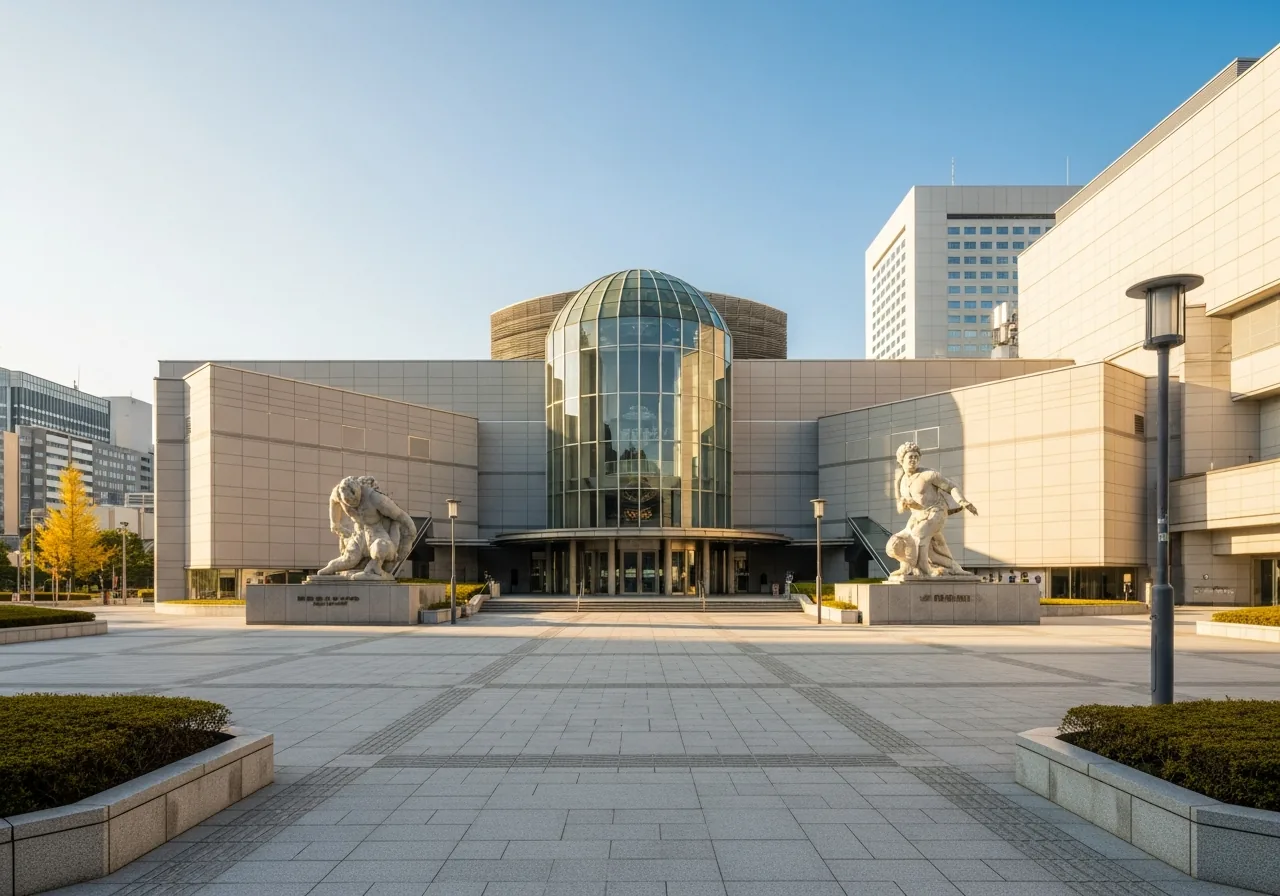
The company he built is still headquartered in Kadoma, northeast of Osaka, on the same site where in July of 1933, the company moved into a new factory and Head Office in Kadoma, northeast of Osaka. The Panasonic Museum that now occupies that site is, among other things, a record of what one city’s commercial culture can produce when it is given a century to work. The Panasonic Museum was established to convey appreciation for society’s support over the past 100 years and to pass down the passion and spirit of Panasonic to future generations by showcasing Konosuke Matsushita’s words and Panasonic products from the past.
There is also a more personal reason to care. Matsushita died on 27 April 1989, at ninety-four, with personal assets worth US$3 billion, and left a company with US$42 billion in revenue.
He had arrived in Osaka eighty-five years earlier with nothing. The distance between those two points is not a story about genius or luck.
It is a story about what a city teaches a child who is paying attention.
The Legacy in the City Today
Walk through Semba today and you are walking through the district that made Matsushita. The wholesale textile buildings have replaced the bicycle shops, but the commercial logic is unchanged: function over form, price transparency, the customer’s interest as the merchant’s primary concern. The akindo spirit that Matsushita absorbed here still inflects the way Osaka does business — faster, more direct, and more price-conscious than Tokyo, less deferential to hierarchy, more focused on what actually works.
The Panasonic Museum in Kadoma is the most direct encounter with Matsushita’s legacy available to a visitor. The “Konosuke Matsushita Museum” is a facility themed around the 94-year life journey of the founder, Konosuke Matsushita.
Through valuable materials, visitors can immerse themselves in Matsushita’s words and philosophies, pondering his views on management and life. Approximately 550 valuable home appliances from the Panasonic Group’s 100-year history are on display.
The building itself is a faithful reconstruction of the 1933 headquarters — the building that Matsushita moved into when the company first outgrew Osaka proper and established itself in what was then the rural northeast of the city.
What the museum cannot fully convey is the texture of the journey — the nine-year-old on the train from Wakayama, the pawnshop register that Mumeno kept during the months when the socket wasn’t selling, the 15,000 workers who signed a petition to keep their boss in his job. Those details live in the Panasonic Holdings corporate chronicle and in Matsushita’s own books, published by the PHP Institute he founded in 1946. Reading them before you visit Kadoma changes what you see when you get there.
The man Japan calls keiei no kamisama — the God of Management — was not a god. He was an Osaka apprentice who paid attention.
Frequently Asked Questions
Q: Where did Konosuke Matsushita found Panasonic?
A: The company was founded on 7 March 1918 in the Fukushima ward of Osaka, in a small rented tenement that Matsushita converted into a workshop. The headquarters later moved to Kadoma, northeast of Osaka, in 1933, where Panasonic’s global headquarters remains today.
Q: What was Matsushita’s “tap-water philosophy”?
A: Announced on 5 May 1932, it holds that a manufacturer’s mission is to produce goods so abundantly and cheaply that they become as accessible as tap water — eliminating poverty through material abundance rather than charity. It remains the stated philosophical foundation of Panasonic’s corporate mission.
Q: Why is Matsushita called the “God of Management” in Japan?
A: The title reflects both the scale of what he built — from nothing to one of the world’s largest electronics companies — and the influence of his management philosophy, which emphasised employee welfare, social mission, and long-term thinking over short-term profit. His 44 books on management and philosophy have sold tens of millions of copies in Japan alone.
Q: Can visitors see the Panasonic Museum in Osaka?
A: Yes. The Panasonic Museum is located in Kadoma City, Osaka Prefecture, about two minutes’ walk from Nishisanso Station on the Keihan Line.
Admission is free. It is closed on Saturdays, Sundays, and public holidays — confirm current hours on the official site before visiting.
Q: What is the PHP Institute that Matsushita founded?
A: The PHP Institute — Peace and Happiness through Prosperity — is a think tank, publisher, and research organisation that Matsushita founded in November 1946, during the Allied occupation, when his company’s assets were frozen. It publishes books and a monthly magazine, and continues to operate as an independent institution. Its website is at php.co.jp.
Panasonic Museum (Konosuke Matsushita History Museum) — Visitor Information
Address: 1006 Oaza Kadoma, Kadoma-shi, Osaka 571-8501 / 〒571-8501 大阪府門真市大字門真1006
Nearest station: Nishisanso Station (Keihan Main Line) — approx. 2-minute walk
Hours: 10:00 a.m. – 5:00 p.m. Closed Saturdays, Sundays, public holidays, Obon holiday, New Year holidays, and holidays set by the museum. Hours may vary during special events — confirm on the official site before visiting.
Admission: Free (groups of 10 or more cannot be accommodated; confirm on official site)
Official site: holdings.panasonic