Looking for kabuki and traditional theatre in Osaka? This guide covers the key venues, what makes Osaka’s scene distinct from Tokyo’s, and everything you need to know to actually get through the door — from ticket prices to English support. Three main venues, one major closure to know about, and a sister art form worth your time.
MICHI’s Pick — Selected by our Osaka-based team, based on places we’ve visited and on research using Tabelog and Google Maps ratings. In Japan, a Tabelog score of 3.4+ is genuinely high — Japanese reviewers are famously strict, and most locals consider anything above 3.4 a place worth a detour. We feature venues meeting at least one of: Tabelog 3.4+, Google Maps 4.3+, or 100+ reviews — the kind of spots locals quietly trust.
Tabelog and Google Maps scores are accurate as of the time of writing.
Osaka Kabuki vs. Tokyo Kabuki: What’s Actually Different
Kabuki has been performed in Osaka for as long as it has in Edo. But the two cities developed their own distinct flavours, and those differences still show up on stage today.
In the old days, mainstream kabuki was performed at selected venues in big cities like Edo (present-day Tokyo), Osaka, and Kyoto. Tokyo’s tradition — rooted in the samurai culture of Edo — leaned toward bombastic, masculine performance styles. Osaka’s tradition grew from a merchant-class audience that wanted emotional depth, domestic drama, and stories about ordinary people caught in impossible situations. The shorthand: Tokyo kabuki is about power; Osaka kabuki is about feeling.
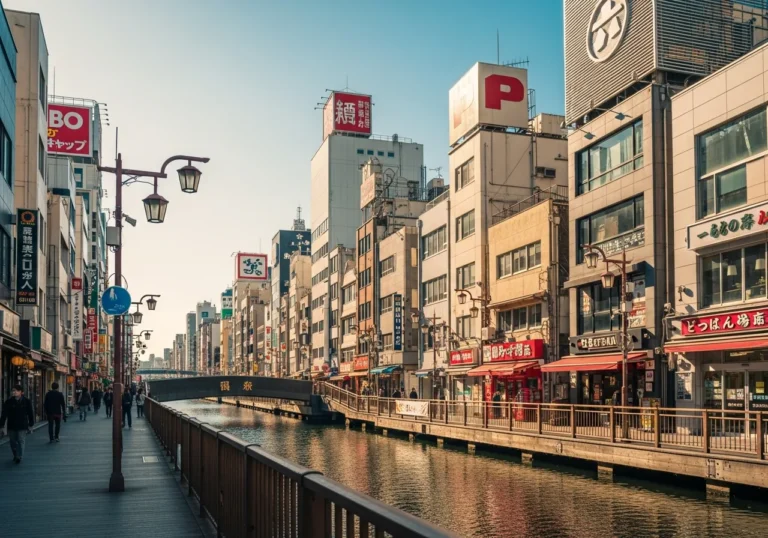
That difference in sensibility is still visible. Osaka-style plays tend to feature more domestic tragedy and love-suicide narratives — the kind of stories that also gave birth to bunraku puppet theatre in this city. The two art forms cross-pollinated for centuries, and many of the most famous kabuki plays in the Osaka repertoire were originally written for bunraku. If you want to understand the best food in Osaka and its culture together, the theatre district around Dotonbori is the place to start — this stretch of canal has been an entertainment hub since the 1620s.
The historic street started in the 1620s as a theater district with kabuki and bunraku establishments along the canal. Most of those original theatres are long gone, but the tradition survived — and the venues below are where it lives now.
1. Osaka Shochikuza (大阪松竹座)
📍 1-9-19 Dotonbori, Chuo-ku, Osaka
🕐 Varies by performance (as of May 2026)
💰 ¥4,000–¥18,000 per person (seat-dependent)
🚃 Namba Station (1 min walk)
⭐ Rating: Google 4.3 (1,200+ reviews) (as of writing)
🗺 Open in Google Maps
📋 Tabelog
🌐 Official site
What to order: Single-act “Try Kabuki” tickets (¥2,000–¥4,000) — the lowest-commitment way in for first-timers.
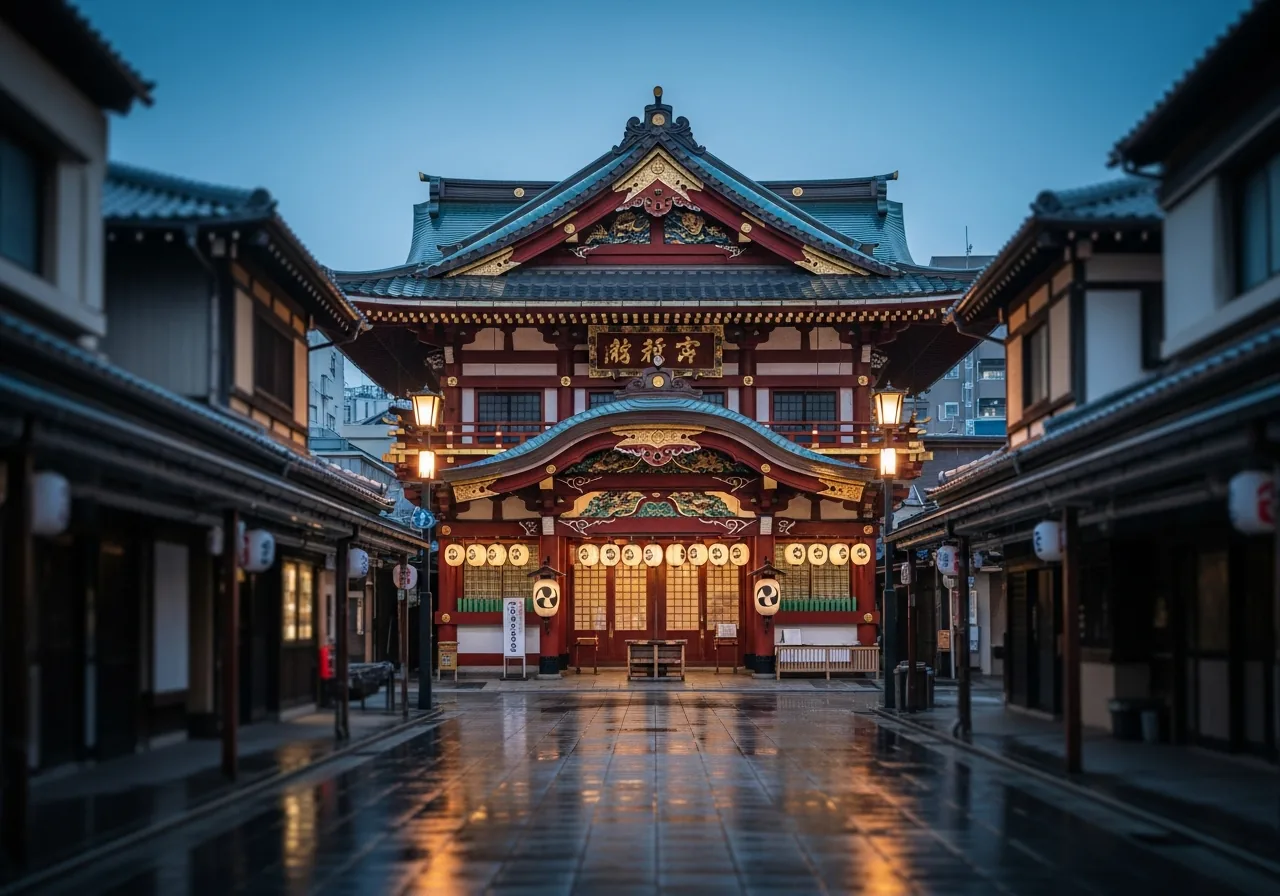
This is Osaka’s primary kabuki venue and the one most visitors will want. This Neo-Renaissance theater first opened in 1923 and was modelled after the Teatro alla Scala in Milan, Italy. In 1997, it was renovated into a theater with state-of-the-art facilities while preserving the Neo-Renaissance-style facade, affectionately known as the “Triumphal Arch of Dotonbori.” The theater now has seats for 1,033 people on three levels with excellent acoustics and state-of-the-art devices such as a revolving stage and trap doors.
Important closure notice: The final performance is scheduled for May 2026, after which the Osaka Shochikuza Building, including its underground shops, is set to close. If you’re reading this after May 2026, check the official Shochiku website for the replacement venue — Shochiku has confirmed kabuki will continue in Osaka at a new location. The building’s closure is a genuine loss; its arch has been a Dotonbori landmark for a century.
To make kabuki accessible even to beginners, pamphlets called “Banbu” and audio guides are available for purchase, providing explanations and highlights of the performances. There are also English brochures and programs available at the ticket office that will give you some explanation of the show’s content.
2. Shin-Kabukiza (新歌舞伎座)
📍 1-2-3 Uehonmachi, Tennoji-ku, Osaka
🕐 Varies by performance (as of May 2026)
💰 ¥3,500–¥16,000 per person (seat-dependent)
🚃 Tanimachi 9-chome Station (1 min walk)
⭐ Rating: Google 4.1 (800+ reviews) (as of writing)
🗺 Open in Google Maps
📋 Tabelog
🌐 Official site
What to order: Concerts and variety shows (¥3,500–¥12,000) — this venue’s current bread and butter.
The name is a little misleading. Shin-Kabukiza — “New Kabuki Theatre” — was built in 1958 as a dedicated kabuki venue in the Uehonmachi district, but today it operates primarily as a general entertainment hall hosting concerts, comedy, and touring stage productions. Traditional kabuki performances here are now rare. That said, it’s a working, active venue with a packed schedule through 2026, and its striking traditional-style exterior makes it worth a look if you’re in the Tennoji area. Think of it as a window into how Osaka’s theatre culture evolved beyond kabuki into broader popular entertainment.
3. National Bunraku Theatre (国立文楽劇場)
📍 1-12-10 Nippombashi, Chuo-ku, Osaka 542-0073
🕐 Box office: 10:00–18:00 on performance days (as of May 2026)
💰 ¥1,000–¥6,700 per person (varies by performance and seat)
🚃 Nippombashi Station (5 min walk)
🗣 English menu: English audio guides and programs available
⭐ Rating: Google 4.4 (900+ reviews) (as of writing)
🗺 Open in Google Maps
📋 Tabelog
🌐 Official site
What to order: Main hall bunraku performance (¥2,000–¥6,700) — book the English audio guide (¥700) at the same time.
Strictly speaking, this is a bunraku theatre, not a kabuki theatre. But it belongs in this guide for two reasons: first, it also features other traditional arts such as kabuki and Japanese dance at certain times of the year; and second, understanding bunraku is the fastest way to understand Osaka kabuki. The two art forms share the same stories, the same emotional logic, and the same Osaka DNA.
This unique dramatic form developed in Osaka in the 17th century as a popular entertainment for the common people. The National Bunraku Theater was established in 1984 as the home of bunraku in the Kansai region. The theater has a main hall with 753 seats and a small hall with 159 seats.
Performances are usually held in three-week runs in January, April, June, July/August, and November. In June, performances for beginners are held with explanations provided. English audio earphone guides with full commentary are also available for bunraku shows for a fee of ¥700. That ¥700 is non-negotiable — get the guide. The chanted narration is in classical Japanese that even native speakers struggle with.
There is also an exhibition room which has a free display of puppets, costumes, photographs, and videos of performances with explanations written in English as well as Japanese. Worth 20 minutes even if you’re not catching a show. To explore more of Osaka beyond the Dotonbori strip, the Nippombashi neighbourhood around this theatre is a good place to wander — it sits between Namba and Shinsekai, two of the city’s most characterful districts.
4. Kabukiza (Tokyo) vs. Osaka Shochikuza: A Direct Comparison
📍 Comparative reference — not a venue to visit in Osaka
🗺 Open in Google Maps
📋 Tabelog
What to order: Single-act tickets at either venue (¥2,000–¥4,000) — the best entry point for first-timers.
The question this article is built around deserves a direct answer. Here’s the practical breakdown:
Frequency: The Kabukiza in Tokyo’s Ginza district was reconstructed and reopened in 2013. It runs kabuki almost every day of the year. Osaka Shochikuza ran roughly one major kabuki run per month — typically a three-to-four-week block. If you’re in Osaka for a short trip, check the schedule before you arrive; there’s no guarantee a kabuki run will be on during your visit.
Scale: The Kabukiza seats around 1,800 people. Osaka Shochikuza seated 1,033. The Osaka experience is more intimate — you’re closer to the stage, and the hanamichi (the runway that extends through the audience) feels more immediate.
Repertoire: Tokyo’s Kabukiza tends to programme the full classical canon, including many Edo-period plays rooted in samurai culture. Osaka runs lean more heavily on the Kamigata (Kyoto-Osaka) repertoire — domestic dramas, merchant-class stories, and plays with bunraku origins. If you’ve already seen kabuki in Tokyo, Osaka’s programming will feel noticeably different in tone.
English support: Captioning service (either English or simplified Chinese subtitles) is available to rent at the Kabukiza. Osaka Shochikuza unfortunately does not have this service — though English brochures and the “Banbu” pamphlet help. The National Bunraku Theatre has the best English support of any traditional theatre in Osaka.
Tickets: Tickets are usually sold per segment, although in some cases they are also available per act. They typically cost around ¥2,000 for a single act or between ¥3,000 and ¥25,000 for an entire segment depending on the seat quality. Book through the official Shochiku website or at the box office. The MICHI Osaka travel guide has more on navigating ticket booking in Japan.
5. How to Watch Kabuki as a First-Timer
📍 Applicable to all venues above
💰 ¥2,000–¥4,000 for a single-act ticket
🚃 Namba Station (for Osaka Shochikuza)
🗺 Open in Google Maps
📋 Tabelog
What to order: One act, not a full programme — two to three hours of kabuki is a lot if you don’t know the stories.
A few things that will make the experience significantly better:
Read the plot summary first. Kabuki actors speak an old-fashioned form of Japanese in a very stylized way, so even for Japanese people it can be difficult to understand. The best way to prepare yourself for a kabuki performance is to read an outline of the story in advance. That way you will have some idea of what is happening so you can sit back and enjoy the colour and extravagance of the show.
Start with one act. Single-act “Try Kabuki” tickets are available at Osaka Shochikuza and let you watch one act without committing to a full programme. They typically cost around ¥2,000 for a single act. That’s the right entry point.
The shouting is normal. Watching a kabuki play, the sense of excitement is infectious and often audience members will shout out the names of actors to voice their approval of their acting. This is not rude. It is an accepted part of kabuki enjoyment.
Dress code: There isn’t one, strictly speaking. Smart casual is fine. You’ll see everything from yukata to jeans in the audience.
Food: There are some Japanese restaurants in the basement of the theater building and you can make a reservation at these restaurants or order a bento-style lunch box for the intermission at the front of the theater before a show starts. Eating a bento during intermission is a kabuki tradition — don’t skip it.
FAQ
Q: What is the best kabuki theatre in Osaka?
A: Osaka Shochikuza (大阪松竹座) in Dotonbori has been the city’s primary kabuki venue for over a century. Note that its final performance was scheduled for May 2026 and the building is closing — check the official Shochiku website for the replacement venue before you visit.
Q: How many kabuki theatres are in Osaka?
A: Osaka has one dedicated kabuki venue (Osaka Shochikuza), one venue that occasionally hosts kabuki alongside other traditional arts (National Bunraku Theatre), and one venue that carries “kabuki” in its name but now programmes mostly concerts and variety shows (Shin-Kabukiza). Tokyo has significantly more dedicated kabuki infrastructure, which is part of what makes Osaka’s scene distinct.
Q: Do Osaka theatres have English menus?
A: English support varies by venue. Osaka Shochikuza offers English brochures and the “Banbu” programme pamphlet, but no English audio guide. The National Bunraku Theatre has the best English support — English audio guides (¥700), English programmes, and multilingual brochures. Neither venue has real-time English subtitles the way Tokyo’s Kabukiza does.
Q: What should I watch at kabuki theatres in Osaka?
A: Look for plays in the Kamigata (Kyoto-Osaka) repertoire — domestic dramas and love-suicide narratives that originated in Osaka’s merchant culture. Plays like “Sonezaki Shinju” (The Love Suicides at Sonezaki) were written specifically for Osaka audiences and feel very different from the samurai-heavy Edo repertoire you’d see at Tokyo’s Kabukiza. At the National Bunraku Theatre, the June beginner-friendly programme is the easiest entry point for first-time visitors.
Last updated: July 19, 2026 · Corrections: [email protected]