Looking for sento and public bath culture in Osaka? This guide covers seven of the city’s best bathhouses — from a classic neighbourhood sento that costs ¥600 to a sprawling 24-hour spa complex with Roman columns and Balinese pools. Whether you want a quick post-sightseeing soak or a full-day cultural deep-dive, explore more of Osaka through its bathhouses.
MICHI’s Pick — Selected by our Osaka-based team, based on places we’ve visited and on research using Tabelog and Google Maps ratings. In Japan, a Tabelog score of 3.4+ is genuinely high — Japanese reviewers are famously strict, and most locals consider anything above 3.4 a place worth a detour. We feature venues meeting at least one of: Tabelog 3.4+, Google Maps 4.3+, or 100+ reviews — the kind of spots locals quietly trust.
Tabelog and Google Maps scores are accurate as of the time of writing.
1. Spa World Hotel & Resort (スパワールド)
- 📍 3-4-24 Ebisuhigashi, Naniwa Ward, Osaka 556-0002
- 🕐 Open 24 hours (individual zones have varying schedules) (as of May 2026)
- 💰 ¥1,500 adults (spa only) / ¥2,000 (spa + pool)
- 🚃 Dobutsuen-mae Station (2 min walk) / Shin-Imamiya Station (2 min walk)
- 🗣 English menu: Yes (English signage and website available)
- ⭐ Rating: Google 4.1 (8,000+ reviews) (as of writing)
- 🗺 Open in Google Maps
- 📋 Tabelog
- 🌐 Official site
What to order: Day spa admission (¥1,500)
The bathing section splits into two major zones — European and Asian — where you can soak beneath classical Roman statues, shower under a Spanish waterfall, or sink into a steaming Japanese hinoki cypress bath. Eight internationally themed stone saunas on the third floor are available for an extra ¥800 on weekdays. This is Osaka’s most theatrical bathhouse — absurd in the best possible way, and genuinely fun for first-timers.
2. Tennen Onsen Naniwa no Yu (天然温泉 なにわの湯)
- 📍 2-7-31 Tenjimbashisuji, Kita Ward, Osaka 530-0041
- 🕐 Weekdays 10:00–01:00; Weekends 08:00–01:00 (as of May 2026)
- 💰 ¥850 adults (weekdays) / ¥950 (weekends & holidays)
- 🚃 Tenjimbashisuji Rokuchome Station (8 min walk)
- ⭐ Rating: Google 4.3 (3,000+ reviews) (as of writing)
- 🗺 Open in Google Maps
- 📋 Tabelog
What to order: Open-air bath + sauna combo (included in admission)
Perched on the eighth floor, this onsen features open-air baths with city skyline views and indoor baths designed for deep relaxation — the mineral-rich water is marketed as a “beauty bath” for its skin-nourishing properties. Admission for one adult is ¥850 on weekdays (¥950 on weekends), making it one of the best-value natural hot spring options in central Osaka. The outdoor carbonated bath on a cool evening is genuinely hard to beat.
3. Solaniwa Onsen Osaka Bay Tower (空庭温泉 OSAKA BAY TOWER)
- 📍 1-2-3 Benten, Minato Ward, Osaka 552-0007
- 🕐 11:00–23:00 (last entry 22:00) (as of May 2026)
- 💰 ¥2,790 adults (weekdays) / ¥3,010 (weekends)
- 🚃 Bentencho Station (6 min walk / direct underground passage)
- 🗣 English menu: Yes
- ⭐ Rating: Google 4.2 (5,000+ reviews) (as of writing)
- 🗺 Open in Google Maps
- 📋 Tabelog
- 🌐 Official site
What to order: Full-day admission with yukata rental (included in entry fee)
Themed around the Azuchi-Momoyama era, this is the largest onsen theme park in western Japan — guests wear yukata and move between natural hot spring baths, foot baths, stone saunas, and a rooftop Japanese garden. Yukata and towels are provided free with admission, and the facility accepts tattoos if fully covered with stickers (sold on-site). It’s pricier than a neighbourhood sento, but the rooftop garden at night justifies the splurge.
4. Taihei-no-yu (太平のゆ)
- 📍 2-3-8 Taihei, Naniwa Ward, Osaka 556-0021
- 🕐 10:00–02:00 (next day); open daily (as of May 2026)
- 💰 ¥900–¥1,100 adults (varies by day)
- 🚃 Daikokucho Station (5 min walk)
- ⭐ Rating: Google 4.3 (1,500+ reviews) (as of writing)
- 🗺 Open in Google Maps
- 📋 Tabelog
What to order: Rooftop outdoor bath + massage chair session (included in admission)
Located in the Daikokucho neighbourhood south of Namba, Taihei-no-yu is a top-class super sento with multiple baths including outdoor tubs on the roof, relaxation rooms with massage chairs, and an on-site restaurant serving local specialties. It’s the kind of place you arrive at for an hour and leave three hours later — a solid all-rounder for anyone staying in the Namba area.
5. Hinode-yu (日之出湯)
- 📍 2-5-7 Taishi, Nishinari Ward, Osaka 557-0002
- 🕐 15:00–24:00; closed Wednesdays (as of May 2026)
- 💰 ¥600 adults (Osaka Prefecture regulated rate from April 2025)
- 🚃 Dobutsuen-mae Station (8 min walk)
- ⭐ Rating: Google 4.4 (400+ reviews) (as of writing)
- 🗺 Open in Google Maps
- 📋 Tabelog
What to order: Standard admission (¥600) — try the electric bath (denki buro)
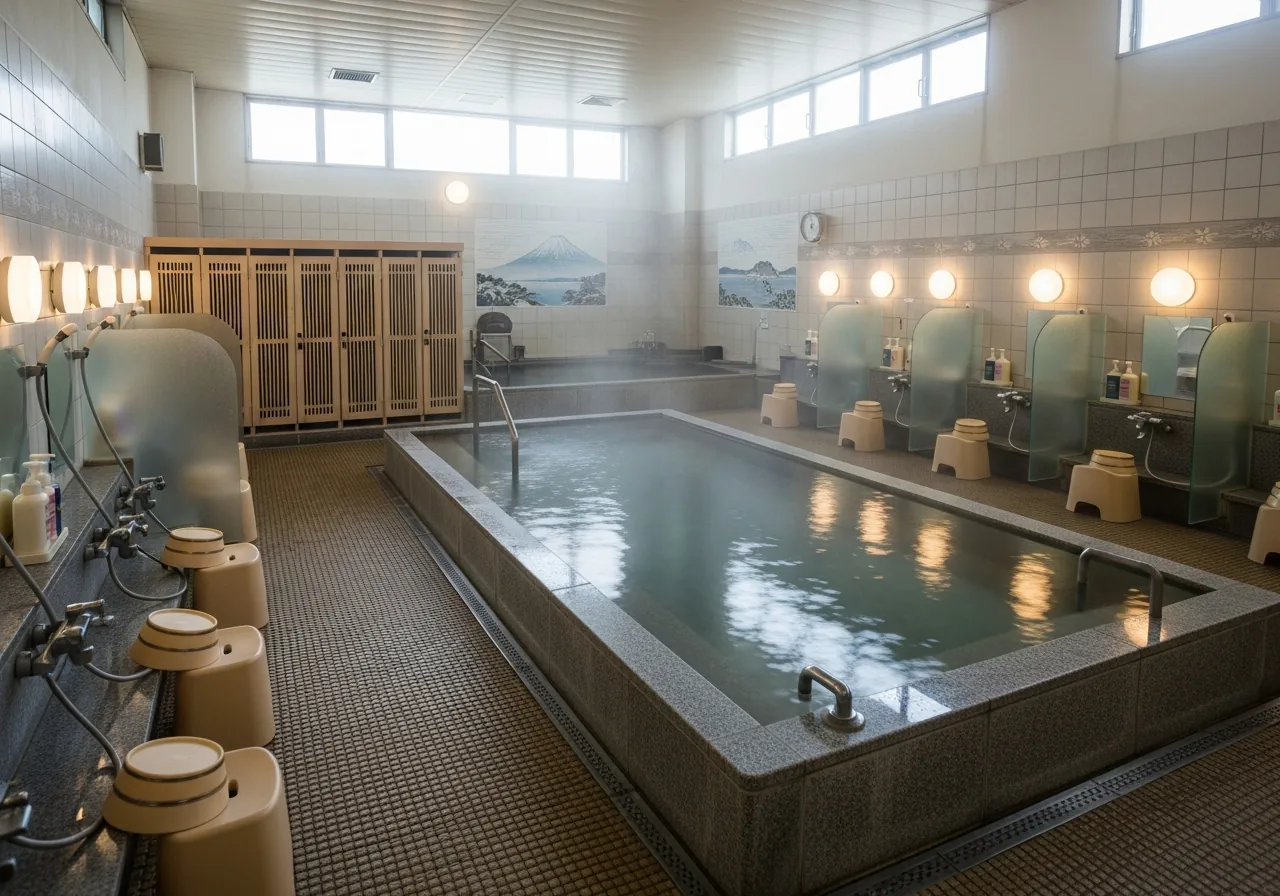
Located in Nishinari Ward, Hinode-yu combines traditional sento charm with a cold water bath — perfect for alternating between extreme heat and cold, a ritual many regulars swear by for full-body rejuvenation. The Osaka Prefecture regulated adult entry fee rose to ¥600 from April 2025 — still a remarkable deal for a genuine neighbourhood bathhouse. This is the one to visit if you want the real, unvarnished sento experience rather than a spa resort.
6. Nobeha no Yu (野辺の湯)
- 📍 2-12-18 Tsuruhashi, Higashinari Ward, Osaka 537-0023
- 🕐 10:00–01:00 (next day); open daily (as of May 2026)
- 💰 ¥1,200–¥1,500 adults
- 🚃 Tsuruhashi Station (5 min walk)
- ⭐ Rating: Google 4.3 (800+ reviews) (as of writing)
- 🗺 Open in Google Maps
- 📋 Tabelog
What to order: High-concentration carbonated spring bath + Finnish sauna (included in admission)
Located in Osaka’s Tsuruhashi area, Nobeha no Yu is a bathing facility featuring source-fed outdoor baths and authentic saunas, with diverse options including high-concentration carbonated springs, tsubo-yu pot baths, and rock baths. The sauna facilities include large Finnish-style saunas with self-löyly options, and after bathing you can rest in tatami-floored spaces and eat Korean cuisine-centred meals. Tsuruhashi is Osaka’s Koreatown, so the post-bath Korean food situation is excellent — pair it with the best food in Osaka nearby.
7. Yume no Koshu Yokujyo Goshiki (夢の公衆浴場 五色)
- 📍 3-1 Nishimachi, Toyonaka, Osaka 561-0882
- 🕐 Open 24 hours; open daily (as of May 2026)
- 💰 ¥800 adults (weekdays) / ¥900 (weekends)
- 🚃 Toyonaka Station (10 min walk)
- ⭐ Rating: Google 4.2 (1,200+ reviews) (as of writing)
- 🗺 Open in Google Maps
- 📋 Tabelog
What to order: Dry sauna (98°C) + cold plunge (17°C) cycle
This spacious 24-hour sento in Toyonaka City offers over ten bath options — including a high-concentration carbonated spring, ancient cypress wood baths, herbal soaks, and jet baths — plus a dry sauna heated to 98°C paired with a cold-water bath at 17°C. Families will appreciate the weekly “Parent-Child Interaction Day,” which gives free entry to up to three children per adult on Saturdays. Note that Toyonaka is just outside Osaka City proper — about 20 minutes from Umeda by subway.
FAQ
Q: What is the best sento in Osaka?
A: For a classic neighbourhood experience, Hinode-yu in Nishinari is hard to beat at ¥600 a soak. If you want something more elaborate, Tennen Onsen Naniwa no Yu offers 100% natural hot spring water on the eighth floor of a building in central Osaka, with open-air city views and a carbonated beauty bath — all for under ¥1,000 on weekdays.
Q: How many sento are in Osaka?
A: There are currently over 200 sento operating in Osaka City alone. They cluster most densely in older working-class neighbourhoods like Nishinari, Naniwa, and Higashinari, though you’ll find at least one within walking distance of most major areas. Super sento and onsen spa complexes add another layer of options across the wider prefecture.
Q: Do Osaka sento have English menus?
A: Larger facilities like Spa World and Solaniwa Onsen have English signage and websites. Traditional neighbourhood sento — like Hinode-yu — operate entirely in Japanese, but the process is simple enough to navigate without language skills: pay at the counter, separate by gender (look for the red and blue curtains), wash before you get in. MICHI Osaka travel guide has more practical tips for first-time visitors.
Q: What should I order at sento in Osaka?
A: At a traditional sento, the experience is the point — try the electric bath (denki buro) for a tingly, muscle-buzzing sensation, and alternate between the hot tub and cold plunge if one is available. The denki buro passes a mild electric current through the water, which is said to improve circulation, relieve joint pain and muscle tightness, and ease exhaustion. At super sento, the carbonated spring baths are consistently the most popular — the fine bubbles are noticeably gentler on the skin than a standard hot tub.
Last updated: July 19, 2026 · Corrections: [email protected]