When Hankyu’s Kobe Main Line opened in July 1920, it did not merely add a second rail connection between Osaka and Kobe — it launched a century-long commercial war that physically rebuilt Osaka’s northern and western suburbs, invented the global template for transit-oriented real estate development, and ended only when a Tokyo activist fund forced two bitter rivals into a shotgun marriage in 2006. The suburbs you move through today — Toyonaka, Nishinomiya, Ashiya, Ikeda — are not accidents of geography; they are the direct residue of that competition.
Why we can tell you this — MICHI is edited in Osaka, and the writers who produced this piece commute on both the Hankyu Kobe Line and the Hanshin Main Line; the contrast between the two corridors — one elevated and inland, one coastal and dense — is something we experience in the body, not just in archives. This article draws on corporate history documents from Hankyu Hanshin Holdings’ own published record, peer-reviewed academic work on Hankyu’s suburban housing development from the University of Leeds and Taylor & Francis, Wikipedia’s extensively sourced railway line articles, and contemporary English-language reporting on the 2006 merger from the Washington Post and NBC News. Where the record is thin — particularly on the internal fare-war negotiations of the 1920s and 1930s, which remain largely in Japanese-language corporate archives — we say so plainly rather than speculate.
Stand at Osaka-Umeda Station on a weekday morning and count the gates. To your left, the maroon trains of Hankyu slide in from Kyoto, Kobe, and Takarazuka on three separate trunk lines.
Thirty metres to your right, behind a different set of turnstiles, the yellow-banded trains of Hanshin depart for the same Kobe. Two companies, two ticketing systems, two department stores rising above the same city block, two baseball teams whose rivalry is the emotional heartbeat of the entire Kansai region.
The physical fact of Umeda — Japan’s largest private railway terminal, the commercial nucleus of western Japan — is the fossilised record of a competition so fierce that it shaped not just how Osaka’s suburbs look, but how every major Japanese city subsequently grew.
Why Did Two Railways End Up Running the Same Route?
The Hanshin Electric Railway’s origins date back to 1889, when it was founded as the Settsu Electric Railway, later renamed Hanshin Electric Railway in 1899. The current company began operations in 1905. Its ambition was straightforward: connect Osaka and Kobe, Japan’s two great commercial cities, faster and cheaper than the government-run Tokaido railway.
The problem was regulatory. The new line was in direct competition with the government-run Tokaido line and would never have received official permission if it had been opened as a railway.
By calling the new route a “tramline,” the Hanshin company could circumvent the problem by applying to a different government department. In fact, only a part of the line needed to run along public roads for it to qualify as a tramline, and the official speed limits for trams were routinely ignored from the beginning.
The regulatory loophole was brazen, and it worked. In contrast to the Tokaido, which followed a direct route between Osaka and Kobe, the Hanshin Main Line was deliberately designed to follow a more convoluted course so that it could reach more potential passengers. This earned the railway the nickname “Curve Company” and made for a longer journey time, but fares were cheaper and services were more frequent, and the new line was a tremendous success.
In the following years, many other railway companies, including Hankyu and Keihan, would copy the Hanshin loophole to open their own intercity railway lines. The precedent Hanshin set in 1905 — private capital, regulatory creativity, and a business model built on passenger volume rather than freight — became the founding logic of the entire Japanese private railway industry.
Why Did Kobayashi Build a Railway to Nowhere?
When the Minoo Arima Electric Tramway Company, a forerunner of Hankyu Hanshin Holdings, was established by Ichizō Kobayashi in 1907, the territory it proposed to serve was, by any conventional measure, unpromising. The Takarazuka Line’s northern terminus was a small hot-spring town in the hills.
The Minoo branch ended at a waterfall popular for autumn leaf-viewing. Neither destination generated the kind of daily commuter traffic that would justify a railway.
Kobayashi understood something his contemporaries did not: the railway was not the product. The railway was the instrument.
When Kobayashi founded the Mino-Arima Electric Railway Company, he realised that expanding demand for transportation services would depend on creating residential districts in areas alongside the lines. In Ikeda-Muromachi, on the early Takarazuka Line, he started a land and housing subdivision sale business immediately after the launch of railway services.
By accepting the long-term monthly-instalment payment method, which at the time was revolutionary, he was able to capture rapidly emerging demand from the middle classes.
The Ikeda-Muromachi development, launched in 1910 simultaneously with the opening of the railway line itself, was a conceptual revolution. The Ikeda-Muromachi residential area represented Japan’s first major private railway-sponsored suburban estate, emphasizing detached homes, green spaces, and integrated amenities to attract middle-class commuters from Osaka. It was located, as the academic study published in Home Cultures notes, about 16 km from central Osaka — regarded as the origin of large-scale suburban housing development by corporations in Japan.
The houses themselves were a cultural statement. During the 1910s, three housing estates targeted at middle-class households were built by Hankyu.
Houses erected in the estates were designed based on a “family-oriented” principle, purpose-built and planned with family life compartmentalised. This was distinct from the domestic interiors of traditional architecture, which were characterised by an open-plan arrangement of interconnected spaces.
Kobayashi was not just selling square metres; he was selling a vision of modern Japanese domesticity — the salaried family, the private garden, the commute as a mark of social arrival.
Founder Ichizo Kobayashi created the original model for Japan’s private railway management, which integrated urban development and distribution businesses centred around the railway to create synergistic effects. As the population increased along the railway lines, he saw business opportunities in meeting the needs of these residents, and launched numerous businesses, including the railway, real estate for residential management, retail, and the entertainment industry.
The Leisure Arm: Takarazuka and the Manufactured Destination
Kobayashi’s genius was in understanding that a commuter railway needs two kinds of traffic: the daily grind and the weekend excursion. Kobayashi opened a hot spring resort in Takarazuka in 1912, hoping the attraction would encourage Osaka city dwellers to use his railway line. The hot spring continued to flourish and was the predecessor of Takarazuka Familyland, Japan’s first amusement park.
Then came the masterstroke. In addition to being an astute businessman, Ichizo Kobayashi was a lover of the arts.
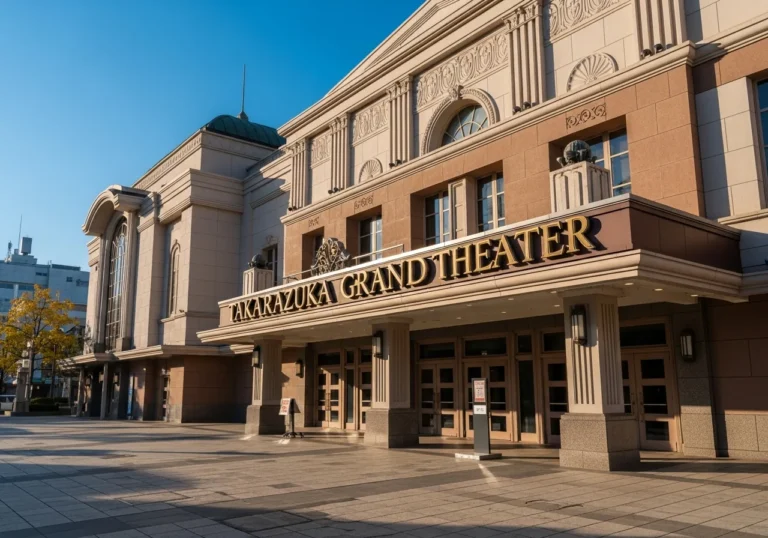
In 1913 he formed the Takarazuka Revue Company, an all-female theater group that gained an international reputation. Although its contribution to the railway company’s profits was minimal, it provided invaluable publicity.
The Takarazuka Revue — still performing today, still drawing audiences from across Japan and beyond — was, at its inception, a marketing device. Kobayashi had repurposed an indoor swimming pool at the Takarazuka spa into a theatre.
The first performance by the Takarazuka Girls Revue took place in 1914, in a theatre that had been converted from the indoor swimming pool. The railway created the audience; the audience justified the railway.
It was a closed loop of demand generation that no competitor had yet imagined.
Why Did the War Begin in 1920?
For the first decade of Hankyu’s existence, the two companies were not direct competitors. Hankyu ran north into the hills; Hanshin ran west along the coast.
The collision was always coming, but it arrived formally on July 16, 1920. Hankyu’s emergence in the field of transportation between Osaka and Kobe triggered a severe rivalry in competition with Hanshin Electric Railway, which was already operating urban commuter trains between Osaka and Kobe.
In 1920, the operation between Juso Station on the Kobe Line and Kobe Station started.
The strategic logic was clear. In 1917, Kobayashi changed the name of his company to Hanshin Kyuko Railway Company — “Hanshin Express” — which came to be known simply as Hankyu from the 1920s.
The name itself was a declaration of intent: Kobayashi was positioning his company as the faster, more modern alternative on the Osaka-Kobe corridor. The name “Hankyu” — combining the characters for Osaka (Han) and Express (kyu) — was a direct challenge to Hanshin’s established identity.
The two lines were built on fundamentally different philosophies. The Hanshin Main Line, with 39 stations, is noted for its “high density” of stations.
In comparison, Kobe-Sannomiya Station is the 16th station on the Hankyu Kobe Main Line from Umeda Station. Hanshin’s “Curve Company” model — many stops, cheap fares, high frequency — served the dense coastal communities that already existed.
Hankyu’s inland route, by contrast, was designed for speed and for communities that Hankyu itself would build. The Kobe Main Line was designed as a faster electric mainline railway, and in response Hanshin began upgrading its interurban mainline to become more railway-like.
Operations included realigning and grade-separating street-running portions, using high platforms, and introducing express trains.
The competition immediately forced both companies to improve. This is the first great paradox of the railway war: the rivalry that seemed destructive was, in fact, the engine of modernisation for the entire corridor.
Why Did the War Become Personal — and Sometimes Dirty?
Corporate competition in early twentieth-century Japan was not conducted purely through timetables and fare schedules. The rivalry between Hankyu and Hanshin spilled into territory that, by any measure, qualifies as sabotage.
The most notorious episode involved the Nishinomiya Ebisu Festival. Nishinomiya Shrine, located in Nishinomiya City, is the headquarters of Ebisu Shrine, and a large number of worshippers flock during the three-day Toka Ebisu period around January 10 every year. Naturally, during this period every year, Hanshin Nishinomiya Station, the closest station to the shrine, was crowded with worshippers.
Hankyu, taking note of this, deliberately created a temporary station and attracted worshippers through extensive publicity, intending to share in the demand. However, on the night of January 9, the first day of the event, a power outage suddenly occurred in the Hankyu temporary station area, and passengers using Hankyu had to endure the inconvenience of heading to the shrine in pitch-black darkness. The truth about this is that Hanshin, displeased with Hankyu’s attempts to steal its customers, mobilised electric companies under its influence and deliberately cut off electricity to Hankyu’s temporary station area.
The electricity sabotage story — widely cited in Japanese railway history — captures the texture of the rivalry at its most raw. These were not merely competing timetables; they were competing visions of the same territory, and the companies fought for passengers with the intensity of feudal lords disputing a border.
The war was also fought through culture and aspiration. In the coming years, the intense rivalry between the two companies would become famous, with both Hanshin and Hankyu setting up their own competing department stores and baseball teams.
Hankyu built its department store at Umeda in 1929. In April 1929, Hankyu Department Store was born as the world’s first railway terminal department store.
At the time, many Japanese department stores originated as kimono shops, and there were no examples of railway companies operating department stores directly, even outside Japan. With two basement floors and eight above-ground floors, this department store was by far the largest at the time, attracting attention from across the country.
In 1929, Hankyu built Asia’s first railway terminus department store, Hankyu Department Store, at Hankyu Umeda Station. The store proved an instant profit generator, and many other railway operating companies quickly adopted the same business model.
Hanshin responded with its own department store at Umeda, directly opposite. The two buildings still face each other today — a physical monument to a century of commercial antagonism — though they now share a corporate parent.
Then came the baseball teams. In 1936, Hankyu established a professional baseball team, and in 1937 the Nishinomiya Stadium as the team’s home field was completed near Nishinomiya-Kitaguchi Station.
The Hankyu Braves played until the 1988 season and became the predecessors of the present-day Orix Buffaloes. Hanshin had already established the Tigers, who play to this day at Koshien Stadium — a Hanshin-owned venue — and every year, the Hanshin Tigers draw around 3 million spectators.
The Tigers are not merely a sports franchise; they are the emotional identity of working-class Osaka, and Hanshin built that identity deliberately, as a counterweight to Hankyu’s more aspirational, middle-class brand.
Why Did the Competition Produce an Entire Cultural Movement?
The railway war’s most lasting consequence was not commercial but civilisational. The corridor between Osaka and Kobe, energised by competing rail companies each trying to make their suburban territory more desirable than the other’s, became the incubator for one of the most distinctive cultural movements in modern Japanese history.
Hanshinkan Modernism was a modernist arts, culture, and lifestyle movement that developed from the region centred primarily on the Hanshinkan conurbation between Osaka and Kobe, the ideally terraced area between the Rokkō Range and the sea — covering Kobe’s Nada and Higashi Nada wards, Ashiya, Takarazuka, Nishinomiya, Itami, Amagasaki, Sanda, and Kawanishi — from the 1900s through the 1930s.
Hanshinkan Modernism emerged during the Taishō era (1912–1926), a period marked by Japan’s post-World War I economic surge that transformed the Hanshinkan region between Osaka and Kobe into a vibrant hub of cultural innovation. This economic expansion, driven by industrial growth and international trade, facilitated the importation of Western ideas and goods. Key precursors to the movement included the arrival of Western architectural and artistic influences via Kobe, Japan’s primary port for international exchange since the Meiji Restoration.
The railways were not passive conduits for this culture — they were its architects. Hankyu’s housing estates in Ikeda, Toyonaka, and Nishinomiya established the physical template: detached houses with gardens, Western-inflected interiors, proximity to schools and parks.
Hankyu Corporation presented itself as a cultural authority for middle-class families in a wide range of enterprises, including the construction of suburban estates. By revisiting its publicity material, including a monthly magazine and housing catalogues, we can trace the complex process through which Hankyu narratively visualised and materialised an image of suburban life in its housing designs.
The literary record of this world is Junichirō Tanizaki’s The Makioka Sisters, set in Ashiya — a town served by both Hankyu and Hanshin — and depicting the refined, slightly anxious life of a merchant family navigating modernity in the 1930s. Ashiya has been the setting for numerous novels, including Sasameyuki (“The Makioka Sisters”) by Junichirō Tanizaki. The novel’s world — the department store excursions, the cherry-blossom viewing trips, the careful calibration of social status through neighbourhood — is inseparable from the railway infrastructure that made it possible.
Accompanying the suburbanisation of the Osaka Bay area, which continued to grow after 1923 in contrast to the Tokyo Bay area where the spread of urbanisation was temporarily suspended due to the Great Kantō earthquake, the Hanshinkan Modernism cultural sphere spread to Ikeda, Minoh, and Toyonaka in Osaka Prefecture, and to Kobe’s Suma and Tarumi wards. The 1923 earthquake that devastated Tokyo was, paradoxically, a gift to the Osaka-Kobe corridor: capital, talent, and cultural energy flowed west, and the railways were ready to absorb them.
Why Did the War Survive the Twentieth Century?
The Second World War interrupted but did not end the rivalry. Wartime consolidation orders forced Hankyu to absorb the Keihan Electric Railway in 1943, creating a briefly unified Keihanshin Kyuko Railway — but the postwar occupation reversed this, and by 1949 the companies were separated again.
The present structure of the Hankyu network with the three main lines was fixed by this transaction. Hanshin, meanwhile, retained its independence and its coastal corridor.
The postwar decades brought a new kind of competition: the mass-transit age. Both companies invested heavily in capacity.
In the railway business, both Hankyu and Hanshin had completed their programmes to increase capacity and now focused on improving convenience. Hankyu extended its reach, opening through-running services to the Osaka Municipal Subway Sakaisuji Line in 1969, pulling suburban passengers deeper into the city without a transfer.
Hanshin pursued its own network extensions.
Then, on January 17, 1995, the ground moved.
At 5:46 am on January 17, 1995, the Great Hanshin Earthquake devastated the Hanshin area. Hankyu and Hanshin suffered severe damage in the disaster.
Its estimated death toll of 6,400 made it the worst earthquake to hit Japan since the Tokyo-Yokohama earthquake of 1923. The quake’s devastation included 40,000 injured, more than 300,000 homeless residents, and in excess of 240,000 damaged homes.
The railway damage was catastrophic. The Kobe Line of Hankyu between Nishinomiya Kitaguchi and Sannomiya (17 km) and Hanshin Electric Railway between Aoki and Motomachi (10 km) were interrupted. With only 30 percent of Osaka-Kobe tracks functional, railways as well as roads were largely inoperable.
The response was remarkable. Both companies worked day and night to restore damaged railways and stations.
Thanks to the willingness of municipal officials, construction teams, and local residents to support nighttime works, both companies were able to open all railways and fully restart operations. The Kobe Line, Itami Line, and the Imazu-kita Line, among others, were seriously damaged by the Great Hanshin Awaji Earthquake that occurred on January 17, 1995, but nearly all the lines were restored by June 12 of the same year.
The earthquake was a trauma that the two companies endured in parallel, each rebuilding its own corridor. But the disaster also revealed a structural vulnerability: two competing companies serving overlapping territory, each carrying the full cost of reconstruction alone. The argument for consolidation, which had always been present in the background, grew louder after 1995.
Why Did a Tokyo Hedge Fund End a Century of Competition?
The final act of the railway war was not decided on a platform or in a fare-setting meeting. It was decided in a Tokyo courtroom and on a stock exchange terminal.
By the mid-2000s, Japan’s corporate landscape was being disrupted by a new generation of activist investors who argued that old-economy conglomerates were sitting on undervalued assets. The Murakami Fund, MAC Asset Management, worth 444 billion yen at the time of its manager’s arrest, bought stakes in companies sitting on large piles of cash, pressing them to raise dividends or use their funds in aggressive investments. The fund’s targets included railway operators Hankyu Holdings and Hanshin Electric Railway and the Osaka Securities Exchange.
The crisis came to a head in 2006. The Murakami Fund had been under media scrutiny for accumulating a 47 percent stake in major Japanese railroad company Hanshin Electric Railway. Last week, a rival railroad, Hankyu Holdings, offered to buy out Hanshin, apparently in reaction to fears that Hanshin would get taken over by Murakami.
The fund recently had been under media scrutiny for accumulating a 47 percent stake in major Japanese railroad company Hanshin Electric Railway. A rival railroad, Hankyu Holdings, offered to buy out Hanshin, apparently in reaction to fears that Hanshin would get taken over by Murakami. — Washington Post, June 2006
The irony was exquisite. For a century, Hankyu and Hanshin had fought each other with every tool available — fare wars, sabotaged power supplies, competing department stores, rival baseball teams. Now Hankyu was riding to Hanshin’s rescue, not out of affection, but because the alternative — a hostile takeover by a financial raider who had no interest in the suburban communities both companies had spent a century building — was worse than merger with a known enemy.
On October 1, 2006, Hankyu Holdings became the wholly owning parent company of Hanshin Electric Railway, and the holdings were renamed Hankyu Hanshin Holdings. The merger was driven by the need to strengthen competitiveness amid intensifying rivalry from other transportation providers and to capitalise on synergies along their overlapping Osaka-Kobe rail routes, particularly in urban transportation and real estate development. These motivations arose in a challenging economic landscape marked by declining population growth and an aging society.
Murakami himself was arrested for insider trading in June 2006, in a separate but related scandal involving Livedoor and Nippon Broadcasting System. Murakami’s arrest caused ripples in Japan’s markets and establishment.
Investors in his fund included Bank of Japan Governor Toshihiko Fukui before he took over at the central bank. The activist era that had forced the merger ended in disgrace — but the merger itself stood.
Why Does the Kobayashi Model Still Matter to the World?
The business model that Kobayashi invented in Ikeda in 1910 — build the railway, develop the land, open the department store at the terminus, manufacture the leisure destination — is now the template for transit-oriented development globally. It is studied in urban planning schools from London to Singapore. It is the reason Tokyo Disneyland sits at the end of a Keisei Railway line, and the reason every major Japanese private railway company owns hotels, department stores, and baseball teams.
Kobayashi first built suburban housing, then a department store at the terminal station; he then created a hot spring resort, a zoo, and his own distinctive brand of all-women musical theatre, the Takarazuka Revue. He also began to run bus services to and from his stations. Other companies emulated Hankyu’s example: Tokyo Disneyland is a collaboration between Disney and the Keisei Railway, while Hanshin in Osaka owns the Hanshin Tigers baseball team.
The Works in Progress analysis of Japanese railway economics puts it plainly: because this system was so successful, Japan never felt a strong need to nationalise or consolidate urban railways. The cities grew organically around competing private lines — and they still operate that way today.
The competition between Hankyu and Hanshin was not a market failure. It was a market success of a particular and rare kind: two companies competing so intensely for the same passengers that they each built an entire world — housing, culture, retail, sport — to justify the choice. The suburbs of northern and western Osaka are the physical proof of what happens when private capital has a genuine incentive to make a place worth living in.
Why Should a Discerning Traveller Care?
The standard tourist itinerary treats Osaka as a food city and a gateway to Kyoto. Both things are true and both things are insufficient. What Osaka actually is — the reason it feels different from Tokyo in ways that go beyond dialect and cuisine — is a city whose spatial logic was written by private railway competition rather than by state planning.
Tokyo’s suburban rail network was shaped partly by government policy and partly by the geography of a city that expanded in all directions from a single imperial centre. Osaka’s network was shaped by two companies fighting over a specific corridor, each trying to make their side of the tracks more desirable than the other’s.
The result is a city with two distinct suburban personalities: the Hankyu corridor, running inland through Toyonaka, Ikeda, and Takarazuka, tends toward the aspirational and the leafy — the legacy of Kobayashi’s deliberate cultivation of middle-class taste. The Hanshin corridor, running along the coast through Amagasaki, Nishinomiya, and Koshien, tends toward the denser, more working-class, more intensely local — the legacy of a company that built its identity around cheap fares and a baseball team.
These are not stereotypes. They are the sediment of a century of deliberate brand-building by two corporations that understood, before the term existed, that place-making was a competitive advantage.
Hankyu Corporation presented itself as a cultural authority for middle-class families in a wide range of enterprises, including the construction of suburban estates. By revisiting its publicity material, including a monthly magazine and housing catalogues, we can trace the complex process through which Hankyu narratively visualised and materialised an image of suburban life in its housing designs.
When you ride the Hankyu Kobe Line today — the maroon trains, the wide seats, the elevated track cutting through Nishinomiya and Ashiya — you are riding through a landscape that was invented. The hills behind Ashiya, the quiet residential streets of Okamoto, the campus-like feel of Nishinomiya-Kitaguchi: none of this existed as a suburb before Kobayashi’s railway made it accessible and his housing division made it desirable.
The city of Ashiya is known for its upscale residential neighbourhoods. The Hanshinkan Modernism movement, which originated here, is visible in Western-style architecture from that era.
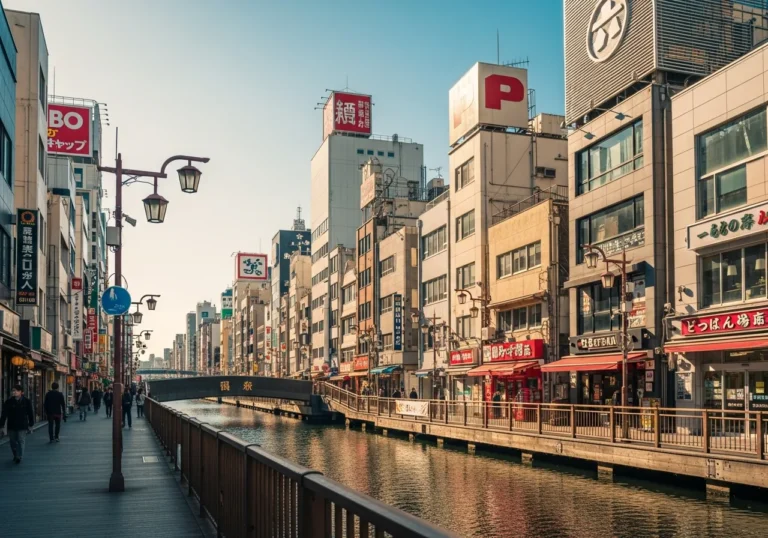
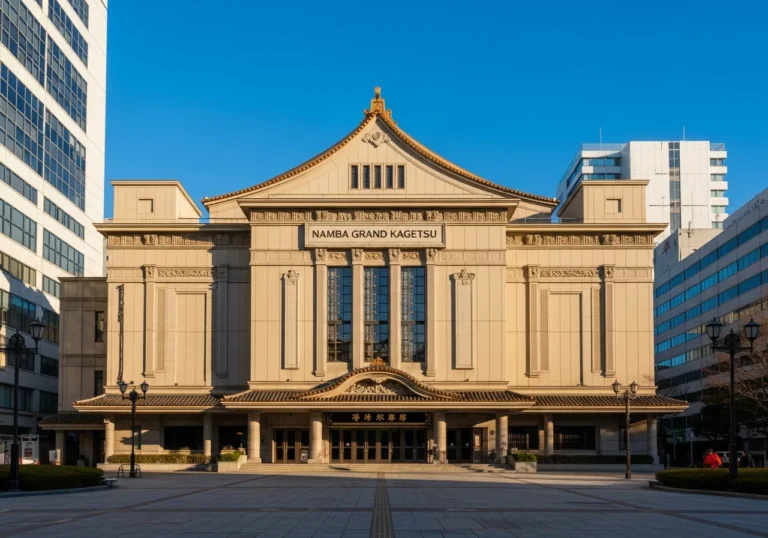
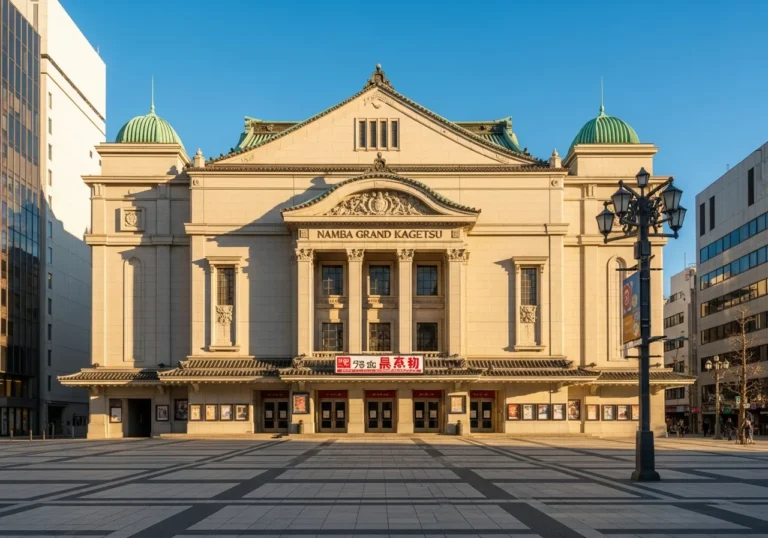
When you ride the Hanshin Main Line — the yellow-banded trains, the dense station spacing, the coastal route through Koshien — you are riding through a different kind of invention: the working city, the stadium crowd, the Friday-night crowd heading to Namba via the Namba Line extension that finally opened in 2009, a century after the original line. The section between Nishikujō and Ōsaka-Namba is the newest line of Hanshin, that opened on March 20, 2009. Even in the twenty-first century, Hanshin was still extending its reach, still competing — now against JR West and the Kintetsu network rather than against Hankyu.
The merger of 2006 ended the formal war. But the two companies still operate separately, still maintain separate ticketing, separate rolling stock, separate brand identities.
If you have a commuter pass between Hankyu Umeda Station and Hankyu Kobe-Sannomiya Station, you can use it between Hanshin Umeda Station and Hanshin Kobe-Sannomiya Station, or vice versa — a small, practical concession to the merger that would have been unthinkable in 1950. But the trains themselves remain distinct.
The maroon and the yellow still run their separate routes, still serve their separate communities, still carry the DNA of a competition that built a city.
The Osaka Umeda Twin Towers — the paired skyscrapers that now rise above the merged company’s terminal — are the most visible symbol of what the war produced. Begun in October 2014, this large project symbolises the merger between Hankyu and Hanshin in 2006.
The construction was completed in February 2022. The Hankyu Hanshin Holdings Group has conceived its Umeda Vision, a concept to enhance the value of the Osaka-Umeda area, the largest transportation node in western Japan and the Group’s largest business base, with the aim of making the area more internationally competitive and a hub of international exchange.
The traveller who understands this history does not see Umeda as a confusing tangle of competing stations. They see it as the terminal moraine of a century-long glacier — the accumulated deposit of two companies’ ambition, rivalry, and, ultimately, reluctant union.
Every department store, every baseball stadium, every quiet residential street in Ashiya or Ikeda or Toyonaka is a layer of that deposit. The railway war built the suburbs.
The suburbs built the city. The city is still being built.
Frequently Asked Questions
Q: Are Hankyu and Hanshin now the same company?
A: They share a holding company — Hankyu Hanshin Holdings, formed in 2006 — but operate as separate railway subsidiaries with distinct branding, rolling stock, ticketing, and route networks. You still buy separate tickets for each.
Q: Which line should I take from Osaka to Kobe?
A: It depends on your destination and preference. Hankyu is faster and runs inland through upscale residential areas; Hanshin is cheaper, runs more frequently, and follows the coast with more stops.
JR West is fastest of all but more expensive. For the experience of the rivalry’s legacy, ride both on the same day.
Q: Can I visit the Ikeda-Muromachi area, Japan’s first suburban housing estate?
A: Yes. Ikeda is on the Hankyu Takarazuka Line, about 30 minutes from Umeda. The Muromachi district retains some of its original character, and Ikeda is also home to the Instant Ramen Museum, where Momofuku Ando invented instant noodles in 1958 — another product of the suburban culture Kobayashi’s railway created.
Q: What is Hanshinkan Modernism and where can I see it?
A: Hanshinkan Modernism was the cultural movement — architecture, literature, lifestyle — that flourished in the Osaka-Kobe corridor between roughly 1910 and 1940, driven by the suburbanisation that the railways enabled. Ashiya and Nishinomiya retain the most visible examples: Western-style houses from the interwar period, the Tanizaki Memorial Museum in Ashiya, and the general atmosphere of a suburb that was designed to be aspirational.
Q: Is the Takarazuka Revue still performing?
A: Yes. The Takarazuka Revue, founded by Kobayashi in 1913 as a marketing tool for his railway, continues to perform at the Grand Theatre in Takarazuka, accessible on the Hankyu Takarazuka Line. It remains one of Japan’s most distinctive performing arts institutions.
Osaka-Umeda Station (Hankyu & Hanshin) — Visitor Information
Address: 1-1-4 Shibata, Kita-ku, Osaka 530-0012 / 大阪府大阪市北区芝田1丁目1-4(阪急大阪梅田駅)
Nearest station: Osaka-Umeda Station (Hankyu) and Osaka-Umeda Station (Hanshin) are adjacent to JR Osaka Station — all within 5 minutes’ walk of each other. The Hankyu and Hanshin terminals are approximately 100 metres apart on the same city block.
Hours: Both stations operate daily; first trains from approximately 5:00 am, last trains after midnight. Station concourses are accessible during operating hours.
Admission: Free to enter the station concourse; train fares apply for travel. Confirm current fares on the official sites.
Official sites: hankyu.co.jp/en (Hankyu) · hanshin.co.jp/global/en (Hanshin)