Last updated: July 3, 2026
This article reflects information available at the time of writing. Check Google Maps for the latest hours and availability.
Introduction
Sakai doesn’t get the tourist traffic of Namba or Shinsaibashi, and that’s exactly why its yakiniku scene is worth the detour. This is a working city — Japan’s historic blade-making capital, home to some of the country’s finest craftsmen — and its restaurants feed people who actually live here. That means fewer tourist markups, more honest cooking, and the kind of regulars who will absolutely judge you if you over-sauce the wagyu.
Yakiniku has deep roots in the Osaka south. Yakiniku actually originated in Japan, created by Korean residents who, in the post-war food shortage era, started food stalls selling grilled offal that had previously been discarded. That horumon tradition is alive and well in Sakai, where offal cuts sit alongside premium wagyu on most menus — and where a ¥3,000 dinner can be just as memorable as a ¥10,000 one. If you want to understand the best food in Osaka, you need to get out of the city centre and eat where locals eat.
This guide covers five yakiniku spots across Sakai — from the Tabelog-ranked crowd favourite in Nakamozu to a legendary eight-seat horumon counter in Otori that doesn’t take new reservations. Some require planning. All are worth it. Ready to explore more of Sakai? Start here.
1. Hibino-tei Nakamozu (炭火焼肉ひびの亭 中百舌鳥店)
- 📍 2-1-1 Nakamozu-cho, Kita-ku, Sakai, Osaka 591-8023
- 🕐 Lunch 11:30–15:00 / Dinner 17:00–23:00 (as of May 2026)
- 💰 ¥3,000–¥5,000 (food only) / ¥4,500–¥7,000 (with drinks)
- 🚃 Nakamozu Station (2 min walk)
- 🗺 Open in Google Maps
- 📋 Tabelog
- 🌐 Official site
What to order: Yakiniku no Tamatebako set (¥9,350 for two) / Wagyu yukke (¥880)
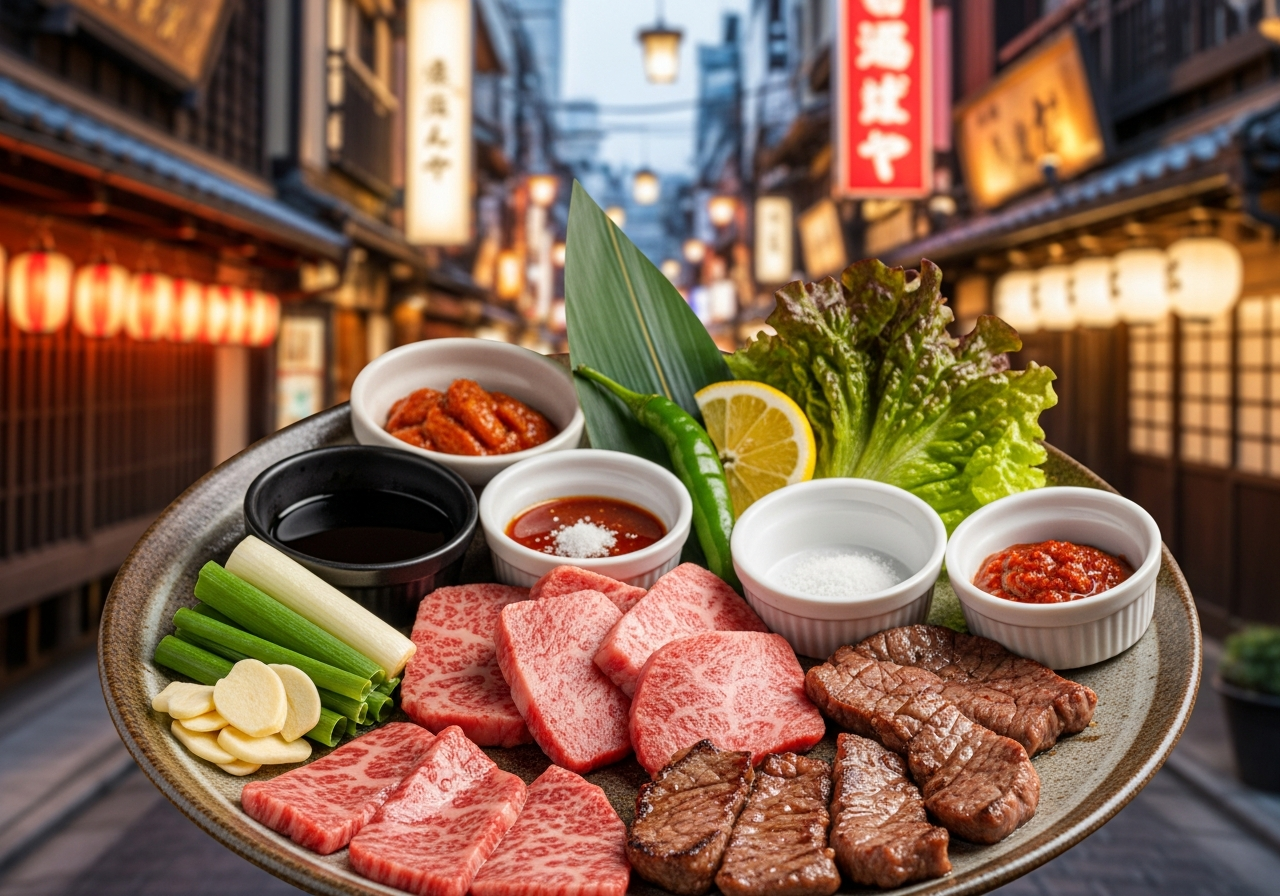
Hibino-tei holds the top spot in Sakai’s yakiniku rankings across multiple platforms, and the reason is straightforward: Kagoshima black wagyu, grilled over charcoal in individual shichirin tabletop braziers. The showpiece is the Tamatebako — a lacquered box that arrives at the table billowing with dry-ice smoke, revealing thick-cut tongue, kalbi, rosu, harami, and sudare-yaki inside. It’s theatrical, yes, but the meat backs it up. Book ahead; this place fills every night.
2. Yakiniku Manki (焼肉 萬輝)
- 📍 1-3-5 Nakamozu-cho, Kita-ku, Sakai, Osaka 591-8023
- 🕐 Lunch 11:30–14:30 / Dinner 17:00–22:30; closed Wednesdays (as of May 2026)
- 💰 ¥3,500–¥6,000 (food only) / ¥5,000–¥8,000 (with drinks)
- 🚃 Nakamozu Station (5 min walk)
- 🗺 Open in Google Maps
- 📋 Tabelog
- 🌐 Official site
What to order: Tokujo rosu (premium sirloin, ¥1,200) / Tokujo missuji (rare shoulder cut, market price)
Manki is a go-to for thick-cut salt tongue and quality horumon in Sakai’s Kita-ku. The tokujo rosu — well-marbled, tender, with a clean sweetness — is the menu’s anchor, and the missuji (a rare shoulder cut yielding only a small amount per animal) is the thing regulars order first. Lunch sets here are a genuine bargain: a tokujo yakiniku teishoku with rice and soup for well under ¥2,000. The iPad ordering system keeps things moving even when it’s packed.
3. Namamorumon Osamuchan (生ホルモン処おさむちゃん。)
- 📍 8-33-4 Otorikita-cho, Nishi-ku, Sakai, Osaka 593-8324
- 🕐 Dinner only, from 18:00; closed irregularly — call ahead (as of May 2026)
- 💰 ¥6,000–¥9,000 (food only, omakase-style)
- 🚃 Otori Station (15–20 min walk)
- 🗺 Open in Google Maps
- 📋 Tabelog
What to order: Omakase course (¥6,000–¥9,000 depending on cuts available)
Osamuchan has been a Tabelog Bronze winner and a Yakiniku West Best 100 selection every year from 2019 through 2024. Eight seats. No new reservations — the counter runs on regulars and word of mouth. The owner’s two-and-a-half-hour performance — part cooking, part stand-up — is the whole point of coming. The horumon is fresh, the cuts are rare, and the yukke made from hiwuchi (a prized inner thigh cut) with egg yolk is the kind of thing people drive across Osaka for. Getting a seat requires persistence and local connections. If you manage it, don’t be late.
4. Marufuku Honten (丸福本店)
- 📍 1-2-15 Sakaihigashi-cho, Sakai-ku, Sakai, Osaka 590-0077
- 🕐 17:00–23:00; closed Mondays (as of May 2026)
- 💰 ¥3,000–¥5,000 (food only) / ¥4,500–¥7,000 (with drinks)
- 🚃 Sakaihigashi Station (8 min walk)
- 🗺 Open in Google Maps
- 📋 Tabelog
What to order: Thick-cut tongue (¥1,100) / Grilled liver (¥880) / Harami (¥1,200)
Marufuku Honten is a long-running Sakai institution, with the grilled liver, thick-cut tongue, and harami drawing yakiniku regulars who know their cuts. The room is old-school — low lighting, smoke-seasoned walls, the kind of place where the staff remember what you ordered last time. Prices are honest and portions are generous. This is the spot for a no-fuss weeknight dinner that punches well above its price point.
5. Koshitei (腰亭)
- 📍 1-chome, Sakai-ku, Sakai, Osaka (near Nankai Sakai Station south exit)
- 🕐 17:30–23:00; closed Sundays (as of May 2026)
- 💰 ¥3,500–¥6,000 (food only) / ¥5,000–¥8,000 (with drinks)
- 🚃 Sakai Station (3 min walk)
- 🗺 Open in Google Maps
- 📋 Tabelog
What to order: Salt tongue (¥1,050) / House konnyaku side (¥400)
Koshitei is a well-loved, longstanding yakiniku restaurant near Nankai Sakai Station, known for its distinctive atmosphere — and for the konnyaku served alongside the yakiniku, a house specialty. The salted tongue is particularly good. It’s a compact room with a loyal neighbourhood crowd, and the MICHI Osaka travel guide recommends it specifically for solo diners or couples who want a quieter, more intimate yakiniku experience than the larger Nakamozu spots offer. No frills, no theatre — just well-sourced meat and a room that feels like it belongs to the people who eat there every week.
How to Order
Most yakiniku restaurants in Sakai use a table grill — either a gas burner or a charcoal shichirin — and you cook the meat yourself. Staff will usually light the grill and bring cuts in the order you request them. A few things to know:
- Order light cuts first. Start with salt tongue or lean cuts before moving to heavily marbled wagyu or horumon. Fat from earlier cuts will smoke up the grill and affect the flavour of delicate meat.
- Don’t press the meat. Pressing squeezes out the juices. Lay it flat, leave it alone, flip once.
- Horumon needs high heat. Offal cuts like mino (tripe) and tecchan (large intestine) should be cooked quickly over high heat — not slow-grilled. Ask staff if you’re unsure.
- Tare vs. shio. Most cuts come with a choice of tare (sweet soy-based sauce) or shio (salt). For premium wagyu, go shio — it lets the fat speak. Tare works better on kalbi and horumon.
- Reservations. Hibino-tei and Manki accept online reservations via Tabelog or HotPepper. Osamuchan does not take new reservations — you’ll need to go in person or have a regular introduce you. Marufuku and Koshitei accept phone reservations.
- Lunch is underrated. Hibino-tei and Manki both run lunch sets from around ¥1,000–¥1,500 — a fraction of dinner prices for the same kitchen.
FAQ
Q: Is yakiniku in Sakai expensive?
A: Less than central Osaka, generally. Expect ¥3,000–¥5,000 per person for a solid dinner with a drink or two at most spots on this list. Premium courses at Hibino-tei or Osamuchan can reach ¥8,000–¥10,000, but that’s the ceiling, not the norm. Lunch sets at Hibino-tei and Manki run ¥1,000–¥1,500.
Q: Do yakiniku shops in Sakai have English menus?
A: Rarely. Hibino-tei has some English on its website and may have picture menus at the table. For the others, a photo menu or Google Translate pointed at the menu board will get you through. Staff at most spots are used to non-Japanese speakers pointing and nodding.
Q: When is the best time to visit?
A: Weekday evenings are your best bet — Sakai’s yakiniku spots fill up fast on Friday and Saturday nights, especially Hibino-tei. Lunch is the quietest window and the best value. If you’re targeting Osamuchan, there’s no “best time” — getting a seat is the challenge regardless of day.
Information is accurate as of May 2026. We recommend checking Google Maps for the latest hours and prices before visiting.