Last updated: July 3, 2026
This article reflects information available at the time of writing. Check Google Maps for the latest hours and availability.
Introduction
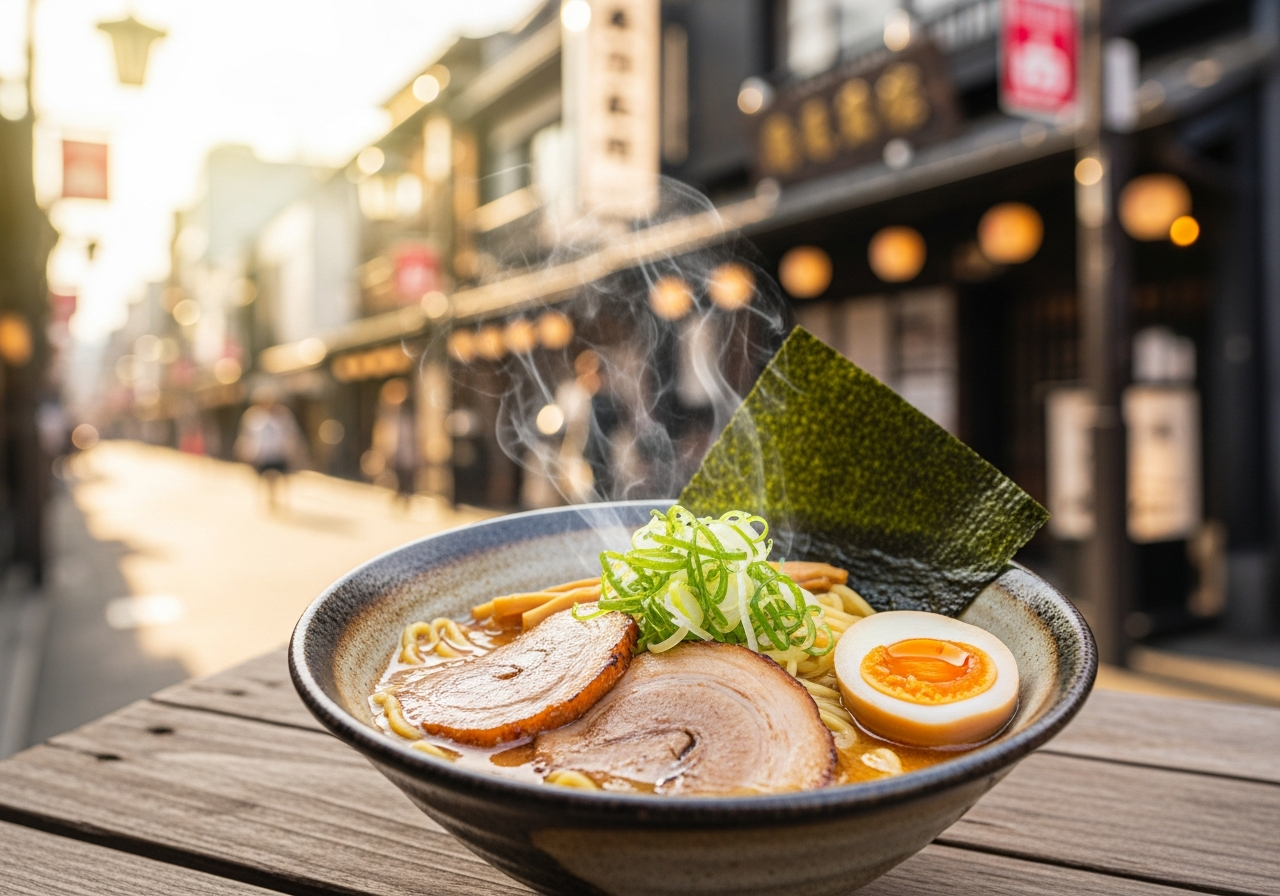
Sakai doesn’t get the ramen headlines that Namba or Fukushima do, but that’s precisely why it’s worth your time. This is a working city — Japan’s third-largest by area, home to knife-makers, textile mills, and a population that eats seriously and without pretension. The ramen scene here reflects that: fewer tourist traps, more obsessive craft, and prices that won’t make you wince. If you want to eat the best food in Osaka without fighting through Dotonbori crowds, Sakai is a legitimate answer.
The city’s ramen identity is genuinely diverse. The Nakamozu area, straddling the Osaka–Sakai border along the Midosuji subway line, has quietly become one of the most competitive ramen corridors in the south — salt-tonkotsu foam specialists, Jiro-style mashimashi shops, and tsukemen counters all within a few blocks of each other. Further south, the Otori and Tsukuno neighbourhoods carry their own loyal followings. And in 2024–2025, a wave of new openings — mazesoba specialists, gluten-free salt ramen, thick-cut chashu bowls — has refreshed the lineup considerably.
This guide covers eight shops across Sakai’s main ramen zones, from a tsukemen counter beloved by noodle nerds to a Jiro-inspired beast that’ll keep you full until tomorrow. Expect to spend ¥900–¥1,300 per bowl. Most shops use ticket vending machines. Queues form at peak lunch and dinner hours, especially on weekends. To explore more of Sakai beyond the bowl, the city’s historic Kofun burial mounds and the Sakai Traditional Crafts Museum are both walkable from several of these shops.
1. RYU-Gu Ryukishin (RYU-Gu 龍旗信)
- 📍 2-7-6 Ishizucho Nishi, Nishi-ku, Sakai-shi, Osaka 593-8322
- 🕐 Lunch: 11:00–15:00 / Dinner: 17:30–20:45 (LO) (as of May 2026)
- 💰 ¥1,000–¥1,600 (food only)
- 🚃 Ishizugawa Station (Nankai Koya Line) (5 min walk)
- 🗺 Open in Google Maps
- 📋 Tabelog
What to order: Shio Ramen (¥1,200) / Tsukemen (¥1,300)
The original Ryukishin honten — the shop that put Sakai salt ramen on the map and eventually spawned outposts in London and Paris — closed its doors about five years ago. This February 2025 revival at a new Sakai address is a genuine reinvention: every element, from the noodles to the seasoning, is completely gluten-free, using rice-flour noodles and a salt tare built around Kawachi duck and mussel extract. The result is lighter and cleaner than you’d expect from a bowl this complex, and the rice-flour noodles have a satisfying chew that converts sceptics. A rare find for coeliac travellers, and worth the trip even if gluten is no concern of yours.
2. Sakai Foam Shio-Tonkotsu Ramen Berasio Sohonten (堺 泡系しおとんこつラーメン べらしお 総本店)
- 📍 5-659-3 Nakamozu-cho, Kita-ku, Sakai-shi, Osaka 591-8023
- 🕐 11:00–24:00 (as of May 2026)
- 💰 ¥850–¥1,200 (food only)
- 🚃 Nakamozu Station (Osaka Metro Midosuji Line / Nankai Koya Line) (2 min walk)
- 🗺 Open in Google Maps
- 📋 Tabelog
What to order: Foam Shio-Tonkotsu Ramen (¥900)
Berasio’s signature move is a thick cap of aerated salt-tonkotsu foam that sits on top of the broth like a savoury cloud — it sounds gimmicky until you stir it in and the soup transforms into something creamy and rounded without turning heavy. The shop sits right next to Nakamozu Mashimashi (see below), making this stretch of Nakamozu-cho one of the more entertaining two-stop ramen crawls in the south of the city. Late-night hours until midnight make it a reliable post-work option.
3. G-Kei Ramen Nakamozu Mashimashi (G系ラーメン ナカモズマシマシ)
- 📍 5-659-1 Nakamozu-cho, Kita-ku, Sakai-shi, Osaka 591-8023
- 🕐 11:00–24:00 (LO 23:30), open year-round (as of May 2026)
- 💰 ¥980–¥1,200 (food only)
- 🚃 Nakamozu Station (Osaka Metro Midosuji Line / Nankai Koya Line) (1 min walk)
- 🗺 Open in Google Maps
- 📋 Tabelog
What to order: Garlic Mayo Mazesoba, 200g (¥980) — add extra vegetables and back fat
Nakamozu Mashimashi is Sakai’s answer to the Jiro-style ramen obsession: thick flat noodles you chew rather than slurp, a mountain of bean sprouts and cabbage, slabs of chashu, and a punchy sweet-soy tare. The garlic mayo mazesoba (brothless) is the move — the richness of the mayo cuts against the soy, and a squeeze of ponzu from the table keeps things from going too heavy. Ranked number one in Sakai on Google Maps for five consecutive months in 2024, and the queue at lunch backs that up. Counter seats only, seven of them, so expect a short wait on weekends.
4. Mensho Shioujin Otori Honten (麺匠 大阪らーめん しおじん 鳳本店)
- 📍 1-1-1 Otori Higashi-cho, Nishi-ku, Sakai-shi, Osaka 593-8325
- 🕐 11:00–15:00 / 18:00–22:00; closed Wednesdays (as of May 2026)
- 💰 ¥800–¥1,100 (food only)
- 🚃 Otori Station (JR Hanwa Line, east exit) (1 min walk)
- 🗺 Open in Google Maps
- 📋 Tabelog
What to order: Shio Ramen (¥850)
Shioujin’s stock-in-trade is a chicken-bone broth seasoned with Okinawa’s “Nuchimasu” salt — a mineral-dense sea salt that holds a Guinness record for mineral content — and the difference is perceptible: the soup has a clean, layered salinity that doesn’t fade into blandness the way lesser shio broths do. It ranked first in Sakai on Google Maps in 2024, and the location right outside Otori Station’s east exit means there’s no excuse not to stop. Straightforward, no-frills counter seating; the kind of shop that earns its reputation through consistency rather than spectacle.
5. Ramen New York × New York (ラーメン NewYork × NewYork)
- 📍 1-1-8 Otori Nishi-cho, Nishi-ku, Sakai-shi, Osaka 593-8326
- 🕐 11:30–15:00 / 18:00–22:00; closed Tuesdays (as of May 2026)
- 💰 ¥900–¥1,300 (food only)
- 🚃 Otori Station (JR Hanwa Line, west exit) (1 min walk)
- 🗺 Open in Google Maps
- 📋 Tabelog
What to order: Otori Black (¥950) / New York Salt (¥1,000)
The name is a bit of a red herring — there’s nothing particularly New York about the food, but the café-style interior and the unusually polished presentation set it apart from the utilitarian counters that dominate Sakai’s ramen scene. The Otori Black is the signature: a soy-based broth that looks darker and more intense than it tastes, with a clean, almost delicate finish and a generous rare chashu on top. The chicken paitan “New York Salt” is the richer option, creamy and satisfying without being cloying. Popular with families and couples who want a sit-down experience rather than a quick counter meal.
6. Menza Gin (麺座ぎん)
- 📍 1-1-15 Mikunigaoka Gyokohdori, Sakai-ku, Sakai-shi, Osaka 590-0028
- 🕐 11:30–14:30 / 18:00–21:30; closed Mondays (as of May 2026)
- 💰 ¥900–¥1,300 (food only)
- 🚃 Sakaihigashi Station (Nankai Koya Line) (5 min walk)
- 🗺 Open in Google Maps
- 📋 Tabelog
What to order: Tsukemen (¥1,050) / Mazesoba (¥1,000)
Menza Gin is the tsukemen specialist in the Sakaihigashi neighbourhood — thick, slightly sweet dipping broth, udon-width noodles with real backbone, and a chashu that’s been given proper attention. The mazesoba is a strong second option if you’re not in a tsukemen mood. Note: operating status should be confirmed via Google Maps before visiting, as recent third-party databases have flagged the shop as unverified — it has been reported open by visitors as recently as spring 2025, but hours can be irregular.
7. Jinrui Mina Mazesoba Sakaihigashi (人類みなまぜそば 堺東店)
- 📍 1-1-18 Ichjodori, Sakai-ku, Sakai-shi, Osaka 590-0955
- 🕐 Mon–Fri: 17:30–21:00 / Sat–Sun & Holidays: 11:00–14:30, 17:30–21:00; irregular closures — check Instagram (as of May 2026)
- 💰 ¥990–¥1,300 (food only)
- 🚃 Sakaihigashi Station (Nankai Koya Line) (10 min walk)
- 🗺 Open in Google Maps
- 📋 Tabelog
What to order: Jinrui Mina Mazesoba (¥990)
Opened in November 2024, this is the Sakai outpost of the popular “Jinrui Mina Menrui” brand, reimagined as a mazesoba-only counter. Eight seats, no frills, and a bowl that earns its queue: whole-wheat thick noodles coated in a soy-based tare, topped with thick-cut braised chashu, crunchy onion, chives, and house-made menma. The add-on soft-boiled egg (¥165) is worth it. Hours are limited on weekdays — dinner only Monday through Friday — so plan accordingly. Check their Instagram before visiting as they observe irregular days off.
8. Nikumen Hidamari-an (肉麺ひだまり庵)
- 📍 17-1 Mikuni-ga-oka Gyokohdori, Sakai-ku, Sakai-shi, Osaka 590-0028
- 🕐 Mon–Fri: 17:30–20:30 / Sat–Sun & Holidays: 11:00–14:00; irregular closures — check Instagram (as of May 2026)
- 💰 ¥1,000–¥1,400 (food only)
- 🚃 Mikunigaoka Station (Nankai Koya Line / JR Hanwa Line) (3 min walk)
- 🗺 Open in Google Maps
- 📋 Tabelog
What to order: Niku Niku Chuka Soba (¥1,200)
Opened in December 2024 as a spin-off of the well-regarded Hidamari-an brand, this shop is built around one idea: as much chashu as possible. The signature bowl arrives with four distinct cuts — pork loin, pork shoulder, chicken breast, and roast beef — stacked over a soy broth built from beef, pork, chicken, and dried fish, with oyster umami folded into the tare and a hit of black pepper and Sichuan peppercorn for lift. The noodles are medium-thick and straight, from a local Sakai noodle maker. Weekday dinner-only hours mean this one rewards planning, but the bowl justifies the effort. MICHI Osaka travel guide recommends pairing a visit here with the nearby Mikunigaoka area’s coffee shops for a full afternoon out.
How to Order
Most ramen shops in Sakai use a 券売機 (ticket vending machine) at the entrance. Buy your ticket before sitting down, then hand it to the staff when they come to you. Machines typically accept cash (¥1,000 notes and coins); some newer shops also accept IC cards or PayPay. If you’re unsure which button to press, look for the highest-priced option in the ¥900–¥1,200 range — that’s usually the signature bowl.
For Jiro-style shops like Nakamozu Mashimashi, you’ll be asked at the counter about your preferences: noodle quantity (並/nami = regular, 大/dai = large), and add-ons like garlic (ニンニク), vegetables (ヤサイ), and back fat (アブラ). If it’s your first time, just say “普通で” (futsuu de) — “regular, please” — and you’ll get a manageable bowl.
For tsukemen, the dipping broth is served hot and the noodles are served separately, either warm or cold. Dip a few strands at a time rather than dunking the whole portion. At the end, most shops will offer to thin the remaining broth with hot water (割りスープ/wari-supu) — say yes. It turns the concentrated dipping sauce into a clean soup to finish the meal.
Tipping is not practised in Japan. Eat, pay at the register or via the ticket machine, and say “ごちそうさまでした” (gochisosama deshita) on your way out — it’s the standard thank-you after a meal and always appreciated.
FAQ
Q: Is ramen in Sakai expensive?
A: No. Most bowls run ¥850–¥1,200. The pricier end (¥1,200–¥1,600) is reserved for specialty shops like RYU-Gu Ryukishin with premium ingredients. Budget ¥1,000–¥1,300 per person including a soft drink or beer where available, and you’ll be well fed.
Q: Do ramen shops in Sakai have English menus?
A: Rarely. Most shops in Sakai are local operations without English menus or English-speaking staff. That said, ticket vending machines with photo buttons make ordering manageable even without Japanese. Google Translate’s camera function works well on printed menus. The shops in this guide are all accessible to non-Japanese speakers with a little patience.
Q: When is the best time to visit?
A: Weekday lunches (11:30–13:00) and weekend evenings (18:30–20:00) are the busiest periods at most shops. For the shortest waits, aim for weekday evenings or late lunch (after 13:30). Nakamozu Mashimashi and Berasio both stay open until midnight, making them solid options if you’re arriving late. Shops with limited hours — Jinrui Mina Mazesoba and Nikumen Hidamari-an — are weekday dinner-only, so check before you go.
Q: How do I get to Sakai from central Osaka?
A: Nakamozu is the easiest entry point — it’s the southern terminus of the Osaka Metro Midosuji Line, about 20 minutes from Umeda or 15 minutes from Namba. For shops near Otori or Tsukuno, take the JR Hanwa Line from Tennoji (about 10–15 minutes). The Nankai Koya Line from Namba reaches Sakaihigashi and Mikunigaoka in around 20 minutes.
Information is accurate as of May 2026. We recommend checking Google Maps for the latest hours and prices before visiting.