Last updated: July 3, 2026
This article reflects information available at the time of writing. Check Google Maps for the latest hours and availability.
Introduction
Most visitors to Osaka never make it to Sakai. That’s their loss — and quietly, your gain. Just 25 minutes south of Namba on the Nankai Line, Sakai is one of Japan’s oldest port cities, a place that once traded with Ming Dynasty China and produced the finest blades in the country. It still does. The knife district around Sakai-Higashi Station is the real deal: workshops where third-generation craftsmen grind steel by hand, and shops where you can buy a chef’s knife that will outlast you.
But this guide is about eating. And Sakai, it turns out, has a food culture that’s completely its own — older, quieter, and less performative than Dotonbori. The city’s shokudo (casual canteen) tradition runs deep. So does its udon, its sushi, and its morning fish market. If you want to understand the best food in Osaka beyond the tourist circuit, Sakai is where you start looking.
This guide covers eight spots across the city — from a legendary rice-and-side-dish canteen that’s been feeding locals since the 1970s, to a sushi counter that’s been on Tabelog’s WEST 100 Best list for years. Come hungry, bring cash, and plan to spend a full day. To explore more of Sakai beyond the plate — the Nintoku Tomb, the knife workshops, the old merchant streets — the MICHI Osaka travel guide has you covered.
1. Geko-tei (銀シャリ屋 ゲコ亭)
- 📍 1-3-13 Ryogoku-cho, Sakai Ward, Sakai, Osaka 590-0941
- 🕐 Mon–Sat 11:30am–2:00pm (lunch only; closed when rice runs out) as of May 2026
- 💰 ¥700–¥1,200 (food only)
- 🚃 Shukunin Station (Hankai Tram), 5 min walk; or Sakai-Higashi Station, 10 min walk
- 🗺 Open in Google Maps
- 📋 Tabelog
What to order: Daily set with rice + 3 side dishes (¥850–¥1,000)
Geko-tei is Sakai’s most famous shokudo, and it earns the reputation honestly. You pick your sides from a glass case — braised fish, dashimaki tamago, simmered vegetables, whatever’s in that day — pile them onto a tray, and eat rice that the owner has been obsessing over for decades. The rice alone is worth the trip: short-grain, perfectly steamed, the kind that makes you understand why Japanese people talk about rice the way Italians talk about pasta. Get there before noon or you’ll be turned away.
2. Menku-i Yamachan (麺くい やまちゃん)
- 📍 1-1-6 Ichjomachi, Sakai Ward, Sakai, Osaka 590-0077
- 🕐 Mon–Fri 11:00am–2:30pm, 5:00pm–9:00pm; Sat 11:00am–3:00pm; closed Sun & public holidays as of May 2026
- 💰 ¥700–¥1,500 (food only)
- 🚃 Sakai-Higashi Station, 3 min walk
- 🗺 Open in Google Maps
- 📋 Tabelog
What to order: Curry udon (¥850); tori-ten curry udon set (¥1,100)
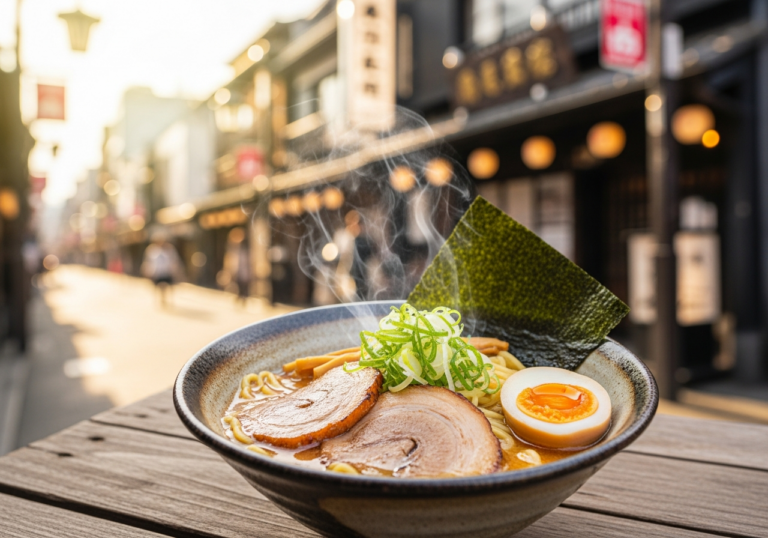
A Tabelog WEST 100 Best Udon selection for 2024, Yamachan has been running near Sakai-Higashi Station long enough to have regulars who’ve been coming since their school days. The curry udon is the move: thick, chewy noodles in a dashi-forward curry broth that’s more nuanced than it sounds, topped with crispy chicken tempura. The lunch set — udon, rice, and a small side — is one of the better deals in the city at around ¥1,100.
3. Maruhana Katsudon (丸花のカツ丼)
- 📍 Shopping arcade near Sakai-Higashi Station, Sakai Ward, Sakai, Osaka
- 🕐 Approx. 11:00am–3:00pm (closed when sold out); closed Wed as of May 2026
- 💰 ¥900–¥1,400 (food only)
- 🚃 Sakai-Higashi Station, 2 min walk
- 🗺 Open in Google Maps
- 📋 Tabelog
What to order: Katsudon (¥950); double katsudon (¥1,300)
Six counter seats, one item on the menu, and a National Donburi Grand Prix win to its name. Maruhana is the kind of place that only exists in cities where locals actually eat — a tiny counter tucked into a Showa-era shopping alley, serving nothing but katsudon and miso soup. The egg is silky and barely set, the pork cutlet is thick, and the rice-to-topping ratio is exactly right. Pay upfront, eat fast, and don’t expect a receipt.
4. Yayoi Sushi (弥助寿司)
- 📍 1-1-23 Shukuin-cho Nishi, Sakai Ward, Sakai, Osaka 590-0944
- 🕐 Tue–Sun 11:30am–2:00pm, 5:00pm–9:30pm; closed Mon as of May 2026
- 💰 ¥3,000–¥8,000 (lunch); ¥8,000–¥20,000 (dinner)
- 🚃 Shukunin Station (Hankai Tram), 2 min walk
- 🗺 Open in Google Maps
- 📋 Tabelog
What to order: Omakase nigiri course (¥5,000–¥8,000 at lunch)
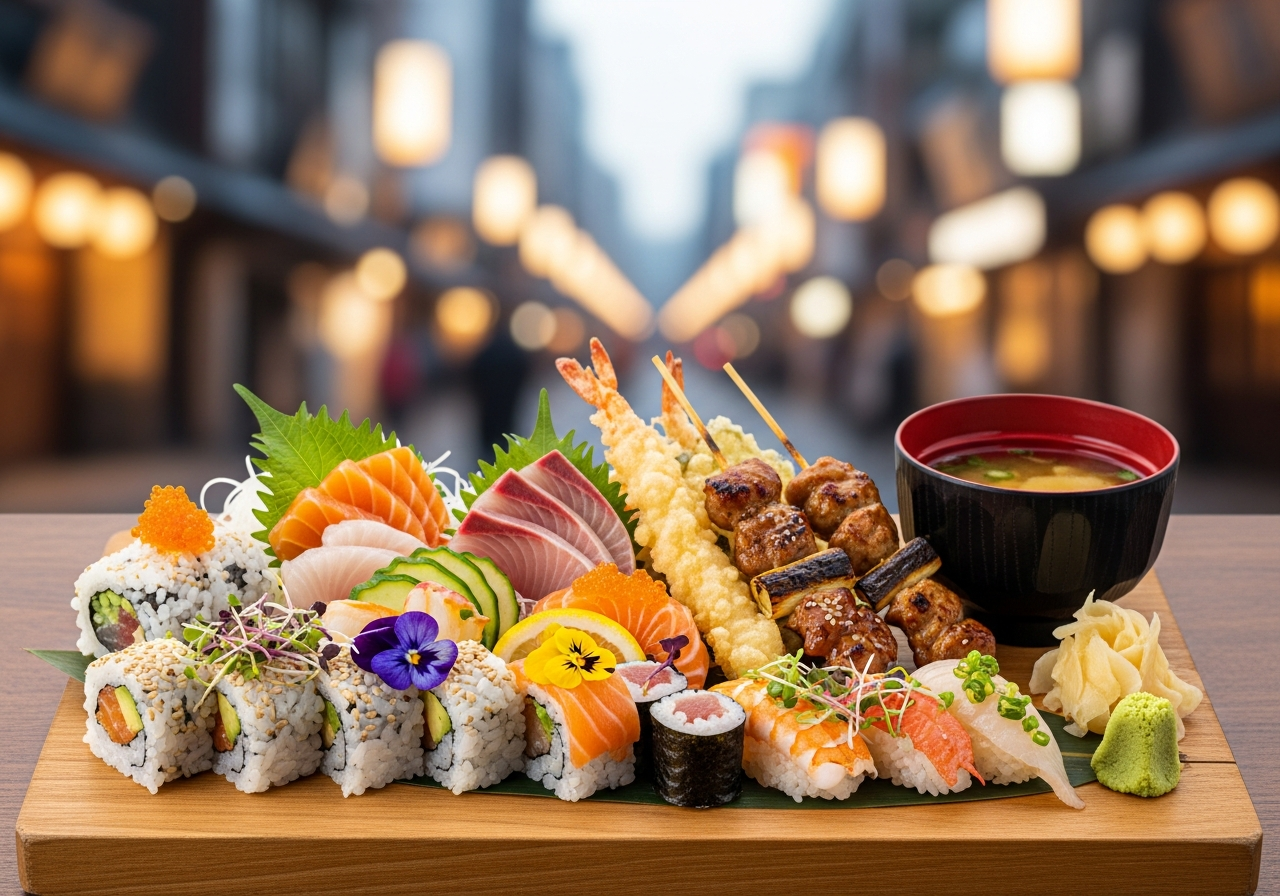
Yayoi is a four-generation sushi counter that has been on Tabelog’s WEST 100 Best Sushi list for years — and it’s the kind of place that makes you wonder why you ever queued in Dotonbori. The house style leans Edomae: fish cured with kombu, rice seasoned with restraint, nothing flashy. The lunch omakase is the entry point, and at around ¥5,000 for 12 pieces plus a small bowl, it’s serious value for the quality. Book ahead — this is not a walk-in situation.
5. Sakai Chuo Ichiba Tempura (堺中央市場 天ぷら)
- 📍 Sakai Chuo Ichiba (Central Market), Sakai Ward, Sakai, Osaka 590-0077
- 🕐 From 11:00pm (late-night/early-morning market hours); check current schedule as of May 2026
- 💰 ¥1,500–¥3,000 (food only)
- 🚃 Sakai Station (Nankai Line), 10 min walk
- 🗺 Open in Google Maps
- 📋 Tabelog
What to order: Assorted tempura set with sashimi (¥2,000–¥2,500)
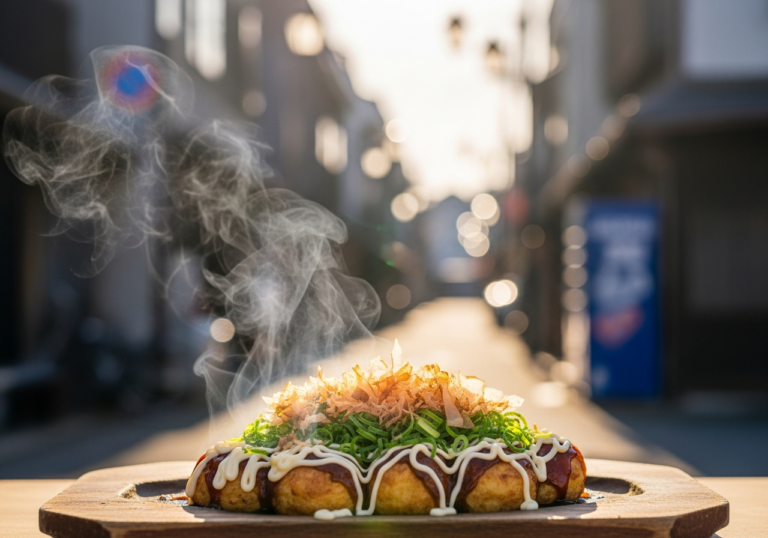
Sakai’s central wholesale fish market has a cluster of small restaurants inside that open late at night and run through the early morning — the kind of setup that exists to feed market workers, not tourists. The tempura counter inside is the standout: fish pulled from the market floor hours earlier, battered and fried to order, eaten at a counter while the market hums around you. It’s not glamorous. The clam soup is exceptional. Note that hours shift seasonally and the market atmosphere starts from around 11pm — this is a late-night or very-early-morning stop, not a dinner plan.
6. Dotou Zenya Udon (どとうぜにや)
- 📍 Dotou-cho, Naka Ward, Sakai, Osaka 599-8123
- 🕐 Tue–Sun 11:00am–3:00pm; closed Mon as of May 2026
- 💰 ¥700–¥1,200 (food only)
- 🚃 Dotozaka Station (Semboku Rapid Railway), 5 min walk
- 🗺 Open in Google Maps
- 📋 Tabelog
What to order: Kitsune udon (¥750); tempura udon (¥950)
A Tabelog WEST 100 Best Udon 2024 pick in Sakai’s Naka Ward, Dotou Zenya is the kind of udon shop that doesn’t need to advertise. The broth is a pale, clean dashi — the Kansai style that lets the kombu and bonito do the talking — and the noodles have the right amount of chew without going gummy. The kitsune udon, topped with a fat piece of sweetened aburaage, is the classic order. Lunch only, cash only, and the queue moves fast.
7. Tarui-ichi Yakiniku (焼肉亭 樽一)
- 📍 1-1-5 Minami-jima-cho, Sakai Ward, Sakai, Osaka 590-0904
- 🕐 Mon–Sat 5:00pm–11:00pm; Sun 4:00pm–10:00pm as of May 2026
- 💰 ¥3,000–¥6,000 (food only); ¥4,000–¥8,000 (with drinks)
- 🚃 Nanado Station (Hankai Tram), 5 min walk
- 🗺 Open in Google Maps
- 📋 Tabelog
What to order: Premium black wagyu kalbi (¥1,800–¥2,500 per plate); tongue salt (¥1,200)
Tarui-ichi is Sakai’s go-to for serious yakiniku — a 90-seat room that includes private booths, run by an owner who hand-selects A4 and A5 black wagyu cuts himself. The beef is the point: well-marbled, properly rested, and served with the kind of quiet confidence that doesn’t need a flashy fit-out to back it up. It’s a dinner spot, not a lunch one, and it fills up on weekends. Booking ahead is strongly recommended.
8. Sakai Knife Street and Tsubaichi Knife Shop Cafe (堺刃物ミュージアム周辺 刃物通り)
- 📍 Knife district around Sakai-Higashi Station, Sakai Ward, Sakai, Osaka
- 🕐 Most shops open 10:00am–5:00pm; closed varies by shop as of May 2026
- 💰 Coffee and light snacks ¥400–¥800
- 🚃 Sakai-Higashi Station, 5 min walk
- 🗺 Open in Google Maps
- 📋 Tabelog
What to order: Coffee and wagashi (Japanese sweets) at a knife-district cafe (¥500–¥700)
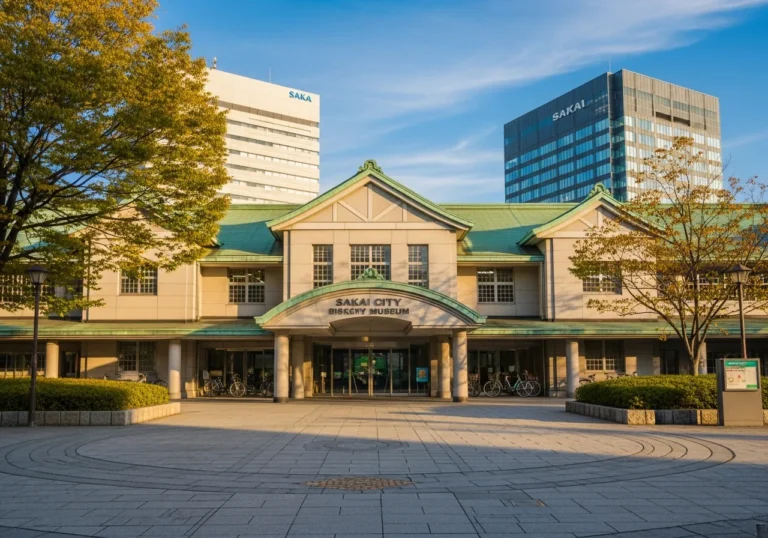
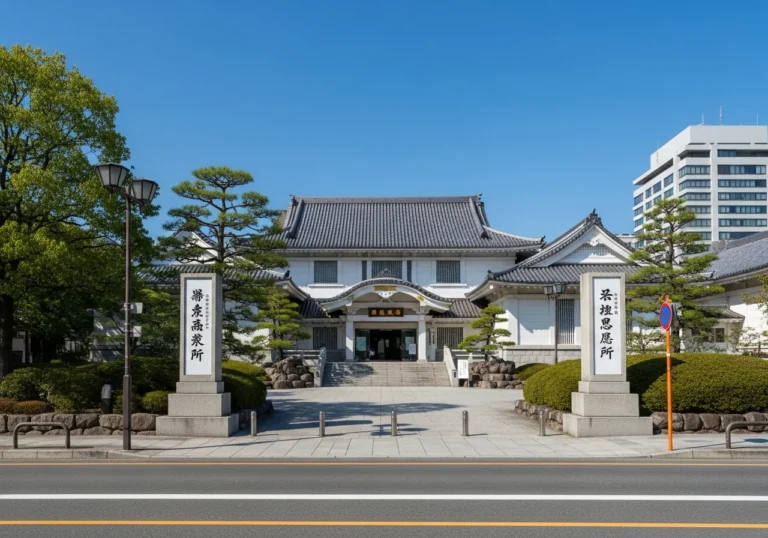
The knife district isn’t just for shopping — it’s the best place in Sakai to take a mid-afternoon break. Several of the workshops and showrooms along the main blade street have small attached cafes or rest areas where you can sit down with a coffee and a piece of wagashi while watching craftsmen work through the window. It’s not a restaurant stop, but after a morning of eating and walking, it’s exactly the kind of pause the day needs. The Sakai Knife Museum (Sakai Hamono Kaikan) nearby has a small cafe and is free to enter.
How to Order
Sakai’s food scene is built around lunch. Most of the best spots — Geko-tei, Yamachan, Maruhana, Dotou Zenya — are lunch-only or lunch-focused, and several close when they sell out. Arrive by 11:30am to avoid queues, especially on weekends. Cash is essential: the majority of Sakai’s independent restaurants and shokudo do not accept cards. Bring at least ¥5,000 in cash for a full day of eating.
For Yayoi Sushi, book at least a week in advance by phone (Japanese only) or via Tabelog’s reservation system. For Tarui-ichi yakiniku, same rule applies for weekend evenings. The fish market tempura counter requires no reservation but demands a late-night schedule — it’s not a conventional dinner stop.
English menus are rare in Sakai. Google Translate’s camera function handles most situations well enough. Point-and-order works at shokudo counters where the dishes are visible. Staff at most spots are used to the occasional confused visitor and will help you figure it out.
Getting around: the Hankai Tram (Hankai Tramway) is the most useful line for moving between Sakai’s eating spots. A day pass costs ¥600 and covers the full tram network. The Nankai Line connects Sakai Station to Namba in about 15 minutes.
FAQ
Q: Is eating in Sakai expensive?
A: Not at all, for most spots. Lunch at Geko-tei runs ¥850–¥1,000. Udon at Yamachan or Dotou Zenya is ¥750–¥1,100. Maruhana’s katsudon is ¥950. The exception is Yayoi Sushi, where lunch omakase starts around ¥5,000 and dinner goes well above ¥15,000. Budget ¥2,000–¥3,000 for a solid day of casual eating, more if you add sushi or yakiniku.
Q: Do restaurants in Sakai have English menus?
A: Rarely. Yayoi Sushi and Tarui-ichi may have some English signage, but most shokudo and udon shops operate in Japanese only. Use Google Translate’s camera mode, or simply point at what other diners are eating — it works. Staff are generally patient and helpful.
Q: When is the best time to visit Sakai for food?
A: Weekday lunchtimes are ideal. Most of the best spots are lunch-focused, and weekday crowds are lighter than weekends. Arrive at 11:30am to beat the rush at Geko-tei and Maruhana, both of which close when they sell out — sometimes by 1:00pm. If you’re planning a late-night fish market visit, aim for a Thursday or Friday when the market is busiest. Avoid national holidays, when many independent restaurants close.
Information is accurate as of May 2026. We recommend checking Google Maps for the latest hours and prices before visiting.