Last updated: July 3, 2026
This article reflects information available at the time of writing. Check Google Maps for the latest hours and availability.
Introduction
Most visitors to Osaka spend their wagashi budget in Namba or Shinsaibashi, picking up department-store confections wrapped in pretty paper. That’s fine. But if you want to understand what Japanese sweets actually mean — the history, the craft, the obsessive specificity of a single ingredient — you need to get on the Hankai tram and ride south to Sakai.
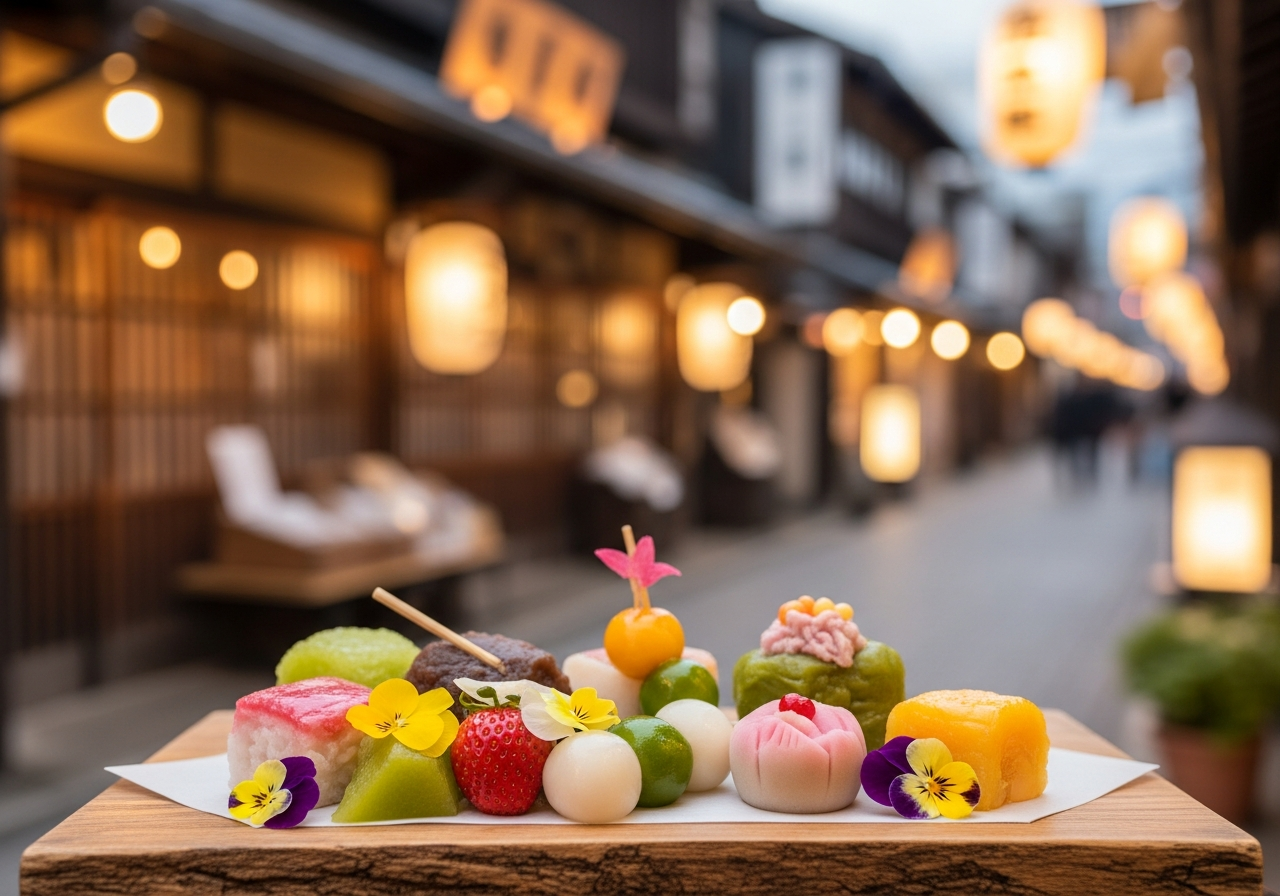
Sakai is the birthplace of Sen no Rikyu, the 16th-century tea master who codified the Japanese tea ceremony and, in doing so, shaped the entire aesthetic of wagashi. The city’s confectioners have been making sweets for tea gatherings for nearly five centuries. Some of the recipes haven’t changed. The flagship sweet here is keshi-mochi — soft mochi filled with smooth bean paste and rolled in poppy seeds — but you’ll also find nikki-mochi (cinnamon-scented mochi), kurumi-mochi (mochi in a sweet green soybean sauce), and seasonal nerikiri that change with the month. These aren’t novelty sweets. They’re the real thing, and they’re part of the best food in Osaka that most tourists never find.
This guide covers five traditional wagashi shops in Sakai — all currently operating, all worth the detour. Prices are low (most pieces run ¥200–¥350), crowds are minimal, and the experience of buying sweets from a shop that predates the Edo period is genuinely hard to replicate anywhere else. Ready to explore more of Sakai? Start here.
1. Honke Kojima (本家小嶋)
- 📍 1-1-2 Zaimokucho, Sakai-ku, Sakai, Osaka 590-0941
- 🕐 9:00–17:00 (closes early when sold out) as of May 2026
- 💰 Budget per person: ¥200–¥800 (food only)
- 🚃 Shukuin Station (Hankai Tram) — 3 min walk
- 🗺 Open in Google Maps
- 📋 Tabelog
- 🌐 Official site
What to order: Keshi-mochi (¥216 per piece)
The keshi-mochi here has been made for 480 years — smooth bean paste wrapped in soft mochi, then rolled in poppy seeds, a recipe that Sen no Rikyu himself is said to have favored. The Sakai Tourism Board lists Honke Kojima as a holder of the city’s official “excellent souvenir” designation, and the shop earns it: the poppy seeds give each piece a faint nuttiness and a gentle crunch that cuts through the sweetness cleanly. Go early — they sell out.
2. Yaohgen Raiko-do (八百源来弘堂)
- 📍 2-chome Kurumamachi-higashi, Sakai-ku, Sakai, Osaka
- 🕐 9:00–18:00 (closed Wednesdays) as of May 2026
- 💰 Budget per person: ¥200–¥600 (food only)
- 🚃 Hanadaguchi Station (Hankai Tram) — 3 min walk
- 🗺 Open in Google Maps
- 📋 Tabelog
What to order: Nikki-mochi — Cinnamon mochi (¥200)
Founded over 200 years ago, Yaohgen Raiko-do is known for its nikki-mochi, made with premium cinnamon that was once a rare and expensive import through Sakai’s trading port. The shop sits in a quiet residential street near Hanadaguchi tram stop, and the old building itself signals the history before you’ve even stepped inside. The nikki-mochi is small, pale, and unassuming — then the cinnamon hits, sharp and aromatic, nothing like the mild spice you’d expect. It’s been a MICHI Osaka travel guide favourite for good reason. Selected for the Tabelog Wagashi & Sweets WEST 100 Shops list in 2023.
3. Kojima-ya (小島屋)
- 📍 1-1-4 Shukuin-cho Nishi, Sakai-ku, Sakai, Osaka 590-0953
- 🕐 9:00–18:00 (closed Tuesdays) as of May 2026
- 💰 Budget per person: ¥200–¥900 (food only); ¥600–¥1,200 (with tea room)
- 🚃 Shukuin Station (Hankai Tram) — 1 min walk
- 🗺 Open in Google Maps
- 📋 Tabelog
- 🌐 Official site
What to order: Keshi-mochi, 6-piece box (¥882)
Kojima-ya sits right at the Shukuin tram crossing, and its keshi-mochi has a loyal following — the poppy-seed coating gives a satisfying texture against the thin, yielding mochi and the refined sweetness of the smooth bean paste inside. The shop has a second-floor tea room where you can sit down with a bowl of matcha and eat your keshi-mochi properly, which is worth the extra few minutes. Note: both Honke Kojima and Kojima-ya make keshi-mochi — they have a shared history and a friendly rivalry. Try both and decide for yourself.
4. Maruichi Kashiho (丸一菓子舗)
- 📍 Ichinocho, Sakai-ku, Sakai, Osaka
- 🕐 9:00–18:00 (closed Mondays) as of May 2026
- 💰 Budget per person: ¥300–¥800 (food only)
- 🚃 Sakai-Higashi Station (Nankai Koya Line) — 10 min walk
- 🗺 Open in Google Maps
- 📋 Tabelog
What to order: Kurumi-mochi (¥350) / Seasonal nerikiri (¥380)
Maruichi Kashiho has been operating for over 120 years, founded in 1895, and draws its creative philosophy from Sen no Rikyu’s tea aesthetics and Sakai’s blade-making tradition. Their kurumi-mochi — soft mochi dumplings in a sweet green soybean paste — was featured at Expo 2025 and is now also available in a canned travel-friendly version. The seasonal nerikiri changes monthly and is worth checking their Instagram before you visit to see what’s currently on offer.
5. Isshin-do (一心堂)
- 📍 1-chome Mikunigaoka, Nishi-ku, Sakai, Osaka
- 🕐 10:00–18:00 (closed Wednesdays) as of May 2026
- 💰 Budget per person: ¥300–¥900 (food only)
- 🚃 Mikunigaoka Station (Nankai Koya Line) — 5 min walk
- 🗺 Open in Google Maps
- 📋 Tabelog
What to order: Fruit daifuku — seasonal selection (¥338–¥540 per piece)
Isshin-do is Sakai’s go-to for fruit daifuku, with a rotating seasonal lineup that has earned it a strong local following. The concept is straightforward — whole fruit or large fruit pieces wrapped in smooth bean paste and thin mochi — but the execution is precise. A melon daifuku runs around ¥540 and uses high-grade Shizuoka melon; the strawberry version is the most popular and sells out fastest. This is a more contemporary style of wagashi than the other shops on this list, but the quality is serious and the queue moves fast.
How to Order
Most of these shops are takeaway-only or have very limited seating. Here’s what to know before you go.
Point and buy. You don’t need Japanese. Most shops have the sweets displayed in a glass case or on a counter. Point at what you want and hold up fingers for the quantity. The staff will box or bag them for you.
Bring cash. Several of these shops — particularly the older ones — are cash-only. ¥5,000 is more than enough for a full tasting run across all five shops.
Go early. Honke Kojima and Kojima-ya both close when they sell out, which can happen before noon on weekends. Aim to arrive by 10:00 if you want the full selection.
Eat same-day. Keshi-mochi and nikki-mochi are best within a few hours of purchase. The mochi firms up as it sits. If you’re buying as a souvenir, ask for a box — most shops pack them with a small ice pack or in a way that keeps them fresh for a day or two.
Seasonal items sell out. Nerikiri and fruit daifuku change monthly. If you see something you want, buy it immediately — there’s no guarantee it’ll still be there when you loop back.
FAQ
Q: Is wagashi in Sakai expensive?
A: No. Most individual pieces cost ¥200–¥400. A box of six keshi-mochi from Kojima-ya is ¥882. Even if you buy from all five shops on this list, you’re unlikely to spend more than ¥3,000 total. The tea room at Kojima-ya adds a matcha set for around ¥600–¥800.
Q: Do these shops have English menus?
A: Most don’t, but you don’t need one. The sweets are displayed visually, and pointing works fine. Maruichi Kashiho has some English-language information available for visitors, and their matcha-and-wagashi experience sessions are conducted with English support if booked in advance.
Q: When is the best time to visit?
A: Weekday mornings between 10:00 and 12:00 are ideal — full stock, no queues. Weekends get busier, especially at Honke Kojima and Kojima-ya. Spring (March–May) and autumn (September–November) bring the best seasonal nerikiri at Maruichi Kashiho. Avoid arriving after 15:00 if you want the full selection at any shop.
Q: How do I get to Sakai from central Osaka?
A: The Hankai tram (also called the “chin-chin densha”) runs from Tennoji and Ebisumachi south to Sakai. It’s slow, charming, and costs around ¥230. Alternatively, the Nankai Main Line from Namba reaches Sakai-Higashi in about 15 minutes for ¥310. Most of the shops in this guide cluster around the Shukuin and Hanadaguchi tram stops.
Information is accurate as of May 2026. We recommend checking Google Maps for the latest hours and prices before visiting.