Last updated: July 3, 2026
This article reflects information available at the time of writing. Check Google Maps for the latest hours and availability.
Introduction
Sakai doesn’t get the tourist traffic of Dotonbori or Namba, and that’s exactly why its udon scene is worth the detour. This is a working city — home to traditional craftspeople, old shotengai shopping streets, and a food culture that answers to locals, not guidebooks. The udon here reflects that: thick, handmade noodles, dashi built from scratch, and prices that rarely crack ¥1,500. No theatre, no gimmicks.
What makes Sakai’s udon distinct is the range of styles packed into a compact area. You’ll find fat, chewy noodles with a mochi-like bounce sitting alongside delicate thin-cut bowls served in crystal-clear Kansai dashi. The city also has a strong kasu udon tradition — a southern Osaka specialty using deep-fried beef offal that adds a rich, smoky depth to the broth. If you’re already exploring more of Sakai, the udon shops here are reason enough to extend your afternoon.
This guide covers four shops worth your time: one Tabelog Udon WEST Hyakumeiten (Top 100) pick, two more Hyakumeiten-listed spots, and a neighbourhood favourite that locals return to weekly. All four are currently operating as of May 2026. For a broader look at where to eat across the city, see the best food in Osaka.
1. Dotou Zeniya (どとうぜにや) — Hyakumeiten Pick
- 📍 Sakai City, Naka Ward, Toto-cho area, Osaka
- 🕐 Lunch: 11:00–14:00; Dinner: 17:30–21:00 (as of May 2026 — confirm before visiting)
- 💰 ¥1,000–¥1,999 per person (food only)
- 🚃 Daishoji Station (approx. 5 min walk)
- 🗺 Open in Google Maps
- 📋 Tabelog
What to order: Tori-ten Udon (¥1,100–¥1,300)
Dotou Zeniya holds a Tabelog score of 3.70 and was selected as a Tabelog Udon WEST Hyakumeiten 2024 shop — the highest-rated udon spot in Sakai by that measure. It sits in the quieter Naka Ward, away from the Sakai-Higashi station cluster, which means the crowd is almost entirely local. The noodles are thick, the dashi is serious, and the portions are the kind that make you reconsider ordering a side dish. Closed Mondays, Sundays, and public holidays — plan accordingly.
2. Sakai Udon Chihaya (堺うどん ちはや)
- 📍 1-4-13 Kita-Kawaramachi, Sakai Ward, Sakai City, Osaka (Teizan Building South 1F)
- 🕐 Lunch: 11:30–14:00; Dinner: 18:00–24:00 (as of May 2026)
- 💰 ¥900–¥1,500 per person (food only)
- 🚃 Sakai-Higashi Station (3 min walk)
- 🗺 Open in Google Maps
- 📋 Tabelog
What to order: Tori-ten Bukkake Udon — cold (¥900–¥1,100)
Chihaya is a Tabelog Udon WEST Hyakumeiten 2024 pick, three minutes from Sakai-Higashi station, known for its thick, chewy noodles and freshly fried chicken tempura. The fat noodles have a mochi-like bounce rather than the aggressive chew of Sanuki-style udon, and they cling well to the sweet-savoury soy-and-kelp dashi. The shop runs to just 16 seats — counter and a small raised tatami section — and any wait at lunch is usually down to noodle cooking time, not a queue out the door. The dinner service turns into something closer to an udon izakaya, worth knowing if you’re in the area after dark.
3. Menkui Yamachan (麺くいやまちゃん)
- 📍 Sakai Ward, Sakai City, Osaka (near Sakai-Higashi Station)
- 🕐 Lunch hours (confirm via Google Maps) (as of May 2026)
- 💰 ¥1,000–¥1,999 per person (food only)
- 🚃 Sakai-Higashi Station (approx. 5 min walk)
- 🗺 Open in Google Maps
- 📋 Tabelog
What to order: Kake Udon or daily special (¥800–¥1,200)
Menkui Yamachan is a Tabelog Udon WEST Hyakumeiten 2024 pick near Sakai-Higashi station, with a Tabelog score of 3.63 and a reputation as the area’s most reliable lunch counter. Counter seating only, which keeps things efficient and keeps the focus on the bowl in front of you. Regulars praise both the food and the service — a combination that’s rarer than it should be in a no-frills udon shop. Closed Tuesdays.
4. Hyakufuku (百福)
- 📍 Daishoji area, Sakai City, Osaka
- 🕐 Lunch: 11:30–14:00; Dinner: 18:00–22:00 (as of May 2026 — confirm before visiting)
- 💰 Lunch ¥800–¥1,360; Dinner ¥800–¥1,500
- 🚃 Daishoji Station, Hankai Tramway (3 min walk)
- 🗺 Open in Google Maps
- 📋 Tabelog
What to order: Zenbu Udon — “everything” bowl (¥1,360)
Hyakufuku sits near the Daishoji tram stop and serves thin, translucent noodles in a refined Kansai dashi built from bonito and kelp — a deliberate contrast to the thick-noodle shops that dominate the Sakai-Higashi end of town. The “zenbu” bowl piles on beef, prawn tempura, kitsune, kelp, and a raw egg — essentially the entire menu in one go. The shop runs to about 30 seats across counter, tables, and a raised tatami section, and it fills up fast on weekends. Dinner service also offers a small selection of odeng (fish cake stew), which pairs well with the dashi-forward cooking style here. Closed Mondays. If you’re using the MICHI Osaka travel guide to plan a full day in Sakai, Hyakufuku makes a natural dinner stop after the Daishoji area’s temples and craft workshops.
How to Order
All four shops take orders verbally at the counter or table — there are no ticket machines here. At Chihaya and Menkui Yamachan, you’ll be asked whether you want hot or cold (atsui or tsumetai / hiyashi), and at Chihaya you’ll also choose between thick noodles (futomen) and thin noodles (hosomen). Point at a neighbouring diner’s bowl if you’re unsure — it works every time.
Portion sizes are generous by default. If you want a double serving of noodles, ask for “ni-tama” (two portions) — at Chihaya this costs an extra ¥300. Most shops offer a small rice set at lunch (kayaku gohan or mini donburi) for an extra ¥200–¥400, which is worth it if you’re hungry.
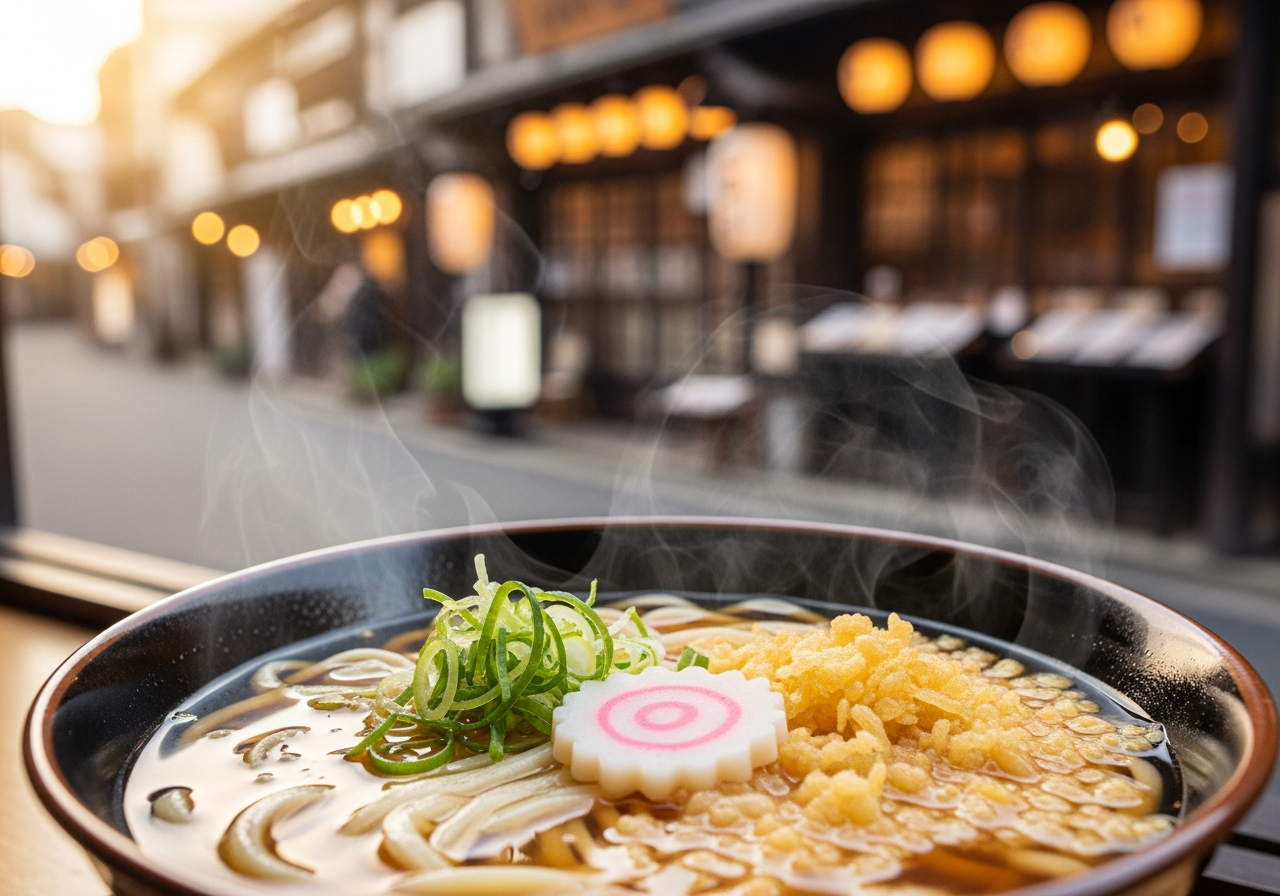
Toppings to know: tori-ten is chicken tempura, chikuwa-ten is fish cake tempura, kitsune is sweet simmered tofu skin, and kasu refers to deep-fried beef offal — a southern Osaka speciality that adds a smoky, fatty richness to the broth. If you see kasu on the menu, try it at least once.
Lunch hours are typically 11:30–14:00 and shops can sell out of noodles before closing time, especially on weekends. Arriving by 12:30 is safe; arriving at 13:45 is a gamble. Evening service, where available, runs from around 18:00.
FAQ
Q: Is udon in Sakai expensive?
A: No. Most bowls run ¥800–¥1,300. The “zenbu” (everything) bowl at Hyakufuku is ¥1,360 and is the priciest item you’re likely to encounter. Add a rice set and you’re still under ¥1,800 for a full lunch.
Q: Do these shops have English menus?
A: Unlikely at any of the four. That said, the menus are short and the dishes are straightforward — a photo menu or Google Translate pointed at the board will get you through. Pointing at what someone else is eating is universally understood.
Q: When is the best time to visit?
A: Weekday lunches between 11:30 and 12:15 are your best bet for a seat without waiting. Saturday lunch at Chihaya in particular fills quickly — the noodle cooking time creates a natural bottleneck even when there’s no formal queue. Avoid arriving in the last 30 minutes of lunch service; shops sometimes sell out early.
Information is accurate as of May 2026. We recommend checking Google Maps for the latest hours and prices before visiting.