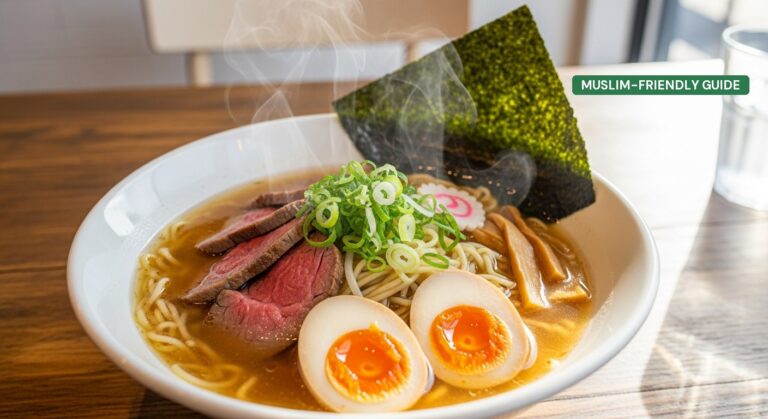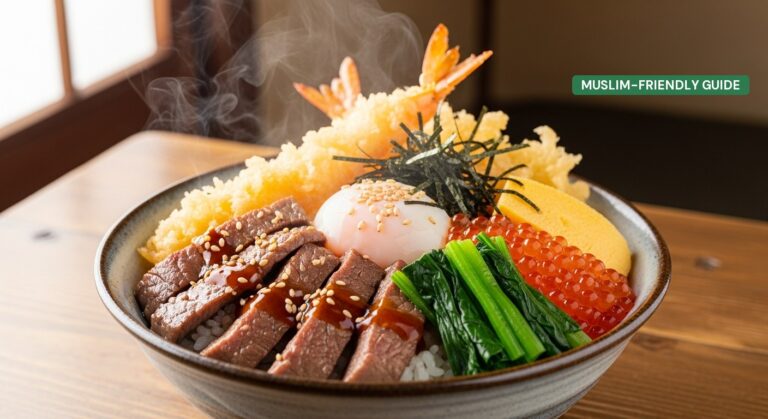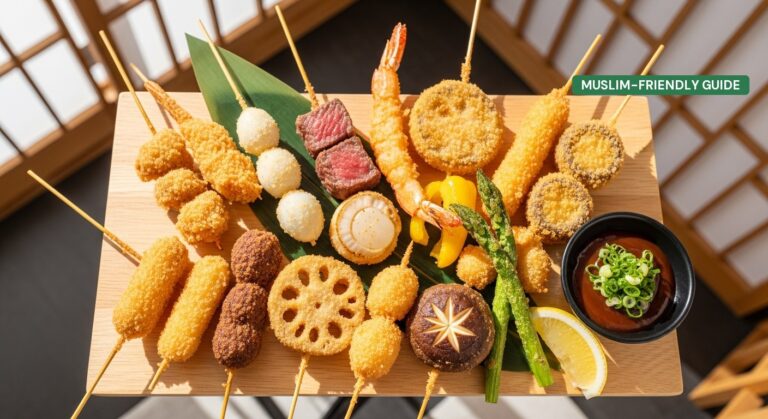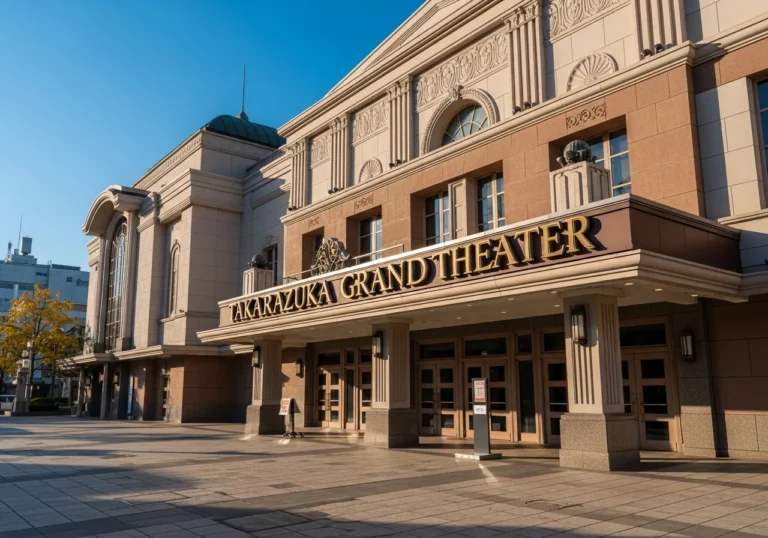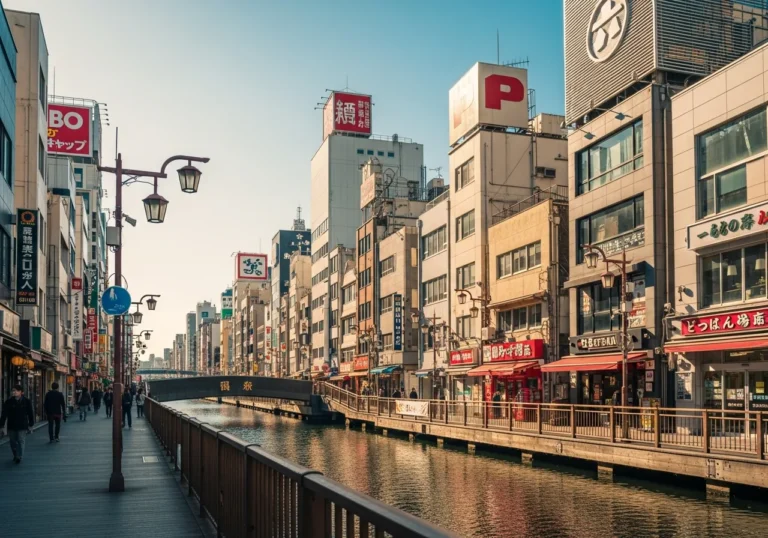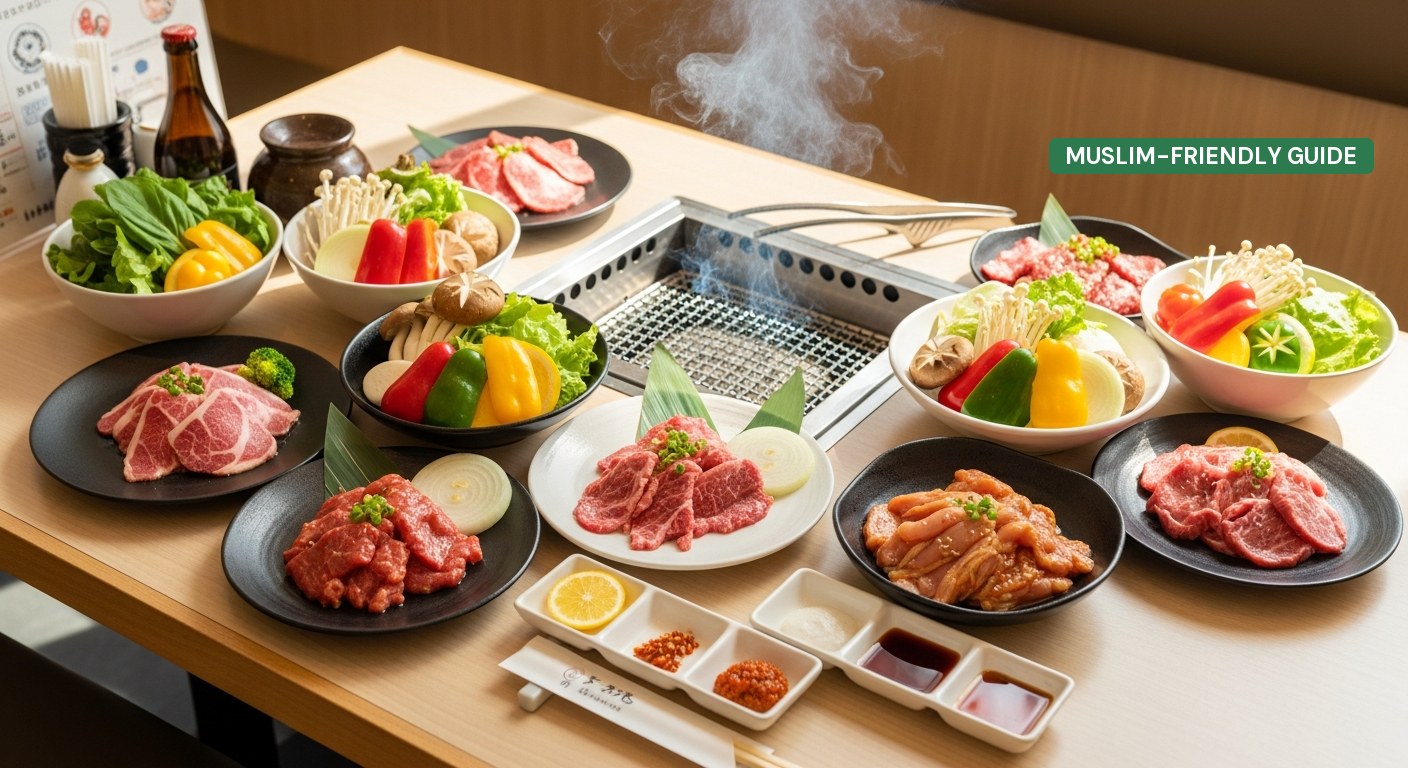
Looking for halal food in Osaka, Japan? Three verified halal yakiniku restaurants — from all-you-can-eat wagyu in Namba to premium A5 cuts in Shinsaibashi and Umeda — make Japanese BBQ genuinely accessible for Muslim diners. Each spot uses halal-certified or fully halal meat, and two have on-site prayer rooms. Check our Osaka halal guide for the full picture.
MICHI’s Pick — Selected by our Osaka-based team, based on places we’ve visited and on research using Tabelog and Google Maps ratings. In Japan, a Tabelog score of 3.4+ is genuinely high — Japanese reviewers are famously strict, and most locals consider anything above 3.4 a place worth a detour. We feature venues meeting at least one of: Tabelog 3.4+, Google Maps 4.3+, or 100+ reviews — the kind of spots locals quietly trust.
Tabelog and Google Maps scores are accurate as of the time of writing.
1. Halal Yakiniku Zerohachi Namba OCAT
Zerohachi at Namba OCAT is the go-to all-you-can-eat halal yakiniku spot for Muslims in Osaka, using all halal meat and halal ingredients — including halal wagyu beef.
- ☪️ Halal status: Muslim-friendly
- 🥩 Must-order: All-you-can-eat Black Course (¥4,000~)
- 📍 Access: JR Namba Station (1 min walk)
- 🕒 Hours: Lunch 11:30–16:00 / Dinner 17:00–22:00 (Closed: 3rd Wednesday)
- 📞 Reservation: Recommended
- 🧎 Prayer room: Available on-site
- 🍷 Alcohol served: Yes
- 🗣 English menu: Limited
- ⭐ Rating: Tabelog 3.05 / (as of writing)
- 🗺 View on Google Maps
- 🔗 Source: halalgourmet.jp
What to order: The halal Japanese Red Wagyu and Kobe Beef are the standout cuts, while the Black Course all-you-can-eat option spans up to 70 items including beef, chicken, lamb, and seafood. For solo diners or lighter appetites, the à la carte Zerohachi Set is a solid choice.
—
2. A5 Wagyu Yakiniku Osaka PANGA
Panga has been awarded halal certification in its effort to share Japanese wagyu with the world — its A5 beef is carefully raised for balanced flavor and smooth texture, selected from the top 4% of A5-grade cattle.
- ☪️ Halal status: halal-certified
- 🥩 Must-order: A5 Wagyu Pair Set 360g (¥14,000)
- 📍 Access: Shinsaibashi Station (2 min walk)
- 🕒 Hours: Dinner 17:00–23:30 (Closed: Tuesday)
- 📞 Reservation: Required
- 🧎 Prayer room: Available on-site
- 🍷 Alcohol served: No
- 🗣 English menu: Yes
- ⭐ Rating: Google 4.7 (500+ reviews) (as of writing)
- 🗺 View on Google Maps
- 🔗 Source: halalgourmet.jp
What to order: Panga uses halal-certified A5 wagyu beef with halal seasonings and sauces, is careful about cross-contamination, and uses separate utensils and grills for halal meals upon request. The sirloin and ribeye are the cuts that keep diners coming back — if you want to explore the best food in Osaka, this is one of the city’s most memorable halal dining experiences.
—
3. Halal Wagyu Gyukatsu Shinjuku-tei Osaka Umeda
Shinjukutei Osaka Umeda is a specialty restaurant in Umeda serving halal A5 wagyu steak and wagyu beef cutlets — no pork or alcohol used — with a Muslim-friendly kitchen and English menu for a safe, comfortable experience.
- ☪️ Halal status: halal-certified
- 🥩 Must-order: Wagyu Yakiniku Steak combo (¥6,000+tax)
- 📍 Access: Higashi-Umeda Station (1 min walk)
- 🕒 Hours: 12:00–21:00 (Open daily)
- 📞 Reservation: Recommended
- 🧎 Prayer room: Available on-site
- 🍷 Alcohol served: No
- 🗣 English menu: Yes
- ⭐ Rating: (1,500+ reviews) (as of writing)
- 🗺 View on Google Maps
- 🔗 Source: halalgourmet.jp
What to order: The Yokozuna Set (wagyu cutlet and meat sushi) and the Samurai Set (sizzling wagyu steak) are the signature draws, served in a clean, welcoming interior with a dedicated prayer space for Muslim diners. Conveniently located in Umeda, it’s an ideal stop if you’re exploring more of Osaka from the north side of the city.
—
Frequently Asked Questions
Q. Is it easy to find halal food in Osaka, Japan?
The number of restaurants where Muslim visitors can enjoy meals with peace of mind is increasing, with establishments that have obtained halal certification or offer Muslim-friendly services. Namba, Shinsaibashi, and Umeda are the three areas with the highest concentration of verified halal yakiniku options.
Q. What does “Muslim-friendly” mean in Japan?
In Japan, “Muslim-friendly” typically means a restaurant avoids pork and alcohol in its dishes but may not hold formal halal certification from a certifying body. It is a partial designation that proves a part of a facility or menu meets certain halal standards — some menu items are made in accordance with Islamic teachings, rather than the entire restaurant being certified. Always confirm the specific status with the restaurant before dining.
Q. Are there prayer rooms near halal restaurants in Osaka, Japan?
Zerohachi has a prayer room next to the store, exclusively available to customers of the OCAT dining floor. Osaka Panga in Shinsaibashi also has a prayer room available. Shinjukutei Umeda similarly provides a dedicated prayer space on-site, making all three restaurants in this guide prayer-friendly.
Q. What hidden ingredients should Muslim travelers watch out for in Japan?
The most common hidden concerns in Japanese cooking are mirin (a sweet rice wine used in sauces and marinades), sake (used in broths and glazes), and pork-derived dashi (stock). Even dishes that appear meat-free may contain these. At halal-certified restaurants like Panga and Shinjukutei, all sauces and seasonings are verified halal — but at Muslim-friendly venues, always ask specifically about cooking sauces and soup bases before ordering.
Last updated: July 3, 2026 · Corrections: [email protected]