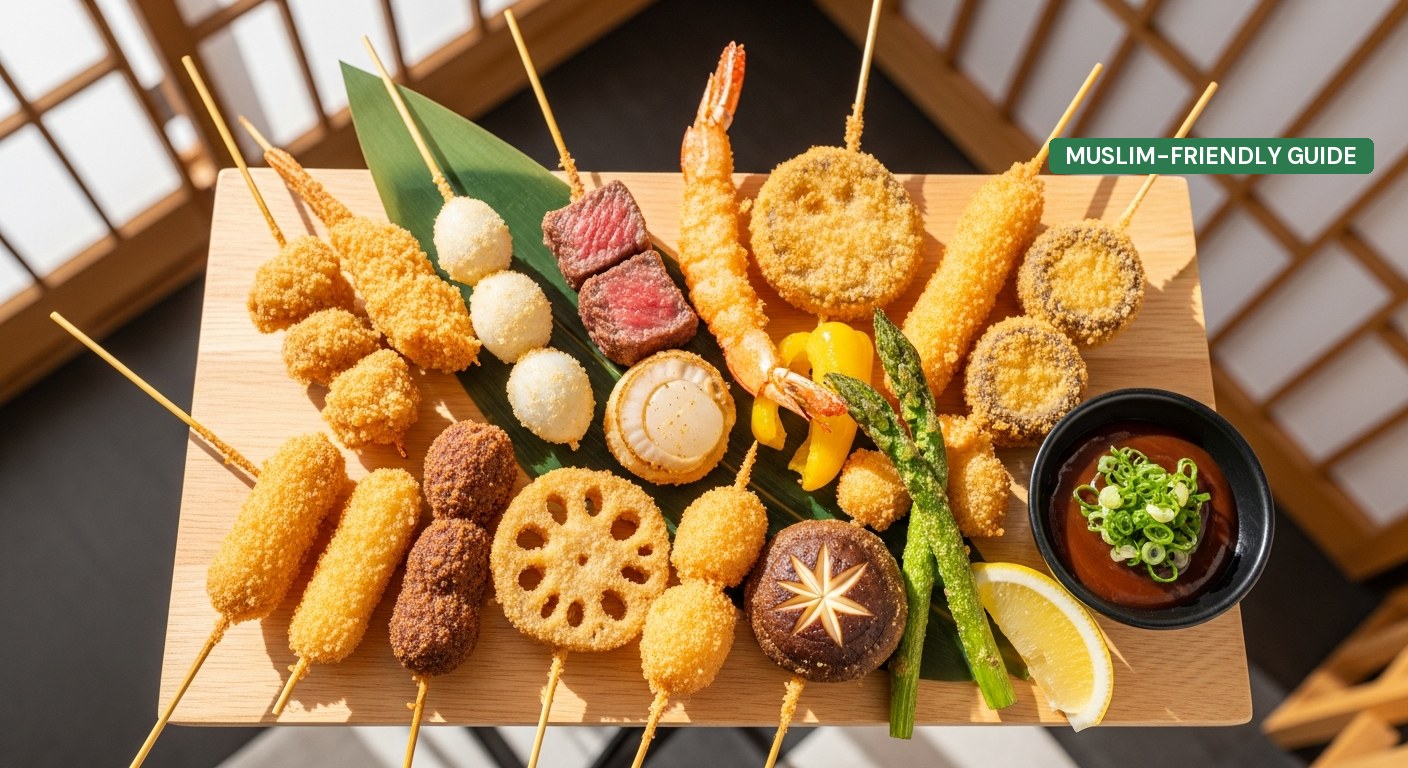
Looking for halal food in Osaka? Three verified spots serve pork-free kushikatsu — Osaka’s beloved deep-fried skewers — without compromising your dietary needs. From a dedicated halal-certified dining floor inside OCAT Mall to a long-running Muslim-friendly izakaya near Noda, options suit solo travelers, families, and groups. Check our Osaka halal guide for the full picture.
MICHI’s Pick — Selected by our Osaka-based team, based on places we’ve visited and on research using Tabelog and Google Maps ratings. In Japan, a Tabelog score of 3.4+ is genuinely high — Japanese reviewers are famously strict, and most locals consider anything above 3.4 a place worth a detour. We feature venues meeting at least one of: Tabelog 3.4+, Google Maps 4.3+, or 100+ reviews — the kind of spots locals quietly trust.
Tabelog and Google Maps scores are accurate as of the time of writing.
1. Asian Spicy Diner 585
Directly connected to JR Namba Station, Asian Spicy Diner 585 is the sister restaurant of Halal Yakiniku Zerohachi and Osaka’s most dedicated halal kushikatsu venue — alcohol-free, with Muslim staff on the floor.
- ☪️ Halal status: Muslim-friendly
- 🍢 Must-order: Halal kushikatsu set (¥2,000~)
- 📍 Access: JR Namba Station (1 min walk, inside OCAT Mall 5F)
- 🕒 Hours: Lunch 11:30–16:00 / Dinner 17:00–22:00 (Closed: 3rd Wednesday of the month, New Year’s Eve & New Year’s Day)
- 📞 Reservation: Recommended
- 🧎 Prayer room: Available on-site
- 🍷 Alcohol served: No
- 🗣 English menu: Yes
- 🗺 View on Google Maps
- 🔗 Source: halalgourmet.jp
What to order: Kushikatsu — deep-fried skewers of meat, fish, and vegetables dipped in sauce — is served here in a fully halal way, making it one of the only places in Osaka where Muslim diners can enjoy this Osaka classic without compromise. A prayer room equipped with a prayer mat and wudu space is available on-site, so you can eat and pray without leaving the building.
2. Three Peace Matsuri
Japanese Restaurant Matsuri is a Muslim-friendly Japanese restaurant located in Osaka that has been serving halal dishes for years, welcoming both Muslim tourists and Muslim residents of Japan.
- ☪️ Halal status: Muslim-friendly
- 🍢 Must-order: Kushikatsu set (¥800~)
- 📍 Access: Noda-Hanshin Station (1 min walk) / JR Noda Station (6 min walk)
- 🕒 Hours: Lunch 11:00–14:00 / Dinner 17:00–24:00 (Open daily)
- 📞 Reservation: Recommended
- 🧎 Prayer room: Available on-site
- 🍷 Alcohol served: Yes
- 🗣 English menu: Yes
- 🗺 View on Google Maps
- 🔗 Source: halalgourmet.jp
What to order: The kushikatsu here is a local specialty worth ordering as a main dish or as an appetizer alongside curry, yakiniku, or ramen. The menu is easy to read, with English explanations and a separate menu for vegans and vegetarians — making Matsuri one of the most accessible halal-friendly restaurants in Osaka for first-time visitors. Note that alcohol is served at this restaurant; Muslim diners should be aware of the shared dining environment. A complete wudu place and prayer space with prayer mat and prayer clothes are available inside the restaurant.
3. Halal Honolu Grande Shinsaibashi
Located in the heart of Shinsaibashi, Osaka, Honolu Grande Shinsaibashi is a rare and welcoming space where guests can enjoy authentic halal-certified Japanese cuisine with complete peace of mind.
- ☪️ Halal status: halal-certified
- 🍢 Must-order: Gyukatsu (deep-fried Wagyu beef cutlet) (¥2,500~)
- 📍 Access: Shinsaibashi Station (6 min walk)
- 🕒 Hours: 11:30–21:00 (Open daily)
- 📞 Reservation: Recommended
- 🧎 Prayer room: Available on-site
- 🍷 Alcohol served: No
- 🗣 English menu: Yes
- 🗺 View on Google Maps
- 🔗 Source: tourismuslim.com
What to order: The menu ranges from gyukatsu, steak sukiyaki, and shabu-shabu made with halal-certified A5-grade Kobe beef, to local Osaka specialties like takoyaki and okonomiyaki — all prepared in full accordance with halal standards. The gyukatsu — a panko-crumbed, deep-fried Wagyu beef cutlet — is the closest thing to kushikatsu on the menu and the dish most worth ordering. If you want to explore more of Osaka after your meal, Shinsaibashi’s covered shopping arcade is right outside the door. The restaurant features a dedicated prayer space and wudu facilities, with Muslim staff members on hand.
Frequently Asked Questions
Q. Is it easy to find halal food in Osaka?
Halal takoyaki or okonomiyaki are comparatively easy to find, but not kushikatsu — which makes the three restaurants above especially valuable. That said, Osaka’s halal dining scene has grown significantly, and dedicated halal-certified and Muslim-friendly restaurants now operate across Namba, Shinsaibashi, and Fukushima. For a broader overview, see the best food in Osaka for context on where halal options fit into the city’s wider food culture.
Q. What does “Muslim-friendly” mean in Japan?
In Japan, “Muslim-friendly” means a restaurant has removed pork and lard from its kitchen and made a deliberate effort to accommodate Muslim diners — but it does not necessarily hold a formal halal certification from a recognised Islamic body. Common halal restrictions include avoiding pork and its by-products, alcohol, blood, and animals not slaughtered in the name of Allah, as well as prohibiting cross-contamination with non-halal items. Always confirm the current status with staff on arrival, as practices can change.
Q. Are there prayer rooms near halal restaurants in Osaka?
All three restaurants in this article provide prayer facilities on-site. Asian Spicy Diner 585 has a prayer room equipped with a prayer mat and wudu space. Matsuri has a complete wudu place and prayer space with prayer mat and prayer clothes. Halal Honolu Grande Shinsaibashi features a dedicated prayer space and wudu facilities.
Q. What hidden ingredients should Muslim travelers watch out for in Japan?
Takoyaki sauce, batter dashi, and bonito-flake toppings commonly contain mirin (sweet rice wine), alcohol-fermented soy sauce, and non-certified fish stock. Kushikatsu sauce at conventional restaurants is also typically shared (double-dipping is forbidden by house rules, but the sauce itself may contain mirin or alcohol). At the restaurants listed above, sauces are specifically prepared to be halal-compliant — but always ask staff to confirm before ordering.
Last updated: July 9, 2026 · Corrections: [email protected]