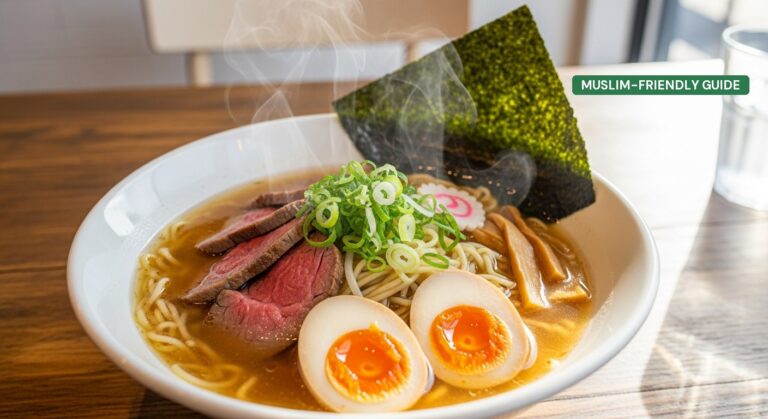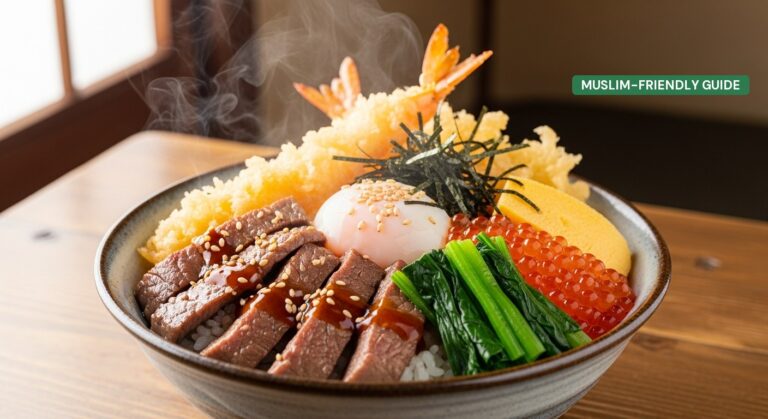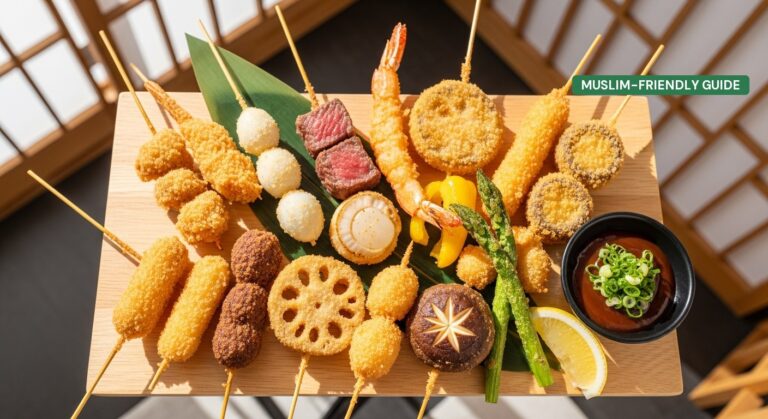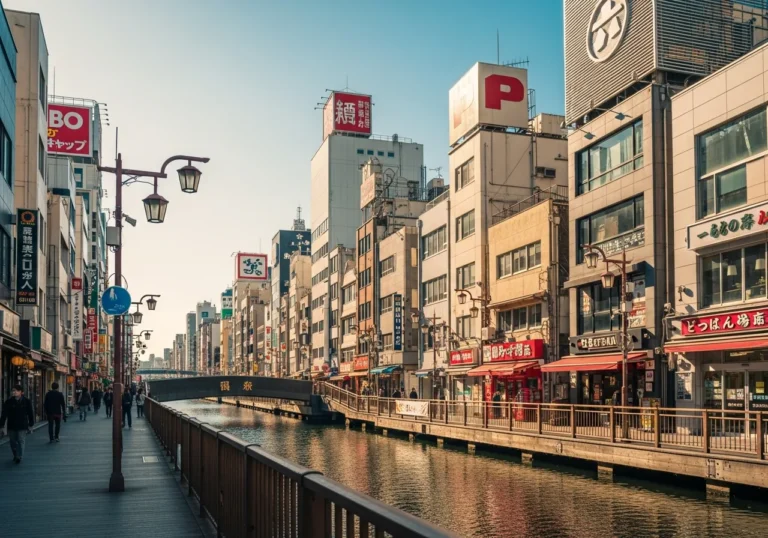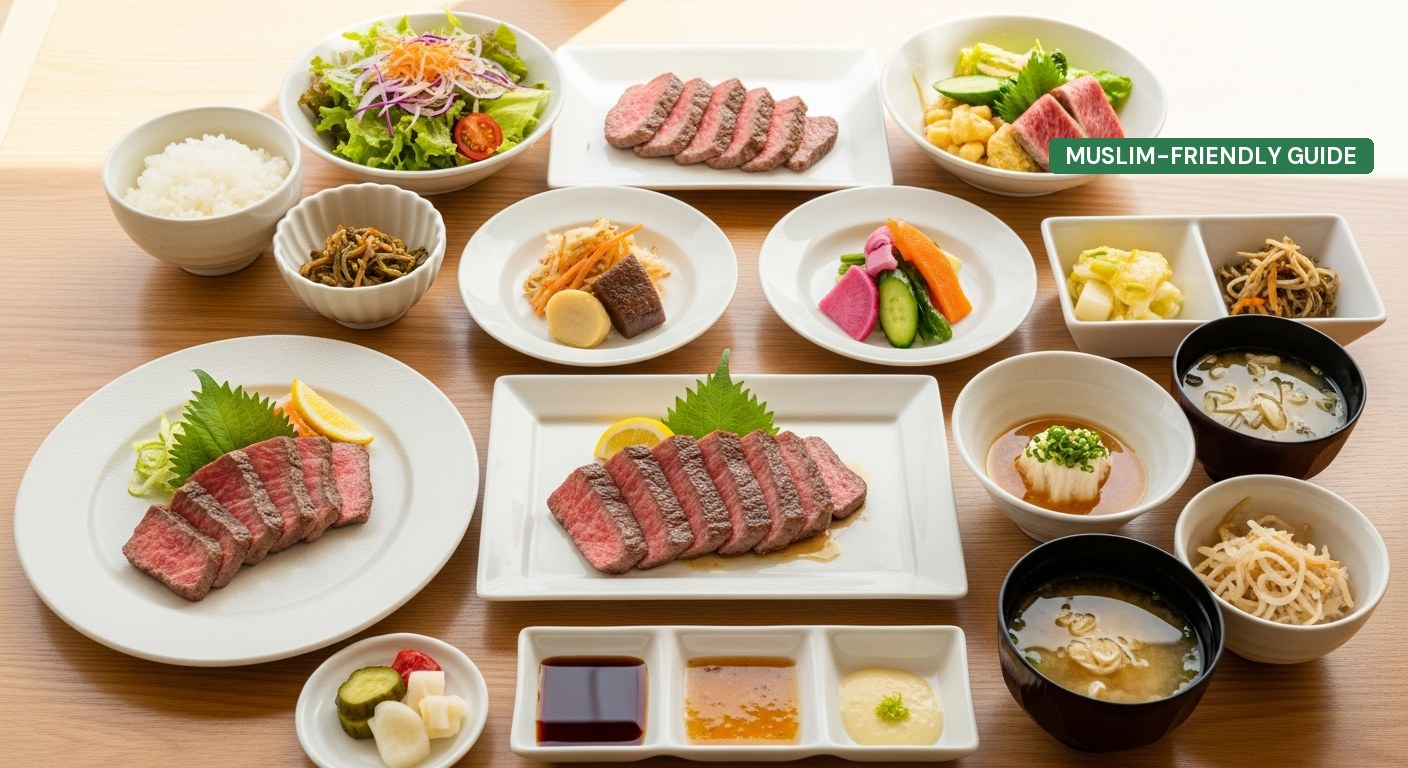
Looking for halal food in Osaka? You’re in luck — the city has a growing number of dedicated halal wagyu and beef restaurants, from A5 gyukatsu specialists in Umeda to all-you-can-eat yakiniku in Namba and premium A5 yakiniku in Shinsaibashi. Whether you’re after a special-occasion splurge or a relaxed grill-your-own dinner, check our Osaka halal guide for the full picture before you book.
MICHI’s Pick — Selected by our Osaka-based team, based on places we’ve visited and on research using Tabelog and Google Maps ratings. In Japan, a Tabelog score of 3.4+ is genuinely high — Japanese reviewers are famously strict, and most locals consider anything above 3.4 a place worth a detour. We feature venues meeting at least one of: Tabelog 3.4+, Google Maps 4.3+, or 100+ reviews — the kind of spots locals quietly trust.
Tabelog and Google Maps scores are accurate as of the time of writing.
1. Halal Wagyu Gyukatsu Shinjuku-tei Osaka Umeda
Just five minutes from Osaka Station, Shinjuku-tei Umeda is best known for its gyukatsu — lightly breaded wagyu served with a personal grill so you can cook each bite to your preference.
- ☪️ Halal status: halal-certified
- 🍢 Must-order: Yokozuna Gyukatsu Set (¥3,500~)
- 📍 Access: Osaka / Umeda Station (5 min walk)
- 🕒 Hours: 12:00–21:00 (Open daily)
- 📞 Reservation: Recommended
- 🧎 Prayer room: Available on-site
- 🍷 Alcohol served: No
- 🗣 English menu: Yes
- ⭐ Rating: Google 4.5 (1,500+ reviews) (as of writing)
- 🗺 View on Google Maps
- 🔗 Source: halalgourmet.jp
What to order: The Yokozuna Set features wagyu cutlet and meat sushi, while the Samurai Set brings sizzling wagyu steak to the table. Many dishes, like the gyukatsu, are served with a personal grill, letting you cook the meat to your preferred level of doneness and experiment with different sauces — a genuinely interactive way to enjoy premium Japanese beef.
2. Halal Yakiniku Zerohachi Namba OCAT
Zerohachi is a Muslim-friendly yakiniku restaurant on the 5th floor of OCAT Mall in Osaka’s Naniwa Ward, offering a variety of halal-certified meats including Akage Wagyu beef and Kobe beef, known for their rich flavor and tenderness.
- ☪️ Halal status: Muslim-friendly
- 🥩 Must-order: Black Course All-You-Can-Eat (¥6,500/person, 120 min)
- 📍 Access: JR Namba Station (1 min walk)
- 🕒 Hours: 11:00–22:00 (Closed: 3rd Wednesday of the month)
- 📞 Reservation: Recommended
- 🧎 Prayer room: Available on-site
- 🍷 Alcohol served: Yes
- 🗣 English menu: Limited
- ⭐ Rating: Tabelog 3.05 / Google 4.3 (100+ reviews) (as of writing)
- 🗺 View on Google Maps
- 🔗 Source: muslim-guide.jp
What to order: The Black Course features up to 70 items including beef, chicken, lamb, and seafood — the widest spread of any halal yakiniku course in Namba. The restaurant provides a prayer room with an ablution area and telekung for customers’ convenience, and the wagyu beef is particularly noteworthy for its luxurious marbling and buttery tenderness. If you want to explore more of Osaka after dinner, the OCAT building connects directly to JR Namba Station for easy onward travel.
3. Halal Wagyu Yakiniku Osaka Panga (Shinsaibashi)
A well-known yakiniku restaurant specializing in authentic, top-grade A5 wagyu beef, located in the heart of Shinsaibashi — and what makes it especially popular among Muslim travelers is its halal-certified A5 wagyu beef and halal seasonings and sauces.
- ☪️ Halal status: halal-certified
- 🥩 Must-order: A5 Wagyu Sirloin Platter (¥3,000~)
- 📍 Access: Shinsaibashi Station (2 min walk) / Namba Station (5 min walk)
- 🕒 Hours: 18:00–23:30 (Closed: Tuesday)
- 📞 Reservation: Recommended
- 🧎 Prayer room: Available on-site
- 🍷 Alcohol served: No
- 🗣 English menu: Limited
- ⭐ Rating: Google 4.4 (100+ reviews) (as of writing)
- 🗺 View on Google Maps
- 🔗 Source: halalgourmet.jp
What to order: The A5 wagyu is carefully raised by farmers and given balanced feed, resulting in flavorful meat with a smooth texture — sourced from the top 4% of the highest-ranked A5 grade, purchased as whole cattle. The restaurant is careful about cross-contamination and prepares food in accordance with Islamic dietary guidelines, using separate utensils and grills for halal meals upon request. For more dining ideas across the city, browse the best food in Osaka on MICHI.
Frequently Asked Questions
Q. Is it easy to find halal food in Osaka?
Osaka has one of Japan’s strongest halal dining scenes, with dedicated halal-certified and Muslim-friendly restaurants spread across Umeda, Namba, and Shinsaibashi. For wagyu and beef specifically, the three restaurants above are all verified and easy to reach by subway or JR.
Q. What does “Muslim-friendly” mean in Japan?
In Japan, “Muslim-friendly” typically means a restaurant uses no pork and no lard, and may avoid alcohol in cooking — but it does not necessarily hold formal halal certification from a recognised certifying body. Always confirm directly with the restaurant if you have specific requirements around cross-contamination or alcohol-based sauces.
Q. Are there prayer rooms near halal restaurants in Osaka?
Shinjuku-tei Umeda provides a prayer space, private rooms, and a comfortable, spacious interior suitable for both casual meals and special occasions. Zerohachi at OCAT has a prayer space, offers prayer items for loan, and displays a qibla marker. Osaka Panga in Shinsaibashi also has a prayer room available.
Q. What hidden ingredients should Muslim travelers watch out for in Japan?
The most common hidden risks in Japanese restaurants are mirin (a sweet rice wine used in sauces and glazes), sake (used in marinades and broths), and lard (sometimes used in ramen broth or teppanyaki cooking). At the three restaurants listed above, all sauces and seasonings are confirmed halal — but at non-halal restaurants, always ask specifically about mirin and sake in the tare (dipping sauce) and cooking stock.
Last updated: July 25, 2026 · Corrections: [email protected]