Looking for halal udon in Osaka? You have real options — from a dedicated halal udon counter inside Kansai International Airport to a Shinsaibashi restaurant serving halal-certified Japanese noodle dishes, and a long-running all-halal Japanese kitchen near Noda. Check our Osaka halal guide for the full picture across cuisines.
MICHI’s Pick — Selected by our Osaka-based team, based on places we’ve visited and on research using Tabelog and Google Maps ratings. In Japan, a Tabelog score of 3.4+ is genuinely high — Japanese reviewers are famously strict, and most locals consider anything above 3.4 a place worth a detour. We feature venues meeting at least one of: Tabelog 3.4+, Google Maps 4.3+, or 100+ reviews — the kind of spots locals quietly trust.
Tabelog and Google Maps scores are accurate as of the time of writing.
1. Homemade Udon KINEYA MUGIMARU (自家製麺 杵屋麦丸)
The only dedicated halal udon counter inside Kansai International Airport — freshly made noodles from Mie Prefecture wheat, served cafeteria-style, with a Muslim-friendly halal menu confirmed by the airport’s own listings.
- ☪️ Halal status: Muslim-friendly
- 🍜 Must-order: Chicken curry udon (¥800–¥1,000)
- 📍 Access: Kansai International Airport (KIX) Terminal 1, 2F — public area before security (Izumisano, Osaka Prefecture)
- 🕒 Hours: 7:00–22:00 (Open daily)
- 📞 Reservation: Not needed
- 🧎 Prayer room: Nearby (KIX Terminal 1 prayer room, same floor)
- 🍷 Alcohol served: No
- 🗣 English menu: Yes
- 🗺 View on Google Maps
- 🔗 Source: kansai-airport.or.jp
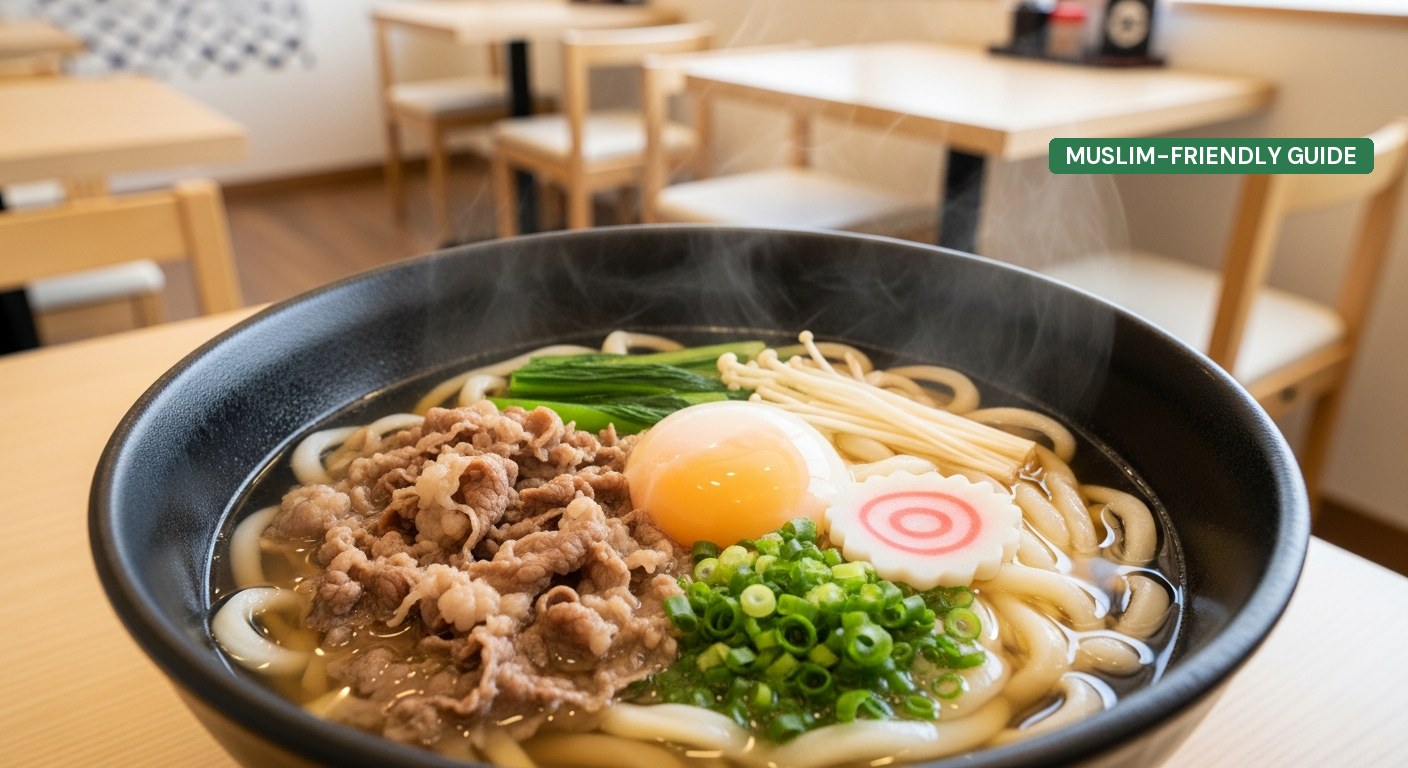
What to order: The noodles are made in-store from Mie Prefecture flour, freshly prepared and boiled, with a thick, soft, and chewy texture that pairs well with the dashi-based soup — try adding grated ginger to lift the broth. The menu includes halal udon, chicken curry udon, beef udon, and seafood udon — ideal for a first or last meal in Japan.
2. Halal Honolu Grande Shinsaibashi (帆のるグランデ心斎橋)
Halal-certified by a recognised Halal Authority, this Shinsaibashi restaurant brings together halal ramen, wagyu, and Osaka street-food classics — including udon — under one roof, making it the most convenient halal Japanese dining stop in the city centre.
- ☪️ Halal status: halal-certified
- 🍜 Must-order: Chicken paitan ramen with udon-style thick noodles (¥1,200–¥1,500)
- 📍 Access: Shinsaibashi Station (3 min walk, Exit 6)
- 🕒 Hours: 11:30–21:00 (Open daily)
- 📞 Reservation: Recommended
- 🧎 Prayer room: Nearby (Muslim Tourist Information Centre, 5–15 min walk)
- 🍷 Alcohol served: No
- 🗣 English menu: Yes
- 🗺 View on Google Maps
- 🔗 Source: tourismuslim.com
What to order: The sauces, mayonnaise, and other seasonings used are all halal-certified, so Muslim guests can enjoy Osaka specialties just as locals do. The thick chicken paitan soup and sticky noodles are a perfect match — order the chicken ramen for a bowl that feels authentically Osaka. If you want to explore more of Osaka after lunch, Dotonbori is a five-minute walk from the door.
3. Japanese Restaurant MATSURI (まつり)
A popular all-halal Japanese restaurant that attracts many Muslim and vegetarian customers, situated a 2-minute walk from Nodahanshin Station Exit 7. Udon is a highlight here — the menu includes curry udon and fried udon, with karaage curry udon at ¥1,000.
- ☪️ Halal status: halal-certified
- 🍜 Must-order: Karaage curry udon (¥1,000)
- 📍 Access: Nodahanshin Station (2 min walk, Exit 7) — Osaka Metro Sennichimae Line
- 🕒 Hours: Lunch and dinner service (confirm current hours before visiting)
- 📞 Reservation: Recommended
- 🧎 Prayer room: Available on-site
- 🍷 Alcohol served: Yes
- 🗣 English menu: Yes
- 🗺 View on Google Maps
- 🔗 Source: fooddiversity.today
What to order: Apart from its well-known DIY takoyaki menu set, the restaurant serves all kinds of Japanese food, from ramen, Kobe beef, and Japanese curry rice to side dishes like dashimaki tamago and miso soup. The curry udon — thick, chewy noodles in a spiced halal broth — is the dish that keeps regulars coming back. For more ideas on where to eat across the city, browse the best food in Osaka.
Frequently Asked Questions
Q. Is it easy to find halal udon in Osaka?
Dedicated halal udon shops are still rare, but the options are growing. Most halal restaurants in Osaka are clustered around Namba, Dotonbori, Umeda, and Shinsaibashi, and several of them — including Honolu Grande — serve udon alongside ramen and other Japanese dishes. Your safest bet for a pure udon experience is KINEYA MUGIMARU at KIX, where the entire menu is halal.
Q. What does “Muslim-friendly” mean in Japan?
In Japan, “Muslim-friendly” typically means a restaurant has removed pork and lard from its kitchen and uses halal-sourced meat or seafood, but may not hold formal certification from a recognised halal body. Halal Gourmet Japan uses pictograms to clearly indicate the halal compliance of establishments, enabling Muslims to make confident choices. Always check whether a venue is formally certified or self-declared, and ask about shared cooking equipment if cross-contamination is a concern.
Q. Are there prayer rooms near halal udon restaurants in Osaka?
Yes. MATSURI has a prayer space with a wudu facility included. Near Honolu Grande Shinsaibashi, the Muslim Tourist Information Centre provides travel information, a prayer room, and is approximately 5–15 minutes’ walk from the Shinsaibashi area. At KIX, prayer rooms are located on the same floor as KINEYA MUGIMARU.
Q. What hidden ingredients should Muslim travelers watch out for in Japan?
The biggest risks in udon broth are dashi made from bonito flakes (fish, generally permissible but worth confirming) and mirin — a sweet rice wine used in many Japanese sauces and broths that contains alcohol. At KINEYA MUGIMARU, each menu item carries a pictogram of the 14 allergen ingredients used, and a logo states “All Our Food is Halal” so diners can eat with confidence. At any other restaurant, ask specifically: 「みりんやアルコールは入っていますか?」 (“Does this contain mirin or alcohol?”).
Last updated: July 4, 2026 · Corrections: [email protected]