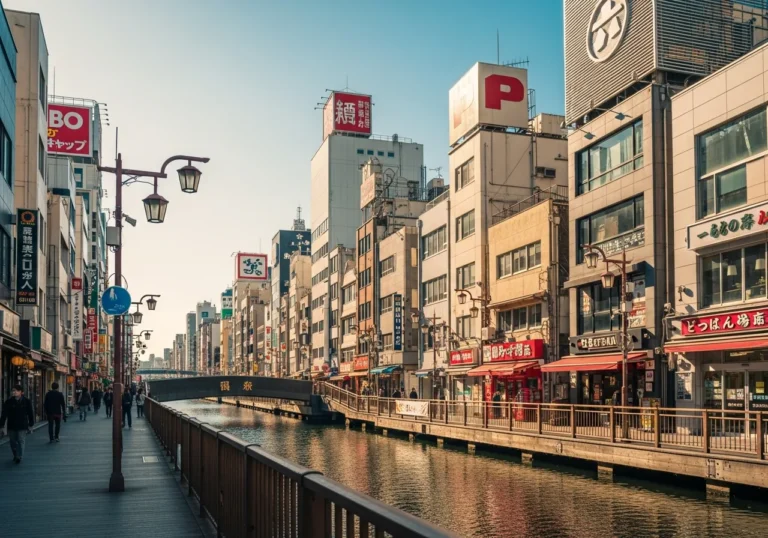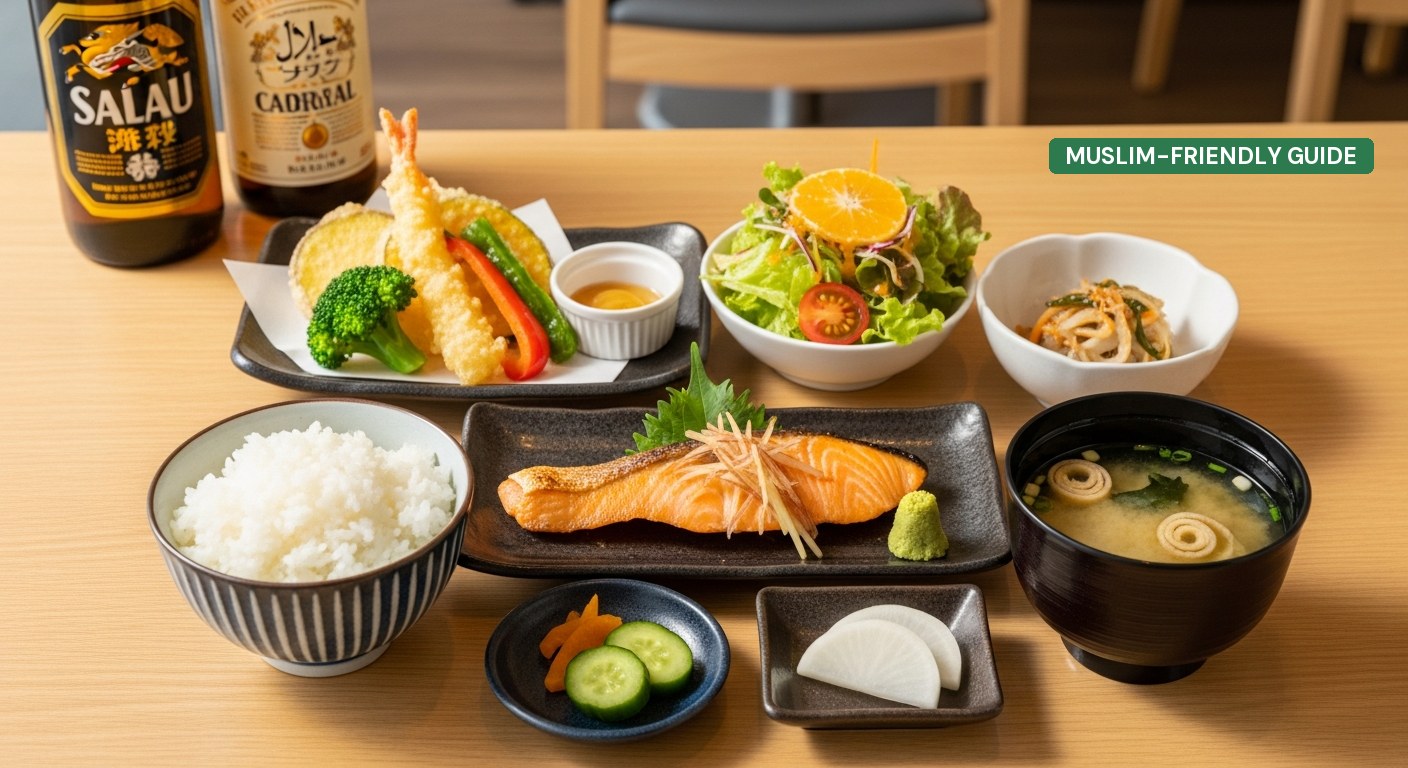
Looking for halal food in Osaka? You’ll find at least three verified halal-certified restaurants serving teishoku-style set meals well under ¥1,500 — from wagyu beef cutlet sets in Umeda to all-halal Japanese lunch trays in Namba and Shinsaibashi. Check our Osaka halal guide for the full picture across the city.
MICHI’s Pick — Selected by our Osaka-based team, based on places we’ve visited and on research using Tabelog and Google Maps ratings. In Japan, a Tabelog score of 3.4+ is genuinely high — Japanese reviewers are famously strict, and most locals consider anything above 3.4 a place worth a detour. We feature venues meeting at least one of: Tabelog 3.4+, Google Maps 4.3+, or 100+ reviews — the kind of spots locals quietly trust.
Tabelog and Google Maps scores are accurate as of the time of writing.
1. Halal Ramen Naniwaya (formerly Naritaya Osaka Minami)
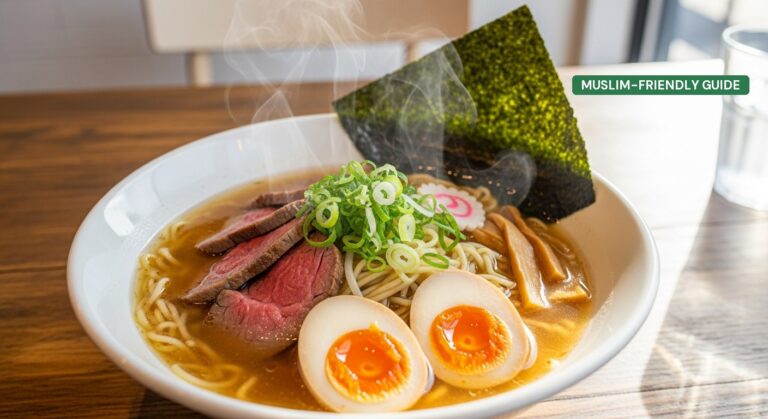
The rebranded Naritaya Osaka Minami — now operating as Halal Ramen Naniwaya — is Japan Islamic Trust-certified and serves halal wagyu set meals alongside ramen, making it one of the most complete halal teishoku stops in central Osaka.
- ☪️ Halal status: halal-certified
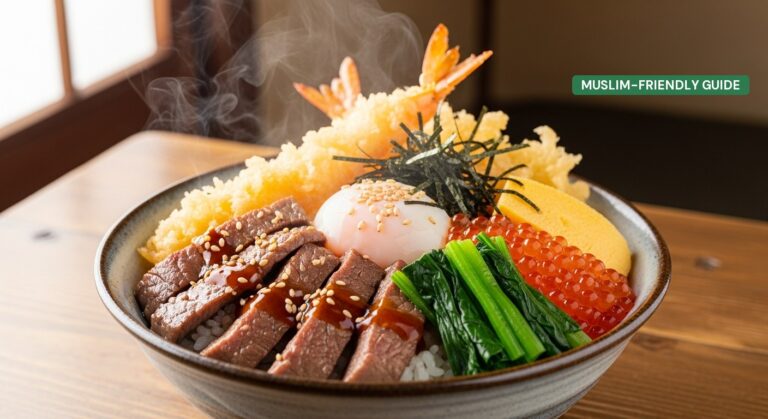
- 🍛 Must-order: Wagyu Yakiniku Don Set (¥1,200–¥1,400)
- 📍 Access: Namba Station (10 min walk)
- 🕒 Hours: 12:00–22:30 (Open daily)
- 📞 Reservation: Recommended
- 🧎 Prayer room: Available on-site
- 🍷 Alcohol served: No
- 🗣 English menu: Yes
- ⭐ Rating: Google 4.1 (200+ reviews) (as of writing)
- 🗺 View on Google Maps
- 🔗 Source: naniwaya-osaka.com
What to order: The halal wagyu menu is the main draw — the Wagyu Yakiniku Rice Bowl, Wagyu Katsu, and Wagyu Curry & Rice are all prepared with premium halal-certified beef. A dedicated prayer space on the second floor is outfitted with prayer mats and a wudu area, so you can pray between courses without leaving the building.
2. Japanese Food Restaurant MATSURI
MATSURI serves halal Japanese food under an “ALL MENU ALL HALAL” policy, covering ramen, sushi, takoyaki, okonomiyaki, Japanese curry, and halal Kobe beef — one of the broadest teishoku-style spreads in Osaka.
- ☪️ Halal status: halal-certified
- 🍜 Must-order: Chicken Katsu Teishoku Set (¥1,000–¥1,300)
- 📍 Access: Namba Station (8 min walk) / Imamiya Station (5 min walk)
- 🕒 Hours: 11:30–21:00 (Open daily)
- 📞 Reservation: Not needed
- 🧎 Prayer room: None
- 🍷 Alcohol served: No
- 🗣 English menu: Yes
- ⭐ Rating: Google 4.3 (300+ reviews) (as of writing)
- 🗺 View on Google Maps
- 🔗 Source: halalgourmet.jp
What to order: Reviewers consistently single out the chicken katsu as the standout dish — ordered twice by some diners — with okonomiyaki and gyoza rounding out a satisfying set-meal lunch. The casual, no-reservation format makes it ideal for a spontaneous midday stop while exploring more of Osaka.
3. Shinjukutei Osaka Umeda (HALAL WAGYU GYUKATSU SHINJUKU-TEI)
Shinjukutei Osaka Umeda is a specialty restaurant serving halal A5 wagyu steak and wagyu beef cutlets, with no pork or alcohol used and a Muslim-friendly kitchen — one of the few halal gyukatsu teishoku options in the Umeda area.
- ☪️ Halal status: halal-certified
- 🥩 Must-order: Halal A5 Wagyu Gyukatsu Set (¥1,300–¥1,500)
- 📍 Access: Higashi-Umeda Station (3 min walk) / Umeda Station (7 min walk)
- 🕒 Hours: 12:00–21:00 (Open daily)
- 📞 Reservation: Recommended
- 🧎 Prayer room: Available on-site
- 🍷 Alcohol served: No
- 🗣 English menu: Yes
- ⭐ Rating: Google 4.4 (150+ reviews) (as of writing)
- 🗺 View on Google Maps
- 🔗 Source: halalgourmet.jp
What to order: The restaurant uses certified halal A5 wagyu beef and follows halal preparation methods; private dining rooms and tatami seating make it comfortable for families. The gyukatsu set — thinly sliced beef cutlet served with rice, miso soup, and pickles — is a textbook teishoku format and one of the best food experiences in Osaka for Muslim diners under ¥1,500.
Frequently Asked Questions
Q. Is it easy to find halal food in Osaka?
The number of restaurants where Muslim visitors can enjoy meals with peace of mind is increasing, with establishments that have obtained halal certification or offer Muslim-friendly services now spread across the city. Central areas like Namba, Shinsaibashi, and Umeda have the highest concentration of verified options.
Q. What does “Muslim-friendly” mean in Japan?
In Japan, “Muslim-friendly” typically means a restaurant avoids pork and alcohol in its ingredients and cooking processes, but may not hold formal halal certification from a recognized body. Halal dietary rules include avoiding pork and its by-products, alcohol, blood, and animals not slaughtered in the name of Allah — and also prohibit cross-contamination with non-halal items. Always check whether a venue is formally certified or simply pork- and alcohol-free.
Q. Are there prayer rooms near halal restaurants in Osaka?
Naritaya/Naniwaya has a dedicated prayer space on the second floor, which is invaluable for Muslim travelers managing prayer times amid a busy sightseeing schedule. Shinjukutei Umeda also has a prayer room and wudu facility on-site. For a larger dedicated space, Osaka Masjid in Nishiyodogawa ward serves as the main mosque and is a good option for Friday prayers.
Q. What hidden ingredients should Muslim travelers watch out for in Japan?
Many Japanese dishes use miso, soy sauce, and other seasonings that may contain alcohol as a preservative or flavoring agent, so checking for halal-certified versions of these condiments is important. Mirin (sweet rice wine), sake-based broths, and lard-fried tempura batter are the most common hidden non-halal ingredients in otherwise meat-free dishes — always confirm with staff even at Muslim-friendly venues.
Last updated: July 4, 2026 · Corrections: [email protected]