Last updated: July 3, 2026
Information changes — always confirm with the venue/source before relying on it.
Introduction
Osaka is one of Japan’s most exhilarating cities for shopping — but for Muslim travelers, the question is never just what to buy, it’s whether you can safely bring it home and share it with family and friends. Edible souvenirs are the heart of Osaka gift culture, yet most mainstream souvenir shops stock items that contain pork-derived gelatin, lard, mirin, or cooking sake. Non-food gifts — ceramics, textiles, stationery — are generally safe, but knowing where to look still saves time and stress.
This guide cuts through the confusion. It explains the difference between halal-certified and Muslim-friendly products, shows you how to read Japanese ingredient labels, maps out the shopping zones where Muslim travelers shop most confidently, and covers the non-food souvenirs that are always a safe bet. For a broader overview of eating and dining in the city, see our Osaka halal guide — this article focuses specifically on what to buy and take home.
Halal-Certified vs. Muslim-Friendly: What the Labels Actually Mean
Before you start filling your shopping bag, it helps to understand the two tiers of assurance you will encounter in Osaka’s souvenir market.
- Halal-certified means a recognised Islamic body has audited the product, its ingredients, and its production environment. Halal certification ensures that the product not only excludes pork, alcohol, or other forbidden ingredients but is also manufactured in an environment that follows Islamic law, including quality control and production processes. In Japan, there is no central halal authority — multiple bodies certify restaurants and products with different standards, and certification is run by private NPOs, religious organizations, and mosque-affiliated bodies. The most internationally recognised body for product certification is JHA (Japan Halal Association), approved by JAKIM, MUIS, BPJPH, and others. When you see a halal-certified mark on a souvenir snack, look for the issuing body’s name alongside the logo and verify it against a known certifier.
- Muslim-friendly (sometimes called “no pork no lard”) means the product’s published ingredient list contains no obviously forbidden items, but it has not been independently audited. These products are not halal-certified; however, from the ingredients shown on the package, there are no haram ingredients contained. The risk of contamination, which can happen in products manufactured in the same machinery or factory, is not always addressed. Many of the snack souvenirs sold across Osaka fall into this category.
Knowing which tier a product belongs to lets you make an informed choice that matches your own level of observance.
🔗 Source: tabemasen.io
Reading Japanese Ingredient Labels in Souvenir Shops
Most souvenir packaging in Osaka is written entirely in Japanese. If you are a Muslim traveling to Japan, one of the most important skills you need is understanding how to read Japanese food labels. Many ingredients are written in Japanese kanji, making it difficult to identify whether a product is halal or contains haram substances.
Every packaged food sold in Japan must display an ingredient list and an allergen disclosure under the Food Labeling Act. For a Muslim shopper, two sections of the label matter: 原材料名 (genzairyōmei) — the ingredient list, in descending order by weight — and アレルギー物質 (arerugii busshitsu) — the mandatory and recommended allergen disclosure.
The key terms to scan for are:
- 豚肉 / ポーク (buta-niku / pōku) — pork
- 豚脂 / ラード (ton-shi / rādo) — pork fat / lard
- ゼラチン (zerachin) — gelatin (source unspecified = treat as doubtful)
- みりん (mirin) — sweet rice wine, typically 10–14% alcohol
- 酒 / 日本酒 (sake / nihonshu) — cooking sake / alcohol
When scanning ingredient labels, develop a systematic approach. Start by looking for the most serious red flags: 豚 (buta/pork), ラード (lard), ゼラチン (gelatin), みりん (mirin), and 酒 (sake/alcohol). These terms are relatively easy to spot once you’ve memorized them, and finding any of them should immediately disqualify a product for most Muslims.
For gelatin specifically: warabi mochi is a traditional Japanese sweet that can be Muslim-friendly — the great thing about some versions is that they use agar, a plant-based ingredient, instead of gelatin. Always check which thickener is listed.
If you find a product with no problematic kanji and want a second opinion, apps such as HalalLens use AI-powered ingredient recognition to cross-check Japanese labels in real time.
🔗 Source: halallens.no
Where to Shop: Osaka’s Key Zones for Muslim Travelers
Osaka’s shopping landscape is spread across several distinct districts. Here is how each one looks from a Muslim traveler’s perspective — and what to explore more of Osaka beyond the souvenir hunt.
Nishi Ward (Minamihorie) — The Dedicated Halal Souvenir Hub
JAPANeid is a Muslim-friendly Japanese brand with a halal souvenir shop in Osaka — possibly the first and biggest halal souvenir shop in Japan to bring together Japanese snacks, sweets, and gifts that Muslims can enjoy with peace of mind. The shop offers over 120 Muslim-friendly and halal-certified souvenirs from across Japan, including mochi, cookies, chocolates, prayer mats, kimono hijabs, and T-shirts, as well as a kids’ play area for families. The Osaka shop also features separate prayer rooms for men and women with wudu facilities, Qibla direction, and prayer accessories, plus multilingual Muslim staff speaking English, Malay, Indonesian, and Arabic. The shop is located on the 9th floor of a building in Nishi Ward, an 8-minute walk from the Dotonbori Glico Sign.
JAPANeid also operates an online shop: halal snacks, meals, and other items can be delivered directly to your hotel anywhere in Japan, or shipped internationally.
Dotonbori & Shinsaibashi — Mainstream Souvenir Streets
The Dotonbori–Shinsaibashi corridor is Osaka’s most concentrated souvenir zone, but it requires careful label-reading. The Don Quijote (Donki) branch in this area is a useful stop: the store offers not only halal-certified souvenir items, but also a wide variety of Muslim-friendly snacks and gift products, carefully checking ingredients and labeling to ensure peace of mind for Muslim travelers. Don Quijote provides halal grocery items including halal meat, oil, rice, beans, spices, snacks, and cosmetic products from different countries. At the Dotonbori branch, look for the dedicated Muslim-friendly section near the entrance on the ground floor.
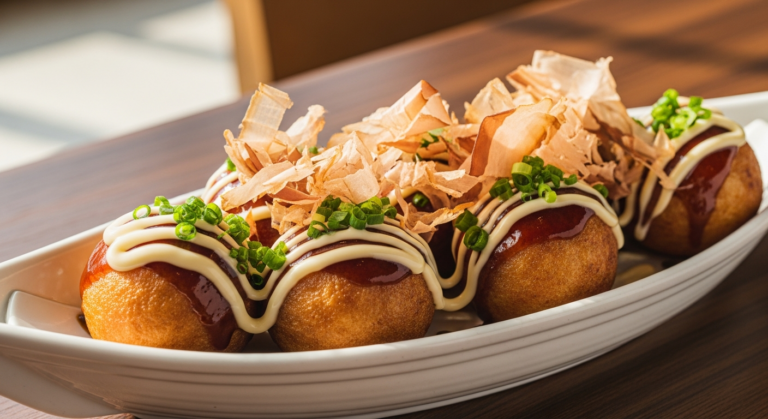
For snack souvenirs at Donki, Happy Turn rice crackers from Kameda Seika are known as very Muslim-friendly, and at Don Quijote you can find local limited flavors such as Osaka Takoyaki Flavor in addition to the standard variety.
Shin-Osaka Station — Last-Minute Souvenir Shopping
Shin-Osaka Station’s souvenir shops are a practical final stop before the Shinkansen. Inside and outside the ticket gates, these stores offer a wide range of Osaka specialty dishes, local products, local sweets, and goods. Sweets with a long shelf life are suitable for long-term storage and sending to distant places — in particular, sweets with a halal certification mark are likely to be appreciated by Muslims. Scan packaging carefully here, as halal-certified items sit alongside non-certified ones on the same shelves.
🔗 Source: japaneid.com · halalgourmet.jp
What to Buy: Souvenir Categories That Work for Muslim Travelers
Not every Osaka souvenir involves food. Here is a breakdown by category — from the safest bets to the ones that need closer scrutiny.
Non-Food Souvenirs (Always Safe)
- Kimono hijabs — One of the most distinctive Muslim-friendly souvenirs available in Osaka. Made from vintage kimono fabric, each kimono hijab is a unique piece that tells its own story — perfect for all hijabis, and available at JAPANeid Osaka as a meaningful gift or a special addition to your wardrobe.
- Wagara (Japanese pattern) accessories — Fans, furoshiki wrapping cloths, tenugui hand towels, and tabi socks featuring traditional Japanese motifs are widely available at souvenir shops throughout Dotonbori and Shinsaibashi-suji. No ingredient concerns apply.
- Japanese kitchen tools — Osaka’s Sennichimae Doguyasuji shopping street is famous for professional kitchen tools and cookware. Japanese kitchen knives are world-renowned for their quality and sharpness. These make excellent halal-safe gifts.
- Matcha tools & ceramics — Matcha whisks (chasen), ceramic cups, and lacquerware are universally safe and widely available at department stores such as Hankyu Umeda.
- Prayer mats & Islamic accessories — JAPANeid stocks tatami-style prayer mats and other Islamic accessories alongside its souvenir range.
Halal-Certified Edible Souvenirs
- Halal-certified chocolates, mochi, and cookies curated by JAPANeid — all snacks’ ingredients are carefully checked and verified by Muslim staff.
- Halal-certified instant ramen and curry pouches, available at Don Quijote Dotonbori’s Muslim-friendly section.
- Matcha-flavoured sweets where the ingredient list shows no gelatin, mirin, or sake — green tea itself is inherently Muslim-friendly.
Muslim-Friendly Edible Souvenirs (Label Check Required)
- Takoyaki senbei (rice crackers) — Takoyaki senbei from Osaka Aji no Hompo uses real octopus inside the snack, giving a crispy and flavourful result. Check the label for the absence of pork-derived seasonings and mirin.
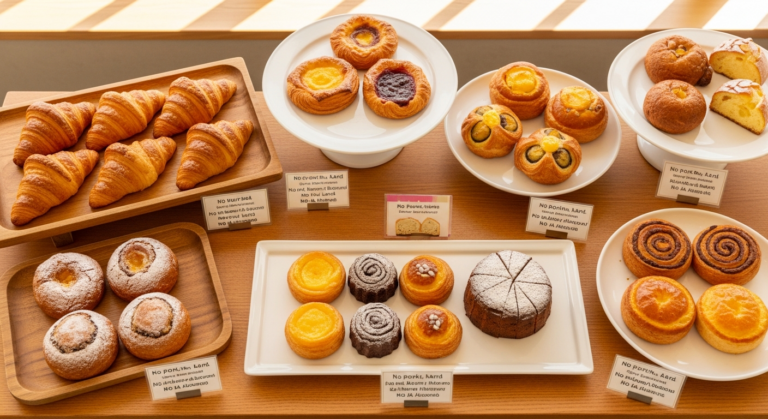
- Sweet potato sweets — Sweets made from potatoes can be Muslim-friendly. Sweet potato desserts in Japan are made from mashed sweet potato mixed with cream and butter and baked in the oven — with only natural ingredients, they can be accepted by many Muslims.
- Kinakomochi rice crackers — Kinakomochi is a sweet rice cake with dried soybean powder, now made as a rice cracker by Echigo Seika. Extremely light with a fluffy texture, and based on a concept of traditional Japanese sweets, it is an ideal gift from Japan.
🔗 Source: paulonia.tokyo · japaneid.com
Halal Cosmetics & Non-Edible Packaged Goods
Muslim travelers increasingly look beyond food when shopping for souvenirs — skincare, cosmetics, and toiletries are popular gifts. Although not common in Japan, halal certification is becoming more widespread for products that are indirectly ingested or come into contact with humans other than food. The most typical category is cosmetics, and familiar examples range from perfumes and skin cosmetics to toothpaste and soap.
When shopping for cosmetics at mainstream stores in Osaka — including the large Don Quijote branches and department store beauty floors — look for products that explicitly state they are free from animal-derived ingredients, or carry a recognised halal certification mark. The safest and most reliable sign is a proper halal certification mark. JAPANeid also stocks a curated range of Muslim-friendly cosmetics at its Nishi Ward shop, verified by its Muslim staff.
For a broader look at what to eat and drink while you are in the city, the best food in Osaka guide covers halal dining options across the city’s main neighbourhoods.
🔗 Source: mpja.jp
Practical Tips for Muslim Travelers
- Start at JAPANeid (Nishi Ward). The shop stocks over 120 Muslim-friendly and halal-certified souvenirs from across Japan, including mochi, cookies, chocolates, prayer mats, kimono hijabs, and T-shirts — all pre-vetted, so you can shop without label anxiety. It also has segregated prayer rooms with wudu facilities on-site.
- Use the Halal Gourmet Japan app or halalgourmet.jp before you go. Search “Osaka souvenir” or “Osaka grocery” to identify Muslim-friendly shops near your hotel before you leave home. The Don Quijote Namba Sennichimae branch is listed on the platform as a Muslim-friendly shopping stop.
- Memorise five kanji before you shop. 豚 (pork), ラード (lard), ゼラチン (gelatin), みりん (mirin), 酒 (sake). These terms are relatively easy to spot once memorised, and finding any of them should immediately disqualify a product for most Muslims.
- Check for the JHA logo on certified products. The most internationally recognised body for product and export certification in Japan is JHA (Japan Halal Association), approved by JAKIM, MUIS, BPJPH, and others. Its logo on a souvenir snack is the strongest assurance available in Japan.
- Use Don Quijote Dotonbori for bulk buying. Don Quijote offers tax-free shopping for purchases over ¥5,000, making it practical for buying multiple Muslim-friendly snack souvenirs in one go. Bring your passport for the tax-free counter.
- Order online if you run out of time. JAPANeid’s online shop makes it easy even if you’re not stopping by the physical store — halal snacks, meals, and other items can be delivered directly to your hotel anywhere in Japan, or shipped internationally.
Last updated: July 3, 2026 · Corrections: [email protected]