Last updated: August 14, 2026
Information changes — always confirm with the venue/source before relying on it.
Introduction
Takoyaki — Osaka’s iconic ball-shaped octopus snack — is one of the first things many visitors want to try the moment they land at Kansai International Airport (KIX). For Muslim travelers, however, the question is not simply “where can I find it?” but “can I actually eat it?” The takoyaki sauce, batter dashi, and bonito-flake topping commonly contain mirin (sweet rice wine), alcohol-fermented soy sauce, and non-certified fish stock — the octopus itself is permissible by Islamic dietary rules, but the seasonings are the problem. That gap between what looks safe and what actually is safe is exactly what this guide addresses.
Whether you are arriving into KIX for the first time or rushing to catch a departure, this guide explains why standard takoyaki is off-limits, what a Muslim-friendly or halal-certified version looks like, where to find pork-free Japanese food inside the airport and in nearby Rinku Town, and how to navigate KIX’s prayer facilities. For a broader picture of the city’s dining scene, see our Osaka halal guide before you travel.
Why Standard Takoyaki Is Not Halal — and What Changes in a Muslim-Friendly Version
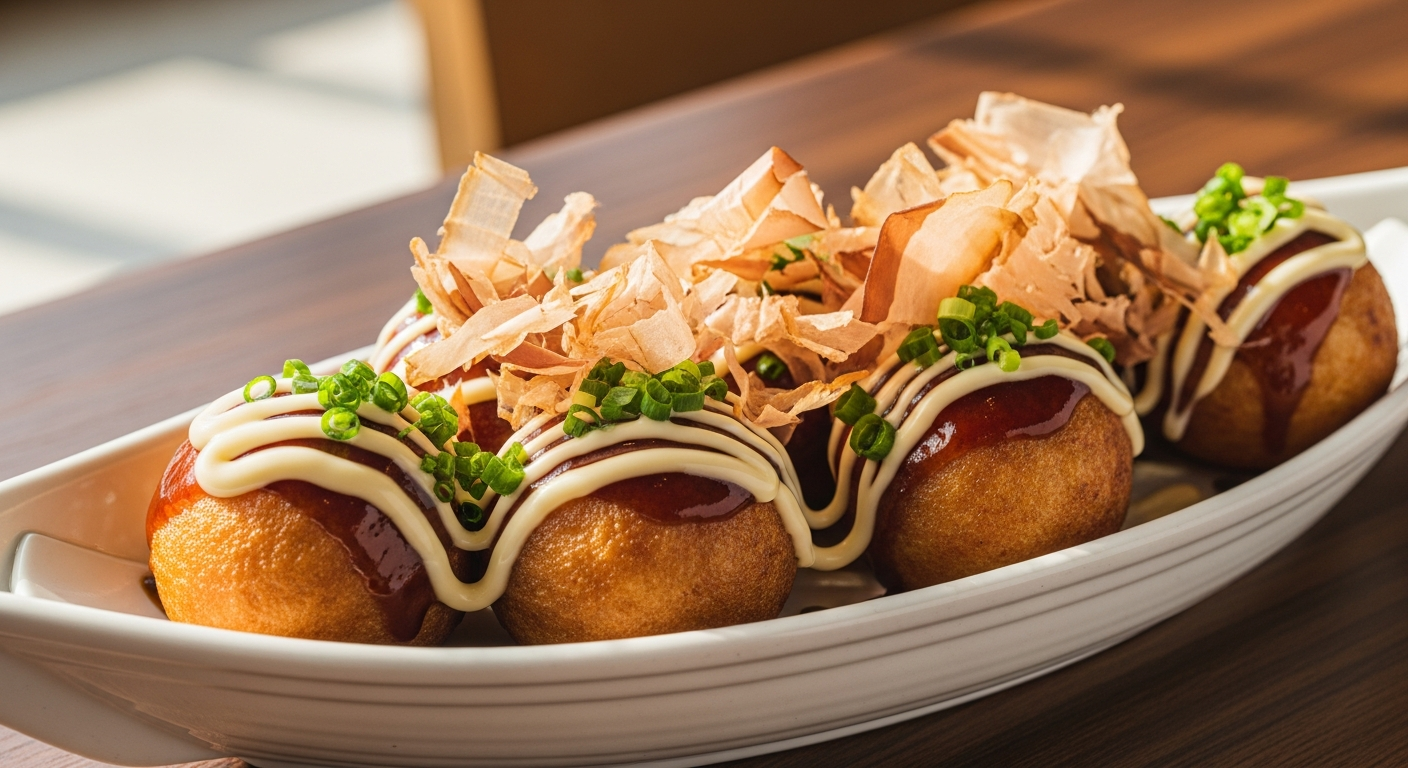
Takoyaki is a ball-shaped Osaka street snack made from a wheat-flour batter cooked in a hemispherical iron pan, with a piece of boiled octopus inside. The cooked balls are brushed with brown takoyaki sauce, drizzled with Japanese mayonnaise, and topped with bonito flakes and dried green seaweed (aonori). That finishing layer is where the halal concerns concentrate.
The takoyaki batter itself is generally Muslim-friendly — wheat flour, egg, dashi, octopus — but the standard takoyaki sauce contains mirin (a Japanese cooking alcohol) and often pork or oyster extract for umami. The alcohol content is not trivial: real hon-mirin is classified as an alcoholic beverage under Japan’s Liquor Tax Act and contains approximately 14% alcohol by volume. The majority position among contemporary halal certification bodies, including Japan Halal Foundation and NPO Japan Halal Association, is that food containing hon-mirin is not halal.
A Muslim-friendly or halal-certified takoyaki replaces these problem ingredients systematically:
- Sauce: Commercial takoyaki sauce is swapped for a halal-certified alternative. The famous Otafuku brand has obtained a halal certificate for its okonomiyaki sauce, which can be used for takoyaki as well — most halal okonomiyaki and takoyaki restaurants in Japan use this sauce.
- Mirin: Traditional hon-mirin contains approximately 14% alcohol and is not considered halal. A substitute is mirin-fu chomiryo (mirin-style seasoning), which contains under 1% alcohol and is widely regarded as permissible by many Muslim scholars.
- Dashi: The safest dashi for halal compliance is kombu (kelp) dashi or shiitake dashi, which are entirely plant-based and carry no halal concerns.
- Shared cooking surfaces: A dedicated halal kitchen or separate griddle eliminates cross-contamination with pork products cooked alongside.
The result is a snack that looks and tastes like the Osaka original but is prepared entirely within Islamic dietary guidelines.
🔗 Source: halal-navi.com
The Halal Food Landscape Inside KIX
Kansai Airport is a Muslim-friendly airport. There are halal-certified restaurants and restaurants that offer menus without pork or alcohol. That said, the options inside the terminal are focused — and takoyaki is not among them at the time of writing.
The most prominent Muslim-friendly dining option currently operating inside the airport is Kineya Mugimaru, a self-service udon restaurant. Located on the 2nd floor of Terminal 1 (before security), it is a must-visit for noodle lovers. There is a logo at the bottom right of the menu stating “All Our Food is Halal,” so that even Muslims can enjoy the food at ease. For people with food restrictions, each menu item has a pictogram of the 14 allergen ingredients used. The restaurant serves udon, tempura toppings, and fried rice — a solid first or last meal in Japan, even if it is not the takoyaki experience you came for.
For Muslim travelers who want to try Osaka’s soul food specifically, the honest answer is that a halal-certified or Muslim-friendly takoyaki stall is not currently operating airside at KIX. As of May 2026, fully halal-certified takoyaki is available at Halal Honolu Grande Shinsaibashi in Osaka (certified December 2024) and several Muslim-friendly spots in Osaka. These are city-centre destinations, not airport options — which is why planning matters. If you are arriving, consider heading into Osaka first and eating takoyaki there; if you are departing, read the Rinku Town section below for a closer alternative.
🔗 Source: kansai-airport.or.jp
Rinku Town: Your Best Bet for Halal Japanese Food Near the Gate
Rinku Town sits on the mainland side of Osaka Bay, directly connected to KIX by the Nankai Airport Line — just one stop, roughly five minutes by train. For Muslim travelers with a few hours before check-in, it offers meaningfully more dining variety than the terminal itself. Located in Rinku Town, just minutes from Kansai International Airport, the area is famous for its premium outlet mall, and has gained attention among Muslim travelers thanks to halal Japanese cuisine options.
One notable option is Samurai Wagyu MUSASHI, a halal-certified restaurant inside Rinku Town. The restaurant is halal-certified and offers authentic Japanese cuisine including wagyu sukiyaki, making it a strong choice for a pre-departure meal. Rinku Premium Outlets itself is also a convenient place to pick up last-minute souvenirs before heading back to the terminal.
For a broader look at what to eat and do in the area, explore more of Kansai Airport on MICHI, including transport tips and accommodation picks near the bay.
🔗 Source: paulonia.tokyo
Where to Find Halal-Certified Takoyaki in Osaka City
If your itinerary gives you time in central Osaka before or after your flight, halal-certified and Muslim-friendly takoyaki is genuinely available — you just need to know where to look. Osaka is the birthplace of takoyaki, and known as Japan’s kitchen, it has around 100 halal options, with a focus on local specialties like okonomiyaki and takoyaki made halal.
The clearest current option for halal-certified takoyaki in the city is Halal Honolu Grande Shinsaibashi. Here, you can enjoy halal versions of must-try Japanese dishes, including Osaka’s soul foods takoyaki and okonomiyaki, as well as dishes like Kobe beef gyukatsu, steak, and gyoza, all made with halal ingredients and sauces. All dishes are prepared without any contact with pork or alcohol, ensuring a worry-free dining experience. It is a 6-minute walk from Shinsaibashi Station on the Osaka Metro Midosuji Line — easily reachable from KIX via the Nankai Line to Namba, then one stop north.
Another well-established option is Three Peace Matsuri, which unlike many halal restaurants in Japan that focus on Middle Eastern fare, takes traditional Japanese dishes and makes them halal-friendly — including halal takoyaki octopus balls, sushi, sashimi, kushikatsu skewers, and teppanyaki. For a deeper dive into the city’s full halal dining scene, the best food in Osaka covers everything from street snacks to sit-down restaurants.
🔗 Source: enjoy-osaka-kyoto-kobe.com
Prayer Rooms and Muslim Facilities at KIX
Beyond food, KIX is well set up for Muslim travelers’ broader needs. There are three locations in Terminal 1 that are open to all religions. Two of them are located inside, after the checkpoint for international flights (north and south wings), and the last room is situated before the entrance gate to departure or arrival, on the 3rd floor of Terminal 1, on the same floor as shops and restaurants.
Kansai International Airport has a prayer room on the 3rd floor, separated between men and women. The room is spacious and bright with wudu’ space, allowing for focused prayer. You may also ask for the Muslim Friendly Airport Guide Map at the information centre on the 2nd floor to locate the prayer rooms.
- Pre-security prayer room: Terminal 1, 3rd floor (accessible to all passengers, including arrivals)
- Post-security prayer rooms: International gate area, north and south wings of Terminal 1
- Wudu’ (ablution) facilities: Available in the prayer rooms
- Gender separation: Men’s and women’s rooms are separate
🔗 Source: kansai-airport.or.jp
Practical Tips for Muslim Travelers at Kansai Airport
- Eat takoyaki in the city, not the airport. No halal-certified takoyaki stall currently operates inside KIX. Plan your takoyaki stop at Halal Honolu Grande Shinsaibashi (Shinsaibashi Station, Osaka Metro Midosuji Line) or Three Peace Matsuri before heading to the airport.
- Use Kineya Mugimaru for a quick halal meal at the terminal. It is on the 2nd floor of Terminal 1 in the public area (before security), making it accessible on both arrival and departure. Look for the “All Our Food is Halal” logo on the menu board.
- Add one stop for more options. Take the Nankai Airport Line one stop to Rinku Town Station for halal-certified wagyu and Japanese cuisine at Samurai Wagyu MUSASHI, or browse Rinku Premium Outlets before check-in.
- Pick up the Muslim Friendly Airport Guide Map. Available free at the Terminal 1 information centre (2nd floor), it shows the exact locations of prayer rooms, halal restaurants, and wudu’ facilities — useful if you are navigating the airport for the first time.
- Know the prayer room layout before you land. The pre-security prayer room is on the 3rd floor of Terminal 1. If you have already cleared immigration, use the post-security rooms in the north or south wings of the international gate area.
- At street stalls, ask for “sauce nuki” (ソースなし). If you encounter a standard takoyaki stall outside the airport, ordering sauce nuki (no sauce) can make it Muslim-friendly — though always confirm the batter ingredients and shared cooking surface with staff before ordering.
Last updated: August 14, 2026 · Corrections: [email protected]