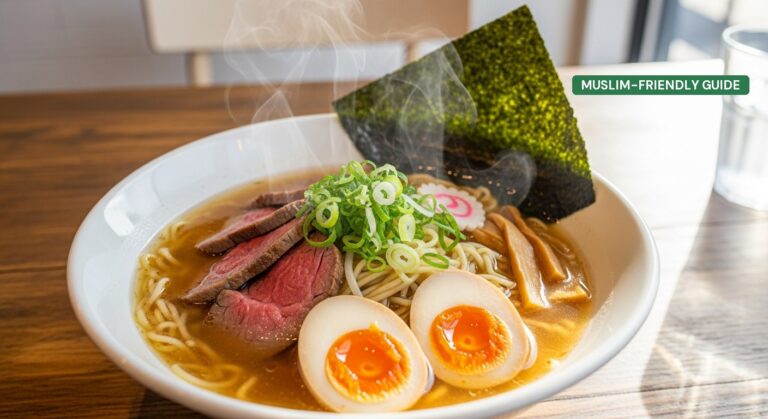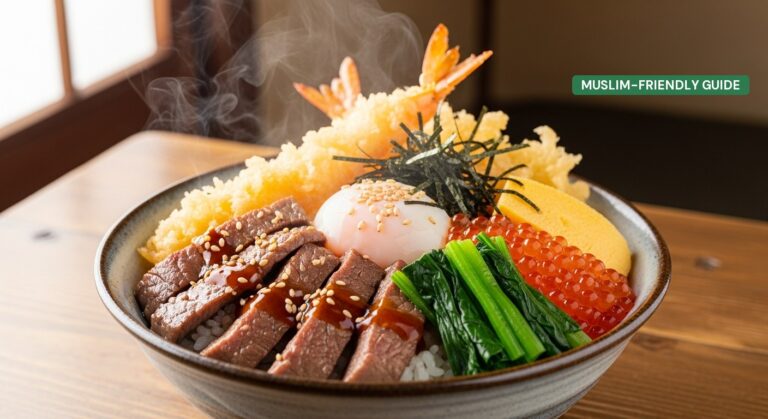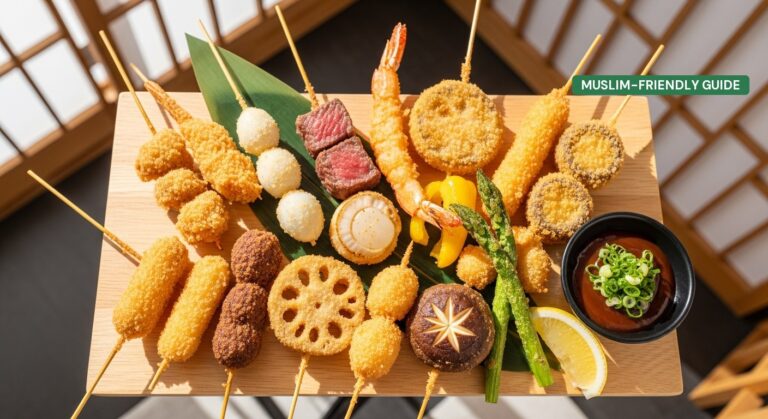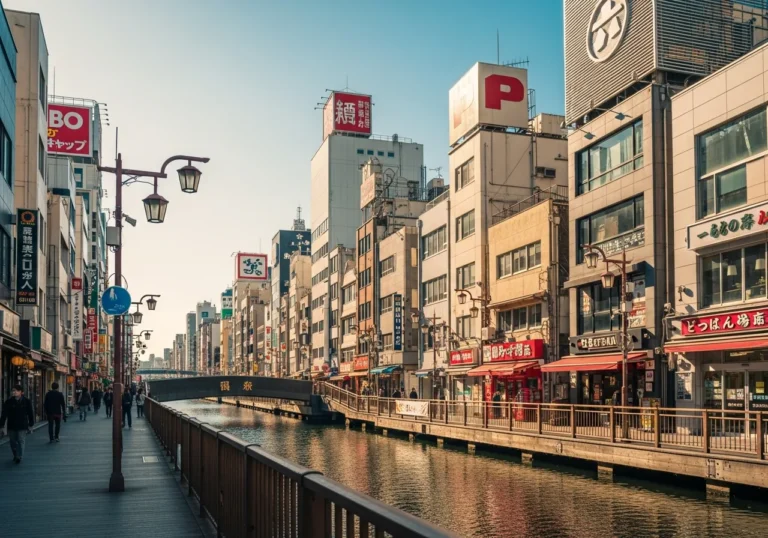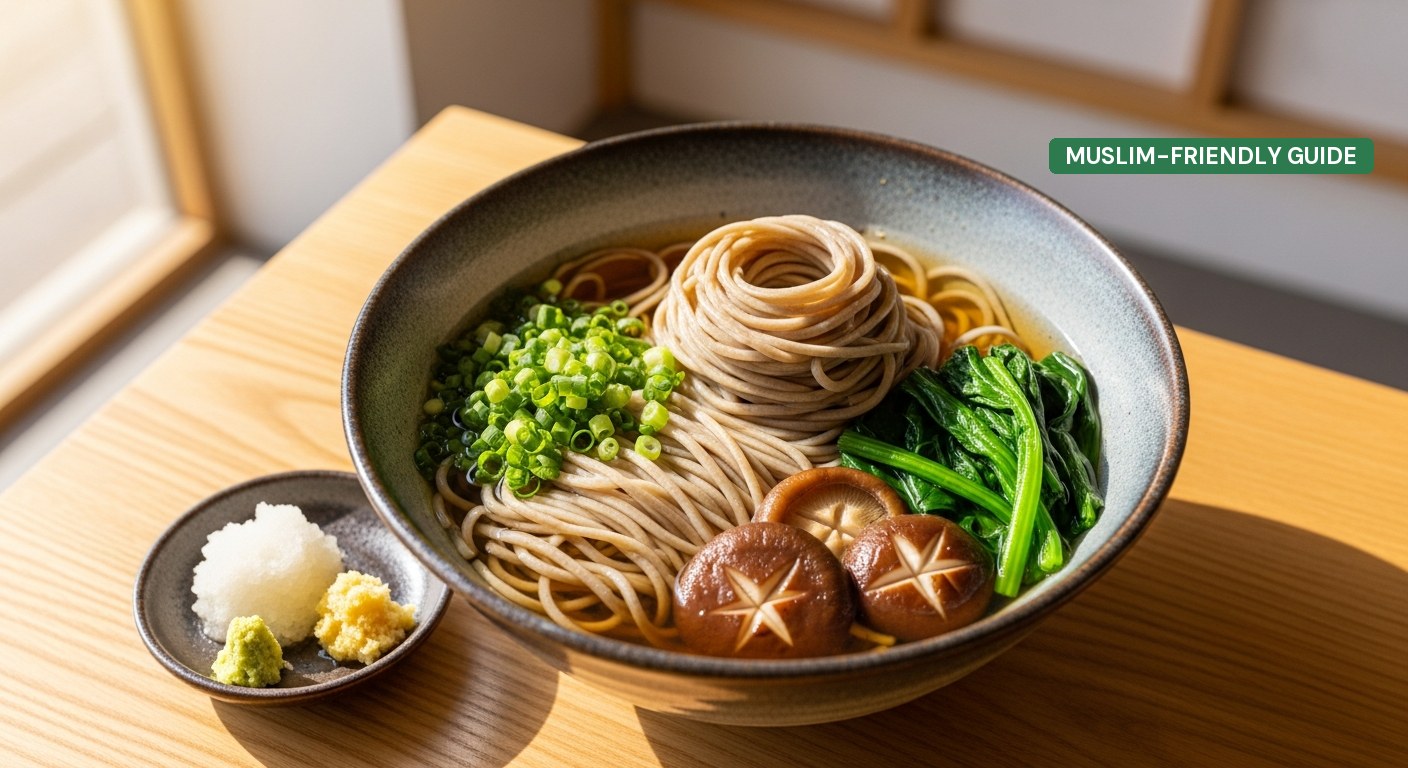
Looking for halal food in Osaka? Buckwheat soba is one of Japan’s most naturally halal-friendly dishes — but the broth and dipping sauce are where hidden alcohol often lurks. This guide covers three verified halal-certified spots across Osaka where the entire soba experience, from noodle to dashi, is safe to eat. Check our Osaka halal guide for the full picture beyond soba.
MICHI’s Pick — Selected by our Osaka-based team, based on places we’ve visited and on research using Tabelog and Google Maps ratings. In Japan, a Tabelog score of 3.4+ is genuinely high — Japanese reviewers are famously strict, and most locals consider anything above 3.4 a place worth a detour. We feature venues meeting at least one of: Tabelog 3.4+, Google Maps 4.3+, or 100+ reviews — the kind of spots locals quietly trust.
Tabelog and Google Maps scores are accurate as of the time of writing.
1. Sojibo — Kansai International Airport
The only halal-certified soba restaurant at Kansai International Airport, making it the ideal first or last meal of your Osaka trip.
- ☪️ Halal status: halal-certified
- 🍜 Must-order: Tempura Soba Set (¥960–¥1,200)
- 📍 Access: Kansai Airport Station (in-terminal, 3F Terminal 1)
- 🕒 Hours: 7:00–22:00 (Open daily)
- 📞 Reservation: Not needed
- 🧎 Prayer room: Available on-site
- 🍷 Alcohol served: No
- 🗣 English menu: Yes
- 🗺 View on Google Maps
- 🔗 Source: halalgourmet.jp
What to order: The tempura soba set pairs earthy buckwheat noodles with crispy prawn and vegetable tempura — all prepared with halal-certified ingredients and a dashi broth free from mirin and sake. You grind your own fresh wasabi tableside, a small ritual that makes the meal memorable.
2. Halal Ramen Naniwaya (浪速屋)
A halal-certified noodle house near Dotonbori that serves maze soba — Japan’s brothless, sauce-dressed noodle bowl — alongside ramen and wagyu rice dishes, all under one halal-only roof.
- ☪️ Halal status: halal-certified
- 🍜 Must-order: Maze Soba (¥1,000–¥1,200)
- 📍 Access: Nagahoribashi Station (5 min walk)
- 🕒 Hours: 11:30–14:30, 17:00–21:30 (Closed: check official site for current days)
- 📞 Reservation: Not needed
- 🧎 Prayer room: Available on-site
- 🍷 Alcohol served: No
- 🗣 English menu: Yes
- 🗺 View on Google Maps
- 🔗 Source: naniwaya-osaka.com
What to order: Maze soba arrives as a dry bowl of thick, chewy noodles dressed in a rich halal-certified sauce — mix everything together before eating for the full effect. If you explore more of Osaka around Dotonbori, this is a practical and satisfying stop that also has a prayer room with wudu facilities on the second floor.
3. Yuigetsuan Sojibo — LaLaport EXPOCITY
A dedicated halal soba dining room inside Osaka’s EXPOCITY mall, where every dish on the halal menu — from cold zaru soba to duck soba — carries formal certification.
- ☪️ Halal status: halal-certified
- 🍜 Must-order: Customisable Soba Bowl with 3 Toppings (¥1,200–¥1,500)
- 📍 Access: Banpaku-Kinen-Koen Station (10 min walk), EXPOCITY EXPO KITCHEN 2F
- 🕒 Hours: 11:00–22:00, LO 21:15 (Open daily)
- 📞 Reservation: Not needed
- 🧎 Prayer room: Available on-site
- 🍷 Alcohol served: Yes (halal menu items are separate)
- 🗣 English menu: Yes
- 🗺 View on Google Maps
- 🔗 Source: halalgourmet.jp
What to order: The customisable soba bowl lets you pick three toppings — jumbo shrimp tempura, maitake mushroom tempura, grated daikon, and more — served on a bamboo plate. The duck soba is a popular choice among regulars; ask staff if it’s available that day. For the best food in Osaka beyond soba, see the best food in Osaka on MICHI.
Frequently Asked Questions
Q. Is it easy to find halal food in Osaka?
Halal soba specifically is rare — only a handful of certified spots exist across the prefecture. For broader halal dining (ramen, wagyu, Indian, Middle Eastern), Osaka’s Dotonbori, Shinsaibashi, and Namba areas have a growing number of options, and apps like Halal Gourmet Japan make searching straightforward.
Q. What does “Muslim-friendly” mean in Japan?
In Japan, “Muslim-friendly” typically means a restaurant has removed pork and alcohol from specific menu items but may not use halal-certified meat or maintain a fully separate kitchen. It sits between “no pork no lard” and full halal certification — always ask staff about cross-contamination if you have stricter requirements.
Q. Are there prayer rooms near halal restaurants in Osaka?
Both Naniwaya (Dotonbori area) and Sojibo (KIX) have prayer rooms on-site. At LaLaport EXPOCITY, a dedicated prayer room is available on the 2F orange side near the lift lobby — ask at the information counter for the access code.
Q. What hidden ingredients should Muslim travelers watch out for in Japan?
Mirin (sweet rice wine) and sake are the most common hidden ingredients in soba dipping sauces and broths — even at restaurants that appear pork-free. Dashi stock made from bonito flakes is generally permissible but worth confirming. At halal-certified restaurants, all of these are replaced with halal-compliant alternatives.
Last updated: July 4, 2026 · Corrections: [email protected]
—
Here is the complete article:
—
Looking for halal food in Osaka? Buckwheat soba is one of Japan’s most naturally halal-friendly dishes — but the broth and dipping sauce are where hidden alcohol often lurks. This guide covers three verified halal-certified spots across Osaka where the entire soba experience, from noodle to dashi, is safe to eat. Check our Osaka halal guide for the full picture beyond soba.
MICHI’s Pick — Selected by our Osaka-based team, based on places we’ve visited and on research using Tabelog and Google Maps ratings. In Japan, a Tabelog score of 3.4+ is genuinely high — Japanese reviewers are famously strict, and most locals consider anything above 3.4 a place worth a detour. We feature venues meeting at least one of: Tabelog 3.4+, Google Maps 4.3+, or 100+ reviews — the kind of spots locals quietly trust.
Tabelog and Google Maps scores are accurate as of the time of writing.
1. Sojibo — Kansai International Airport
A soba shop at Kansai Airport that provides halal foods including soba, tempura, and donburi — and the most convenient halal soba option if you’re arriving or departing through KIX.
- ☪️ Halal status: halal-certified
- 🍜 Must-order: Tempura Soba Set (¥960–¥1,200)
- 📍 Access: Kansai Airport Station (in-terminal, 3F Terminal 1)
- 🕒 Hours: 7:00–22:00 (Open daily)
- 📞 Reservation: Not needed
- 🧎 Prayer room: Available on-site
- 🍷 Alcohol served: No
- 🗣 English menu: Yes
- 🗺 View on Google Maps
- 🔗 Source: halalgourmet.jp
What to order: At Shinshu Soba Sojibo you can enjoy various soba and side menus of fritters — all halal products certified by the Malaysian Halal Consultancy & Training Agency (MHCT). English menus are available, and you grind your own fresh wasabi tableside. The tempura soba set is the go-to order: earthy buckwheat noodles, crispy prawn and vegetable tempura, and a dashi broth free from mirin and sake.
2. Halal Ramen Naniwaya (浪速屋)
Naniwaya holds HALAL certification from Japan Islamic Trust and is one of the few spots in central Osaka where you can eat maze soba — Japan’s brothless, sauce-dressed noodle bowl — with complete confidence.
- ☪️ Halal status: halal-certified
- 🍜 Must-order: Maze Soba (¥1,000–¥1,200)
- 📍 Access: Nagahoribashi Station (5 min walk)
- 🕒 Hours: 11:30–14:30, 17:00–21:30 (Closed: check official site for current days)
- 📞 Reservation: Not needed
- 🧎 Prayer room: Available on-site
- 🍷 Alcohol served: No
- 🗣 English menu: Yes
- 🗺 View on Google Maps
- 🔗 Source: naniwaya-osaka.com
What to order: The highlight here is the Mazesoba — unlike traditional ramen served in broth, Mazesoba is a brothless noodle dish where thick, chewy noodles are presented with a rich, savory sauce at the bowl’s base, accompanied by various toppings. At Naniwaya, the halal version is a triumph of texture and flavor. If you explore more of Osaka around Dotonbori, this is a practical stop — the prayer room with wudu facilities is on the second floor.
3. Yuigetsuan Sojibo — LaLaport EXPOCITY
A highly recommended halal soba noodle shop located in EXPOCITY Osaka that holds halal certification, making it the most family-friendly soba option in the prefecture — inside a large shopping mall with a dedicated prayer room.
- ☪️ Halal status: halal-certified
- 🍜 Must-order: Customisable Soba Bowl with 3 Toppings (¥1,200–¥1,500)
- 📍 Access: Banpaku-Kinen-Koen Station (10 min walk), EXPOCITY EXPO KITCHEN 2F, Suita
- 🕒 Hours: 11:00–22:00, LO 21:15 (Open daily)
- 📞 Reservation: Not needed
- 🧎 Prayer room: Available on-site
- 🍷 Alcohol served: Yes (halal menu items are clearly separated)
- 🗣 English menu: Yes
- 🗺 View on Google Maps
- 🔗 Source: halalgourmet.jp
What to order: You can customise your bowl of soba by choosing 3 kinds of toppings — options range from maitake mushroom tempura and jumbo shrimp tempura to deep-fried rice cakes and grated daikon. The duck soba is a popular dish among regulars — check with staff if it’s available that day. For the best food in Osaka beyond soba, see the best food in Osaka on MICHI.
Frequently Asked Questions
Q. Is it easy to find halal food in Osaka?
Halal soba specifically is rare — only a handful of certified spots exist across the prefecture. For broader halal dining (ramen, wagyu, Indian, Middle Eastern), Osaka’s Dotonbori, Shinsaibashi, and Namba areas have a growing number of options, and apps like Halal Gourmet Japan make searching straightforward.
Q. What does “Muslim-friendly” mean in Japan?
In Japan, “halal-certified” means a restaurant has been fully inspected by an official halal certification body, with all ingredients, cooking utensils, and preparation methods complying with Islamic law. “Muslim-friendly” establishments may serve pork-free and alcohol-free dishes but might not use certified halal meat or may share kitchen facilities with non-halal items. Always ask staff about cross-contamination if you have stricter requirements.
Q. Are there prayer rooms near halal restaurants in Osaka?
Both Naniwaya (Dotonbori area) and Sojibo (KIX) have prayer rooms on-site. At LaLaport EXPOCITY, a dedicated prayer room is available on the 2F orange side, near the lift lobby between TSUTAYA BOOK STORE and C smart — visit the information counter to obtain the access code.
Q. What hidden ingredients should Muslim travelers watch out for in Japan?
Mirin (sweet rice wine) and sake are the most common hidden ingredients — halal-friendly soba versions use sauces and broths free from these. Dashi stock made from bonito flakes is generally permissible but worth confirming. At halal-certified restaurants, all of these are replaced with halal-compliant alternatives, so you can order freely from the certified menu.
Last updated: July 4, 2026 · Corrections: [email protected]