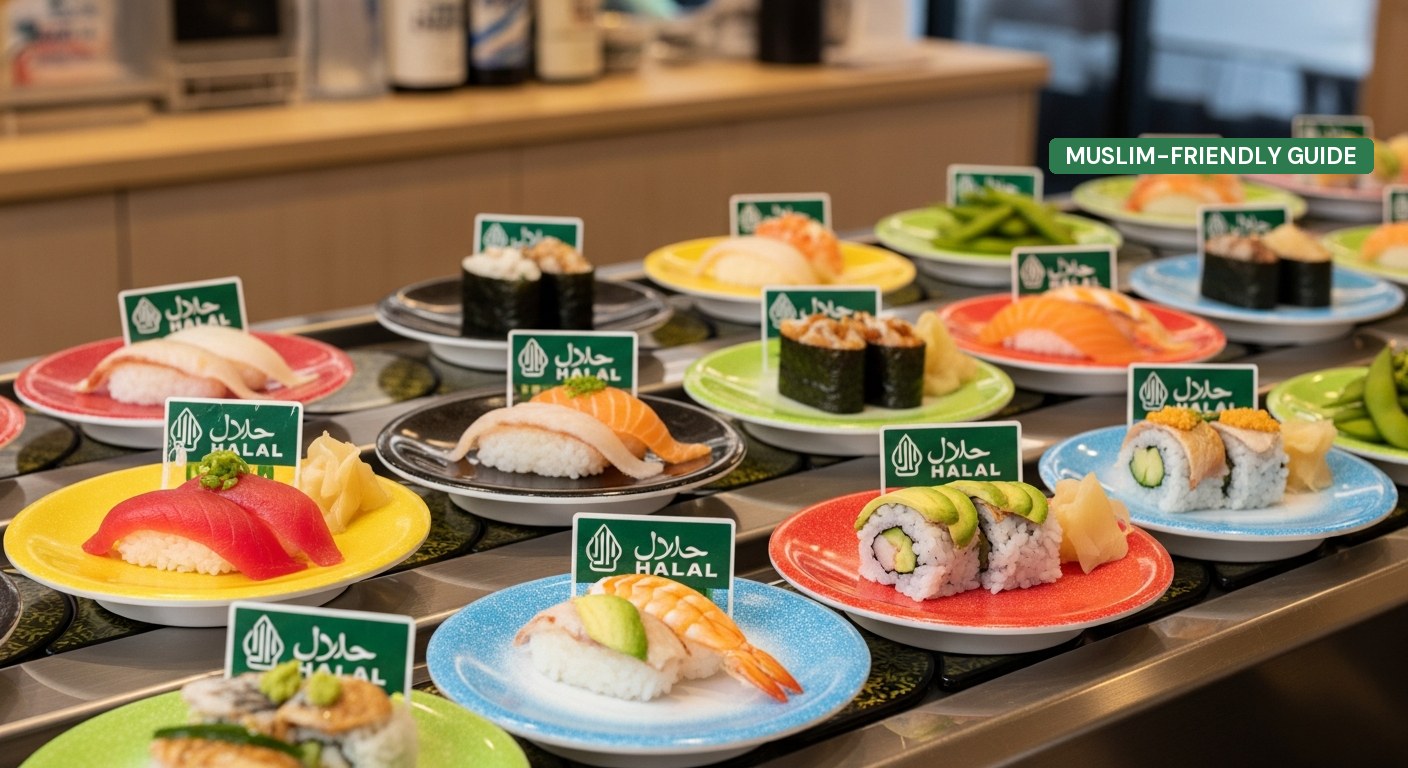
Looking for halal food in Osaka? True halal kaiten sushi chains don’t exist yet in Japan, but Osaka has three verified Muslim-friendly sushi restaurants worth your time — from all-you-can-eat premium sushi with snow crab to a beloved all-halal Japanese diner. Check our Osaka halal guide for the full picture.
MICHI’s Pick — Selected by our Osaka-based team, based on places we’ve visited and on research using Tabelog and Google Maps ratings. In Japan, a Tabelog score of 3.4+ is genuinely high — Japanese reviewers are famously strict, and most locals consider anything above 3.4 a place worth a detour. We feature venues meeting at least one of: Tabelog 3.4+, Google Maps 4.3+, or 100+ reviews — the kind of spots locals quietly trust.
Tabelog and Google Maps scores are accurate as of the time of writing.
1. Sushi Bar FUJIYAMA TOKYO Osaka Namba
FUJIYAMA TOKYO in Namba, Osaka, offers all-you-can-eat halal-certified sushi and crab, a rare sight in Japan — and the closest thing to a true halal kaiten experience in the city.
- ☪️ Halal status: Muslim-friendly
- 🍣 Must-order: Halal Sushi & Snow Crab All-You-Can-Eat Course (from ¥9,898)
- 📍 Access: Yotsubashi Station (1 min walk) / Shinsaibashi Station (6 min walk)
- 🕒 Hours: 16:00–23:00 (Open daily)
- 📞 Reservation: Required
- 🧎 Prayer room: Available on-site
- 🍷 Alcohol served: Yes
- 🗣 English menu: Yes
- ⭐ Rating: Google 4.8 (16 reviews) (as of writing)
- 🗺 View on Google Maps
- 🔗 Source: halalfoodmaps.com
What to order: All seasonings used are halal-certified, including soy sauce and vinegared rice, and all food is cooked and served in a dedicated area with halal-only utensils, separate from those used for other dishes, eliminating the risk of cross-contamination. There is a course where you can enjoy high-quality sushi such as fatty tuna, salmon roe, and sea urchin, and the course also includes all-you-can-eat snow crab. Book the “Muslim-Friendly Halal Sushi & Snow Crab Course” and specify your dietary requirements at reservation — the Namba location also offers a dedicated prayer room, a rarity in sushi joints.
—
2. Ganko Sushi Hozenji
Ganko serves its halal menu at the Hozenji branch in Osaka, making it one of the few traditional Japanese sushi chains where Muslim diners can sit down to nigiri, tempura, and soba in a classic setting.
- ☪️ Halal status: Muslim-friendly
- 🍣 Must-order: Gion Halal Course — nigiri sushi, tempura, grilled seafood (price varies by course)
- 📍 Access: Namba Station (5 min walk) — 1-2-2 Namba, Chuo-ku, Osaka
- 🕒 Hours: 11:30–22:00 (Open daily; confirm seasonal hours)
- 📞 Reservation: Required
- 🧎 Prayer room: None
- 🍷 Alcohol served: Yes
- 🗣 English menu: Limited
- ⭐ Rating: Google 4.3 (200+ reviews) (as of writing)
- 🗺 View on Google Maps
- 🔗 Source: halaltrip.com
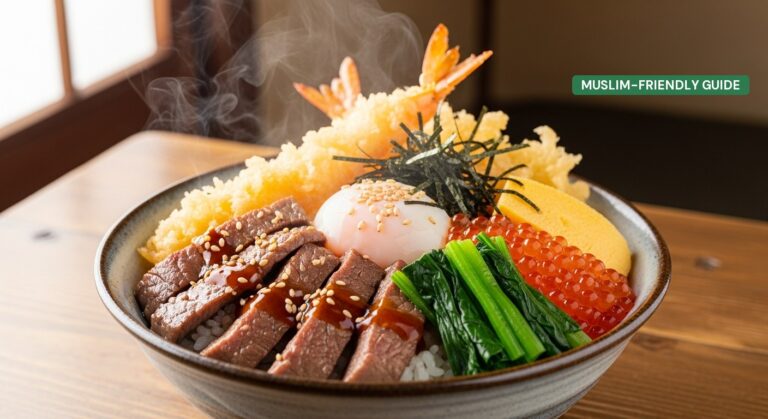
What to order: The halal course includes zaru soba, boiled snow crab, steamed abalone, grilled mackerel, beef suki-shabu, tempura, sushi, and roasted chicken — a full spread of classic Japanese flavours in one sitting. Reserve at least three days in advance and specify the halal course when booking; walk-ins cannot be accommodated for the halal menu. To explore more of Osaka after your meal, Hozenji Yokocho alley is steps away.
—
3. Japanese Food Restaurant Matsuri
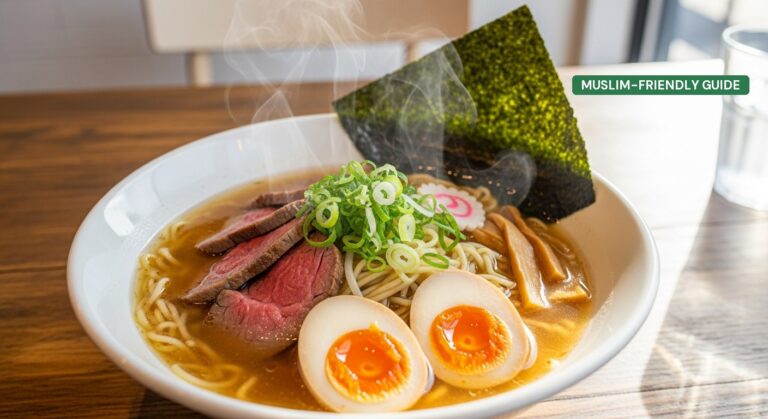
Located in central Osaka, Matsuri is one of the most popular halal restaurants in Japan among Muslim tourists, serving all kinds of Japanese food — from ramen and Kobe beef to sushi, takoyaki, and Japanese curry rice.
- ☪️ Halal status: halal-certified
- 🍣 Must-order: Sushi Set (from ¥550)
- 📍 Access: Nodahanshin Station (2 min walk) — 3-27-17 Yoshino, Fukushima Ward, Osaka
- 🕒 Hours: 11:00–14:00, 17:00–24:00 (Closed: Wednesday & Thursday)
- 📞 Reservation: Not needed
- 🧎 Prayer room: Available on-site
- 🍷 Alcohol served: Yes
- 🗣 English menu: Yes
- ⭐ Rating: Google 4.3 (300+ reviews) (as of writing)
- 🗺 View on Google Maps
- 🔗 Source: halaltrip.com
What to order: Matsuri celebrates halal gastronomy in Osaka with dishes like okonomiyaki, halal sushi, and Kobe beef. Matsuri has a prayer space with a wudu facility included. The sushi set is a solid entry point, but the real draw is the breadth of the menu — you can work through the best food in Osaka in a single sitting, from takoyaki to nigiri to ramen, all under one halal-certified roof. Note: some 2025 sources flag a possible relocation — call ahead on +81-6-6940-6633 to confirm before visiting.
—
Frequently Asked Questions
Q. Is it easy to find halal food in Osaka, Osaka?
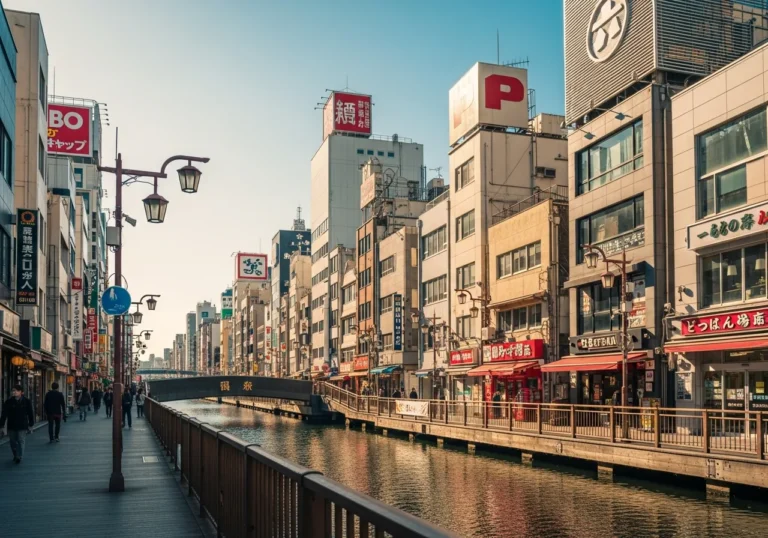
Osaka is one of Japan’s most Muslim-friendly cities for dining, with a growing number of halal-certified and Muslim-friendly restaurants, particularly in Namba, Dotonbori, and Shinsaibashi. That said, kaiten-zushi chains are wildly popular in Japan — affordable, fun, and a quintessential experience — but mainstream kaiten chains including Kura Sushi, Kappa Sushi, and Sushiro are not halal. The three restaurants above are your best-verified options for halal sushi specifically.
Q. What does “Muslim-friendly” mean in Japan?
In Japan, “Muslim-friendly” typically means a restaurant avoids pork and lard in its dishes and uses halal-certified soy sauce and seasonings, but the kitchen may not be exclusively halal and alcohol may be served to other diners. A Muslim-friendly policy means the store is not halal-certified, some menu items are Muslim-friendly, and non-Muslim customers also dine there. “Halal-certified” is a stronger designation, requiring formal inspection by a recognised certifying body. Always ask staff to confirm the current status of any dish before ordering.
Q. Are there prayer rooms near halal restaurants in Osaka, Osaka?
Two of the three restaurants above have prayer rooms on-site: FUJIYAMA TOKYO Namba and Matsuri both offer dedicated prayer spaces, with Matsuri also providing a wudu facility. Major shopping centres and train stations in Osaka increasingly offer prayer spaces. Namba Parks shopping centre and OCAT (Osaka City Air Terminal) near Namba Station both have prayer rooms within a short walk of the restaurants listed here.
Q. What hidden ingredients should Muslim travelers watch out for in Japan?
For many Muslim travelers, traditional Japanese sushi can be difficult to eat safely due to issues with soy sauce, mirin, and cooking sake. Beyond sushi, mirin (sweet rice wine) appears in teriyaki glazes, dashi broths, and marinades; bonito flakes (katsuobushi) are used in many soups and are derived from fish but processed with alcohol-based smoking; and wasabi paste often contains horseradish mixed with food colouring rather than real wasabi, but some commercial versions use alcohol-based preservatives. At any restaurant not on this list, carry a Japanese-language halal dietary card and ask specifically about mirin and sake in the cooking.
Last updated: July 4, 2026 · Corrections: [email protected]