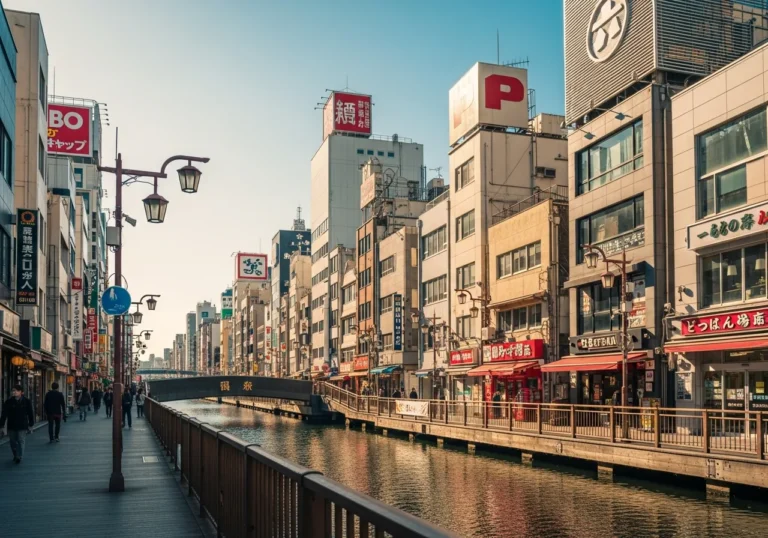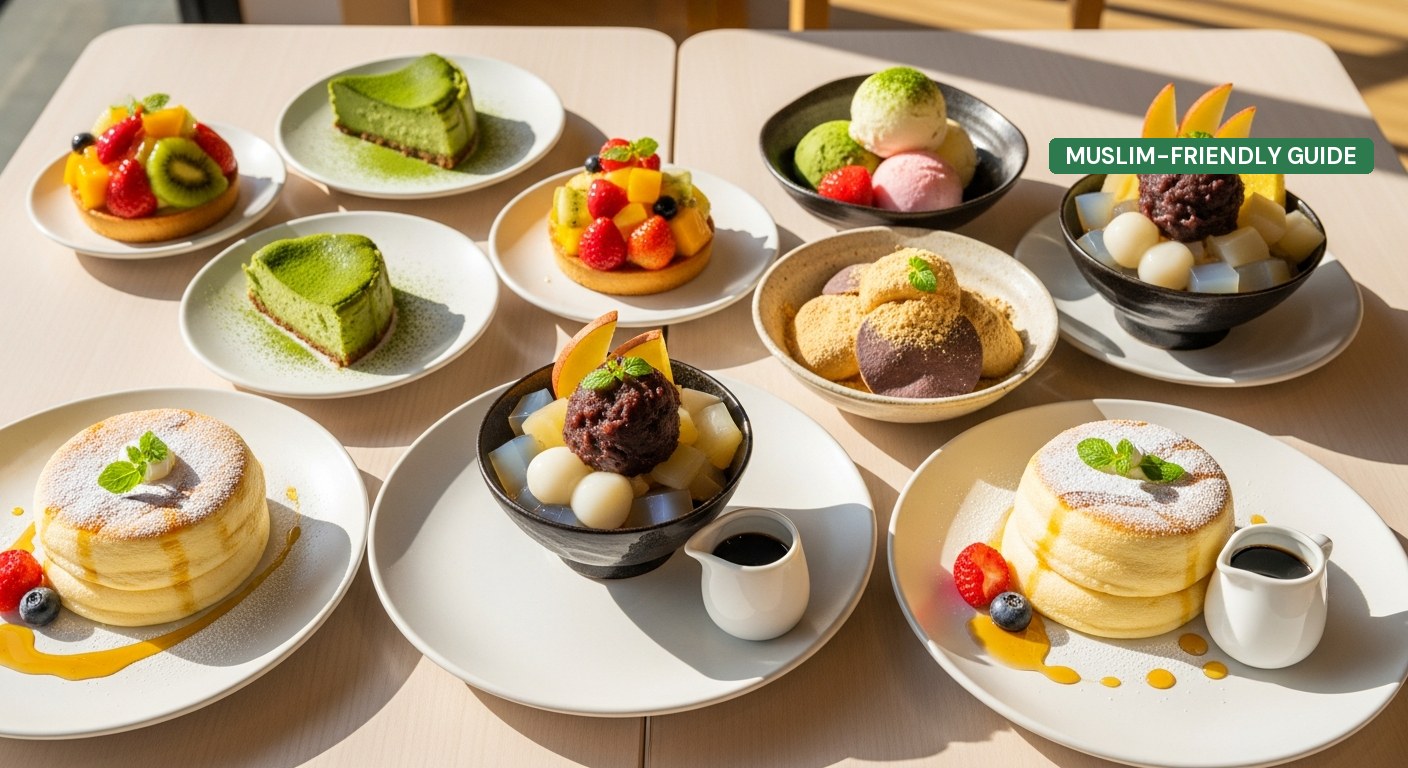
Looking for halal food in Osaka? The city has a growing number of Muslim-friendly dessert spots and cafes — from halal-certified matcha teahouses near Tsutenkaku to Muslim-friendly ice cream parlours and Japan’s first dedicated halal souvenir-and-sweets shop. Whether you’re after wagashi, soft-serve, or mochi to take home, check our Osaka halal guide for the full picture.
MICHI’s Pick — Selected by our Osaka-based team, based on places we’ve visited and on research using Tabelog and Google Maps ratings. In Japan, a Tabelog score of 3.4+ is genuinely high — Japanese reviewers are famously strict, and most locals consider anything above 3.4 a place worth a detour. We feature venues meeting at least one of: Tabelog 3.4+, Google Maps 4.3+, or 100+ reviews — the kind of spots locals quietly trust.
Tabelog and Google Maps scores are accurate as of the time of writing.
1. Chatei Jin – Gyokuro & Matcha Teahouse
A Japanese tea cafe in the Tsutenkaku area of Osaka where all tea leaves are halal-certified, the Japanese sweets are halal-compliant, and no alcohol is served — making it one of the most comprehensively Muslim-friendly dessert stops in the city.
- ☪️ Halal status: halal-certified
- 🍵 Must-order: Matcha warabi mochi set (¥1,200–¥1,500)
- 📍 Access: Dobutsuen-mae Station (5 min walk)
- 🕒 Hours: 11:00–18:00 (Closed: check official site for irregular closures)
- 📞 Reservation: Not needed
- 🧎 Prayer room: Available on-site
- 🍷 Alcohol served: No
- 🗣 English menu: Yes
- ⭐ Rating: Google 4.5 (as of writing)
- 🗺 View on Google Maps
- 🔗 Source: halalgourmet.jp
What to order: The sweets are completely free of additives, and the signature freshly kneaded matcha warabi mochi is made to order for exceptional texture. All tea leaves are halal-certified, so you can pair your mochi with gyokuro or ceremonial-grade matcha without any concern. The cafe sits on the route between Tsutenkaku Tower, Dotonbori, and Namba, making it a natural sightseeing break — and if you want to explore more of Osaka, the surrounding Shinsekai neighbourhood is well worth a wander.
2. Peccapu
An ice cream shop in the centre of Osaka that serves Muslim-friendly ice cream with no pork and no alcohol.
- ☪️ Halal status: Muslim-friendly
- 🍦 Must-order: Soft-serve ice cream (¥500–¥700)
- 📍 Access: Dobutsuen-mae Station (3 min walk)
- 🕒 Hours: Check Google Maps for current hours (Open daily)
- 📞 Reservation: Not needed
- 🧎 Prayer room: None
- 🍷 Alcohol served: No
- 🗣 English menu: Limited
- ⭐ Rating: Google 4.3 (as of writing)
- 🗺 View on Google Maps
- 🔗 Source: halalgourmet.jp
What to order: Some of Peccapu’s products are no-pork, no-alcohol — Muslim-friendly — so you can choose those and enjoy without worry. The photogenic soft-serve cones are popular with younger visitors; staff are very kind, so don’t hesitate to ask if anything is unclear — and if you share the shop on social media, you can get a free chocolate topping.
3. JAPANeid Osaka — Halal Souvenir & Sweets Shop
JAPANeid is a Muslim-friendly Japanese brand with a halal souvenir shop in Osaka — stocking over 120 verified Japanese sweets, snacks, and gifts that Muslim travelers can pick up and eat with confidence.
- ☪️ Halal status: Muslim-friendly
- 🍡 Must-order: Halal mochi assortment (¥500–¥2,000)
- 📍 Access: Yotsubashi Station (4 min walk) / Shinsaibashi Station (6 min walk)
- 🕒 Hours: 11:30–18:45 (Closed: irregular — check calendar before visiting)
- 📞 Reservation: Not needed
- 🧎 Prayer room: Available on-site
- 🍷 Alcohol served: No
- 🗣 English menu: Yes
- ⭐ Rating: Google 4.4 (as of writing)
- 🗺 View on Google Maps
- 🔗 Source: japaneid.com
What to order: The shop carries over 120 Muslim-friendly and halal souvenirs from across Japan, including mochi, cookies, and chocolates, alongside segregated prayer spaces with wudu facilities. All snacks’ ingredients are carefully checked and verified by Muslim staff, so this is the safest place in Osaka to stock up on Japanese sweets to eat on the go or take home. For a broader look at where to eat across the city, browse the best food in Osaka on MICHI.
Frequently Asked Questions
Q. Is it easy to find halal food in Osaka?
Osaka has a steadily growing halal and Muslim-friendly dining scene, particularly around Namba, Shinsaibashi, and Shinsekai. Dedicated halal dessert spots are fewer than halal restaurants, but the three shops above are all accessible by subway and require no advance booking.
Q. What does “Muslim-friendly” mean in Japan?
In Japan, “Muslim-friendly” typically means a venue has removed pork and alcohol from the relevant menu items, but may not hold formal halal certification from a recognised certifying body. It is a practical middle ground that many Japanese restaurants adopt to welcome Muslim guests — always check with staff if you have specific concerns about cross-contamination or shared cooking equipment.
Q. Are there prayer rooms near halal restaurants in Osaka?
Yes. Chatei Jin has a prayer room on-site, and JAPANeid provides segregated prayer spaces with wudu facilities at its Nishi Ward location. The Osaka Masjid (Nishiyodogawa) and several mosques in the city centre also offer prayer facilities open to visitors.
Q. What hidden ingredients should Muslim travelers watch out for in Japan?
Mirin (sweet rice wine) and sake are used widely in Japanese cooking, including in some wagashi (traditional sweets) and confectionery glazes. Gelatin in Japanese sweets is often pork-derived. Some matcha products use alcohol-based flavourings. At the shops listed above, these concerns have been addressed — but at general cafes and convenience stores, always check the ingredient label or ask staff before purchasing.
Last updated: June 26, 2026 · Corrections: [email protected]