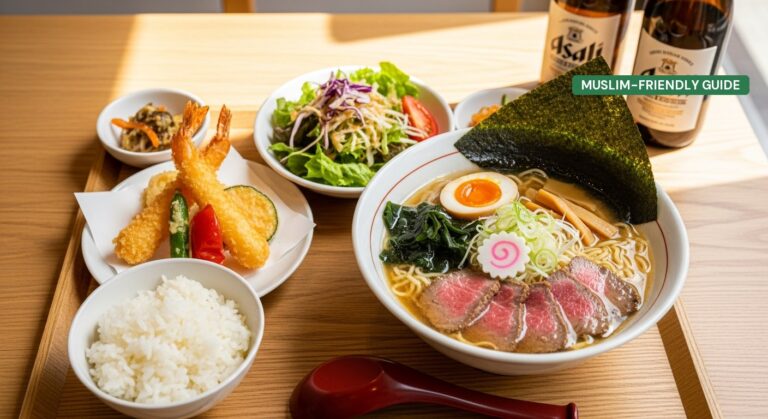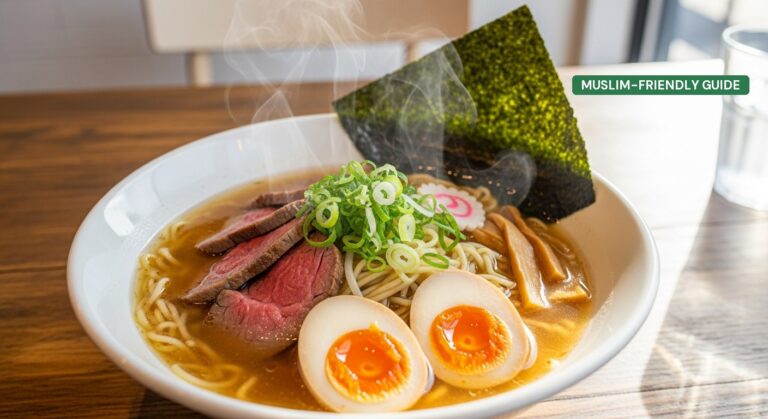
Looking for halal food in Tenmabashi, Osaka? This business and government district near Osaka Castle has a small but solid set of Muslim-friendly dining options — a refined Kyoto kaiseki counter, a French bistro with a dedicated halal course, and a Japanese shabu-shabu and washoku spot one station south. All three serve no pork and no alcohol on their halal menus, and suit solo diners, couples, and small groups equally well. For a broader overview of where to eat across the city, see our Osaka halal guide.
MICHI’s Pick — Selected by our Osaka-based team, based on places we’ve visited and on research using Tabelog and Google Maps ratings. In Japan, a Tabelog score of 3.4+ is genuinely high — Japanese reviewers are famously strict, and most locals consider anything above 3.4 a place worth a detour. We feature venues meeting at least one of: Tabelog 3.4+, Google Maps 4.3+, or 100+ reviews — the kind of spots locals quietly trust.
Tabelog and Google Maps scores are accurate as of the time of writing.
1. Minokichi Tenmabashi (美濃吉 天満橋店)
The Tenmabashi outpost of Kyoto’s storied kaiseki chain offers a dedicated Muslim-friendly lunch and dinner menu certified by the Kyoto Halal Council — your best chance in this district to experience refined Japanese seasonal cuisine without compromise.
- ☪️ Halal status: Muslim-friendly
- 🍱 Must-order: Muslim-friendly kaiseki lunch course (¥3,500~)
- 📍 Access: Tenmabashi Station (1 min walk) — inside Keihan City Mall 8F
- 🕒 Hours: 11:00–23:00, last order 21:30 (Closed: varies — confirm ahead)
- 📞 Reservation: Recommended
- 🧎 Prayer room: None
- 🍷 Alcohol served: Yes (halal menu items are alcohol-free)
- 🗣 English menu: Limited
- 🗺 View on Google Maps
- 🔗 Source: halalinjapan.com
What to order: The Muslim-friendly kaiseki course swaps out any pork-based dashi and alcohol-based seasonings for halal-compliant alternatives, letting you work through seasonal small plates — sashimi, simmered vegetables, grilled fish — in the calm, lacquerware-lined setting that Minokichi has refined over centuries. It’s the most elegant lunch option in the Tenmabashi area for Muslim diners, and worth booking a day in advance.
2. The French Blue
A French bistro inside the Tenmanbashi Coop building that runs a fully halal course — no alcohol in the sauces, no animal-derived oils, and only scaled fish and halal-certified meats throughout.
- ☪️ Halal status: Muslim-friendly
- 🥩 Must-order: Halal French course dinner (¥5,000~)
- 📍 Access: Tenmabashi Station (3 min walk) — Tenmanbashi Coop 1F, 2-2-10 Shima-cho, Chuo-ku
- 🕒 Hours: Lunch & dinner service (confirm current hours by phone — 06-6809-4608)
- 📞 Reservation: Required
- 🧎 Prayer room: None
- 🍷 Alcohol served: Yes (halal course is alcohol-free)
- 🗣 English menu: Limited
- 🗺 View on Google Maps
- 🔗 Source: halalgourmet.jp
What to order: The halal course is built around French technique applied to halal-certified proteins — expect dishes like pan-seared chicken or beef with herb jus, accompanied by seasonal vegetables and a clean, wine-free sauce. It’s an unusual find in Osaka: proper French bistro cooking that a Muslim diner can order from start to finish without having to negotiate individual items. Always call ahead to confirm the halal course is available that day, as it is prepared to order. If you’re planning a full day around Osaka Castle and want to explore more of Tenmabashi, this makes a fitting dinner to end it.
3. Halal Washoku Minori (ハラール和食みのり)
A Japanese washoku restaurant in adjacent Matsuyamachi — one stop south of Tenmabashi on the Tanimachi Line — where all food served uses halal ingredients, covering shabu-shabu, sukiyaki, and everyday Japanese comfort dishes.
- ☪️ Halal status: Muslim-friendly
- 🍲 Must-order: Halal shabu-shabu set (¥2,500~)
- 📍 Access: Matsuyamachi Station (5 min walk) — adjacent to Tenmabashi; B1F Urban Stage APEX, 4-21 Matsuyamachi Sumiyoshi, Chuo-ku
- 🕒 Hours: Lunch & dinner (confirm current hours — Tel: 06-6777-9997)
- 📞 Reservation: Recommended
- 🧎 Prayer room: None
- 🍷 Alcohol served: No
- 🗣 English menu: Limited
- 🗺 View on Google Maps
- 🔗 Source: tabelog.com
What to order: The halal shabu-shabu set is the crowd-pleaser — thinly sliced halal beef or chicken swirled through a clean kombu broth, served with seasonal vegetables and ponzu on the side. The floor seating adds a traditional touch that many visitors find memorable. Unlike the other two restaurants on this list, Minori serves no alcohol at all, making it the most straightforward choice for families or diners who prefer a fully alcohol-free environment. For more ideas on what to eat across the city, browse the best food in Osaka.
Frequently Asked Questions
Q. Is it easy to find halal food in Tenmabashi, Osaka?
Tenmabashi is primarily a business and government district, so dedicated halal restaurants are fewer here than in tourist-heavy areas like Namba or Shinsaibashi. That said, the three venues above cover Japanese kaiseki, French bistro, and everyday washoku — a solid range for a one- or two-day stay near Osaka Castle. Always call ahead, as halal courses at some restaurants are prepared to order.
Q. What does “Muslim-friendly” mean in Japan?
In Japan, “Muslim-friendly” typically means a restaurant has removed pork and alcohol from specific menu items or courses, and takes care to avoid cross-contamination on those dishes. It does not automatically mean the entire kitchen is halal-certified or that a formal certifying body has inspected the premises. The level of care varies by restaurant — the safest approach is to ask staff directly about ingredients and preparation methods before ordering.
Q. Are there prayer rooms near halal restaurants in Tenmabashi?
None of the three restaurants above have an on-site prayer room. The nearest dedicated prayer space is inside Keihan City Mall (connected to Tenmabashi Station), where a Muslim prayer room has been reported on the upper floors — confirm availability at the information desk. Osaka Central Mosque (Ibaraki) is reachable by metro but is not within walking distance of Tenmabashi.
Q. What hidden ingredients should Muslim travelers watch out for in Japan?
The most common pitfalls are mirin (a sweet rice wine used in almost all Japanese sauces and glazes), sake (added to broths and marinades), and pork-derived dashi (a stock base made from dried bonito or pork bones). Even dishes that appear vegetable-based may contain bonito flakes in the broth. At Muslim-friendly restaurants, always confirm that the specific dish you are ordering — not just the menu category — has been prepared without these ingredients.
Last updated: July 4, 2026 · Corrections: [email protected]