Last updated: July 3, 2026
This article reflects information available at the time of writing. Check Google Maps for the latest hours and availability.
Introduction
Tenmabashi doesn’t get the food press that Dotonbori or Shinsekai attract, and that’s precisely why it’s worth your time. This stretch of central Osaka — straddling the Okawa River between Osaka Castle and the old merchant quarter of Kitahama — runs on office-worker lunches and neighbourhood regulars. The restaurants here don’t need to perform for tourists. They just need to be good.
Udon fits this neighbourhood perfectly. The best food in Osaka is often the most unassuming, and the udon spots around Tenmabashi are a case in point: counter seats, handmade noodles, broths built on proper kombu-and-katsuobushi dashi, and prices that won’t make you wince. The Kansai style leans lighter than the thick, soy-heavy broths you’d find in Tokyo — pale gold, subtly sweet, with the noodle doing most of the talking.
This guide covers three spots within easy walking distance of Tenmabashi Station, each with a different personality: a live-demo noodle counter inside the station itself, a no-frills neighbourhood shop near Tanimachi-4-chome that opens early enough for a proper breakfast bowl, and a long-running soba-and-udon house that’s become a quiet fixture for the area’s lunch crowd. All three make their noodles by hand. None of them will ask you to queue for an hour. To explore more of Tenmabashi beyond the bowl, the riverside walk along the Okawa and the covered shotengai heading north are both worth your afternoon.
1. Jitsuenteuchi Udon-ya Tenmabashi (実演手打うどん屋 天満橋)
- 📍 1-1 Tenmabashi Kyomachi, Chuo-ku, Osaka (inside Tenmabashi Station concourse, Keihan/Osaka Metro)
- 🕐 Approx. 7:00–21:00 (weekdays); 10:00–20:00 (weekends) — hours vary; confirm on-site (as of May 2026)
- 💰 ¥500–¥900 (food only)
- 🚃 Tenmabashi Station (0 min walk — inside the station)
- 🗺 Open in Google Maps
- 📋 Tabelog
What to order: Curry udon (¥750–¥850)
The noodle-making happens right in front of you — the counter is open to the station concourse, so you can watch the dough being stretched and cut before it hits the pot. It’s a commuter spot at heart, which means fast service and zero fuss, but the noodles are genuinely handmade and the curry udon carries a proper dashi backbone rather than the gloopy, powder-mix version you’ll find at chain shops.
2. Sarashina Tenmabashi (更科 天満橋)
- 📍 Approx. 1-chome, Tenmabashi Kyomachi, Chuo-ku, Osaka (short walk from Tenmabashi Station east exit)
- 🕐 Lunch: 11:30–14:00; Dinner: 17:30–20:30 (closed Sundays) (as of May 2026)
- 💰 ¥700–¥1,200 (food only)
- 🚃 Tenmabashi Station (3 min walk)
- 🗺 Open in Google Maps
- 📋 Tabelog
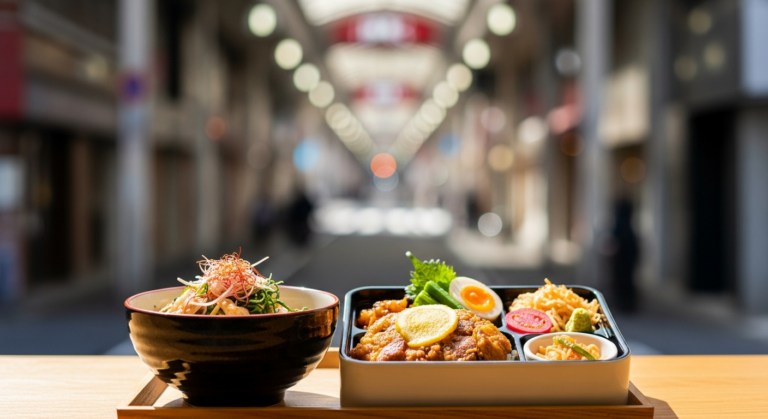
What to order: Oyako-don set with mini udon (¥950–¥1,100)
A husband-and-wife shop that’s been feeding the neighbourhood for years — the kind of place where the couple behind the counter know half the room by name. The handmade udon and soba share the menu equally, and the set meals (a bowl of noodles paired with a small rice dish) are the move at lunch. Portions are honest, the broth is clean and well-seasoned, and the whole thing costs less than a convenience-store bento in most tourist areas.
3. Tanimachi-4-chome Morning Udon (谷町四丁目 朝うどん)
- 📍 Near Tanimachi-4-chome Station, Chuo-ku, Osaka (125m from station exit)
- 🕐 From approx. 7:00 (opens early for breakfast service); closes early afternoon (as of May 2026)
- 💰 ¥280–¥700 (food only)
- 🚃 Tanimachi-4-chome Station (2 min walk)
- 🗺 Open in Google Maps
- 📋 Tabelog
What to order: Kake udon (¥280) with age (fried tofu) topping (¥100–¥150)
A kake udon at ¥280 is about as close to free as a hot meal gets in Osaka, and this counter near Tanimachi-4-chome pulls in early-morning regulars — office workers, locals heading to Osaka Castle Park — who want something warm and filling before 9am. The MICHI Osaka travel guide rarely flags spots this stripped-back, but the noodles are made in-house and the dashi is the real thing. Go early; it closes once the lunch rush winds down.
How to Order
Most udon shops in Tenmabashi operate on a simple counter or table system — you’ll either order at the counter when you arrive, or a staff member will come to your table. At smaller shops, a ticket machine (券売機) near the entrance handles payment upfront; buy your ticket before sitting down. If you’re unsure, watch what the person ahead of you does.
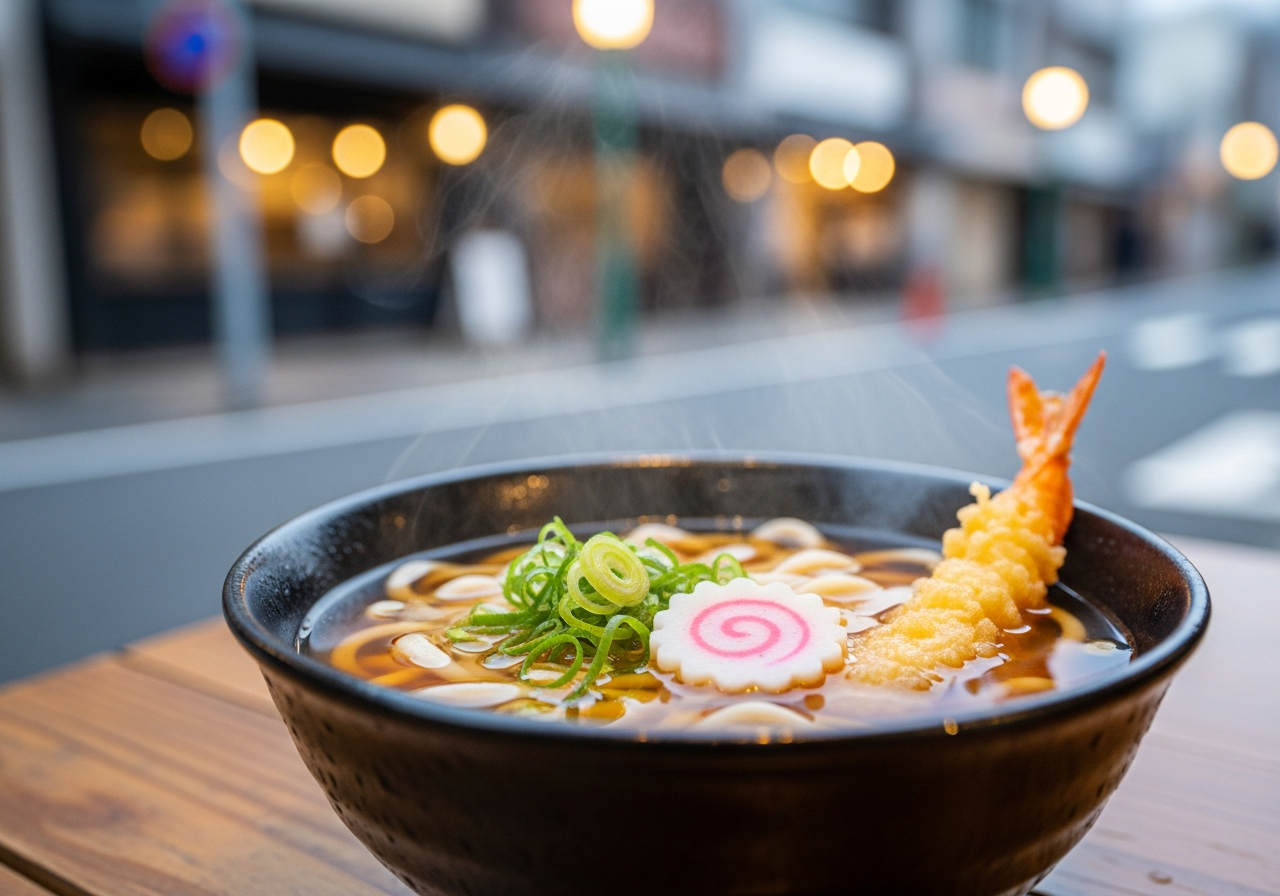
The core vocabulary you need: kake udon is the plain broth bowl, the baseline for everything else. Kitsune udon adds a piece of sweetened fried tofu. Tempura udon comes with a prawn or vegetable fritter on top. Curry udon is exactly what it sounds like — thick, spiced, and warming. Point at the menu or hold up fingers for quantity if language is a barrier; staff at these neighbourhood spots are used to it.
Toppings are usually ordered separately and added to your base bowl. A plain kake udon with one or two toppings is a complete lunch. Don’t feel obliged to order more than that — these are fast, functional spots, not restaurants where you’re expected to linger over multiple courses.
Slurping is not just acceptable — it’s the correct way to eat udon. The noise aerates the noodle and cools the broth slightly as it hits your mouth. Nobody will look at you twice.
FAQ
Q: Is udon in Tenmabashi expensive?
A: No. A plain kake udon starts at around ¥280–¥400 at the most casual spots. A full lunch with a topping or two and a side dish lands between ¥700 and ¥1,200. Even the sit-down shops with set meals rarely push past ¥1,500 at lunch.
Q: Do udon shops in Tenmabashi have English menus?
A: Most don’t. These are neighbourhood lunch spots, not tourist-facing restaurants. That said, many shops have plastic food displays or photo menus near the counter — pointing works fine. Learning two or three dish names (kake, kitsune, tempura) gets you most of the way there.
Q: When is the best time to visit?
A: For the smoothest experience, aim for 11:30am right when lunch service opens, or after 1:30pm when the office-worker rush has cleared. The morning udon spot near Tanimachi-4-chome is best visited before 9am on a weekday. Avoid the 12:00–13:00 window at all three shops — seats fill up fast and some counters run out of noodles before the afternoon.
Information is accurate as of May 2026. We recommend checking Google Maps for the latest hours and prices before visiting.