Last updated: July 3, 2026
This article reflects information available at the time of writing. Check Google Maps for the latest hours and availability.
Introduction
Tenmabashi sits on the east bank of the Okawa River, a few stops from Osaka-jo and a world away from the tourist crush of Dotonbori. The neighbourhood runs on office workers, long-term residents, and the kind of unhurried evening pace that makes it easy to linger over a grill. That combination — steady local demand, lower rents than Namba or Shinsaibashi — has quietly produced a solid yakiniku scene that rewards anyone willing to cross the river.
The four spots in this guide cover the full range: a lava-stone grill institution that made Tabelog’s Yakiniku WEST Top 100 in 2024, a solo-dining chain that strips the experience back to meat and heat, a neighbourhood butcher-turned-BBQ counter with an English iPad menu, and a reservation-only newcomer where the head chef hand-cuts every piece. Whether you want a ¥1,500 lunch set or a proper evening of wagyu and whisky, Tenmabashi has a grill for it. For more ideas on where to eat across the city, browse the best food in Osaka — or explore more of Tenmabashi beyond the yakiniku scene.
1. Manryo Higashi-Tenma (万両 東天満店)
- 📍 2-3-15 Higashi-Tenma, Kita-ku, Osaka 530-0044
- 🕐 Mon–Sat 17:00–23:30; Sun & holidays 17:00–23:00 (as of May 2026)
- 💰 ¥3,000–¥6,000 per person (food only) / ¥4,000–¥8,000 (with drinks)
- 🚃 Tenmabashi Station (7 min walk) / Minamimorimachi Station (5 min walk)
- 🗺 Open in Google Maps
- 📋 Tabelog
- 🌐 Official site
What to order: Special upper loin (toku-jo rosu) with house tare (¥1,595)
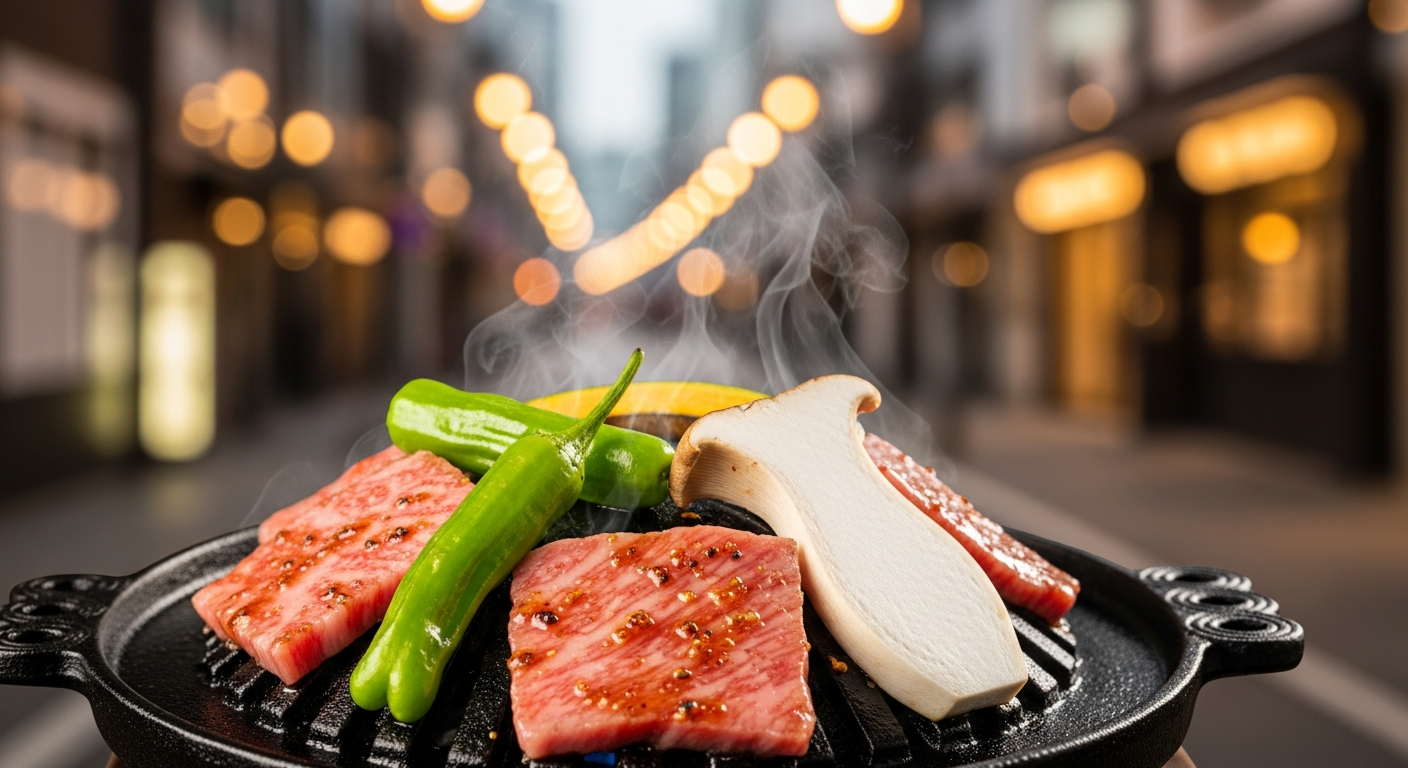
Ranked in Tabelog’s Top 100 Yakiniku Restaurants WEST 2024, Manryo Higashi-Tenma is the area’s most decorated grill. The far-infrared effect of lava stone magma produces perfectly grilled results, and the whole-carcass buying policy means the menu regularly features cuts you won’t find at most restaurants. Kimchi, namul, yakiniku tare, and salad dressings are all made in-house — the kind of detail that separates a serious operation from a chain. Book ahead; it fills up fast on weekends.
2. Yakiniku Like Tenmabashi (焼肉ライク 天満橋店)
- 📍 2-1-3 Tanimachi, Chuo-ku, Osaka 540-0012
- 🕐 11:00–23:00 daily (as of May 2026)
- 💰 ¥800–¥1,800 per person (food only) / ¥1,000–¥2,200 (with drinks)
- 🚃 Tenmabashi Station (4 min walk) / Tanimachi 4-chome Station (3 min walk)
- 🗺 Open in Google Maps
- 📋 Tabelog
- 🌐 Official site
What to order: Wagyu kalbi set with rice (¥1,290)
Each diner gets their own individual smokeless roaster — the whole concept is built around solo yakiniku, which makes this the easiest entry point in the area if you’re eating alone or just want a quick, no-fuss lunch. The menu is tight and the prices are honest. Open from 11am, it’s one of the few yakiniku spots in Tenmabashi that works as a proper lunch stop without a reservation.
3. Yakiniku Horumon Maruyoshi Seinikuten Tenmabashi (焼肉ホルモン 丸吉精肉店 天満橋)
- 📍 1-4-3 Tanimachi, Chuo-ku, Osaka 540-0012
- 🕐 Mon–Fri 11:30–14:00, 17:00–23:00; Sat–Sun 11:30–23:00 (as of May 2026)
- 💰 ¥2,000–¥4,500 per person (food only) / ¥3,000–¥6,000 (with drinks)
- 🚃 Tenmabashi Station (3 min walk)
- 🗣 English menu: Yes (iPad ordering)
- 🗺 Open in Google Maps
- 📋 Tabelog
What to order: Upper harami (skirt steak) with salt (¥1,200)
Ordering is done via iPad, and the restaurant has an English menu — making it genuinely foreigner-friendly. Meat quality is strong: not too fatty, with good thickness and cuts. The butcher-shop lineage shows in the horumon selection — offal is fresh and handled with care, not an afterthought. All-you-can-drink lemon sours are available for ¥550 per hour, which makes a weeknight dinner here very easy on the wallet.
4. Hobi (ほうび)
- 📍 2-1-8 Tenmabashi Kyomachi, Chuo-ku, Osaka 540-0032
- 🕐 Mon–Sat 17:00–23:00; closed Sunday (as of May 2026)
- 💰 ¥3,500–¥6,000 per person (food only) / ¥5,000–¥9,000 (with drinks)
- 🚃 Tenmabashi Station (1 min walk)
- 🗺 Open in Google Maps
- 📋 Tabelog
What to order: Premium harami (¥1,500) or kalbi (¥1,200)
Located just a one-minute walk from Tenmabashi Station, Hobi’s head chef trained at a well-regarded Hida beef yakiniku restaurant in Nara — and that background shows in how the meat is handled. Ingredients are sourced daily from trusted suppliers and hand-cut to order. The drinks list includes Japanese whisky such as Yamazaki, which makes this the right call for a proper evening out rather than a quick bite. Reservations are strongly recommended. The MICHI Osaka travel guide covers more spots like this across the city.
How to Order
Most yakiniku restaurants in Tenmabashi use one of two systems: table buzzers with a paper menu, or tablet/iPad ordering. Hobi and Manryo Higashi-Tenma use the traditional call-staff approach, so flag someone down when you’re ready. Maruyoshi uses an iPad with an English interface — tap your selections and they arrive at the table. Yakiniku Like is counter-service: order at the register before you sit.
For the grill itself, start with tongue (tan) and lighter cuts before moving to fattier pieces like kalbi or rosu. Salt-seasoned cuts go on first; tare-marinated cuts can go on a slightly hotter grill. At lava-stone restaurants like Manryo, the stone retains heat well — don’t pile everything on at once or the temperature drops. Most restaurants will replace the grill net mid-meal if you ask; at a quality spot, it’s worth requesting.
Lunch sets (ranchi setto) at Maruyoshi and Yakiniku Like typically include rice, soup, and a small salad — good value for ¥1,000–¥1,800. Evening visits at Hobi and Manryo work best as two-hour affairs with drinks; both accept reservations via Tabelog or phone.
FAQ
Q: Is yakiniku in Tenmabashi expensive?
A: It depends on where you go. Yakiniku Like runs ¥800–¥1,800 per person for a full lunch. Maruyoshi sits in the ¥2,000–¥4,500 range for dinner. Manryo Higashi-Tenma and Hobi are the premium end at ¥4,000–¥8,000 with drinks. None of these are Ginza prices — Tenmabashi’s rents keep things honest.
Q: Do yakiniku shops in Tenmabashi have English menus?
A: Maruyoshi has a confirmed English iPad menu and is the most foreigner-friendly option. Yakiniku Like uses a visual menu with photos that’s easy to navigate without Japanese. Hobi and Manryo are Japanese-only menus, but staff at both are used to pointing and gesturing — a translation app on your phone will cover the gaps.
Q: When is the best time to visit?
A: Weekday lunches at Yakiniku Like and Maruyoshi are the least crowded — arrive by 12:00 or after 13:30 to avoid the office rush. For evening visits at Manryo or Hobi, book at least two to three days ahead for weekends; weeknights are more forgiving but still worth reserving. Tenmabashi empties out earlier than Namba, so last orders at most spots are around 22:30.
Information is accurate as of May 2026. We recommend checking Google Maps for the latest hours and prices before visiting.